Complete Guide to Iwate Gokoku Shrine | History, Deities, Goshuin (Shrine Seal), and Access Information [Morioka City, Iwate Prefecture]
Iwate Gokoku Shrine is a shrine located in Hachiman-cho, Morioka City, Iwate Prefecture, dedicated to war dead associated with Iwate Prefecture. Situated within the grounds of Morioka Hachimangu Shrine, it is an important shrine dedicated to the spirits of those who sacrificed their lives for their country from the Meiji Restoration to the Greater East Asia War, attracting many worshippers. This article provides a comprehensive overview of Iwate Gokoku Shrine, including its detailed history, enshrined deities, visiting information, goshuin (shrine seal), and access methods.
History and Founding of Iwate Gokoku Shrine
Founding in 1869 and the First Enshrined Deities
The founding of Iwate Gokoku Shrine dates back to November 2, 1869 (Meiji 2). It was established by Nanbu Toshiyuki, the then governor of the Morioka Domain, at the behest of Emperor Meiji. Nanbu Toshiyasu was the 15th and last lord of the Morioka Domain, and after the abolition of the feudal domains and the establishment of prefectures, he served as governor and dedicated himself to the development of Iwate Prefecture.
At the time of its founding, the shrine was built in the Chabatake area of Higashinakano Village, Iwate County (present-day Morioka City), and the spirits of two local patriots who upheld the cause of loyalty to the Emperor and sacrificed their lives for the nation at the dawn of the Meiji Restoration—Metokita Takanoshin no Mikoto and Nakajima Genzo no Mikoto—were initially enshrined there.
Metokita Takanoshin no Mikoto and Nakajima Genzo no Mikoto, who remained true to their ideals of reverence for the Emperor and expulsion of foreigners during the turbulent Bakumatsu period and sacrificed their lives for the country, were enshrined in accordance with the imperial will of Emperor Meiji.
Transition from Shokonsha to Gokoku Shrine
Initially, it was called Iwate Shokonsha or Nio Shokonsha. Shokonsha are facilities established to comfort and honor the spirits of those who sacrificed their lives for the nation, and were established throughout Japan after the Meiji Restoration.
In March 1939 (Showa 14), it was renamed Iwate Gokoku Shrine by designation of the Minister of Home Affairs, establishing its status as an officially sanctioned Shokonsha. This made it a shrine officially managed and operated by the state, and it took on the role of a central facility for commemorating war dead in Iwate Prefecture.
Post-War Renaming and Relocation to Current Location
During the occupation period after World War II, the use of the name “Gokoku Shrine” was restricted by the GHQ (General Headquarters of the Supreme Commander for the Allied Powers) Shinto Directive, so it was temporarily renamed Iwate Shrine. Many Gokoku Shrines underwent similar measures during this period.
After the San Francisco Peace Treaty came into effect in 1952, the shrine reverted to its original name, Iwate Gokoku Shrine. It was then relocated to its current location within the grounds of Morioka Hachimangu Shrine in Hachiman-cho, Morioka City, where it remains today. Morioka Hachimangu Shrine is a representative ancient shrine of Morioka City, and the presence of the Gokoku Shrine within its grounds allows many worshippers to pay their respects at both shrines.
Significance of the Deities and Rituals
Enshrined Heroes
Iwate Gokoku Shrine enshrines heroic spirits of those who died for their country and who have ties to Iwate Prefecture. Specifically, the following war dead are included:
- Meiji Restoration: Loyalists who sacrificed their lives for the nation in conflicts such as the Boshin War
- Satsuma Rebellion: Soldiers who died in the civil war of 1877
- First Sino-Japanese War: Those who died in the war of 1894-1895
- Russo-Japanese War: Those who died in the war of 1904-1905
- World War I: Those who died in the war of 1914-1918
- Manchurian Incident/Second Sino-Japanese War: Those who died in battles on the continent from 1931 onwards
- Greater East Asia War (Pacific War): Those who died in the war of 1941-1945
The number of these war dead amounts to tens of thousands, and the spirits of those from Iwate Prefecture or those with ties to Iwate Prefecture are enshrined here.
The Role and Significance of Gokoku Shrines
Gokoku shrines are not merely war memorials, but religious institutions that comfort the souls of those who sacrificed their lives for their country and pass on their achievements to future generations. Beyond the morality of war, they play a vital role as places of gratitude and remembrance for those who dedicated themselves to their homeland.
At Iwate Gokoku Shrine, special ceremonies are held on the anniversary of the end of the war, in addition to the annual spring and autumn festivals, where bereaved families, related parties, and general worshippers gather to offer prayers for lasting peace. On August 15, 2025, the “80th Anniversary Grand Festival of the End of the Greater East Asia War” was held, with many bereaved families in attendance, renewing their commitment to mourning the lost souls.
Highlights and Facilities on the Shrine Grounds
Relationship with Morioka Hachimangu Shrine
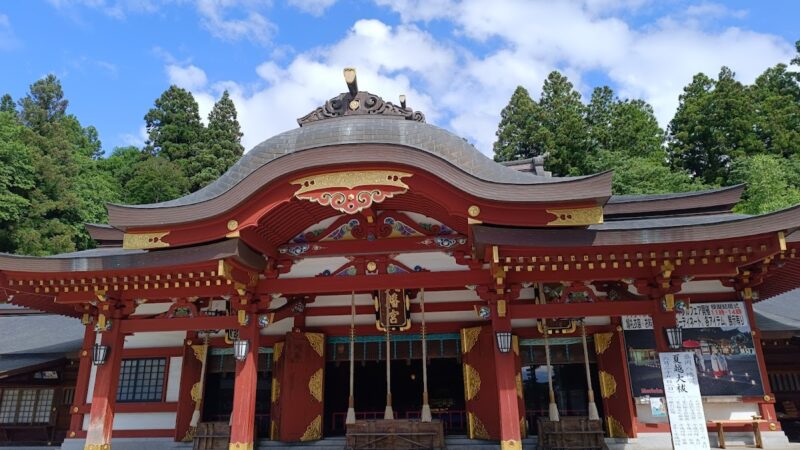
Since Iwate Gokoku Shrine is located within the grounds of Morioka Hachimangu Shrine, visitors can visit both together. Morioka Hachimangu Shrine is an ancient shrine said to have been founded in 1062 by Minamoto no Yoriyoshi, and is widely revered as the guardian shrine of Morioka.
Within the grounds of Morioka Hachimangu Shrine, in addition to the main hall, there are numerous subsidiary shrines and auxiliary shrines, and Iwate Gokoku Shrine is one of them. The vast grounds are covered with lush greenery, creating a tranquil environment for worship.
Shrine Buildings and Worship Facilities
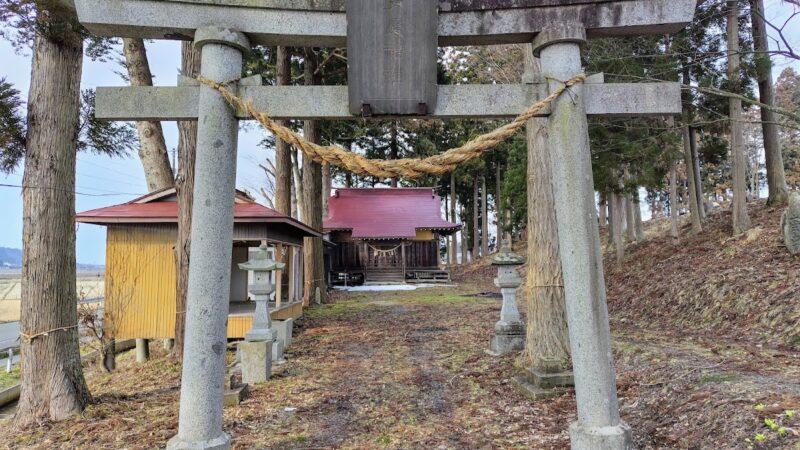
The shrine building of Iwate Gokoku Shrine is located in a corner of the Morioka Hachimangu Shrine grounds. Its simple yet solemn construction creates a dignified atmosphere befitting a shrine dedicated to war dead.
Worship is conducted in the same manner as at any other shrine. After passing through the torii gate and purifying oneself at the water basin, one should pray in front of the worship hall using the two bows, two claps, and one bow ritual. Within the shrine grounds, there are flower offering stands and memorial monuments where bereaved families and related parties can lay flowers.
Festivals and Annual Events
Iwate Gokoku Shrine holds various festivals throughout the year:
- Spring Grand Festival (Late April to Early May): An important festival held in conjunction with the cherry blossom season.
- Memorial Service (Around August 15th): A special festival coinciding with the anniversary of the end of the war.
- Autumn Grand Festival (September to October): A grand festival held during the autumn harvest season.
- Monthly Festival: A festival held regularly every month.
These festivals are attended by bereaved families and related organizations, who offer gratitude to the war dead and prayers for peace. General visitors are also welcome to attend.
Goshuin (Shrine Seal) Information
About the Issuance of Goshuin
Iwate Gokoku Shrine offers Goshuin (shrine seals). Goshuin (temple/shrine stamps) are cherished by many worshippers as proof of their visit and as a tangible representation of their connection with the shrine.
Goshuin are issued at the Morioka Hachimangu Shrine office. Since Iwate Gokoku Shrine is a subsidiary shrine of Morioka Hachimangu Shrine, the Morioka Hachimangu Shrine office is the point of contact for issuing goshuin.
Goshuin Design and Features
The Iwate Gokoku Shrine goshuin features the calligraphy and red seal of “Iwate Gokoku Shrine.” The simple yet powerful calligraphy expresses the solemn atmosphere of a shrine dedicated to war dead.
If you do not have a goshuincho (goshuin notebook), you can purchase one at the shrine office. Morioka Hachimangu Shrine also offers original goshuincho, which would make a wonderful souvenir.
Precautions When Receiving a Goshuin
Since a goshuin is proof of your visit, please be sure to complete your prayers before receiving it. Also, the offering fee for a Goshuin (temple/shrine stamp) is generally around 300 to 500 yen, but you can also offer whatever you feel is appropriate.
The shrine office may be crowded during festivals and events, so it is recommended to visit with plenty of time to spare. Especially crowded times are expected during the New Year holidays and long weekends.
Access Information and Visiting Guide
Basic Information
Location: 13-1 Hachiman-cho, Morioka City, Iwate Prefecture (Morioka Hachimangu Shrine grounds)
Postal Code: 020-0872
Telephone Number: 019-652-5211 (Morioka Hachimangu Shrine)
Visiting Hours: Grounds are freely accessible (Shrine office is generally open from 9:00 to 17:00)
Parking: Available (Use Morioka Hachimangu Shrine parking lot)
Access by Train
The nearest station is Senbokucho Station on the JR Tohoku Main Line and IGR Iwate Galaxy Railway. It takes about 10 minutes on foot from the station.
From Morioka Station, there are the following options:
- Take the JR Tohoku Main Line and get off at Senbokucho Station (1 stop from Morioka Station, about 3 minutes)
- Use the local bus: Take a bus bound for “Chabatake” or “Hachimancho” from Morioka Station Bus Terminal and get off at the “Hachimangu-mae” bus stop.
- Walk: About 25 minutes (about 2km) from Morioka Station
Access by Car
If using the Tohoku Expressway:
- About 15 minutes from “Morioka IC” via National Route 4
- About 20 minutes from “Morioka Minami IC” via Prefectural Road Morioka Ring Road
For car navigation, it is convenient to enter “Morioka Hachimangu” or the address “13-1 Hachimancho, Morioka City”.
Parking Information
Morioka Hachimangu has several free parking lots for visitors, with a total capacity of over 100 cars. However, it gets extremely crowded during the New Year’s visit period (January 1st to 3rd) and during events such as the annual festival, so we recommend using public transportation.
Nearby Tourist Attractions
The following tourist attractions are located near Iwate Gokoku Shrine and Morioka Hachimangu Shrine:
- Morioka Castle Ruins Park (Iwate Park): Approximately 15 minutes on foot, the site of the castle of the Nanbu clan of the Morioka Domain
- Morioka History and Culture Museum: A facility where you can learn about the history of Morioka
- Ishiwari-zakura (Stone-Splitting Cherry Tree): A natural monument in front of the Morioka District Court
- Morioka City Central Community Center (Former Iwate Prefectural Library): A Western-style building designated as an Important Cultural Property
- Konyamachi Ban’ya (Konyamachi Fire Station): A restored fire station from the Edo period
After visiting the shrine, why not explore these tourist attractions and experience the history and culture of Morioka?
Manners and Mindset for Visiting a Shrine
The Significance of Visiting a Gokoku Shrine
Iwate Gokoku Shrine is a shrine dedicated to those who sacrificed their precious lives for their country. When visiting, it is important to approach the shrine with feelings of gratitude and respect for the spirits of the fallen heroes.
Visiting a Gokoku Shrine is not about glorifying war, but rather an opportunity to reaffirm the preciousness of peace and renew the resolve to never let war happen again. Let us not forget that today’s peace is built upon the sacrifices of our ancestors, and let us visit with a grateful heart.
Etiquette for Visiting the Shrine
The etiquette for visiting Iwate Gokoku Shrine is the same as for most shrines:
- Bow before passing through the torii gate: Bow lightly before entering the shrine grounds.
- Purify yourself at the water basin: Purify your left hand, then your right hand, then your mouth.
- Walk along the edge of the path: The center is considered the path for the gods.
- Pray in front of the main hall: Pray using the two bows, two claps, and one bow method.
- Bow again upon leaving: When leaving the shrine grounds, turn around after passing through the torii gate and bow.
Clothing and Belongings
There are no specific dress code requirements, but as it is a sacred place, clean and subdued clothing is desirable. In summer, the sun is strong, so a hat or parasol is useful. In winter, be sure to dress warmly.
Those wishing to receive a Goshuin (shrine stamp) should bring their Goshuincho (stamp book). Also, it’s helpful to have some small change ready for offerings.
Photography at Iwate Gokoku Shrine
Photography is generally permitted on the shrine grounds, but consideration must be given to avoid disturbing other visitors or during ceremonies. Especially during solemn events such as memorial services, please refrain from taking photos or follow the instructions of the staff.
Posting on social media is also acceptable, but given the nature of a Gokoku Shrine, please avoid inappropriate posts and strive for respectful content.
Relationship with Bereaved Families Association and Related Organizations
Iwate Gokoku Shrine has close ties with related organizations, including the Iwate Prefecture Bereaved Families Association. The Bereaved Families Association is composed of bereaved families of war dead and conducts memorial services and activities to honor those who died in the war.
Every year around August 15th, the anniversary of the end of the war, a grand memorial service is held, hosted by the Bereaved Families Association, with many bereaved families and related parties in attendance. Although the number of attendees is decreasing year by year due to the aging population, efforts are being made to pass on the memories of the war to younger generations in order to prevent them from fading.
Other Gokoku Shrines and Shokonsha in Iwate Prefecture
In addition to the Iwate Gokoku Shrine, there are other facilities in Iwate Prefecture that enshrine war dead in various regions. Major examples include:
- Tono Shokonsha (Tono City)
- Hanamaki Gokoku Shrine (Hanamaki City)
- Ichinoseki Area Shokonhi (Ichinoseki City)
These facilities also enshrine the war dead of their respective regions and are carefully preserved by the local people.
Summary: The Significance of Visiting the Iwate Gokoku Shrine
The Iwate Gokoku Shrine is a shrine that has continued to enshrine war dead associated with Iwate Prefecture for over 150 years since its founding in 1869 (Meiji 2). Located within the grounds of Morioka Hachimangu Shrine in Hachiman-cho, Morioka City, it is an important memorial facility visited by many worshippers.
From the Meiji Restoration to the Greater East Asia War, tens of thousands of souls who sacrificed their precious lives for their country are enshrined here, and we must never forget that today’s peace is built upon their sacrifices. Through a visit, you can express your gratitude and remembrance for our ancestors and renew your commitment to lasting peace.
When you visit Morioka, please be sure to stop by Iwate Gokoku Shrine and offer a quiet prayer. Visiting Morioka Hachimangu Shrine in conjunction with Iwate Gokoku Shrine is also highly recommended. It will be a valuable opportunity to learn about history and truly appreciate the preciousness of peace.
The shrine is easily accessible, within walking distance of Senbokucho Station and also easily reachable by car. Goshuin (shrine stamps) are available, so why not get one as a memento of your visit? To gain a deeper understanding of Iwate Prefecture’s history and culture, we wholeheartedly recommend visiting Iwate Gokoku Shrine.