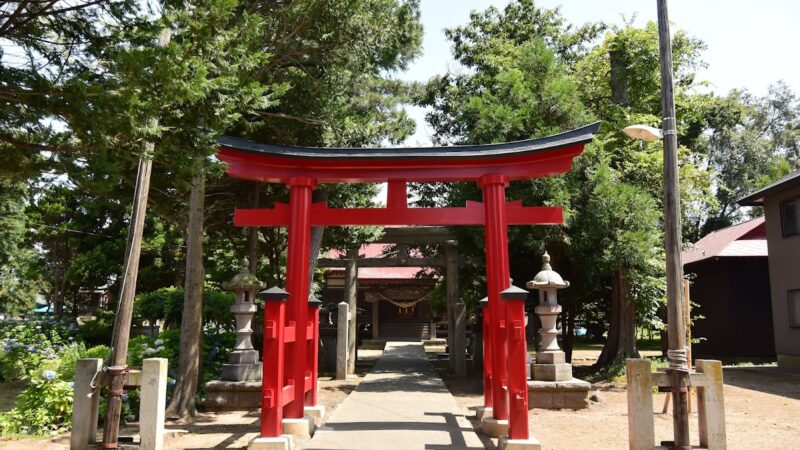
Takagi Hachimangu Shrine (Tsugaru City, Aomori Prefecture) Complete Guide | History, Goshuin (Shrine Seal), and Access Information
Takagi Hachimangu Shrine, located in Shimoaino, Morita-cho, Tsugaru City, Aomori Prefecture, is a historic shrine with a history dating back to the Edo period. It once attracted many worshippers as the eleventh stop on the Tsugaru Thirty-Three Kannon Pilgrimage, and continues to be revered as the local guardian deity. This article provides a detailed introduction to Takagi Hachimangu Shrine, including its history, goshuin (shrine seal), visiting information, and surrounding attractions.
History and Origins of Takagi Hachimangu Shrine
Founding and Beginning as Shimoaino Kannon-do
Takagi Hachimangu Shrine was established in 1665 (Kanbun 5). “Kanjo” means welcoming and enshrining a divided spirit of a deity or Buddha. Initially, it was called “Shimoaino Kannon-do” and was deeply rooted in the community as a religious facility with strong Buddhist influences.
During the Edo period, the Tsugaru Thirty-Three Kannon Pilgrimage was established in the Tsugaru region, attracting many pilgrims. Takagi Hachimangu Shrine was designated as the eleventh pilgrimage site, becoming a center of faith. This pilgrimage was an important religious event and a source of spiritual support for the people of the Tsugaru domain.
Enshrinement of the Nyoirin Kannon Statue
Takagi Hachimangu Shrine houses a statue of Nyoirin Kannon. Nyoirin Kannon is known as one of the Six Kannon, and is depicted as a Kannon Bodhisattva holding a wish-granting jewel and a Dharma wheel. This Kannon is believed to have the power to grant wishes and crush worldly desires, and has long been revered by the people.
Originating as Shimo-Aino Kannon-do, our shrine has received people’s prayers with this Nyoirin Kannon statue as its principal image. Kannon worship has been passed down through the ages and forms the foundation of the shrine’s faith today.
Transition to a Local Guardian Deity
The Meiji-era decree separating Shinto and Buddhism brought about a major transformation for temples and shrines throughout Japan. Takagi Hachimangu Shrine was no exception, changing its character from a Kannon hall to a Shinto shrine. However, the faith in Nyoirin Kannon never ceased, and it remains carefully preserved as a remnant of the syncretism of Shinto and Buddhism.
With the changing times, Takagi Hachimangu Shrine came to be positioned as the local guardian deity (ubusunagami) of the region. A ubusunagami is a deity that protects the land and safeguards the people who live there from before birth to after death. It is still deeply revered by the local people as a guardian deity for all aspects of life, including family safety, abundant harvests, and good health.
Deities and Benefits of Takagi Hachimangu Shrine
Main Deity
The main deity of Takagi Hachimangu Shrine is Hachiman-jin (Emperor Ojin). Hachiman, worshipped at Hachiman shrines throughout Japan, is one of Japan’s most representative deities, known as the god of military fortune and victory. He is also revered as the guardian deity of agriculture and fishing, and is believed to bring blessings of abundant harvests and maritime safety.
Fusion with Kannon Worship
At Takagi Hachiman Shrine, which has a history of syncretism between Shinto and Buddhism, a unique form of worship can be seen where Hachiman and Nyoirin Kannon are united. This is a characteristic of Japanese religious culture and evidence of the history of how Shinto and Buddhism harmonized to form popular beliefs.
Main Benefits
Takagi Hachimangu Shrine is believed to offer the following benefits:
- Family Safety: Protection of the health and peaceful life of all family members
- Abundant Harvest: Prayers for a bountiful harvest
- Good Health and Protection from Illness: Protection from illness and misfortune
- Business Prosperity: Development of business and prosperity
- Protection from Evil: Warding off misfortune during unlucky years and inviting good fortune
- Fulfillment of Wishes: The power of Nyoirin Kannon to grant various wishes
Goshuin (Shrine Seal) Information
About the Issuance of Goshuin
Takagi Hachimangu Shrine offers Goshuin. Goshuin are popular among many visitors as proof of worship and as a way to forge a connection with the shrine.
If you wish to receive a Goshuin, please speak to the shrine office after your visit. However, depending on the size of the shrine and whether or not there is a permanent attendant, the hours for receiving goshuin (stamps) may be limited, so it is recommended to check in advance.
About Goshuincho (Stamp Books)
Regarding the availability of original goshuincho, it is recommended to inquire directly with the shrine. If you are visiting other shrines in Tsugaru City, it is a good idea to bring your own goshuincho.
Manners for Receiving Goshuin
- First, complete your prayers before receiving the goshuin.
- Open your goshuincho and indicate the page where you would like it written.
- Prepare the offering fee (usually around 300 to 500 yen).
- Request using polite language.
- Wait quietly while the goshuin is being written.
Goshuin are not a stamp rally; they are important for forging a connection with the shrine. Treat them with respect.
Etiquette and Manners for Visiting Shrines
Basic Etiquette for Visiting Shrines
There are traditional manners for visiting shrines. When visiting Takagi Hachimangu Shrine, please follow these steps:
- Bow before the torii gate: A greeting before entering the sacred area.
- Purify yourself at the water basin: Purify your left hand, right hand, and mouth in that order, and wash your left hand last.
- Walk along the edge of the path: The center is considered the path of the gods.
- Bow twice, clap twice, and bow once in front of the main hall: Bow deeply twice, clap twice, and bow deeply once.
- Bow again at the torii gate when leaving: With gratitude.
Attire for Visiting
No special formal attire is required, but it is desirable to wear clothing that reflects the sacredness of the place. Avoid clothing that is excessively revealing or overly casual, such as sandals.
About Offerings
Offerings are a way of expressing gratitude to the gods. There are no set amounts, but please place the offering quietly in the offering box and be careful not to throw it.
About Offerings ## Highlights of the Shrine Grounds
Main Hall and Worship Hall
The main hall of Takagi Hachimangu Shrine boasts an architectural style that reflects the region’s history. While retaining characteristics of shrine architecture dating back to the Edo period, it has undergone repairs to adapt to changing times. In the worship hall, one can quietly join their hands and offer heartfelt prayers.
Subsidiary Shrines
Like many shrines, Takagi Hachimangu Shrine may also have small shrines and subsidiary shrines within its grounds. These enshrine local guardian deities or gods with specific blessings, and visiting them alongside the main deity allows for a deeper religious experience.
Natural Environment
Surrounded by the nature of Morita Town, Takagi Hachimangu Shrine displays beauty throughout the seasons. You can enjoy the fresh greenery of spring, the deep green of summer, the autumn foliage, and the snowy landscape of winter—each season offers a different facet of the shrine.
Annual Events and Festivals
Spring Grand Festival
Many shrines hold their grand festivals in the spring. At Takagi Hachimangu Shrine, it is believed that a spring festival is held, where local people gather to pray for a bountiful harvest and family safety. Please check with the shrine or local information for the festival dates.
Autumn Festival
Autumn is the harvest season, a time to offer thanks to the gods. The autumn festival expresses gratitude for the year’s harvest and prays for a good harvest in the coming year. In some areas, a portable shrine procession or offering ceremony may be held.
Annual Festival
The annual festival, the most important festival of the shrine, is held once a year on a date based on the shrine’s history. For the date of Takagi Hachimangu Shrine’s annual festival, please inquire directly or check local information.
Access Information
Location
Address: 152 Shimoaino Noda, Morita-cho, Tsugaru City, Aomori Prefecture
Access by Car
- Tohoku Expressway: Approximately 30 minutes from Namioka IC
- Tsugaru Expressway: Approximately 20 minutes from Goshogawara Kita IC
- From Aomori City Center: Approximately 40 minutes via National Route 101
- From Hirosaki City: Approximately 50 minutes via National Routes 7 and 101
There may be parking spaces for visitors at the shrine, but the number of spaces may be limited. Especially on festival days, congestion is expected, so it is recommended to visit with plenty of time to spare.
Access by Public Transportation
If using public transportation:
- JR Gonō Line: Get off at Mutsu-Morita Station, then take a taxi or walk.
- Bus: Tsugaru City’s community bus may be operating.
However, public transportation services are limited, so it is recommended to check the timetable in advance and plan your visit accordingly. Visiting by car is the most convenient option.
Other Attractions in Tsugaru City
When visiting Takagi Hachimangu Shrine, combining your visit with other tourist spots in Tsugaru City will make your trip even more fulfilling.
Takayama Inari Shrine
Takayama Inari Shrine, a representative tourist spot in Tsugaru City, is famous for its “Senbon Torii” (thousand torii gates). The sight of the vermilion torii gates winding along the hillside is breathtaking, possessing a unique beauty different from that of Fushimi Inari Taisha in Kyoto.
This shrine, dedicated to Inari Okami, is revered as a deity of abundant harvests, maritime safety, and business prosperity, attracting many worshippers. Grand events such as the Spring Festival are held here, making it an important center of faith in Tsugaru City.
Kamegaoka Ruins and Jomon Culture
Tsugaru City is home to many important Jomon period archaeological sites. The Kamegaoka Ruins, in particular, are a nationally designated historical site and are known as the site where the famous “Shakoki Dogu” (goggle-eyed clay figurine) was unearthed. It is a valuable place to learn about the culture of the late to final Jomon period.
Tsugaru City Agricultural Products Direct Sales Outlet
This direct sales outlet offers fresh local agricultural products and specialty goods. Tsugaru City is known as a rice-producing area and also boasts an abundance of fruits such as apples and melons. It’s a place to experience the local food culture.
Shichiri Nagahama Beach
A beautiful sandy beach facing the Sea of Japan, known as a famous spot for sunsets. In summer, it’s bustling with beachgoers, while in winter, it reveals the harsh face of the Sea of Japan. It’s a spot where you can feel the grandeur of nature.
Tourist Spots Around Tsugaru City
Dazai Osamu Memorial Museum “Shayokan” (Goshogawara City)
Located next to Tsugaru City, Goshogawara City is home to the Shayokan, the birthplace of the renowned author Dazai Osamu. It’s a valuable facility where you can learn about the magnificent Meiji-era architecture and the life of Dazai Osamu.
Tachineputa Museum (Goshogawara City)
This facility permanently displays gigantic Tachineputa floats, some reaching 23 meters in height. You can experience Aomori’s summer festival culture all year round.
Iwaki-yama Shrine (Hirosaki City)
This shrine, situated at the foot of Mount Iwaki, also known as Tsugaru Fuji, has long been revered as the guardian shrine of the Tsugaru region.
Tourist Spots in Aomori City
- Aomori Prefecture Tourism and Product Center ASPAM: A facility showcasing Aomori Prefecture’s tourist information and local products.
- Seikan Ferry Memorial Ship Hakkoda Maru: A former ferry that connected Aomori and Hakodate, now open to the public as a museum.
- A-FACTORY: A stylish complex facility with an attached cider brewery.
- Seikan Tunnel Memorial Museum: Learn about the history of the world’s longest undersea tunnel.
Tourist Spots in Hirosaki City
- Tsugaru Clan Neputa Village: A facility where you can experience the traditional culture of Tsugaru.
- Hirosaki Castle: A nationally designated historical site known for its cherry blossoms.
- Aomori Spring Ski Resort: Enjoy skiing and snowboarding in winter.
Suitable Time and Attire for Visiting
Charms of Each Season
Spring (April-June): Beautiful fresh greenery and pleasant weather. This is also a time when the Spring Grand Festival is likely to be held. Summer (July-August): A season of lush greenery and vibrant life. However, summers can get hot even in Aomori Prefecture, so heatstroke prevention is necessary.
Autumn (September-November): Beautiful autumn foliage and harvest season. The Autumn Grand Festival is held during this time, making it ideal for visiting the shrine to give thanks for the harvest.
Winter (December-March): The shrine amidst the snowy landscape is solemn and beautiful, but caution is needed regarding snow accumulation and icy roads. Take thorough precautions against the cold.
Clothing Advice
- Spring/Autumn: Wear layers. It can get chilly in the mornings and evenings.
- Summer: Wear breathable clothing. Don’t forget sun protection.
- Winter: Thick coat, gloves, hat, and other complete cold-weather gear are essential.
- Rainy Weather: Prepare an umbrella or rain gear. Please be careful as the shrine grounds can be slippery.
Guidelines for Visiting Takagi Hachimangu Shrine
Visit with a Quiet Heart
Shrines are sacred places. Take time away from the hustle and bustle of everyday life and cherish the time to quietly connect with the gods. Use your smartphone sparingly and be considerate of those around you.
Respect Local Culture
Takagi Hachimangu Shrine is a place of worship for the local people. Even as a tourist, please respect the local culture and customs and visit with humility.
Regarding Photography
Photography is generally permitted on the shrine grounds, but it may be prohibited inside the main hall or during religious ceremonies. If unsure, always check before taking pictures.
Don’t Forget Gratitude
Visiting a shrine is not only about making wishes, but also an opportunity to be grateful for the peace and tranquility of everyday life. Remember to be grateful to the gods and pray with a sincere heart.
History and Culture of Tsugaru City
As the Center of the Tsugaru Region
Tsugaru City is located in the central part of the Tsugaru Plain and has long been a thriving agricultural area. During the Tsugaru Domain era, it played an important role as a rice-producing region, and many temples and shrines were built there. Takagi Hachimangu Shrine also developed as a center of local faith within its history.
A Treasure Trove of Jomon Culture
Tsugaru City, with its many Jomon period ruins including the Kamegaoka site, is an important region for understanding ancient Japanese culture. The unique Jomon culture, exemplified by the Shakoki Dogu (goggle-eyed clay figurines), continues to influence the present day.
Agriculture and Faith
In Tsugaru City, an agricultural area centered on rice cultivation, faith praying for a bountiful harvest has been deeply rooted since ancient times. Prayers for family safety and a bountiful harvest at Takagi Hachimangu Shrine can be said to be a form of faith closely intertwined with the lives of people in this region.
Summary: Finding Peace of Mind at Takagi Hachimangu Shrine
Located in Tsugaru City, Aomori Prefecture, Takagi Hachimangu Shrine is a historic shrine that has attracted the faith of local people for nearly 360 years since its founding in 1665. As the eleventh stop on the Tsugaru Thirty-Three Kannon Pilgrimage and as the local tutelary deity, it has received the prayers of many.
Housing a statue of Nyoirin Kannon, Takagi Hachimangu Shrine, which preserves the history of Shinto-Buddhist syncretism, is believed to offer blessings for all aspects of life, including family safety, abundant harvests, and good health. Since you can also receive a Goshuin (shrine stamp), it is recommended for those who enjoy visiting shrines.
When visiting Tsugaru City, combining a visit to Takagi Hachimangu Shrine with other sights such as the Senbon Torii (thousand torii gates) of Takayama Inari Shrine and the Kamegaoka Ruins will make for a more fulfilling trip. Spending time quietly visiting Takagi Hachimangu Shrine, while feeling the history, culture, and natural beauty of Tsugaru, will surely be a precious experience that allows you to forget the hustle and bustle of everyday life.
Why not find inner peace and renewed vitality at Takagi Hachimangu Shrine, which displays different expressions in each of the four seasons?