Hirosaki Hachimangu Shrine (Aomori Prefecture) Complete Guide | History, Benefits, Goshuin (Shrine Seal), and Access Information
Hirosaki Hachimangu Shrine, located in Hirosaki City, Aomori Prefecture, is a historic shrine representing the Tsugaru region. It was relocated in 1612 (Keicho 17) as a guardian against evil influences from Hirosaki Castle, and has been a center of local faith for over 400 years. The main hall and Karamon gate, designated as important national cultural properties, are known as valuable cultural heritage that preserves the architectural style of the Momoyama period.
This article comprehensively introduces information you should know before visiting Hirosaki Hachimangu Shrine, from its history and architectural highlights to its benefits, goshuin (shrine seal), annual events, worship methods, and access information.
History and Origins of Hirosaki Hachimangu Shrine
From Founding to Relocation
The origins of Hirosaki Hachimangu Shrine date back to the early Heian period. It is said that Sakanoue no Tamuramaro prayed for victory here during his eastern expedition against the eastern barbarians, and the shrine has long been revered as a god of war. Initially, it was located in Oura-go Hachiman (present-day Hachiman, Iwaki-cho), in the castle town of Oura Castle.
In 1612, during the reign of Tsugaru Nobuhira, the second lord of the Hirosaki Domain, the shrine was moved to its current location to protect the northeast (demon’s gate) of Hirosaki Castle. In feng shui, the northeast is considered a direction where evil spirits easily enter, and the Hachiman shrine was positioned there for protection.
Status as the General Guardian Shrine of Tsugaru
After the relocation, Hirosaki Hachiman Shrine established itself as the most revered shrine within the domain, serving as the general guardian shrine of Tsugaru and Hirosaki. During the Edo period, all aspects of the shrine’s operation, including the execution of festivals, maintenance of the shrine buildings and grounds, and treatment of the shrine families, were covered by domain funds, demonstrating the generous protection of the Tsugaru Domain.
Under the Meiji era’s shrine ranking system, it was designated a prefectural shrine and continues to welcome many worshippers to this day, serving as a spiritual pillar of the region.
Deities Enshrined
The following deities are enshrined at Hirosaki Hachimangu Shrine:
- Emperor Ojin: The 15th Emperor, revered as Hachiman-sama, the god of military fortune and victory.
- Empress Jingu: The mother of Emperor Ojin, worshipped as the goddess of safe childbirth and child-rearing.
- Hime Okami: A collective name for the three Munakata goddesses, considered guardian deities of maritime safety and traffic safety.
These deities are believed to bestow a wide range of blessings, including military fortune, victory, safe childbirth, child-rearing, and traffic safety.
Architectural Beauty of a National Important Cultural Property
Features of the Main Hall
The main hall of Hirosaki Hachimangu Shrine, a representative example of shrine architecture that strongly retains the style of the Momoyama period, was designated a National Important Cultural Property in 1953. It is built in the Sangensha Nagare-zukuri style, and features intricate decorations down to the smallest detail.
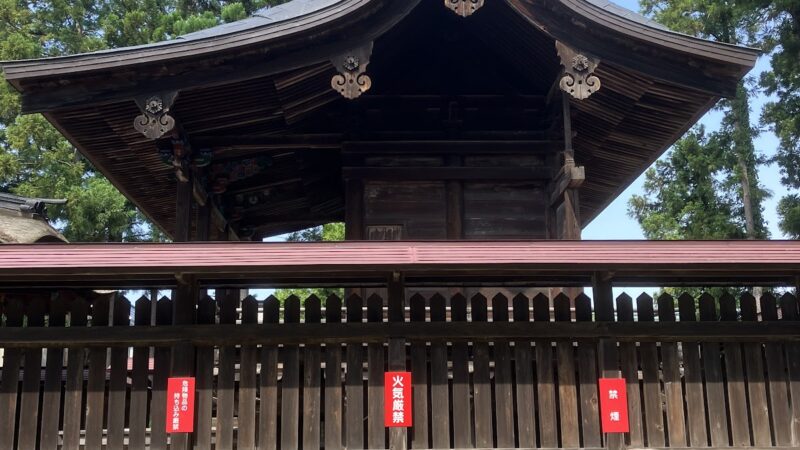
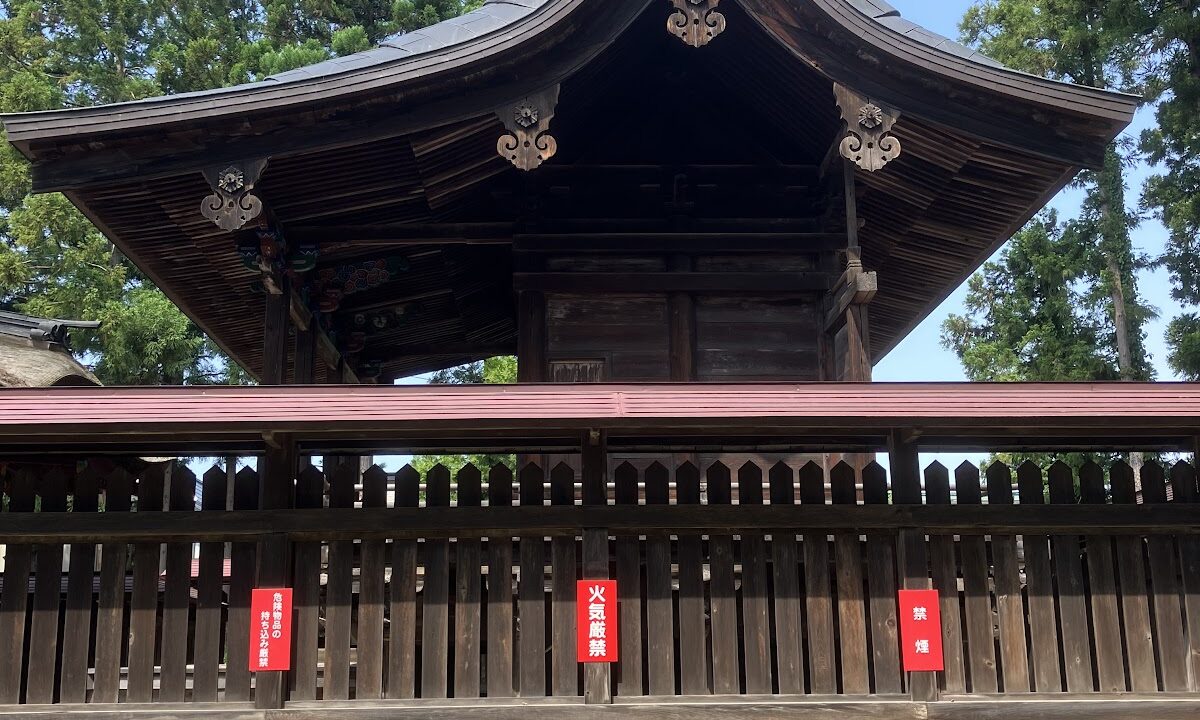
Particularly noteworthy is the design of the roof. The Karahafu (curved gable) of the eaves and the light curves of the four corners express the splendor and strength characteristic of Momoyama architecture. The carvings and coloring represent the pinnacle of the technology of the time, and it maintains its beautiful appearance even after more than 400 years.
The Magnificence of the Karamon Gate
The Karamon Gate, also designated as an Important Cultural Property along with the main hall, is a dignified gate welcoming worshippers. It is a four-legged gate with a copper roof. The detailed carvings are magnificent, and the designs of dragons, lions, flowers, and birds delight the eyes of visitors. Passing through the Karamon Gate deepens the solemn atmosphere of the sacred grounds, and one’s resolve to worship is heightened.
Highlights of the Shrine Grounds
Besides the main hall and Karamon Gate, there are other points of interest scattered throughout the shrine grounds:
- Haiden: A place where worshippers offer their prayers, enveloped in a solemn atmosphere.
- Temizuya: A place to purify oneself before worship; cleanse yourself with proper etiquette.
- Komainu: A pair of guardian lion-dogs protecting the shrine grounds, possessing a dignified presence that evokes a sense of history.
- Shamusho: Offers Goshuin (shrine stamps) and amulets, and accepts requests for prayers.
The shrine grounds are blessed with nature that changes with the seasons, displaying different expressions each time: cherry blossoms in spring, fresh greenery in summer, autumn leaves, and snowscapes in winter.
Benefits and Prayers at Hirosaki Hachimangu Shrine
Main Benefits
Hirosaki Hachimangu Shrine is believed to offer the following benefits through the divine virtues of its enshrined deities:
- Long-lasting Military Fortune and Good Luck in Competitions: Emperor Ojin is known as a god of war, and is believed to bring good fortune in competitions such as sports and examinations.
- Safe Childbirth and Child-rearing: Due to the divine virtues of Empress Jingu, many worshippers visit to pray for safe childbirth and the healthy growth of their children.
- Protection from Evil and Protection from Inauspicious Directions: Due to its history of being relocated to protect the northeast direction of Hirosaki Castle, it is deeply revered for protection from evil and protection from inauspicious directions.
- Traffic Safety: With the protection of Hime-no-Okami, car blessings and prayers for traffic safety are performed.
- Family Safety and Business Prosperity: As the guardian shrine of the region, you can pray for the happiness of your family and the prosperity of your business.
About Prayers
Hirosaki Hachimangu Shrine accepts various types of prayers. If you wish to receive a prayer service, advance reservations are required.
Reservations and Inquiries
- Phone: 0172-32-8719
- Reception Hours: 9:00 AM – 4:30 PM
Main Types of Prayers:
- First Shrine Visit (Omiyamairi)
- Shichi-Go-San (7-5-3) Ceremony
- Protection from Evil Spirits and Directional Misfortunes
- Prayer for Safe Childbirth
- Traffic Safety (Vehicle Purification)
- Prayer for Success in Exams and Academic Achievement
- Business Prosperity and Thriving
- Family Safety
Please confirm the prayer time and offering fee when making a reservation.
Goshuin (Shrine Seals) and Amulets
About Goshuin (Shrine Seals)
At Hirosaki Hachimangu Shrine, you can receive a Goshuin as proof of your visit. It is available at the shrine office and will be given either inscribed in your Goshuincho (seal book) or as a pre-printed seal.
The goshuin (temple/shrine stamp) features the calligraphy and red seal of “Hirosaki Hachimangu Shrine,” resulting in a simple yet dignified finish. The offering fee is approximately 300 to 500 yen, similar to most shrines (please check on the day as this may change).
When receiving a goshuin, the correct etiquette is to first complete your prayers at the shrine before visiting the shrine office.
Types of Amulets
Hirosaki Hachimangu Shrine offers a variety of amulets for different blessings:
- Amulet for Protection from Misfortune: For those in their unlucky year or seeking protection from disaster
- Amulet for Safe Childbirth: For pregnant women seeking safe childbirth and the health of mother and child
- Amulet for Traffic Safety: Also available in types that can be attached to cars or bicycles
- Amulet for Academic Success: For students taking exams or those seeking academic improvement
- Amulet for Victory: For success in sports, exams, and other competitive endeavors
- Amulet for Health: For recovery from illness and longevity
Amulets are available during the shrine office’s opening hours (9:00 AM to 4:30 PM).
Annual Events and Festivals
Hirosaki Hachimangu Shrine holds various festivals and events throughout the year.
Main Annual Events
New Year’s Events
- Saitansai (January 1st): The most important festival celebrating the New Year
- Genshisai (January 3rd): A festival praying for the prosperity of the Imperial Family and the peace and security of the nation
Spring Events
- Kinensai (February 17th): A prayer for a bountiful harvest and the development of industry
- Spring Grand Festival (April): An important festival celebrating the arrival of spring
Summer Events
- Oharai-shiki (June 30th): A Shinto ritual to purify and cleanse away the sins and impurities accumulated over the past six months
- Natsukoshi no Harae: Includes the ritual of passing through a ring of reeds, etc.
Autumn Events
- Autumn Grand Festival (September): The most grand festival of the year, including the procession of the portable shrine, etc.
- Shichi-Go-San (November): A ceremony to celebrate and give thanks for children’s growth.
Winter Events
- Great Purification Ceremony (December 31st): A ceremony to purify oneself of the sins and impurities of the past year and prepare for the New Year.
- New Year’s Eve Festival: A New Year’s Eve celebration.
For detailed dates and information on each event, please inquire via the official website or by phone.
Information for Visitors
Visiting Hours and Admission Fees
Visiting Hours
- Entry to the shrine grounds is generally free.
- Shrine office hours: 9:00 AM – 4:30 PM
- The issuance of Goshuin (shrine stamps), amulets, and prayer requests are only available during these hours.
Admission Fees
- Visiting the shrine is free.
- A donation is required for prayers (varies depending on the service).
Proper Worship Etiquette
By observing the correct worship etiquette at a shrine, you can offer a more heartfelt prayer:
- Bow before passing through the torii gate: Show respect before entering the sacred area.
- Purify your body and mind at the water basin:
- Take the ladle with your right hand and purify your left hand.
- Switch the ladle to your left hand and purify your right hand.
- Switch the ladle back to your right hand, receive water in your left hand, and rinse your mouth.
- Finally, stand the ladle upright and purify the handle.
- Worship in front of the main hall:
- Bow lightly before placing your offering.
- Ring the bell if there is one.
- Bow using the two bows, two claps, and one bow ritual.
- Bow again at the torii gate upon leaving: Express your gratitude to the gods.
Clothing and Items to Bring
Clothing
- Casual attire is acceptable, but clean and modest clothing is preferred.
- If you are receiving a prayer, slightly more formal attire is preferable.
- Take appropriate precautions against the cold or heat depending on the season (Aomori is especially cold in winter).
Items to Bring
- Bring your goshuincho (stamp book) if you wish to receive a goshuin (temple/shrine stamp).
- Small change for offerings.
- Camera (Photography of the main hall, Karamon gate, etc. is permitted, but please do so with moderation).
Access Information
Location
Hirosaki Hachimangu Shrine
〒036-8057 1-1-1 Hachiman-cho, Hirosaki City, Aomori Prefecture
Phone: 0172-32-8719
FAX: 0172-34-3469
Access by Train and Bus
From JR Hirosaki Station
- Walking: Approximately 25-30 minutes (approximately 2 km)
- Taxi: Approximately 10 minutes
- Route Bus: Immediately after alighting at “Hachiman-gu-mae” bus stop (Konan Bus)
If walking from Hirosaki Station, taking a route via Hirosaki Castle allows you to combine sightseeing. It’s approximately a 20-minute walk from Hirosaki Castle to Hirosaki Hachiman-gu Shrine.
Access by Car
From the Tohoku Expressway
- Approximately 20 minutes (approx. 12 km) from the Owani-Hirosaki Interchange
From Aomori Airport
- Approximately 40 minutes (approx. 30 km) by car
- Approximately 55 minutes by airport limousine bus to Hirosaki Station, then a short walk or taxi.
Parking
There is a parking lot for visitors on the shrine grounds. Since the number of spaces is limited, especially during busy periods such as New Year’s Day and the annual festival, please consider using public transportation.
Parking is free, but please refrain from long-term parking or using the parking lot for purposes other than worship.
Nearby Tourist Attractions
When visiting Hirosaki Hachimangu Shrine, we recommend also visiting nearby tourist attractions.
Hirosaki Castle and Hirosaki Park
Hirosaki Castle, located approximately 20 minutes on foot from Hirosaki Hachimangu Shrine, is a representative tourist attraction of the Tsugaru region. As one of the 12 remaining castle keeps, it is designated as a National Important Cultural Property, and is especially known as “Japan’s No. 1 Cherry Blossom Spot” during the spring cherry blossom season, when approximately 2,600 cherry trees bloom.
Saishoin Five-Storied Pagoda
The five-storied pagoda of Saishoin Temple, located near Hirosaki Hachimangu Shrine, is designated as a National Important Cultural Property as the only five-storied pagoda in the Tohoku region. Built in the early Edo period, its elegant form is impressive.
Zenrin-gai
This temple district, lined with 33 temples, offers a peaceful place for a stroll. It is a historic area developed as part of the formation of the Hirosaki Domain’s castle town.
Fujita Memorial Garden
This Japanese garden, created by Kenichi Fujita, a businessman from Hirosaki City, is a borrowed-landscape garden consisting of elevated and low-lying areas. Beautiful scenery can be enjoyed throughout the four seasons.
Points to Note When Visiting Hirosaki Hachimangu Shrine
Recommended Time to Visit
Spring (April-May)
- Perfect for combining with a visit to Hirosaki Castle during cherry blossom season
- The time when the Spring Grand Festival is held
- The weather is mild and easy to visit
Summer (June-August)
- Beautiful fresh greenery surrounds the shrine grounds
- You can observe Shinto rituals such as the Summer Purification Ceremony
Autumn (September-November)
- The Autumn Grand Festival is held, making it the busiest time of year
- The autumn leaves are beautiful, enhancing the atmosphere of the shrine grounds
- The season for Shichi-Go-San (children’s festival)
Winter (December-March)
- The shrine buildings amidst the snowscape are breathtakingly beautiful
- The shrine is crowded with many visitors during the New Year’s visit
- Be sure to dress warmly
Estimated Time Required
- Visiting the Shrine Only: 30-45 minutes
- Including the issuance of Goshuin (temple/shrine stamp) and amulets: 45 minutes to 1 hour
- If receiving prayers: 1 hour to 1 hour 30 minutes
- Including a stroll around the surrounding area: 2 hours to 3 hours
Regarding Photography
Photography is generally permitted on the shrine grounds, but please note the following:
- Refrain from taking photos in areas where photography is prohibited, such as inside the main hall.
- Be considerate of other worshippers.
- Refrain from taking photos during prayers.
- Avoid using tripods during crowded times.
- Post on social media with moderation.
The Cultural Value of Hirosaki Hachimangu Shrine
Architectural Historical Importance
The main hall and Karamon gate of Hirosaki Hachimangu Shrine are designated as important national cultural properties not simply because they are old. They occupy an important position in architectural history as valuable structures that strongly retain the Momoyama period shrine architectural style.
They are excellent examples demonstrating the high level of shrine architecture in the Tohoku region during the early Edo period, and are preserved as cultural heritage that conveys the technology and aesthetic sense of that time to the present day.
The Center of Faith in the Tsugaru Region
Hirosaki Hachimangu Shrine is not merely a tourist spot; for over 400 years, it has remained the center of faith for the people of the Tsugaru region. From the Edo period to the present day, it has served as a spiritual pillar of the community, embodying people’s joys, sorrows, and wishes.
The sight of locals visiting Hirosaki Hachimangu Shrine at various milestones in their lives—such as first shrine visits for newborns, Shichi-Go-San (a traditional rite of passage for children), exorcisms, and weddings—demonstrates that this shrine is not merely a cultural asset, but a living place of faith.
Summary of Visiting Hirosaki Hachimangu Shrine
Hirosaki Hachimangu Shrine is a valuable shrine in terms of history, architecture, and faith. The main hall and Karamon gate, designated as important national cultural properties, convey the architectural beauty of the Momoyama period, deeply moving visitors.
The historical background of its relocation as a guardian against evil influences from Hirosaki Castle, its status as the general guardian shrine of Tsugaru, and the fervent faith of the local people that continues to this day—all of these factors combine to make Hirosaki Hachimangu Shrine a special place that transcends mere tourist attractions.
Hirosaki Hachimangu Shrine is a valuable shrine in terms of history, architecture, and faith. The main hall and Karamon gate, designated as important national cultural properties, convey the architectural beauty of the Momoyama period, leaving a profound impression on visitors.
The historical background of its relocation as a guardian of the northeast direction of Hirosaki Castle, its status as the general guardian shrine of Tsugaru, and the fervent faith of the local people that continues to this day—all of these elements combine to make Hirosaki Hachimangu Shrine a special place beyond mere tourist destinations.
When you visit Hirosaki, be sure to stop by Hirosaki Hachimangu Shrine and experience its majestic atmosphere and beautiful architecture. The shrine grounds display different expressions with each season—cherry blossoms in spring, lush greenery in summer, vibrant autumn leaves, and snowy winter landscapes—so you’re sure to discover something new with every visit.
Why not spend some time at Hirosaki Hachimangu Shrine, finding peace of mind through prayer, expressing gratitude to the gods, and gaining the strength to take a new step forward?