Atago Shrine (Naka City, Ibaraki Prefecture) Complete Guide | History, Benefits, and Access Information
Atago Shrine, located in Naka City, Ibaraki Prefecture, is a shrine deeply rooted in the local community. Situated in Kadobe, Naka City, this shrine has long been revered as a deity of fire prevention. This article provides a detailed introduction to Atago Shrine, including its history, enshrined deities, benefits, visiting information, and nearby tourist attractions.
Basic Information on Atago Shrine (Naka City)
Location: 3720 Kadobe, Naka City, Ibaraki Prefecture
Main Deity: Hinokagutsuchi-no-kami
Founding: Details unknown (estimated to be before the Edo period)
Shrine Rank: Village Shrine
Annual Festival Day: Local festivals are held throughout the year
Atago Shrine is located in the Kadobe district of Naka City and is cherished as the center of faith for local residents. While there are several Atago Shrines in Ibaraki Prefecture, the one in Naka City has followed its own unique history as a community-oriented shrine.
Deities and Benefits of Atago Shrine
About Hinokagutsuchi-no-kami
Hinokagutsuchi-no-kami, the main deity of Atago Shrine, is the god of fire appearing in Japanese mythology. According to the Kojiki and Nihon Shoki, Kagutsuchi-no-Kami is a deity born as the child of Izanagi-no-Mikoto and Izanami-no-Mikoto, and has been revered as the god who controls fire.
Kagutsuchi-no-Kami is also known as “Homusubi-no-Kami” and is worshipped as a god who brings the blessings of fire and protects people from fires.
Main Benefits
Fire Prevention: The most representative benefit, protecting houses and property from fire.
Household Safety: As the god of fire, he watches over the safety of the home.
Business Prosperity: Protection for occupations that handle fire (food service, blacksmithing, etc.).
Exorcism: Warding off disasters and bringing about a peaceful life.
Abundant Harvest: Praying for agricultural development and a bountiful harvest.
From the Edo period to the Meiji period, fire was one of the greatest threats to people’s lives. In those days, when wooden buildings were the norm, a fire would spread rapidly, often resulting in the destruction of entire settlements. Therefore, Atago Shrines, dedicated to the god of fire prevention, were deeply revered throughout Japan.
History and Origins of Atago Shrine
Founding History
The exact founding date of Naka City’s Atago Shrine is unclear due to the loss of historical records, but records confirm that it already garnered local devotion during the Edo period. Atago worship originated at Mount Atago in Kyoto and spread throughout Japan.
Within Ibaraki Prefecture, Atago Shrines in Mito City and Kasama City are particularly famous, but Naka City’s Atago Shrine is also an important shrine that has walked hand-in-hand with the history of the region.
Atago Worship in the Edo Period
During the Edo period, Atago worship spread to a wide range of people, from the samurai class to commoners. In urban areas, where fires were particularly frequent, the worship of Atago Gongen (the name of Atago Shrine during the period of syncretism of Shinto and Buddhism) as a god of fire prevention was widespread.
The area around Naka City was part of the Mito Domain, and it is believed that Atago Shrine played an important role during the Edo period as a place to pray for regional safety and abundant harvests. In the Kadobe district, which was an agricultural area, it was revered not only as a fire-prevention deity but also as a guardian deity of agriculture.
Changes after the Meiji Restoration
With the Meiji-era separation of Shinto and Buddhism, Atago Shrines throughout Japan were reorganized as Shinto shrines. Similarly, Atago Shrine in Naka City eliminated Buddhist elements and adopted a purely Shinto form.
Even as modernization progressed, the faith of the local residents continued uninterrupted and has been carefully preserved to this day. Currently, it is maintained and managed by local parishioners, and festivals are held throughout the year.
Guide to Atago Shrine Grounds
Features of the Shrine Buildings and Grounds
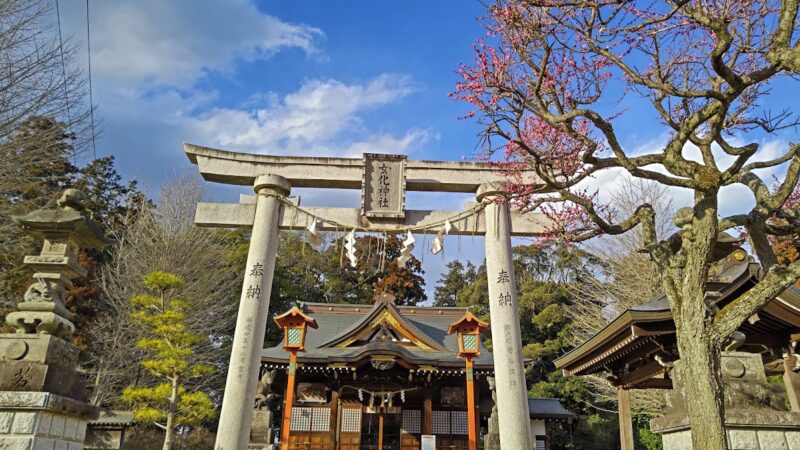
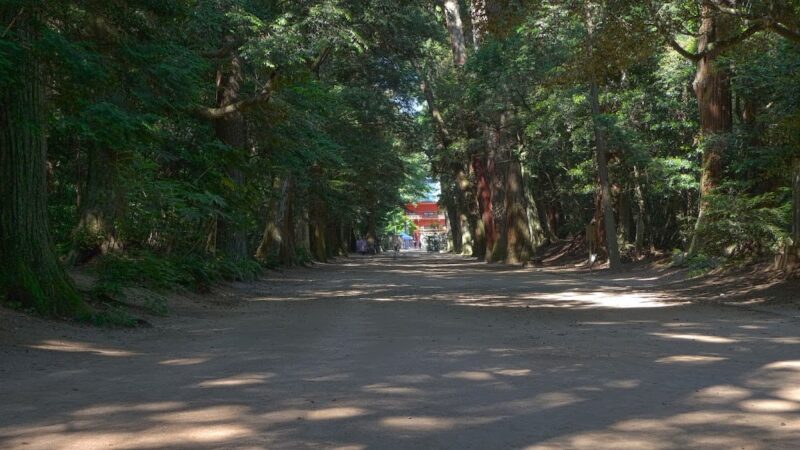
Atago Shrine in Naka City is located in a quiet residential area, possessing a tranquil atmosphere. The grounds feature a main hall and a worship hall, creating a simple yet solemn space.
Torii Gate: The torii gate, marking the entrance to the sacred area, guides worshippers into a sacred space.
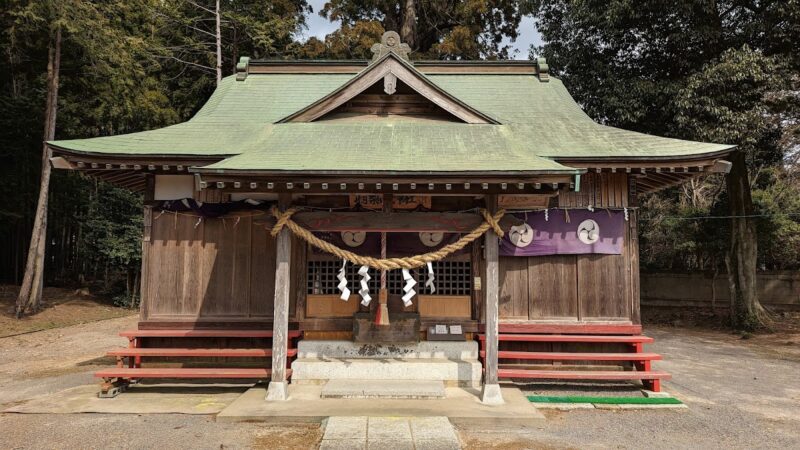
Worship Hall: A place where worshippers offer prayers. It features traditional wooden architecture.
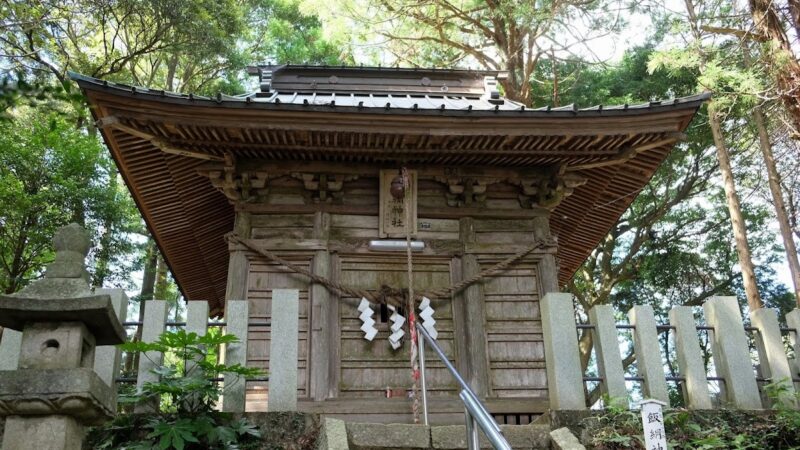
Main Hall: The most sacred place where the enshrined deity resides.
Shrine Precincts: Small shrines worshipped in the local area may be located around the main hall.
Etiquette for Worship
When visiting Atago Shrine, please observe the following basic etiquette.
- Bow before passing through the torii gate: As a sign of respect before entering the sacred area.
- Purify yourself at the water basin: Purify your left hand, then your right hand, then your mouth.
- Avoid walking in the center of the approach to the shrine: The center is considered the path of the gods.
- Bow twice, clap twice, and bow once in front of the main hall: Basic Shinto worship etiquette.
- Bow again at the torii gate upon leaving: With gratitude.
Annual Events and Festivals
Atago Shrine holds various festivals throughout the year. These are traditional local events, with participation from parishioners and local residents, forming a community centered around the shrine.
Main Annual Events
New Year’s Day Festival (January 1st): A festival to pray for happiness and peace in the new year.
Spring Festival: Prayers for a bountiful harvest and the safety of the community as spring arrives.
Summer Purification Ceremony: A Shinto ritual to cleanse away the impurities accumulated over the past six months.
Autumn Festival: A prayer for gratitude for the harvest and for a bountiful harvest in the coming year.
Year-End Purification Ceremony: A ritual to cleanse away the impurities of the year and prepare for a pure welcome in the new year.
Specific dates may change depending on the year, so it is recommended to check with local information or shrine officials before visiting.
Access Information
Access by Public Transportation
Nearest Station: JR Suigun Line “Urizakura Station” or “Shizu Station”
The shrine is a considerable distance from the station on foot, so taking a taxi is recommended. It’s approximately a 10-15 minute taxi ride from Urizura Station.
Regarding bus routes, Naka City operates a community bus service, but the number of services is limited, so it is recommended to check the timetable in advance.
Access by Car
Joban Expressway: Approximately 15 minutes from Naka IC
National Route 118: Head north from Mito, or south from Hitachiomiya
Parking: There is parking space on the shrine grounds or nearby, but it may be crowded during festivals.
If using a car navigation system, searching for “3720 Kadobe, Naka City, Ibaraki Prefecture” is convenient.
Map and Landmarks
The Kadobe area is located slightly northwest of the center of Naka City and is a quiet area with sprawling rural scenery. It can be accessed via National Route 349 or prefectural roads.
Naka City and Surrounding Tourist Attractions
When visiting Atago Shrine, combining your visit with a tour of Naka City and surrounding tourist attractions will make your trip even more fulfilling.
Tourist Attractions in Naka City
Shizumine Furusato Park: A famous cherry blossom viewing spot with approximately 2,000 double-flowered cherry trees. The best time to visit is from late April to early May each year.
Naka General Park: A large, comprehensive park with sports facilities and walking trails.
Ichinoseki Reservoir Waterfront Park: A park rich in nature where you can enjoy the scenery of each season.
Naka City Historical and Folk Museum: A facility where you can learn about the history and culture of the region.
Tourist Attractions in Neighboring Cities and Towns
Mito City: Kairakuen Garden (one of Japan’s three most famous gardens), Kodokan, Mito Art Museum, etc.
Hitachinaka City: Hitachi Seaside Park (famous for nemophila and kochia)
Hitachiota City: Ryujin Suspension Bridge, Nishiyama-so (retirement residence of Tokugawa Mitsukuni)
Kasama City: Kasama Inari Shrine, Kasama ware pottery kilns, Atago-yama (Atago Shrine in Kasama City)
Comparison with Atago Shrines in Ibaraki Prefecture
There are several Atago Shrines in Ibaraki Prefecture, each with its own unique characteristics.
Atago Shrine in Kasama City
Atago Shrine in Izumi, Kasama City, is nationally known as one of Japan’s three major fire prevention shrines. Located on the summit of Mount Atago (elevation 305m), this historic shrine is said to have been founded in 806 AD. It is also famous for its Tengu legend and attracts many worshippers.
Atago Shrine in Mito City
Atago Shrine, located in Atago-cho, Mito City, is said to have originated in 938 AD when Taira no Kunika invited a divided spirit from Atago Shrine in Kyoto. Known as a shrine built on a burial mound, it also has the alternative names “Mishima-yama” and “Biwa-yama.”
Characteristics of Atago Shrine in Naka City
Atago Shrine in Kadobe, Naka City, is smaller in scale compared to these famous Atago Shrines, but is characterized by its continued preservation of a deeply rooted local faith. Because it is not a tourist destination, it is a quiet and peaceful shrine where worshippers can be cherished by the local people.
Guidelines for Visiting Atago Shrine
Appropriate Attire for Visiting
While there are no strict dress code regulations for visiting shrines, it is desirable to dress appropriately, keeping in mind that it is a sacred place.
- Clean and presentable clothing
- Avoid revealing clothing
- Remove hats before passing through the torii gate
- Shoes are preferable to sandals
Manners During Visit
- Be quiet within the shrine grounds
- Take photographs only where permitted
- Always take your trash with you
- Treat the sacred area with respect
- Be considerate of other visitors
Meaning of Offerings
Offerings express gratitude to the gods. There are no set amounts; offer an amount that reflects your feelings. Place your offering quietly in the offering box and pray using the two bows, two claps, and one bow ritual.
History and Culture of Naka City
Origins of Naka City
Naka City is a relatively new city, formed in 2005 (Heisei 17) through the merger of Naka Town and Urizura Town. However, the history of this region is ancient, with archaeological sites dating back to the Jomon period having been discovered.
Naka Region in the Edo Period
During the Edo period, the area that is now Naka City was part of the Mito Domain and developed primarily through agriculture. It also functioned as a key logistics hub, utilizing the Mito Highway and the Kuji River for water transport. The Kadobe district was also an agricultural area, with rice cultivation as its main focus.
Modern Naka City
Modern Naka City is a region where agriculture and industry have developed in a balanced manner. In particular, the double cherry blossoms at Shizumine Furusato Park have been selected as one of Japan’s “Top 100 Cherry Blossom Viewing Spots,” making it a notable tourist resource.
Nationwide Spread of Atago Worship
Origin of Atago Worship
The main shrine of Atago worship is Atago Shrine in Ukyo-ku, Kyoto City. Located on the summit of Mount Atago (elevation 924m), this shrine has been worshipped as a god of fire prevention since ancient times.
Nationwide Spread
From the Heian period to the Middle Ages, Atago worship spread throughout Japan. Especially during the Edo period, branch shrines of Atago Shrine were established in various locations, particularly in urban areas where fires were frequent.
In Ibaraki Prefecture, several Atago Shrines were founded during the Mito Domain era, attracting local devotion. It is believed that the Atago Shrine in Naka City also originated within this trend.
Modern Significance as a God of Fire Prevention
Fire Risk in Modern Times
In modern times, large-scale fires like those of the Edo period have decreased due to improvements in fire safety equipment and building standards. However, the risk of fire has not completely disappeared.
- Residential fires
- Forest fires
- Factory fires
- Electrical fires
These fire risks still exist today, and faith in the god of fire prevention remains meaningful.
Raising Disaster Prevention Awareness
Visiting Atago Shrine is not merely an act of faith, but also an opportunity to raise disaster prevention awareness. Visiting Atago Shrine can be seen as a catalyst for reviewing fire preparedness and considering actions to protect family safety.
Local Communities and Atago Shrine
The Parishioner System and Community Bonds
Atago Shrine in Kadobe, Naka City, has been protected by local parishioners. The parishioner system forms the foundation of the local community centered around the shrine.
The shrine is maintained through the cooperation of parishioners in preparing for festivals, cleaning the grounds, and maintenance. This is not merely a religious activity, but also an important social activity that deepens community bonds.
Passing on Tradition
In today’s society, characterized by a declining birthrate and an aging population, passing on local traditions to the next generation is a major challenge. The festivals and events at Atago Shrine provide children with valuable opportunities to experience local history and culture.
Things to Enjoy After Visiting the Shrine
Naka City’s Cuisine
Naka City boasts unique local cuisine.
Hitachi Aki Soba: A representative buckwheat variety from Ibaraki Prefecture. It is also cultivated in and around Naka City.
Local Vegetables: Fresh vegetables can be purchased at direct sales outlets.
Dried Sweet Potatoes: A famous specialty product of Ibaraki Prefecture.
Taking a Break at a Roadside Station
There are several roadside stations around Naka City where you can purchase local agricultural products and specialty goods.
Michi-no-Eki Katsura: A roadside station located in Hitachiomiya City, offering a wide variety of fresh local vegetables and processed goods.
Summary: The Charm of Atago Shrine (Naka City)
Located in Kadobe, Naka City, Ibaraki Prefecture, Atago Shrine, though not large in scale, is a precious shrine that continues to preserve deeply rooted local faith. Dedicated to the deity Hino Kagutsuchi, and known for its blessings of fire prevention and family safety, this shrine has been a spiritual center for local people since the Edo period.
The charm of Atago Shrine in Naka City lies in the simple yet precious experience of calmly praying in its tranquil grounds, wishing for daily safety and peace.
When visiting Ibaraki Prefecture, please consider visiting not only famous tourist spots but also these small, community-oriented shrines. There, you will find the true face of the region, something not found in tourist guides.
We hope that through your visit to Atago Shrine, you will be able to experience the history and culture of Naka City and feel the form of faith that the local people have carefully preserved. May the god of fire prevention bless you and your family.