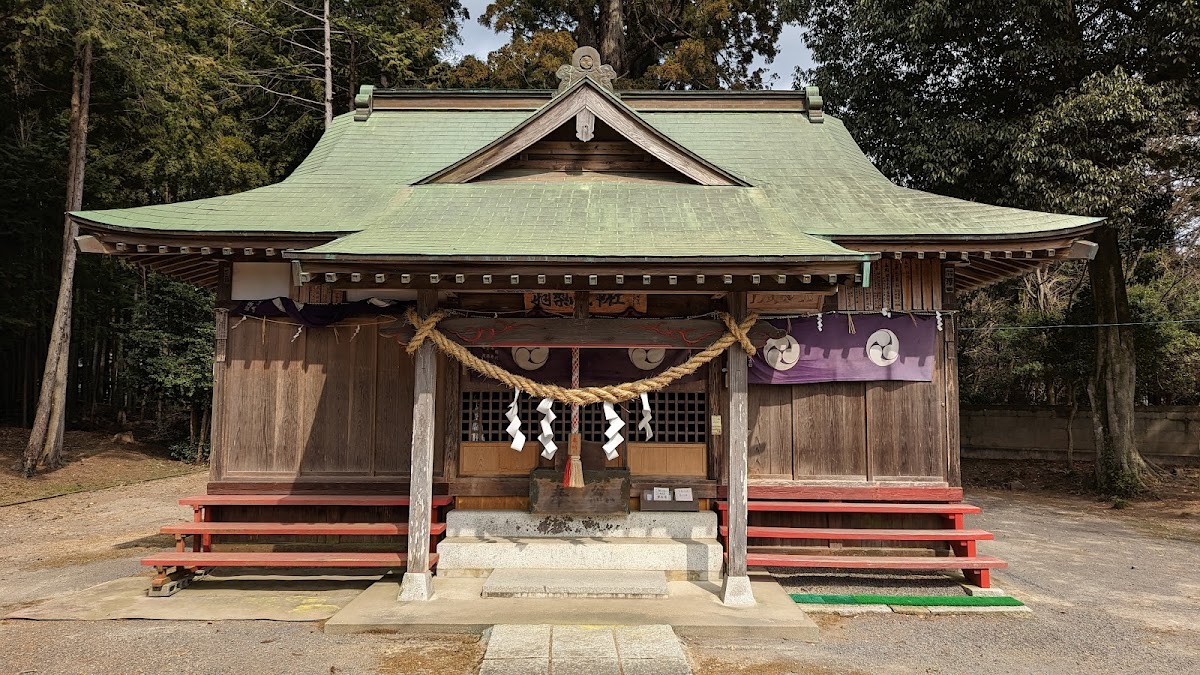
Complete Guide to Hanashiyama Shrine (Kasama City, Ibaraki Prefecture) | Goshuin (Shrine Seal), Sacred Tree, History, and Access Information
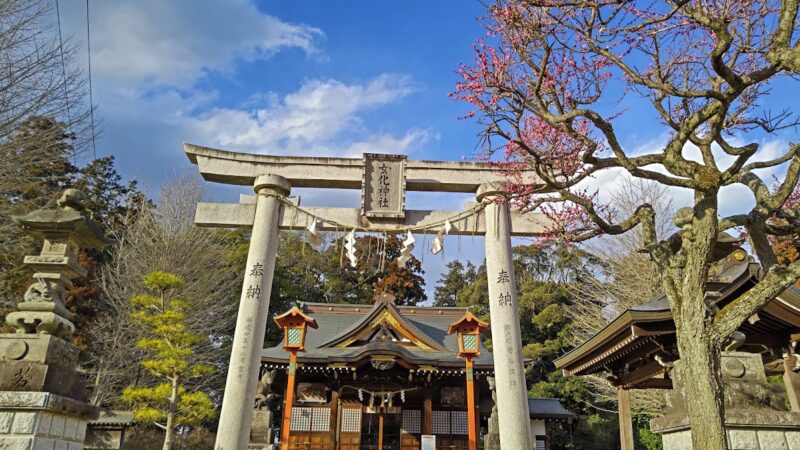
Hanashiyama Shrine, located in Kamigo, Kasama City, Ibaraki Prefecture, is a venerable shrine that has long been revered as a Shikinaisha (shrine listed in the Engishiki) of Hitachi Province. It enshrines Konohanasakuya-hime no Mikoto and is known for its blessings of matchmaking, marital harmony, and prosperity of descendants. This article provides a detailed introduction to Hanashiyama Shrine, including its history, highlights, goshuin information, and access methods.
About Hanashiyama Shrine
Hanashiyama Shrine is located at 3161-1 Kamigo, Kasama City, Ibaraki Prefecture. It is a prestigious ancient shrine listed as a Shikinaisha (minor shrine) of Ibaraki County, Hitachi Province. Its former shrine rank was Gosha (village shrine), and it has a long history as a center of local faith.
Currently, it is located at the foot of Mt. Hanashiyama, but it is said that the shrine building was originally located on the mountainside of Mt. Hanashiyama. The shrine came to be called “Hanashiyama Shrine” after Hanashiyama Mountain, which was known as a famous cherry blossom viewing spot.
Deity Enshrined: Konohanasakuya-hime
The deity enshrined at Hanashiyama Shrine is Konohanasakuya-hime. Konohanasakuya-hime is a beautiful goddess who appears in Japanese mythology and is also known as the goddess of Mount Fuji.
Konohanasakuya-hime was born as the daughter of the mountain god, Oyamatsumi-no-kami, and became the consort of Ninigi-no-Mikoto, who descended from heaven. Because she became pregnant overnight, Ninigi-no-Mikoto became suspicious of her, but the myth remains that she set fire to the birthing hut and safely gave birth to three princes inside, thus proving her innocence.
From this myth, Konohanasakuya-hime is believed to possess divine virtues such as safe childbirth, fertility, matchmaking, and protection from fire, and is worshipped throughout Japan.
History of Hanashiyama Shrine
Origin of Founding
Hanashiyama Shrine is said to have been founded in 664 AD (the 3rd year of Emperor Tenji’s reign). According to shrine tradition, it began in the Asuka period when a shrine dedicated to Konohanasakuya-hime was built on the mountainside of Hanashiyama, a mountain rich in cherry blossoms.
At that time, Hanashiyama was known as a famous cherry blossom viewing spot, and it is said that in spring, the entire mountain presented a beautiful landscape dyed in the color of cherry blossoms. It is thought that Konohanasakuya-hime was enshrined in this place because she is a goddess as beautiful as a cherry blossom.
Status as a Shikinaisha Shrine
The Engishiki Jinmyocho, compiled during the Heian period, lists the shrine as “Hanashi Shrine, Ibaraki District, Hitachi Province,” confirming its historical significance as a shrine recognized by the imperial court since ancient times.
Furthermore, the Nihon Sandai Jitsuroku contains multiple mentions of the Hanashi Shrine. Records indicate that on August 28, 870 (Jōgan 12), the shrine was promoted from Junior Fifth Rank, Lower Grade to Junior Fifth Rank, Upper Grade, and then on September 7, 885 (Ninna 1), it was granted Senior Fifth Rank, Lower Grade. These records are important historical documents demonstrating the importance the Hanashiyama Shrine held in the eyes of the imperial court during the Heian period.
Changes from the Medieval Period Onward
While detailed records from the medieval period onward are scarce, the shrine survived the turmoil of the Sengoku period and was deeply revered as a local guardian shrine during the Edo period. It is said that in the early modern period, it received patronage from the Kasama Domain, and that the shrine buildings were repaired.
Following the Meiji-era separation of Shinto and Buddhism, the shrine was ranked as a local shrine under the modern shrine ranking system. It continues to attract the faith of local people, and seasonal festivals are held there.
Highlights of the Shrine Grounds
The Sacred Cedar Tree
The greatest highlight of Hanashiyama Shrine is the sacred cedar tree, which is designated as a Kasama City Designated Cultural Property. This cedar tree has the following characteristics:
- Trunk Circumference at Eye Level: 7.58 meters
- Tree Height: 39.20 meters
- Tree Age: Estimated over 500 years
Notably, while it is a massive tree with a trunk circumference of 8 meters up to about 4 meters from the ground, it splits into two trunks (forks) above that point, creating a unique tree shape. This unusual shape, combined with the spiritual power of Hanashiyama Shrine, is worshipped as a symbol of matchmaking, marital harmony, prosperity of descendants, and longevity.
The tree’s split trunk is likened to a married couple embracing, attracting many worshippers praying for good relationships and marital harmony. A constant stream of people can be seen clasping their hands together in front of the sacred tree, praying for good fortune in love and family harmony.
Main Hall and Shrine Architecture
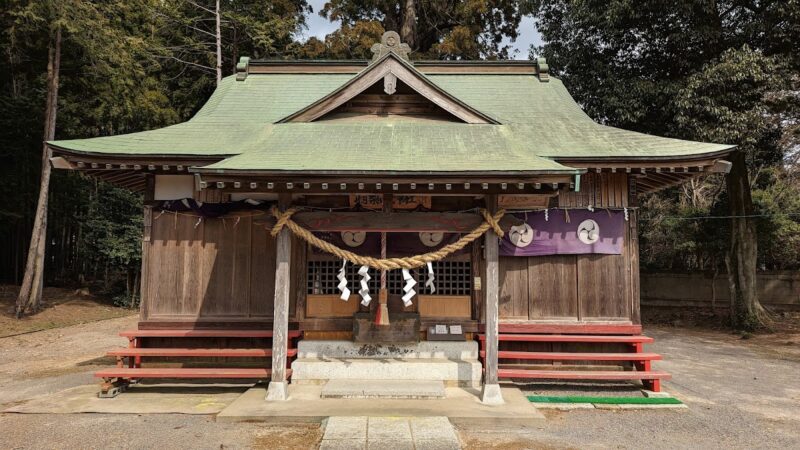
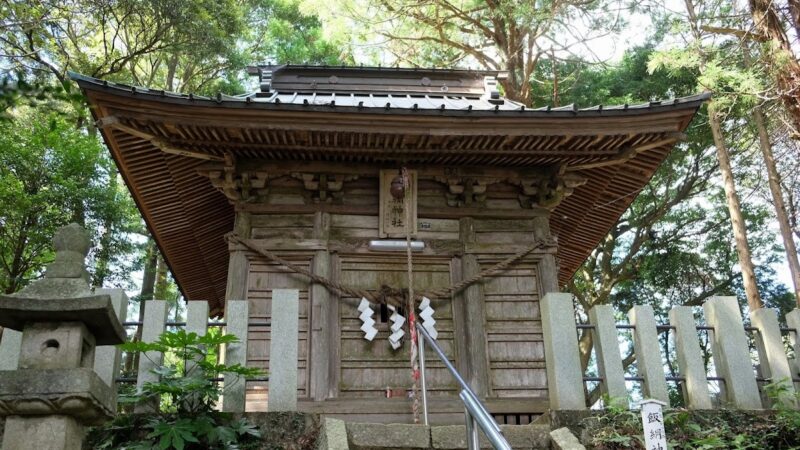
The main hall of Hanashiyama Shrine is built in the traditional style of shrine architecture. While not large in scale, it is meticulously maintained, reflecting the deep faith of the local people.
Around the shrine, old votive plaques and ema (votive tablets) can be seen, testifying to the many worshippers who have visited throughout its long history.
Natural Environment of the Shrine Grounds
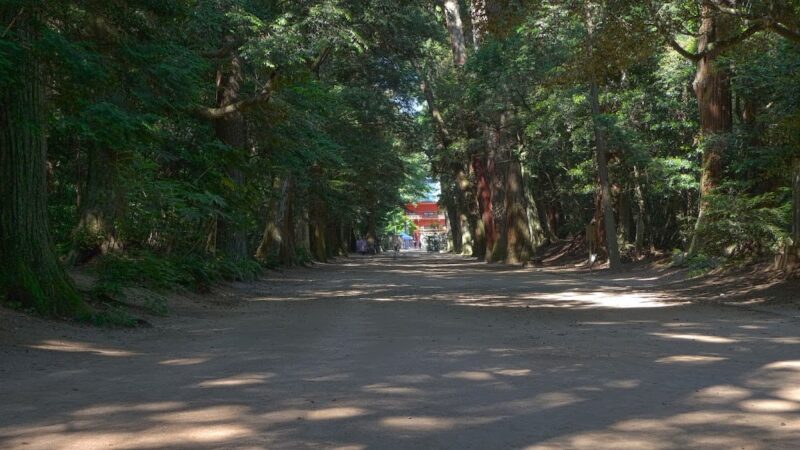
Located at the foot of Mount Hanashiyama, the shrine grounds are surrounded by abundant nature. Ancient trees, including the sacred cedar tree, cover the grounds, creating a sacred atmosphere.
You can enjoy the beauty of nature throughout the seasons: cherry blossoms in spring, fresh greenery in summer, autumn leaves in fall, and a serene snowscape in winter. Especially during cherry blossom season, which is the origin of the shrine’s founding, the surrounding cherry blossoms create a beautiful landscape.
Goshuin (Shrine Seal) Information
About the Issuance of Goshuin
Goshuin are available at Hanashiyama Shrine. Goshuin are important mementos that forge a connection with the shrine, and many people receive them as proof of their visit.
The goshuin features the name “Hanashiyama Shrine” written in ink and stamped with the shrine’s seal. It is a simple yet dignified goshuin.
Goshuin Reception Hours and Location
Goshuin are generally issued during daytime visiting hours. However, since there may not always be a permanently staffed shrine office, it is recommended to call ahead to confirm if you wish to be sure to receive a goshuin.
During special periods such as the New Year holidays, staff may be stationed to handle goshuin requests. It is also said that it is relatively easier to receive a goshuin during the New Year preparation period.
About the Goshuincho (Stamp Book)
Information regarding the original Goshuincho of Haneyama Shrine is limited. You can bring a standard Goshuincho and have it stamped.
Many people undertake the “Hitachi Province Shikinaisha Pilgrimage,” visiting shrines listed in the Engishiki (ancient Japanese legal code) within Ibaraki Prefecture, and Haneyama Shrine holds an important position as one of the 28 shrines listed in the Engishiki.
Benefits and Faith
Main Benefits
At Haneyama Shrine, the following benefits are believed to be available due to the divine power of the enshrined deity, Konohanasakuya-hime, and the sacred tree.
- Matchmaking: For those seeking a good partner or those about to get married.
- Marital Harmony: For those wishing for a happy marriage.
- Childbearing and Safe Childbirth: For those wishing for children or those who are pregnant.
- Prosperity of Descendants: For those wishing for the prosperity of their family line.
- Longevity and Health: For those wishing for health and longevity.
- Protection from Fire: For those wishing for protection from fire.
Etiquette for Visiting a Shrine
The basic etiquette for visiting a shrine is as follows:
- Bow before passing through the torii gate.
- Purify your body and mind at the water basin. (Left hand → Right hand → Mouth → Handle of the ladle in your left hand)
- Walk along the approach to the shrine, avoiding the center.
- Bow twice, clap twice, and bow once in front of the main hall.
- Greet the sacred tree.
- When leaving, turn around and bow after passing through the torii gate.
While it may be possible to touch the sacred cedar tree, please treat it with respect as it is sacred.
Access Information
Basic Information
- Address: 3161-1 Kamigo, Kasama City, Ibaraki Prefecture 319-0201
- Phone Number: Advance confirmation is recommended
- Visiting Hours: Grounds are freely accessible (Please check the hours of the shrine office)
- Admission Fee: Free
Access by Train
Nearest Station: JR Joban Line “Iwama Station”
- Walking from Iwama Station: Approximately 40 minutes (approximately 3.2 km)
- Taxi from Iwama Station: Approximately 10 minutes
Iwama Station is approximately 15 minutes from Mito Station on the Joban Line, and approximately 1 hour and 15 minutes from Ueno Station by limited express train.
While walking is possible, the distance is considerable, so we recommend taking a taxi if you are not confident in your physical fitness or are traveling with children. Renting a bicycle is also an option.
Access by Car
- From Iwama IC on the Joban Expressway: Approximately 10 minutes
- From Tomobe IC on the Joban Expressway: Approximately 15 minutes
- From Kasama-Nishi IC on the Kita-Kanto Expressway: Approximately 20 minutes
Access by car is the most convenient. Please enter “Hanashiyama Shrine” or the address “3161-1 Kamigo, Kasama City, Ibaraki Prefecture” into your car navigation system.
Parking
There is parking space on the shrine grounds or nearby, but the number of spaces may be limited. Congestion is expected during major festivals, so it is recommended to visit with plenty of time to spare.
Nearby Tourist Attractions
When visiting Hanashiyama Shrine, you can also visit other tourist attractions in Kasama City.
- Kasama Inari Shrine: One of Japan’s three major Inari shrines (approx. 20 minutes by car)
- Kasama Nichido Museum of Art: Art exhibition (approx. 20 minutes by car)
- Kasama Craft Hill: Facility where you can experience pottery making (approx. 25 minutes by car)
- Atago Mountain: Hiking course (approx. 15 minutes by car)
Annual Events and Festivals
Main Festivals
Hanashiyama Shrine holds various festivals throughout the year. Detailed dates may vary from year to year, so it is recommended to check in advance.
- New Year’s Day Festival: Prayers for the New Year
- Spring Grand Festival: Spring Grand Festival
- Autumn Grand Festival: Autumn Grand Festival
- Monthly Festival: Monthly festival
Local parishioners and devotees gather to pray for the prosperity of the shrine and the peace of the community.
First Shrine Visit of the New Year
During the first three days of the New Year, visitors come for their first shrine visit of the year. While not as crowded as large shrines, you can see local people coming to offer their New Year’s greetings. It’s a suitable environment for those who wish to quietly pray for the New Year.
Photography
Photography is generally permitted on the shrine grounds, but please note the following:
- Please refrain from photographing inside the main hall.
- Please be considerate of other visitors.
- Please use tripods in a way that does not disturb others.
- Prior permission is required for commercial use.
You can take beautiful photos of the sacred cedar tree, the exterior of the shrine buildings, and the natural scenery within the grounds. The twin trunks of the sacred tree, in particular, are a popular subject symbolizing Haneyama Shrine.
Precautions for Visiting the Shrine
Clothing and Items to Bring
- Clothing: There are no specific regulations, but as it is a sacred place, clean clothing is desirable.
- Shoes: Since some parts of the shrine grounds are unpaved, comfortable walking shoes are recommended.
- Items to Bring: Goshuincho (stamp book) (if you wish to receive a Goshuin stamp), small change (for offerings)
Weather Precautions
- Rainy Weather: The shrine grounds may become slippery.
- Summer: Insect repellent is recommended.
- Winter: Take thorough precautions against the cold.
Accessibility Information
It is recommended to check the detailed accessibility facilities in advance. Due to its location at the foot of a mountain, there may be steps and other uneven surfaces.
As One of the Shrines on the Hitachi Province Shikinaisha Pilgrimage
Hanashiyama Shrine is one of the 28 Shikinaisha shrines located in Hitachi Province (present-day Ibaraki Prefecture). The Shikinaisha pilgrimage is a popular pilgrimage to visit historically significant shrines that have existed since ancient times. ### What are the Shikinaisha Shrines of Hitachi Province?
There are 28 shrines in Hitachi Province listed in the Engishiki Jinmyocho (a list of shrines compiled in the Heian period). These are prestigious shrines recognized by the imperial court during the Heian period. By visiting these shrines scattered throughout Ibaraki Prefecture, you can trace the history of faith in ancient Hitachi Province.
Nearby Shikinaisha Shrines
Other Shikinaisha shrines are scattered near Haneyama Shrine.
- Yoshida Shrine (Mito City)
- Oi Shrine (Kasama City)
- Sashino Shrine (Kasama City)
Visiting these shrines together will allow you to gain a deeper understanding of the history and culture of Hitachi Province.
Connection with the Community
Haneyama Shrine has played a central role in the local community as the guardian shrine of the Kamigo district in Kasama City.
Relationship with Parishioners
The shrine is carefully preserved by local parishioners, who engage in various volunteer activities such as cleaning the shrine grounds and preparing for festivals. The deeply rooted faith in this region preserves the traditional form of Japanese shrine worship.
Collaboration with Local Events
Hanashiyama Shrine plays an important role in local annual events and festivals. During the autumn festival, for example, local residents gather to participate in traditional ceremonies.
Summary
Hanashiyama Shrine boasts a long history, founded in 664 during the Asuka period, and is a prestigious shrine listed in the Engishiki (ancient Japanese legal code) of Hitachi Province. It enshrines Konohanasakuya-hime no Mikoto and is known for its blessings of matchmaking, marital harmony, and prosperity of descendants.
In particular, the sacred cedar tree, over 500 years old, with its unique double-trunked form, is worshipped as a symbol of matchmaking and marital harmony. This sacred tree is also a designated cultural property of Kasama City and is the main highlight when visiting Hanashiyama Shrine.
Access is convenient by car, a 40-minute walk from Iwama Station on the JR Joban Line, or about 10 minutes from the Iwama Interchange on the Joban Expressway. Goshuin (temple/shrine stamps) are also available, making it a great choice for those visiting the Shikinaisha shrines of Hitachi Province.
Why not spend some time in the tranquil grounds, reflecting on the ancient history of faith, and offering a peaceful visit? It will be a meaningful experience for many, including those praying for good fortune in relationships and family harmony, those wishing to visit a historical shrine, and those on a pilgrimage to Shikinaisha shrines.
When you visit Kasama City in Ibaraki Prefecture, be sure to stop by Haneyama Shrine, offer your prayers before the sacred cedar tree, and pray for the protection of Konohanasakuya-hime.