Complete Guide to Sangyoji Temple (Chiba Prefecture): History, Highlights, and Access Information
About Sangyoji Temple
Sangyoji Temple is a historic temple located in Chiba Prefecture. As a place of faith deeply rooted in the community, it has been cherished by many worshippers for many years. Its tranquil grounds are an ideal place to escape the hustle and bustle of everyday life and find peace of mind.
While there are many temples in Chiba Prefecture, Sangyoji Temple is known for its unique history and characteristics. This article provides detailed information you should know before visiting, including the history of Sangyoji Temple, highlights of the grounds, visiting information, and access methods.
History and Origin of Sangyoji Temple
Background of Founding
The founding of Sangyoji Temple is deeply intertwined with the history of the region. The temple’s name, “Sangyo,” is believed to contain meanings related to important Buddhist teachings and practices.
In Buddhism, there is a concept called “Sangō” (three actions): body, speech, and mind. It is considered important to purify these three aspects of one’s life. The name of Sangyōji Temple may also originate from this Buddhist teaching.
Successive Chief Priests and the Temple’s Development
Sangyōji Temple has been preserved and developed by successive chief priests. Each chief priest, while valuing their relationship with the local community, dedicated themselves to maintaining the temple and transmitting Buddhist teachings.
With strong ties to local parishioners and believers, the temple has played a central role not only as a religious institution but also as a vital part of the local community.
Transitions Across Time
Throughout its long history, Sangyōji Temple has experienced various changes. From the Sengoku period, the Edo period, the Meiji Restoration, and up to the present day, it has continued to fulfill its role as a place of faith, influenced by each era.
Especially during the Edo period, under the terauke system (temple registration system), it also played a role in managing the household registration of local residents. Records from this period are valuable resources for understanding the history of the region.
Sect and Principal Image
Affiliated Sect
The sect to which Sangyoji Temple belongs is based on its doctrines and practices. Japanese Buddhism has many sects, each with its own unique teachings and methods of practice.
The sutras recited, the ceremonies performed, and the methods of practice differ depending on the sect. Understanding Sangyoji Temple’s sect allows for a deeper understanding of the meaning of the rituals and events performed at the temple.
About the Principal Image
The principal image, the central object of worship in a temple, is the most important entity. The principal image is enshrined in the main hall and worshipped during daily services and ceremonies.
The type of principal image reflects the character of the temple and the characteristics of its faith. Various Buddhas, such as Amida Buddha, Shakyamuni Buddha, Yakushi Buddha, and Kannon Bodhisattva, may be enshrined as the principal image.
Highlights of the Temple Grounds
Main Hall
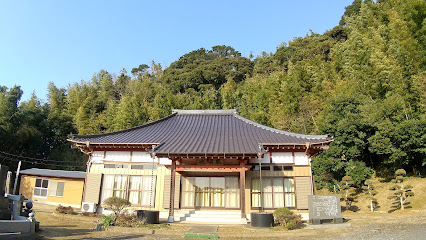
The main hall is the central building of the temple and the most important place where the principal image of Buddha is enshrined. Worshippers offer their prayers and blessings in the main hall.
The architectural style and decoration of the main hall reflect the characteristics of the era in which it was built and the traditions of the sect. By observing the structure of the pillars and beams, the shape of the roof, and decorative elements such as sculptures and paintings, you can deepen your understanding of architectural culture.
Temple Gate
The temple gate stands at the entrance of the temple and is a symbolic presence separating the secular world from the sacred realm. Passing through the temple gate signifies entering the world of Buddhism from the everyday world.
There are various types of temple gates, including one-bay gates, three-bay gates, and two-story gates (tower gates). Nio statues (guardian deities) may be enshrined within, serving to protect worshippers.
Stone Structures within the Temple Grounds
Various stone structures are sometimes placed within the temple grounds. Stone pagodas, stone Buddha statues, lanterns, and water basins each have their own meaning and role.
Especially older stone structures are valuable historical documents that tell the story of the temple’s history. If inscriptions are present, we can learn about the social conditions of the time from the construction date and the names of the donors.
Gardens and Natural Environment
Temple gardens are not merely decorative; they are an important element that expresses the Buddhist worldview. The arrangement of ponds, stones, and trees often contains intentions to express the Pure Land or a cosmic view.
Enjoying the changing seasons is another charm of temple gardens. They show different expressions in each season: cherry blossoms in spring, lush greenery in summer, colorful leaves in autumn, and snowscapes in winter.
Annual Events and Memorial Services
Major Annual Events
At Sangyoji Temple, various events and memorial services are held throughout the year. These events are important opportunities to practice Buddhist teachings and deepen bonds with parishioners.
New Year’s Events
On New Year’s Day, a memorial service is held to celebrate the new year. The temple is bustling with visitors praying for safety and happiness throughout the year.
Spring Equinox
For one week centered around the spring equinox, the Higan-e (Equinox service) for ancestor worship is held. The temple grounds are lively with people visiting graves.
Obon Events
During Obon in August (or July), the Urabon-e (Obon festival) is held to welcome the spirits of ancestors. A Segaki (feeding of hungry ghosts) service may also be held.
Autumn Equinox
The Higan-e, centered around the autumn equinox, is also an important event, similar to the spring equinox.
Special Memorial Services
Special memorial services related to the temple’s history, as well as commemorative services such as the founding anniversary and the founder’s anniversary, may be held. These services are important opportunities to pass on the temple’s history and traditions to future generations.
How to Visit and Etiquette
Basic Etiquette for Visiting a Temple
When visiting a temple, it is important to observe basic etiquette. Please refer to the following steps:
- Bow at the Temple Gate: Bow before passing through the temple gate. Remove your hat.
- Watering Procedure: Cleanse your hands and mouth at the water basin. Hold the ladle in your right hand and wash your left hand, then hold the ladle in your left hand and wash your right hand. Again, hold the ladle in your right hand, receive water in your left hand, rinse your mouth, and finally, hold the ladle upright and rinse the handle.
- Worship at the Main Hall: Bow slightly in front of the main hall and quietly place your offering. If there is a bell, ring it, and pray quietly with your hands clasped together.
- Bow Upon Departure: Bow again at the temple gate before leaving.
Regarding Photography
Photography is generally permitted within the temple grounds, but photography inside the main hall or of Buddha statues may be prohibited. Please check before taking photos or follow any posted notices.
It is important to be considerate of other visitors and maintain a quiet atmosphere.
Regarding Attire
While formal attire is not required, temples are sacred places, so it is best to avoid revealing or overly flashy clothing. Please aim for clean and presentable attire.
Regarding Goshuin (Temple Seals)
What is a Goshuin?
A Goshuin is a seal and calligraphy given as proof of visiting a temple or shrine. Collecting Goshuin has become a popular hobby in recent years.
A Goshuin is not merely a stamp rally; it is proof of your visit and a tangible representation of your connection with the temple. Please handle it carefully and keep it safe.
How to Receive a Goshuin
Please note the following points when receiving a Goshuin.
- First, complete your prayers before receiving your goshuin (temple/shrine stamp).
- Open your goshuincho (stamp book) and hand it to the person in charge, keeping it open to the page you want them to write on.
- Prepare your offering (or donation). Generally, this is around 300 to 500 yen.
- Wait quietly while they are writing.
- After receiving your goshuin, express your gratitude politely.
About Goshuincho
Goshuincho can be purchased at temples or Buddhist supply stores. Some people use separate goshuincho for shrines and temples, but this is not mandatory.
Sometimes, Sangyoji Temple offers its own original goshuincho, so it’s a good idea to check when you visit.
Access Information
Location
Sangyoji Temple is located in Chiba Prefecture. It is recommended to check the exact address and contact information in advance.
Access by Public Transportation
If using the train
It is important to check the distance from the nearest station and transportation options in advance. If you’re taking the bus from the station, be sure to check the bus timetable.
Using the Bus
It’s a good idea to check the walking time and route from the bus stop in advance.
Access by Car
Route from Major Roads
Check the route from the nearest interchange and major roads in advance. Using a car navigation system or smartphone map app is convenient.
Parking Information
It’s recommended to check the availability of parking, capacity, and operating hours in advance. It may be particularly crowded on days with events.
Points to Note When Visiting
- Check the visiting hours before visiting.
- General visits may be restricted on days with memorial services or events.
- The temple grounds may be slippery depending on the weather, so wear comfortable shoes.
Nearby Tourist Attractions
Nearby Temples and Shrines
Chiba Prefecture has many historical temples and shrines. When visiting Sangyoji Temple, you can enjoy a more fulfilling temple and shrine tour by also visiting nearby temples and shrines.
Local Tourist Attractions
Around the temple, there are likely to be various tourist attractions such as historical buildings, nature parks, and museums. Researching local tourist information in advance will help you make the most of your day.
Food Information
Visiting local specialty dishes and long-established restaurants is also a pleasure of travel. Looking for restaurants that serve vegetarian cuisine or dishes made with local ingredients is a good idea.
Training and Experiences at Sangyoji Temple
Zen Meditation Sessions
Many temples hold Zen meditation sessions that are open to the public. Zen meditation is a valuable opportunity to calm the mind and confront oneself.
If there are Zen meditation sessions that are open to beginners, we highly recommend trying them. You can learn the proper etiquette and breathing techniques for Zen meditation.
Sutra Copying and Buddha Image Copying Experience
Sutra copying is the practice of copying Buddhist scriptures. Carefully writing each character calms the mind and increases concentration.
Buddha image copying is the practice of drawing and copying the image of Buddha. Even without artistic talent, anyone can participate by tracing a pre-drawn picture.
Dharma Talks
Sometimes, Dharma talks are held by the head priest. This is a valuable opportunity to learn Buddhist teachings in an easy-to-understand way.
You can learn Buddhist wisdom that can be applied to daily life and gain inner richness.
How to Interact with Temples
About the Danka System
A danka is a family that financially supports a specific temple and holds funerals and memorial services there. Becoming a danka creates a deep connection with the temple.
Danka have roles such as cooperating in the maintenance and management of the temple and participating in annual events. In return, they receive support from the temple, such as attentive memorial services and consultation.
Interaction as a General Visitor
Even if you are not a danka, it is possible to have a connection with a temple. By regularly visiting and participating in events, you can use the temple as a spiritual anchor.
Temples are open to the community and anyone can visit. When you’re feeling weary or simply want some quiet time, why not visit?
Donations and Offerings
Maintaining a temple requires significant expense. Funding is needed for various aspects, including building repairs, grounds maintenance, and event management.
Donations and offerings are one way to support a temple. Regardless of the amount, it allows you to express your feelings towards the temple.
Temple Culture in Chiba Prefecture and Sangyoji Temple
Buddhist History in Chiba Prefecture
Chiba Prefecture has a long history of flourishing Buddhist culture. Many ancient temples date back to the Nara and Heian periods, and have been influenced by the Buddhist culture of each era.
Due to its geographical location surrounded by the sea, the Boso Peninsula received various cultural influences through maritime trade. This fostered a diverse Buddhist culture.
Local Communities and Temples
Temples have played a central role in local communities, not merely as religious institutions. They have served diverse functions as places of education, cultural centers, and community gathering places.
Even today, temples remain important places for conveying local history and culture. Temples often participate in local festivals and events, forming the core of regional identity.
The Role of Sangyoji Temple in the Community
Sangyoji Temple, as a temple deeply connected to the local community, is believed to have played various roles. Through interaction with parishioners and local residents, it serves as a place to strengthen community bonds.
Its role in recording and passing on local history is also important. Ancient documents and records remaining at the temple are valuable resources for local history research.
Buddhist Teachings and Modern Life
Basic Buddhist Teachings
Buddhism is a religion founded in India approximately 2500 years ago by Siddhartha Gautama (Shakyamuni). It teaches the path to liberation from suffering by understanding its causes.
The Four Noble Truths
- The Truth of Suffering: The truth that suffering is inherent in life.
- The Truth of the Origin of Suffering: The truth that suffering has a cause.
- The Truth of the Cessation of Suffering: The truth that suffering can be extinguished.
- The Truth of the Path to the Cessation of Suffering: The truth that there is a way to extinguish suffering.
The Eightfold Path
Eight practices for liberation from suffering. These consist of Right View, Right Thought, Right Speech, Right Action, Right Livelihood, Right Effort, Right Mindfulness, and Right Concentration.
Buddhist Wisdom for Modern Life
Buddhist teachings offer many insights even in modern society.
Mindfulness
The practice of focusing awareness on “the here and now” originates from Buddhist meditation techniques. It is considered effective for stress reduction and improved concentration, and is gaining attention worldwide.
Understanding Impermanence
The teaching of impermanence, that everything changes, cultivates a mind that does not fear change and can adapt flexibly.
The Heart of Compassion
Cultivating compassion and kindness towards others enriches human relationships and contributes to a better society.
Learning at Temples
Visiting temples like Sangyoji Temple provides an opportunity to experience Buddhist teachings. Various elements, such as the abbot’s sermons, the tranquility of the temple grounds, and the appearance of the Buddha statues, work on the heart.
Regularly visiting temples and taking time to calm the mind is a valuable habit in today’s busy life.
The Charm of Temple Architecture
Characteristics of Japanese Temple Architecture
Japanese temple architecture has developed uniquely while being influenced by Buddhist architecture introduced from China and the Korean Peninsula.
Wooden Construction Techniques
Most Japanese temples are made of wood. The structures that utilize the properties of wood and the intricate joinery techniques are traditional techniques that the world can be proud of.
Roof Shapes
There are various roof styles, such as hipped roofs, gable roofs, and gable roofs. The shape of the roof reflects the status and purpose of the building.
Layout and Spatial Composition
There are various styles of building layouts, known as garan layouts. Asuka style, Nara style, Heian style, and others differ depending on the era.
Beauty in Architectural Details
The details of temple architecture embody the skill and aesthetic sense of the craftsmen.
Sculpture and Decoration
The carvings on pillars, beams, and transoms often feature motifs with Buddhist significance or express the beauty of nature.
Coloring and Gold Leaf
The coloring and gold leaf applied to buildings and Buddha statues create a solemn atmosphere and also protect the wood.
Roof Tiles and Oni-gawara (Demon Tiles)
The patterns on roof tiles and the designs of oni-gawara (demon tiles) also reflect the characteristics of the era and region.
Sangyoji Temple in Each Season
Sangyoji Temple in Spring
Spring is the season when new life sprouts. Cherry blossoms and plum blossoms bloom in the temple grounds, creating a vibrant atmosphere.
Many worshippers visit during the spring equinox. Visiting the temple in the warm sunshine brightens the heart.
Summer at Sangyoji Temple
In summer, the temple grounds are covered in deep green. The shade of the trees is cool, and the sound of cicadas fills the air.
During the Obon period, ceremonies are held to welcome ancestors. The temple grounds at dusk in summer create a magical atmosphere.
Autumn at Sangyoji Temple
Autumn is a season of beautiful autumn foliage. Maple and ginkgo trees change color, and the temple grounds are adorned in the splendor of autumn.
The autumn equinox is also a time of important events. Visiting the temple in the crisp air purifies the heart.
Winter at Sangyoji Temple
In winter, the temple grounds are enveloped in silence. If it snows, a world of white unfolds.
The end of the year and the beginning of the new year are important times. Many people visit for the ringing of the temple bell on New Year’s Eve and for their first shrine visit of the year.
Summary
Sangyoji Temple is a temple with a rich history and tradition located in Chiba Prefecture. Throughout its long history, it has played a vital role as a place of worship, deeply intertwined with the local community.
The temple grounds contain various buildings and stone structures, including the main hall, each with its own history and meaning. Visitors can enjoy the changing seasons and discover something new with each visit.
Various events and ceremonies are held throughout the year, offering opportunities to engage with Buddhist teachings and find inner peace. Experiences such as Zen meditation and sutra copying provide valuable opportunities to spend time away from daily routines.
A temple is not merely a tourist destination; it is a place of spiritual solace. When you want to escape the hustle and bustle of everyday life and spend some quiet time, or when you want to reflect on life, why not visit Sangyoji Temple?
When visiting, please observe basic manners and be considerate of other visitors. By offering heartfelt prayers, you are sure to find something that resonates within your heart.
Sangyoji Temple will continue to walk alongside the local community and pass on the teachings of Buddhism. While respecting its history and traditions, we hope that this place will continue to be a place where many people can visit and find peace of mind.