Complete Guide to Bando Inari Shrine (Chiba Prefecture) | History, Blessings, and Access Explained
Located in the heart of Chiba City’s Chuo Ward, close to the Chiba Prefectural Government Office, Bando Inari Shrine has been cherished by locals since the Meiji era as the guardian deity of the shopping district. This small shrine, rich in history and tradition, provides a detailed introduction, from its origins and blessings to access information.
Basic Information on Bando Inari Shrine
Bando Inari Shrine is an Inari shrine located at 4-7-13 Chuo, Chuo Ward, Chiba City, Chiba Prefecture. It is situated in the central urban area of Chiba City, close to the Chiba Prefectural Government Office and Chuo Park.
Location and Contact Information
- Address: 4-7-13 Chuo, Chuo-ku, Chiba City, Chiba Prefecture 260-0013
- Corporate Number: 2040005000931
- Nearest Station: 5-minute walk (approx. 375m) from Kencho-mae Station on the Chiba Urban Monorail, 5-minute walk (approx. 431m) from Yoshikawa-koen Station on the Keisei Chiba Line
Deity and Blessings
The deity enshrined at Bando Inari Shrine is Ukanomitama-no-kami, the principal deity of Inari shrines. This is the central deity of Inari worship, known for its divine blessings of abundant harvests and business prosperity.
Main Benefits:
- Business Prosperity
- Abundant Harvest
- Business Success
- Family Safety
- Industrial Development
Especially given its origins as the guardian deity of the shopping district, many local shop owners and business owners visit the shrine seeking blessings for business prosperity.
The History and Origins of Bando Inari Shrine
The history of Bando Inari Shrine dates back to the Meiji era. Its origins are closely related to the development of Chiba Town.
Founding in the Meiji Era
Bando Inari Shrine was originally an Inari shrine enshrined on the private land of Mr. Shirohei Beniya, a wealthy man of Chiba Town, in the early Meiji period. Mr. Shirohei Beniya was an influential figure in Chiba Town at the time and owned a vast residential area.
In 1877 (Meiji 10), when Mr. Beniya planned to divide his land to form a shopping district, he relocated the Inari shrine, which was located on his private property, to its current location to pray for the commercial prosperity of the area and the development of the town. This transformed it from a private household shrine into an independent shrine, a guardian deity of the town’s prosperity.
History according to the “Chiba Prefecture Shrine Directory”
According to the “Chiba Prefecture Shrine Directory,” compiled by the Chiba Prefecture Shrine Association, Bando Inari Shrine is described as follows: “In the early Meiji era, an Inari shrine enshrined on the property of Mr. Shirohei Beniya, a wealthy man in Chiba town, was relocated to its current location in 1877 (Meiji 10) when his land was divided and leased to form a shopping district, becoming an independent shrine as a guardian deity of the town’s prosperity.”
This description reveals that Bando Inari Shrine is not merely a religious facility, but a historical witness to the urban development and commercial growth of Chiba City during the Meiji period.
Records from “Chiba Town Guide”
Descriptions of Bando Inari Shrine can be found in local histories such as “Chiba Town Guide,” published from the late Meiji period to the Taisho period. These documents describe the shrine as a center of worship in the central shopping district of Chiba Town, cherished by local residents and shop owners.
At that time, Chiba Town was rapidly developing as the prefectural capital, and commercial activity was booming. Within this context, Bando Inari Shrine played an important role as the guardian deity of the commercial area.
Legends of Minamoto no Yoritomo and Bando Inari Shrine
Bando Inari Shrine holds an interesting legend related to Minamoto no Yoritomo, the founder of the Kamakura Shogunate.
The Legend of Yoritomo’s Passage Through Chiba
In 1180, after being defeated at the Battle of Ishibashiyama, Minamoto no Yoritomo fled to Awa Province (present-day southern Chiba Prefecture), seeking support from samurai groups on the Boso Peninsula to attempt a comeback. It is said that he passed through Chiba, the base of the Chiba clan, during this time. According to legend, when Yoritomo passed through Chiba from Awa Province, he set up camp within the grounds of Bandō Inari Shrine. This legend suggests that the area has been an important location since ancient times.
Relationship with Yūki Inari Shrine
However, there are alternative theories regarding this legend, with some claiming that Yoritomo set up camp not at Bandō Inari Shrine but at Yūki Inari Shrine. Yūki Inari Shrine is also an ancient shrine located within Chiba City, and historically, it is not definitively established which is correct.
In any case, these legends indicate that the location of Bandō Inari Shrine was historically important, enhancing the shrine’s status and history.
Shrine Grounds and Highlights
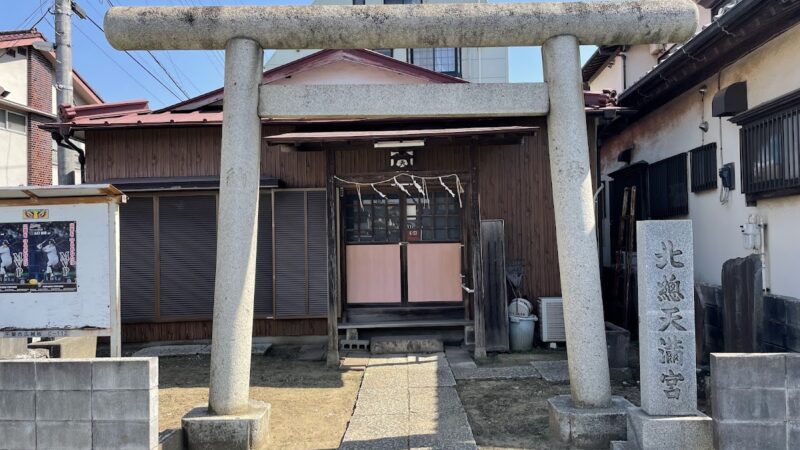
Bandō Inari Shrine is an urban shrine located in the city center of Chiba City’s Chuo Ward. While the grounds are not particularly large, they are well-maintained and cherished as a place of worship for the local community.
Shrine Grounds Layout
The shrine grounds contain the following facilities:
- Main Hall: An Inari-style shrine building
- Worship Hall: A place where worshippers offer prayers
- Torii Gate: The entrance to the sacred area
- Komainu (Guardian Dogs): A pair of guardian dogs protecting the shrine grounds
- Shrine Office: The shrine’s administrative facility
Characteristics of Inari Shrines
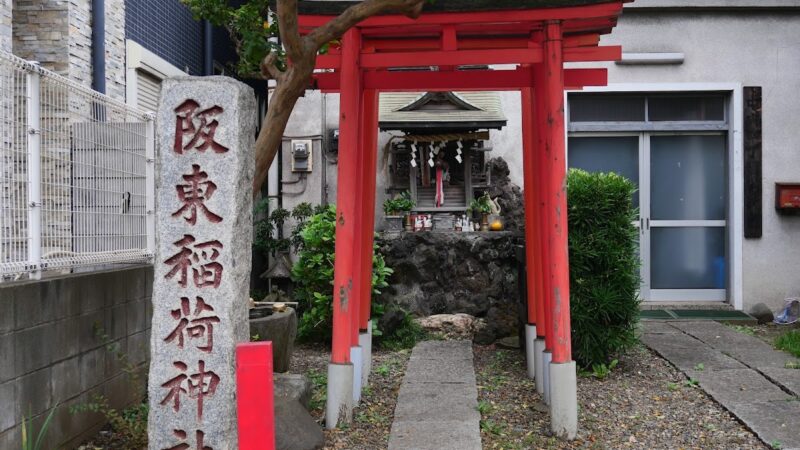
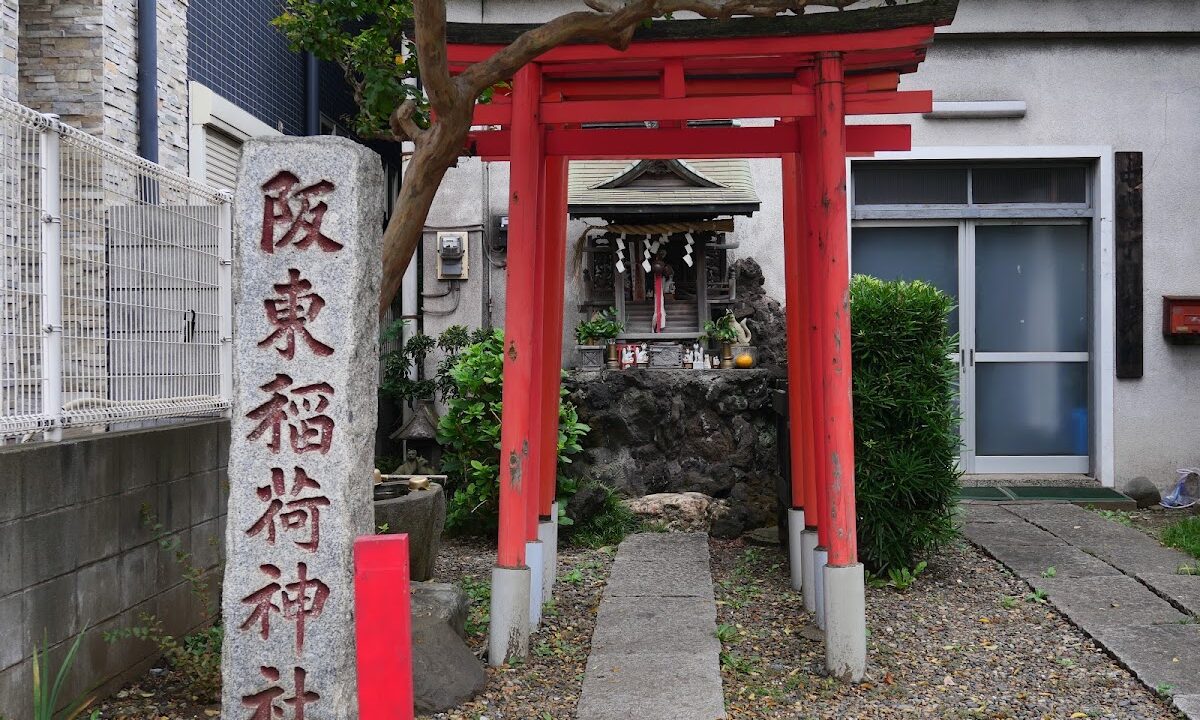
Many Inari shrines feature vermilion torii gates and fox statues. Bando Inari Shrine, while preserving the traditions of Inari worship, maintains the appearance of a shrine in an urban area.
Surrounding Environment
The area surrounding the shrine is the central business district of Chiba City, an area lined with office buildings and commercial facilities. Public facilities such as the Chiba Prefectural Government, Chiba City Hall, and Central Park are also nearby, placing it in the heart of the business and administrative district.
Due to its location, many business people working nearby visit the shrine during their lunch breaks on weekdays, and it continues to attract worshippers as a god of business prosperity even today.
How to Access Bando Inari Shrine
Bando Inari Shrine is located in the heart of Chiba City and is easily accessible by public transportation.
Access by Train
Using the Chiba Urban Monorail:
- Get off at “Kencho-mae Station” and walk for approximately 5 minutes (approx. 375m)
- The monorail is two stops from Chiba Station.
Using the Keisei Electric Railway:
- Get off at “Yoshikawa-koen Station” on the Keisei Chiba Line and walk for approximately 5 minutes (approx. 431m)
Using JR:
- Get off at JR “Chiba Station” and walk for approximately 15 minutes
- It is convenient to transfer to the Chiba Urban Monorail from Chiba Station.
Access by Car
As it is located in the heart of Chiba City, it is accessible by car, but parking is limited due to the surrounding urban area. We recommend using nearby coin-operated parking lots or public transportation.
Access from major roads:
- Approximately 15 minutes from the Keiyo Expressway “Anagawa IC”
- Approximately 20 minutes from the Higashi-Kanto Expressway “Wangan Chiba IC”
Landmarks on foot
It’s easiest to head towards the Chiba Prefectural Government Main Building and then towards Chuo Park. It’s located in the commercial area of Chuo 4-chome, Chuo-ku.
Manners and points for visiting
Here are some basic manners and points to keep in mind when visiting Bando Inari Shrine.
Proper Worship Etiquette
- Bow before passing through the torii gate.
- Purify your body and mind at the water basin (if available).
- Bow twice, clap twice, and bow once before the main hall.
- Quietly place your offering.
- Recite your wish silently.
Suitable Time for Worship
As this is an urban shrine, you can generally visit anytime during the day. However, if you wish to worship in peace, weekday mornings are recommended.
About Goshuin (Shrine Seals)
Information regarding Goshuin at Bando Inari Shrine is limited, and as it is a small shrine, they may not always be available. Those wishing to receive a Goshuin are advised to check in advance.
Other Shrines and Temples in Chiba City’s Chuo Ward
When visiting Bando Inari Shrine, why not also visit other shrines and temples in Chiba City’s Chuo Ward?
Major Shrines in the Neighborhood
- Chiba Shrine: A representative shrine of Chiba City and a center of Myoken worship.
- Temples and Shrines around Yoshikawa Park: Numerous historical temples are scattered throughout the area.
- Chiba-dera Temple: An ancient temple associated with the Chiba clan.
Chiba City’s Chuo Ward is a historical area where the Chiba clan established their base, and many historically significant shrines and temples remain.
Annual Events at Bando Inari Shrine
Inari shrines generally hold the following annual events.
Main Festivals (Examples of Typical Inari Shrines)
- Hatsuumasai (February): The most important festival at Inari shrines.
- Reitaisai (Autumn): The most important festival of the year at the shrine.
- Hatsumode (January): New Year’s visit to the shrine.
For specific festival dates at Bando Inari Shrine, it is recommended to check directly with the shrine.
Benefits of Praying for Business Prosperity
Bando Inari Shrine was founded as the guardian deity of the shopping district, and is therefore particularly known for its blessings of business prosperity.
For Those Praying for Business Prosperity
Many worshippers visit the shrine to pray for business success, including those running businesses, managing shops, and starting new ventures. Due to its location in the central business district of Chiba City, not only local shop owners but also people working around the prefectural and city offices visit the shrine.
The Relationship Between Inari Worship and Commerce
Originally, Inari was worshipped as the god of agriculture, especially rice cultivation. However, since the Edo period, it has also been widely worshipped as the god of commerce. This is believed to have spread due to wordplay, such as the similarity between “commerce” (商い) and “never getting tired” (焼きない), and the similarity between “rice harvest” (稲成) and “will inevitably come true” (否往能なり).
The History of Chiba City and Bando Inari Shrine
To understand the history of Bando Inari Shrine, it is important to know the history of Chiba City’s development.
Chiba Town in the Meiji Era
During the Meiji era, Chiba Town rapidly developed as the capital of Chiba Prefecture. In 1873 (Meiji 6), the prefectural office relocated from Kisarazu, and Chiba Town became the administrative center.
During this period, commercial activity also intensified, and many shops opened. The fact that Shirohei Beniya divided his land to form a shopping district is also a testament to this development of Chiba Town.
Modern Chiba City’s Chuo Ward
Currently, Chiba City’s Chuo Ward functions as the administrative and economic center of Chiba Prefecture. It is home to the Chiba Prefectural Government, Chiba City Hall, and many other companies and commercial facilities.
Bando Inari Shrine, amidst this wave of modernization and urbanization, continues to exist as a place of local worship that dates back to the Meiji era.
Summary: The Charm of Bando Inari Shrine
Bando Inari Shrine is a small shrine located in the central urban area of Chiba City’s Chuo Ward, but its history and origins are deeply intertwined with the development of Chiba Town during the Meiji era.
Features of Bando Inari Shrine:
- Founded in 1877 (Meiji 10) as the guardian deity of the shopping district
- Benefits of business prosperity and abundant harvests
- Legends related to Minamoto no Yoritomo
- Convenient location in the heart of Chiba City
- A place of worship deeply rooted in the community
When visiting the Chiba Prefectural Government Office or Central Park, or if you have the opportunity to do business or shop in central Chiba City, please be sure to stop by Bando Inari Shrine. Why not pray for business prosperity and family safety in this quiet shrine amidst the hustle and bustle of the city?
Despite its small size, this shrine boasts a history of nearly 150 years and remains a beloved guardian deity for the local community, having watched over the development of Chiba City.