Anjoji Temple (Nagara-machi, Chiba Prefecture) Complete Guide | History, Access, and Highlights Explained in Detail
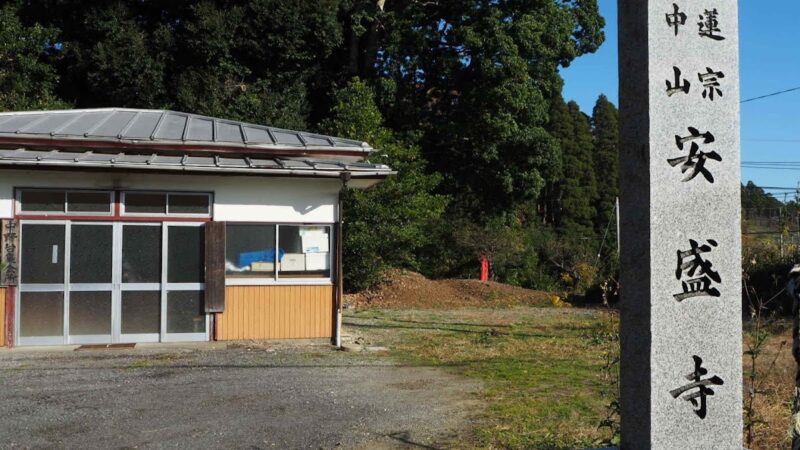
Anjoji Temple, located in Nakanodai, Nagara-machi, Chosei-gun, Chiba Prefecture, is a historic temple belonging to the Nichiren sect. Its official name is “Hōchūzan Anjoji,” and it has long been a center of faith for the local residents. This article comprehensively introduces useful information for visitors, from the historical background of Anjoji Temple to its highlights, access methods, and annual events.
Basic Information about Anjoji Temple
Location and Contact Information
Official Name: Hochuzan Anjoji Temple
Sect: Nichiren Buddhism
Address: 162 Nakanodai, Nagara-machi, Chosei-gun, Chiba Prefecture 297-0232
Jurisdiction: Nichiren Buddhism Chiba Prefecture Western Office
Anjoji Temple is located in a quiet residential area of Nagara-machi, Chosei-gun, in the central part of the Boso Peninsula in Chiba Prefecture. Nagara-machi is situated between Chiba City and Mobara City and is known as a region blessed with a rich natural environment.
Overview of the Sect and Doctrine
Nichiren Buddhism is a Buddhist sect founded by Nichiren Shonin (1222-1282), a monk of the Kamakura period. It is characterized by practice centered on chanting the title “Namu Myoho Renge Kyo” and considers the Lotus Sutra as its fundamental scripture. Nichiren Shonin wrote the “Rissho Ankoku Ron” (Treatise on Establishing Righteousness and Securing the Peace of the Nation), preaching teachings that prayed for the peace and security of the nation and the happiness of its people.
Anshoji Temple, based on these teachings of the Nichiren sect, has served as a center of faith in the local community, providing spiritual support to its parishioners and residents.
History and Origins of Anshoji Temple
Background of Founding
While detailed records of Anshoji Temple’s founding are limited, it is believed to have been established during the medieval or early modern period, when the Nichiren sect spread throughout the Boso region. Chiba Prefecture is the birthplace of Nichiren Shonin (present-day Kamogawa City) and is a region with many Nichiren sect temples.
The Chosei District, including Nagara Town, has long been a community centered on agriculture, and temples have played an important role as spiritual pillars for the local people. It is presumed that Anshoji Temple developed within this historical context, attracting the faith of local residents.
Meaning of the Mountain Name “Hōchūzan”
The mountain name of Ansei-ji Temple, “Hōchūzan,” is thought to embody the meaning that the treasure of Buddhist teachings is at the center. In the Nichiren sect, the Lotus Sutra is revered as the “king of all sutras,” and this mountain name reflects the belief that its teachings are the true treasure.
Connection to the Community
Nagara Town developed as an agricultural area during the Edo period, as part of Kazusa Province. Ansei-ji Temple, as the local family temple, has been closely intertwined with the lives of the residents through funerals, memorial services, and annual events. Even today, it maintains a danka (parishioner) system and plays a role as the spiritual center of the local community.
Highlights of the Temple Grounds
Main Hall
The main hall of Ansei-ji Temple is an architectural structure that follows the traditional style of Nichiren sect temples. The principal image is enshrined inside, and daily services and memorial services are held there. The main hall of a Nichiren Buddhist temple typically houses a mandala of “Namu Myoho Renge Kyo,” and worshippers chant the mantra while praying.
Atmosphere of the Temple Grounds
Located in the tranquil setting of Nagara-cho, the grounds of Ansei-ji Temple are enveloped in a peaceful atmosphere, far removed from the hustle and bustle of the city. Visitors can enjoy the changing natural scenery with each season, especially during the cherry blossom season in spring and the autumn foliage season, when the temple grounds are beautifully colored.
Cemetery
A cemetery is located within the temple grounds, where generations of parishioners rest. As a traditional Japanese temple cemetery, it is carefully maintained as a place for ancestral worship.
Access Methods
Access by Car
The most convenient way to access Ansei-ji Temple is by car.
From the Tokyo Metropolitan Area:
- Approximately 15 minutes from the Mobara-Kita Interchange on the Keiyo Expressway/Tateyama Expressway
- Approximately 10 minutes from the Mobara-Chonan Interchange on the Ken-O Expressway
Public transportation in Nagara Town is limited, so we recommend using a private car or taxi. Please enter the address “162 Nakanodai, Nagara-machi, Chosei-gun, Chiba Prefecture” into your car navigation system.
Access by Public Transportation
By Train/Bus:
- Get off at Mobara Station on the JR Sotobo Line
- Approximately 20 minutes by taxi from Mobara Station
Since bus services are limited, it is recommended to check the timetable in advance or use a taxi.
Parking
The temple has parking spaces for visitors, but it may be crowded during memorial services. If you are attending a large memorial service, we recommend checking with the temple in advance.
Annual Events and Memorial Services
Main Annual Events
At Anshoji Temple, a Nichiren Buddhist temple, various religious events are held throughout the year.
Main Events:
- New Year’s Day (Shushō-e): A memorial service praying for peace in the new year.
- Spring Equinox Service: Ancestor memorial service centered around the spring equinox.
- Obon (Urabon-e): Ancestor memorial service in August.
- Autumn Equinox Service: Ancestor memorial service centered around the autumn equinox.
- Oeshiki: A memorial service commemorating the death anniversary of Nichiren Shonin (around October 13th).
The Oeshiki service, in particular, is one of the most important events for Nichiren Buddhist temples, commemorating the virtues of Nichiren Shonin, and sometimes includes a lantern procession.
Individual Memorial Services
Anshoji Temple also accepts individual memorial services for parishioners and the general public, as listed below.
- Funeral/Memorial Service
- Annual Memorial Services (First Anniversary, Third Anniversary, Seventh Anniversary, etc.)
- Monthly Memorial Services
- Memorial Services for Stillborn Children
- Ancestor Worship
If you wish to hold a memorial service, it is necessary to contact the temple in advance to discuss the date and details.
Attractions in Nagara Town and Surrounding Areas
About Nagara Town
Nagara Town is a town with a population of approximately 6,500 located almost in the center of Chiba Prefecture. It is characterized by its rich natural environment and agriculture, and is particularly known as a region where rice cultivation is thriving. There are also tourist spots nearby, such as Nagara Dam and Kasamori Kannon, making it a region where you can experience nature and history.
Nearby Tourist Spots
Kasamori Kannon (Kasamori Temple):
This is an ancient Tendai sect temple located in Chonan Town, and it houses a Kannon Hall designated as a National Important Cultural Property. It is about a 15-minute drive from Ansei-ji Temple and is visited by many pilgrims as the 31st temple of the Bando Thirty-Three Kannon Pilgrimage. Nagara Dam: A dam in the Ichinomiya River system, surrounded by a rich natural environment. A suitable spot for hiking and nature observation.
Mobara Park: A park in Mobara City known for its cherry blossoms. In spring, approximately 2,850 cherry trees bloom, attracting many visitors.
Characteristics as a Nichiren Buddhist Temple
Nichiren Buddhist Faith Practice
The core of Nichiren Buddhist faith lies in chanting the title “Namu Myoho Renge Kyo.” This title praises the merits of the Lotus Sutra and expresses devotion to the Buddha’s teachings. At Ansei-ji Temple, the title is chanted during daily services and ceremonies, forming the foundation of the faith lives of the parishioners.
Teachings of the Lotus Sutra
The Lotus Sutra is one of the representative scriptures of Mahayana Buddhism, expounding the idea of “All sentient beings possess Buddha-nature,” meaning that all people have the potential to become Buddhas (Buddha-nature). Nichiren Shonin was convinced that the Lotus Sutra was the true teaching of Shakyamuni Buddha, and he dedicated his life to its dissemination.
Nichiren Buddhism in Chiba Prefecture
Chiba Prefecture is the birthplace of Nichiren Shonin and holds special significance for the Nichiren sect. Many important temples associated with Nichiren Shonin exist within the prefecture, including Tanjoji Temple (Kamogawa City), Seichoji Temple (Kamogawa City), and Nakayama Hokkeji Temple (Ichikawa City). Anshoji Temple also plays a part in this network of Nichiren sect temples in Chiba Prefecture.
Manners and Etiquette for Visiting Temples
Basic Etiquette for Visiting Temples
This section introduces basic etiquette for visiting Nichiren sect temples.
- Bow at the Temple Gate: Bow at the temple gate before entering the temple grounds.
- Purification at the Water Basin: Purify your hands and mouth (hold the ladle in your right hand and purify your left hand, then hold the ladle in your left hand and purify your right hand, and finally receive water in your left hand and rinse your mouth).
- Worship at the Main Hall: Join your hands in prayer in front of the main hall and chant “Namu Myoho Renge Kyo.”
- Offering a Coin: Offer your coin with sincerity.
- Bow Upon Departure: Turn around and bow when leaving the temple grounds.
Regarding Attire
While casual attire is acceptable, it is considered polite to avoid overly flashy or revealing clothing. For memorial services, subdued colors such as black or navy are appropriate.
Regarding Photography
Photography is generally permitted on the temple grounds, but it is advisable to obtain prior permission before photographing the interior of the main hall or Buddhist statues. Please also be considerate of other visitors and avoid disturbing them.
The Danka System and Temple Maintenance
What is the Danka System?
The Danka system is a system of believers who provide economic and spiritual support to a specific temple. Danka cooperate in the maintenance and management of the temple, and the temple performs funerals, memorial services, and ancestral rites for the danka. This mutual support relationship has supported temples in Japan.
Maintenance Activities of Anseiji Temple
Anseiji Temple is also maintained through the support of its danka members. Temple activities such as repairs to the main hall and grounds, the implementation of annual events, and participation in community activities cannot be carried out without the cooperation of the danka members.
In recent years, due to the effects of a declining birthrate, an aging population, and urbanization, many temples are finding it difficult to maintain the Danka system. However, Anseiji Temple will continue to play an important role as a place of faith rooted in the community.
History and Culture of Nagara Town
Origins of Nagara Town
Nagara Town was formed in 1955 (Showa 30) through the merger of Nagara Village and Mizukami Village. Historically, it belonged to Nagara District of Kazusa Province and developed as a region centered on agriculture. The town name “Nagara” originates from the ancient district name.
Local Cultural Assets
Besides Anseiji Temple, Nagara Town is dotted with historically and culturally valuable sites and buildings. Understanding the region’s history will deepen your understanding of Anseiji Temple’s significance.
Local Communities and Temples
In rural Japan, temples have not merely been religious institutions, but have played a central role in local communities. Various activities centered around temples, such as Bon Odori dances, festivals, and temple schools, have supported local communities.
Anseiji Temple, too, continues to play an important role in the Nagara Town community, serving as a place for the transmission of spiritual culture and deepening the bonds among residents.
The Role of Temples in Modern Times
As a Place of Spiritual Support
While modern society has become materially wealthy, people’s worries and stresses have increased. Temples provide a space of tranquility and healing, serving as a place of spiritual support for modern people.
Local temples like Anshoji Temple function as places where parishioners and local residents can easily visit and find peace of mind. Through dialogue with the head priest, people can also seek advice on life’s worries and anxieties.
Preservation of Traditional Culture
Temples are also important places for preserving Japan’s traditional culture. Buddhist rituals, architectural styles, arts and crafts, calligraphy, music (Shomyo), and other diverse traditional cultures are concentrated in temples.
Anshoji Temple also plays a role in preserving the traditions of the Nichiren sect and passing them on to future generations.
Contribution to Regional Revitalization
In recent years, temples have attracted attention as hubs for regional revitalization. New forms of temple activities, such as temple cafes, Zen meditation experiences, sutra copying classes, and concerts, are being developed nationwide, opening up to the community.
Anshoji Temple is expected to contribute to the local community by preserving tradition while also undertaking new initiatives that are relevant to the times.
Summary
Located in Nagara-machi, Chosei-gun, Chiba Prefecture, Hochuzan Anshoji Temple is a historic temple belonging to the Nichiren sect, supporting the faith and lives of local residents. Its tranquil grounds provide an ideal place to find peace of mind and remember one’s ancestors.
Visiting Anshoji Temple allows you to experience the teachings of the Nichiren sect and feel the history and culture of Nagara-machi. It is relatively easy to access from the Tokyo metropolitan area, so please consider visiting as part of a temple and shrine tour of the Boso Peninsula.
As a temple deeply rooted in the community, Anshoji Temple will continue to walk alongside its parishioners and local residents, passing on Japanese traditional culture and Buddhist spirit to future generations. Those wishing to visit or attend a memorial service are advised to contact the temple in advance to confirm details.
Amidst a journey to experience the rich nature and history of Chiba Prefecture, a quiet moment at Anshoji Temple is sure to bring peace of mind and new insights.