Dokyoji Temple (Nagara Town, Chiba Prefecture) Complete Guide | A Thorough Explanation of the History and Highlights of Toyasan
Dokyoji Temple, located in Nagara Town, Chosei District, Chiba Prefecture, is a historic temple belonging to the Nichiren sect. Its official name is “Toyasan Dokyoji,” and it has long been a center of local faith. This article provides a detailed explanation of Dokyoji Temple’s history, origins, highlights within the temple grounds, access methods, and other information you should know before visiting.
Basic Information about Dokyoji Temple
Dokyoji Temple is a Nichiren sect temple located in Yamane, Nagara Town, Chosei District, Chiba Prefecture. Nagara Town is located almost in the center of Chiba Prefecture and is known as a region surrounded by lush green nature.
Location and Contact Information
- Official Name: Touyasan Doukyouji Temple
- Sect: Nichiren Buddhism
- Address: 1391-1 Yamane, Nagara-machi, Chosei-gun, Chiba Prefecture 297-0206
- Phone Number: For inquiries regarding temple visits and other matters, please contact the Nichiren Buddhism Chiba Prefecture Western District Office.
- Affiliation: Under the jurisdiction of the Nichiren Buddhism Chiba Prefecture Western District Office
Doukyouji Temple is under the jurisdiction of the Nichiren Buddhism Chiba Prefecture Western District Office and plays a part in the temple network in the western Chiba Prefecture area, including Mobara City, Chosei District, Ichihara City, Kisarazu City, Futtsu City, Kimitsu City, and Sodegaura City.
History and Origins of Dowaki-ji Temple
Background of Founding
While detailed records regarding the founding date and founder of Dowaki-ji Temple are not currently publicly available, the temple’s mountain name, “Higashinoyama,” is thought to be deeply connected to the region’s topography and historical background. Nagara Town has long developed as an inland area of the Boso Peninsula, and many temples were built there from the medieval to the early modern period.
Connection to the Nichiren Sect
The Nichiren sect is a Buddhist sect founded by Nichiren Shonin during the Kamakura period. Chiba Prefecture is close to Awa Province (present-day Kamogawa City), the birthplace of Nichiren Shonin, and is known as a region with many Nichiren sect temples. Dowaki-ji Temple also follows this tradition, continuing to uphold a faith centered on the teachings of the Lotus Sutra.
Chiba Prefecture boasts numerous prominent Nichiren Buddhist temples, including Hokkeji Temple (Ichikawa City), Hondoji Temple (Matsudo City), Myokakuji Temple (Narita City), Honshoji Temple, Hosenji Temple, and Kofukuji Temple. However, community-based temples like Dowakiji Temple also play a vital role in supporting the religious lives of local residents.
The Position of Temples in Nagara Town’s Temple Culture
Nagara Town has several temples scattered throughout, each serving as a spiritual pillar for the local community. Dowakiji Temple, located in the Yamane district, serves as a familiar place of worship for local residents, contributing to the preservation of local culture through religious services and annual events.
Dowakiji Temple Grounds and Highlights
Main Hall
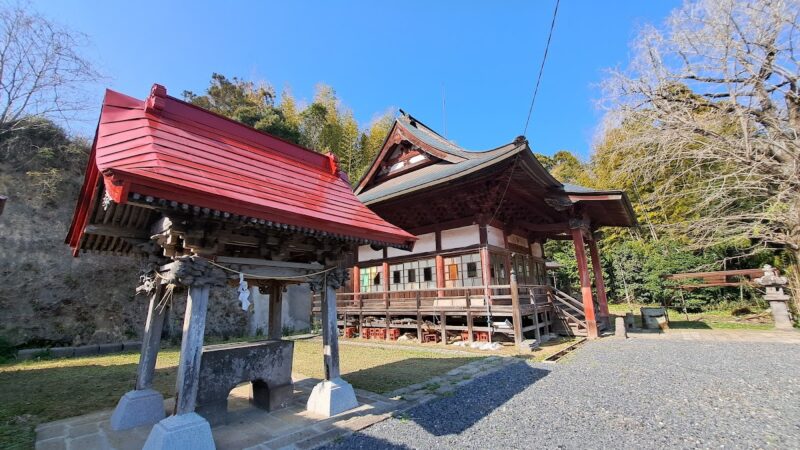
The main hall of Dowakiji Temple follows the traditional architectural style of Nichiren Buddhist temples. The principal image is enshrined within the main hall, where daily services and religious ceremonies are held. The main hall of a Nichiren Buddhist temple is designed as a space embodying the teachings of the Lotus Sutra, allowing visitors to find peace of mind in a tranquil atmosphere.
Natural Environment of the Temple Grounds
Nagara Town is located in the Boso Hills and is blessed with abundant nature. The grounds of Dowaki-ji Temple harmonize with the surrounding nature, allowing visitors to enjoy the scenery of each season. In particular, the seasonal changes—the fresh green of spring, the deep green of summer, the autumn foliage, and the tranquility of winter—provide peace of mind to visitors.
Cemetery and the Danka System
Dowaki-ji Temple has a cemetery for its parishioners, serving as a place for ancestor worship for local residents. In the Japanese temple system, the danka system has been the foundation of temple management since the Edo period. Dowaki-ji Temple is also supported by local parishioners, and faith is passed down through generations.
Nichiren Buddhism and Dowaki-ji Temple
The Center of Lotus Sutra Faith
The foundation of Nichiren Buddhism lies in the Lotus Sutra. Nichiren Shonin taught that the Lotus Sutra is the true teaching of Shakyamuni Buddha, and that anyone can attain Buddhahood by chanting the title “Namu Myoho Renge Kyo.” This faith, centered on this title, is also preserved at Dowaki-ji Temple.
Annual Events
Nichiren Buddhist temples hold various memorial services and events throughout the year. Major events include:
- Oeshiki: The most important memorial service commemorating the anniversary of Nichiren Shonin’s death (October 13th)
- Rikkyo Kaishu-e: A memorial service commemorating the day Nichiren Shonin declared the founding of the Nichiren sect (April 28th)
- Obon Memorial Service: A summer memorial service for ancestors
- Spring and Autumn Equinox Services: Ancestor memorial services centered around the spring and autumn equinoxes
These events are also held at Dowaki-ji Temple, providing opportunities for parishioners and local residents to gather. ### Nichiren Buddhism: Practice and Implementation
In Nichiren Buddhism, chanting the Daimoku (the title of the Lotus Sutra) is considered the most important practice, but simultaneously, the practice of Buddhist teachings in daily life is also highly valued. The head priest of Dowaki-ji Temple continues to convey the significance of Buddhism in modern society through sermons and consultations with parishioners.
History and Culture of Nagara Town
Overview of Nagara Town
Nagara Town is located almost in the center of Chiba Prefecture, in Chosei District, with a population of approximately 6,500 (as of 2024). It is about 70 kilometers from central Tokyo and is blessed with a rich natural environment and a mild climate.
Local History
Nagara Town has a long history, with Jomon period ruins having been discovered. In the Middle Ages, it belonged to Kazusa Province, and during the Sengoku period, it was within the sphere of influence of the Satomi clan. During the Edo period, it was a shogunate-controlled territory and a hatamoto territory, and developed as a region centered on agriculture.
Cultural Properties and Tourism Resources
Besides Dowaki-ji Temple, Nagara Town is dotted with historical temples, shrines, and cultural properties. Furthermore, there are many tourist spots where nature and history blend together, such as the Nagara Dam and Kasamori Kannon (in the neighboring Chonan Town), offering visitors a time of peace and tranquility.
Nichiren Buddhist Temple Network in Western Chiba Prefecture
Role of the Nichiren Buddhist Office in Western Chiba Prefecture
The Nichiren Buddhist Office in Western Chiba Prefecture, to which Dowaki-ji Temple belongs, oversees temples across a wide area including Mobara City, Chosei District, Ichihara City, Kisarazu City, Futtsu City, Kimitsu City, and Sodegaura City. The office handles a wide range of tasks, including supporting the operation of each temple, training monks, and coordinating religious events.
Major Temples in the Surrounding Area
In addition to Dowaki-ji Temple, many other Nichiren Buddhist temples exist in the western Chiba Prefecture area. Larger temples are located in urban areas such as Mobara City and Ichihara City, while smaller, community-oriented temples are scattered throughout rural areas like Nagara Town. These temples work together to preserve the local Buddhist culture.
Nichiren Sect Temple Map
The Nichiren Sect publishes a “Nichiren Sect Temple Map” that covers all Nichiren Sect temples nationwide, and Dowaki-ji Temple is listed on this map. This map can be accessed from the Nichiren Sect portal site, and you can search for Nichiren Sect temples in Chiba Prefecture by region.
How to Access Dowaki-ji Temple
Access by Car
Access to Dowaki-ji Temple is convenient by car.
From Tokyo
- Take the Shuto Expressway Wangan Line, then the Keiyo Expressway, and exit at Mobara-Chonan IC.
- Head north on National Route 409 towards Nagara-machi.
- Travel time: Approximately 1 hour 30 minutes (may vary depending on traffic conditions)
From Chiba City
- Take National Route 16, then the prefectural road to Nagara-machi.
- Travel time: Approximately 50 minutes
Car Navigation Settings
- Address search: 1391-1 Yamane, Nagara-machi, Chosei-gun, Chiba Prefecture
- Phone number search: Refer to the information of the Nichiren-shu Chiba Prefecture Western District Office
Access by Public Transportation
If using public transportation, the following routes are possible.
Using JR Lines
- Get off at Mobara Station on the JR Sotobo Line
- Take a taxi or bus from Mobara Station towards Nagara-machi
- Travel time: Approximately 20-30 minutes
Using Highway Buses
- Take a highway bus from Tokyo Station towards Mobara
- Walk or take a taxi from the nearest bus stop
*Please note that public transportation is limited, so it is recommended to check the timetable in advance.
Parking Information
There is parking available for visitors at Dowaki-ji Temple. However, it may be crowded during memorial services and events, so it is recommended to visit with plenty of time to spare.
Manners and Precautions for Visiting a Temple
Basic Manners for Visiting a Temple
Please observe the following manners when visiting a temple.
- Dress Code: Clean and subdued attire is preferred.
- Bow at the Temple Gate: Bow before entering the temple grounds.
- Quietness: Behave quietly within the temple grounds.
- Photography: Be mindful of areas where photography is restricted, such as inside the main hall.
- Offering: Offer with sincerity.
- Praying with Clasped Hands: In Nichiren Buddhism, pray with clasped hands while chanting “Namu Myoho Renge Kyo.”
Manners Specific to Nichiren Buddhist Temples
In Nichiren Buddhist temples, chanting “Namu Myoho Renge Kyo” is fundamental. In front of the main hall, pray with clasped hands while chanting the mantra. Also, in Nichiren Buddhism, incense is usually burned three times during the offering.
Visiting Hours
It is recommended to check the visiting hours for Dowaki-ji Temple in advance. Generally, temples are open for daytime visits, but times may be specified for religious services and events.
Tourist Spots Around Michiwaki-ji Temple
Nagara Dam
Nagara Dam is one of the representative tourist spots in Nagara Town. Built on the upper reaches of the Ichinomiya River, the surrounding area boasts a rich natural environment. The walking paths around the dam lake offer beautiful scenery throughout the seasons.
Kasamori Kannon (Chonan Town)
In the neighboring town of Chonan, you’ll find Kasamori Kannon, the 31st temple of the Bando Thirty-Three Kannon Pilgrimage. The Kannon Hall, designated a National Important Cultural Property, is known for its unusual architectural style called “shiho-kakezukuri” (four-sided cantilevered construction).
Tourist Spots in Mobara City
In the nearby city of Mobara, there are numerous spots where you can enjoy history and nature, such as Mobara Park and Mobara-ji Temple. Mobara Park, in particular, is known as a famous cherry blossom viewing spot, attracting many visitors in spring.
The Temple Culture of Chiba Prefecture and the Role of Dowaki-ji Temple
Buddhist History of Chiba Prefecture
Chiba Prefecture is the birthplace of Nichiren Shonin, and therefore has a particularly large number of Nichiren Buddhist temples. However, there are also temples of various other sects, including Shingon, Tendai, Jodo, and Soto Zen, fostering a diverse Buddhist culture.
Local Communities and Temples
In modern society, temples are not merely religious facilities but also play a central role in local communities. Dowaki-ji Temple provides a place for local residents to gather through memorial services and events, serving as a place for intergenerational exchange.
Depopulation and the Future of Temples
In the inland areas of the Boso Peninsula, including Nagara Town, population decline and aging are progressing. In this situation, local temples like Dowaki-ji Temple play a crucial role in the transmission of traditional culture and the maintenance of local communities.
Characteristics of Dowakiji Temple as a Nichiren Buddhist Temple
Practice of the Lotus Sutra’s Teachings
At Dowakiji Temple, we practice the teachings of the Lotus Sutra, the fundamental scripture of the Nichiren sect, on a daily basis. Through sermons and services by the head priest, parishioners and visitors can experience the teachings of the Lotus Sutra.
Relationship with Parishioners
Dowakiji Temple operates based on the parishioner system and maintains close relationships with its parishioners. We provide religious support at important life events such as funerals, memorial services, and annual memorial services.
Contribution to the Local Community
Dowakiji Temple contributes not only to religious activities but also to the local community. We deepen our ties with the community through multifaceted activities such as participation in local festivals and events, and cooperation in youth education.
Message to Visitors
Dowakiji Temple is a Nichiren Buddhist temple quietly nestled in the Yamane district of Nagara-machi, Chosei-gun, Chiba Prefecture. While not a large-scale tourist temple, it has served as a place of faith deeply rooted in the community, a spiritual haven for local people for many years.
Modern society is constantly changing, and many people seek peace of mind. Community-based temples like Dokyoji Temple offer a valuable place of tranquility and spiritual stability to such people.
During a visit, one can calm their mind in the quiet grounds, taking time to reflect on oneself away from the hustle and bustle of daily life. Furthermore, by encountering the teachings of Nichiren Shonin, one may find guidance for their life.
Summary
Dokyoji Temple is a Nichiren Buddhist temple located in Yamane, Nagara-machi, Chosei-gun, Chiba Prefecture. Its official name is Higashinoyama Dokyoji Temple, and it is under the jurisdiction of the Nichiren Buddhist Chiba Prefecture Western District Office.
Nestled amidst the rich natural environment of Nagara-machi, Dokyoji Temple serves as a center of faith for the local people, contributing to the preservation of local culture through religious services and annual events. This temple upholds the teachings of the Nichiren sect, specifically the Lotus Sutra, and conducts religious activities centered around the mantra “Namu Myoho Renge Kyo.”
Access is most convenient by car, approximately 20 minutes from the Mobara-Chonan Interchange. If using public transportation, take a taxi or bus from Mobara Station on the JR Sotobo Line.
Dojoji Temple plays a vital role in the Nichiren sect’s network of temples in Chiba Prefecture, supporting the region’s Buddhist culture alongside prominent temples such as Hokkeji, Hondoji, and Myokakuji. As a community-oriented temple, it maintains close relationships with parishioners and local residents, playing a vital role in preserving traditional culture and maintaining the local community.
Those wishing to visit are advised to check detailed information through the Nichiren Sect Chiba Prefecture Western District Office. In its tranquil grounds, one can find peace of mind and gain new insights into daily life by experiencing the teachings of Nichiren Shonin.