Honmanji Temple (Chiba City, Chiba Prefecture): History and Highlights | A Central Head Temple of the Kenpon Hokke Sect
Located in Omi-cho, Chuo-ku, Chiba City, Chiba Prefecture, Honmanji Temple is a historic temple belonging to the Kenpon Hokke sect. Founded in 1473 during the Muromachi period, this temple is a cherished religious site that preserves the history of southern Chiba City.
Overview of Honmanji Temple
Honmanji Temple is a temple of the Kenpon Hokke sect located at 1743 Omi-cho, Chuo-ku, Chiba City. Its mountain name is Hoju-san, and it holds the high status of a central head temple.
Basic Information
- Official Name: Hojuzan Honmanji Temple
- Sect: Kenpon Hokke Sect
- Temple Rank: Chuhonji Temple
- Former Head Temple: Myotozan Myomanji Temple (Head Temple of the Kenpon Hokke Sect)
- Founded: April, Bunmei 5 (1473)
- Founder: Nichitai Shonin
- Location: 1743 Omi-cho, Chuo-ku, Chiba City, Chiba Prefecture 260-0813
The Kenpon Hokke Sect is a branch of the Hokke Sect that inherits the teachings of Nichiren Shonin, and Honmanji Temple holds an important position as a Chuhonji Temple within it. A Chuhonji Temple refers to a temple with a certain rank and authority within the sect, and has played a central role in religious activities in the region.
History and Origin of Honmanji Temple
Nichitai Shonin, who greatly contributed to the development of the Kenpon Hokke Sect, was deeply involved in the founding of Honmanji Temple. Understanding the history of this temple is crucial for comprehending the spread of Nichiren Buddhism in Chiba Prefecture.
Founding History
Honmanji Temple was founded in April of Bunmei 5 (1473) by Nichitai Shonin. Nichitai Shonin is also known as the founder of Hongyo-ji Temple in Chiba City and played a significant role in the spread of Nichiren Buddhism in this region.
It is believed that Nichitai Shonin’s founding of Honmanji Temple in Omi was driven by the religious needs of the Chiba region at the time and the strategic need to establish a base for spreading Nichiren Buddhism. During this period in the mid-Muromachi era, Nichiren Buddhism was gaining traction among influential figures in the region, including the Chiba clan, and Honmanji Temple played an important role as a center for this faith.
Records of Honmanji Temple in the Chiba Prefecture Chiba County History
The local historical document, “Chiba Prefecture Chiba County History,” contains valuable records concerning Honmanji Temple. According to this historical document, Honmanji Temple, as the main temple in Omi Village, maintained close ties with the local community throughout the Edo period.
The description in the county history suggests that Honmanji Temple functioned not merely as a religious facility, but also as a center for local education and cultural activities. It is highly likely that it played a role similar to a temple school, serving as a place to teach reading, writing, and Buddhist teachings to local children.
Description of Honmanji Temple in the Draft Chiba Prefecture History
The “Draft Chiba Prefecture History,” compiled during the Meiji era, also contains a description of Honmanji Temple. This document provides a detailed record of the state of temples and shrines in Chiba Prefecture in the early Meiji period, making it a valuable resource for understanding the scale and activities of Honmanji Temple at that time.
According to the description in the Draft Chiba Prefecture History, Honmanji Temple continued to exist as a center of local faith despite the impact of the anti-Buddhist movement after the Meiji Restoration. During this period, many temples suffered the fate of being abandoned or merged, but Honmanji Temple managed to maintain its firm position in the local community.
Cultural Property Survey by Chiba City Board of Education
The Chiba City Board of Education continuously conducts surveys of historical buildings and cultural properties within the city, and a detailed survey of Honmanji Temple has also been conducted. Information on Honmanji Temple’s architectural features and the cultural properties it possesses is included in the notices and materials provided by the Board of Education.
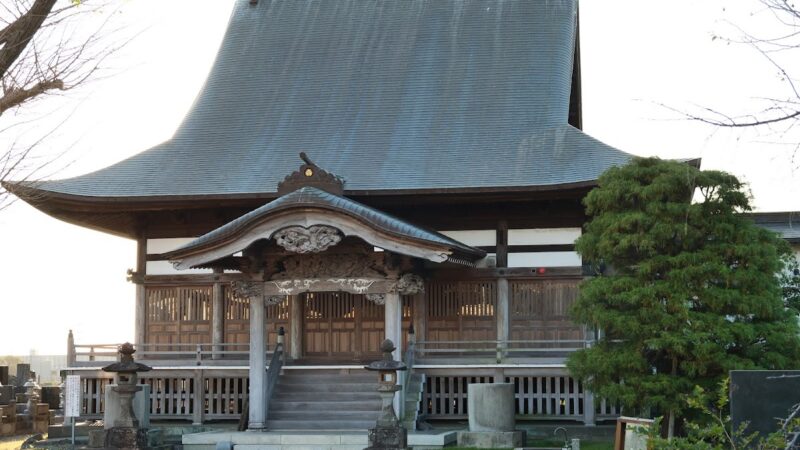
Of particular note is the architectural style of Honmanji Temple’s main hall. It retains architectural styles from the late Edo period to the Meiji period, making it an important example for understanding the changes in temple architecture in the region.
Highlights of Honmanji Temple’s Architecture and Grounds
Within the grounds of Honmanji Temple, various buildings and stone structures remain that tell the story of its long history. These are valuable cultural heritage items that convey not only the history of the temple but also the changes in the region’s culture and beliefs.
Features of the Main Hall
The main hall of Honmanji Temple follows the traditional style of temple architecture while being adapted to the local climate and environment. Particularly noteworthy is the decorative gegyo (decorative ornament) on the curved gable of the main hall’s facade.
This gegyo features a dragon carving, characterized by its exquisite carving technique and unique design. Dragons are highly valued in Buddhism as protectors of Buddhist teachings, and the dragon on Honmanji Temple’s gegyo also holds symbolic meaning as a protector of the temple and its followers.
Stone Structures on the Temple Grounds
The grounds of Honmanji Temple contain various stone structures built from the Edo period to the Meiji period. These include gravestones of successive chief priests, stone lanterns donated by parishioners, and inscribed monuments.
In particular, the stone monuments inscribed with the title “Namu Myoho Renge Kyo,” unique to Nichiren Buddhist temples, are important relics that tell the story of the temple’s history of faith. The inscriptions on these stone structures reveal the names of believers at the time and the dates of their dedication, making them valuable resources for local history research.
Kenpon Hokke Sect and Honmanji Temple
Honmanji Temple belongs to the Kenpon Hokke Sect, a branch of the Hokke sect that inherits the teachings of Nichiren Shonin. Understanding the doctrines and history of this sect is essential to understanding Honmanji Temple’s religious position.
Establishment of the Kenpon Hokke Sect
The Kenpon Hokke Sect is a sect that inherits the lineage of Nichiro Shonin, a direct disciple of Nichiren Shonin. It developed primarily in Kyoto from the Muromachi period onward, eventually spreading to the Kanto region. Myomanji Temple, the former head temple of Honmanji Temple, is the head temple of the Kenpon Hokke Sect located in Kyoto, and Honmanji Temple was founded as a branch temple of Myomanji Temple.
Role as a Chuhonji Temple
Honmanji Temple holds the status of a Chuhonji Temple within the Kenpon Hokke Sect. Chūhonji was a temple situated between the head temple and its branch temples, playing a role in overseeing religious activities within a certain region and guiding branch temples.
This temple status indicates that Honmanji was not merely an isolated temple, but held a crucial position as a central temple of the Kenpon Hokke sect in the Chiba region. Chūhonji possessed a wide range of religious and administrative functions, including conducting religious ceremonies, educating monks, and managing branch temples.
The Relationship Between Honmanji and Hongyoji
When discussing Honmanji, its relationship with Hongyoji, also founded by Nichitai Shōnin, is essential. These two temples developed in close cooperation as the two major centers of Hokke faith in Chiba City.
The Footsteps of Nichitai Shōnin
Nichitai Shōnin was a high-ranking priest who was active in the Chiba region in the late 15th century. He first founded Hongyoji, and later Honmanji. Through these two temples, he laid the foundation for Hokke faith in the Chiba region.
The activities of Nichitai Shonin extended beyond simply constructing temples, encompassing a wide range of activities including missionary work among local people, lectures on religious doctrine, and training of disciples. His teachings have been passed down through both temples to the present day.
Differences in the Characteristics of the Two Temples
Although founded by the same founder, Honkoji and Honmanji temples possess distinct characteristics. They differ in location, size, and parishioner composition, and each has developed independently.
Honmanji is located in Oyumi, a rural area in southern Chiba City, and has attracted followers primarily from the local farming class. On the other hand, Honkoji is located closer to the center of Chiba City and is thought to have had a more urban character.
The History of Oyumi Town and Honmanji
Oyumi Town, where Honmanji is located, is a region in the southern part of Chiba City’s Chuo Ward. Understanding the relationship between the history of this region and Honmanji clarifies the social role the temple has played.
Origin of the Place Name Omi
There are several theories regarding the origin of the place name Omi, but it is a historical place name indicating that this area has been developed since ancient times. During the Middle Ages, it was under the control of the Chiba clan, and a village centered on agriculture was formed.
The Role of Honmanji Temple in the Local Community
Throughout the Edo period, Honmanji Temple functioned as the religious and cultural center of Omi village. The temple served not only as a place for religious rituals such as funerals and memorial services, but also as a social space where villagers gathered and exchanged information.
Even after the Meiji era, Honmanji Temple continued to play an important role as the core of the local community. Even today, it maintains deep ties with residents as a base for local traditional events and cultural activities.
Access and Visiting Information for Honmanji Temple
This section provides practical information regarding transportation and visiting Honmanji Temple.
Access by Train and Bus
The nearest stations to Honmanji Temple are Kamatori Station or Soga Station on the JR Sotobo Line. From the station, you will need to take a bus or taxi.
- From Kamatori Station: Take the Keisei Bus and get off at the “Omi-cho” bus stop, then walk for about 5 minutes.
- From Soga Station: Take the Kominato Railway Bus and get off at the “Omi-cho” bus stop, then walk for about 5 minutes.
Access by Car
If you are coming by car, the Soga IC or Omiya IC on the Keiyo Expressway are convenient.
- Approximately 10 minutes from Soga IC
- Approximately 15 minutes from Omiya IC
There is parking space for visitors on the temple grounds, but it is limited, so if you are visiting in a large group, we recommend contacting us in advance.
Precautions When Visiting
Honmanji Temple is a temple that is still actively engaged in religious activities. Please note the following points when visiting.
- Maintain silence and be considerate of other worshippers and nearby residents.
- Refrain from taking photographs inside the main hall and other areas out of religious consideration.
- Refrain from visiting if a memorial service or event is taking place, or obtain permission in advance.
- Always take your trash with you.
Other Kenpon Hokke Sect Temples in Chiba City
Besides Honmanji Temple, there are several other Kenpon Hokke Sect and Nichiren Sect temples in Chiba City. Visiting these temples will give you a deeper understanding of the spread of Hokke faith in the Chiba region.
Comparison with Hongyoji Temple
As mentioned above, Hongyoji Temple, like Honmanji Temple, was founded by Nichitai Shonin. Visiting both temples allows you to compare the characteristics of temples founded by the same founder and the differences in their respective developments.
Hokke Sect Temples in Surrounding Areas
Numerous Hokke Sect temples also exist in Ichikawa City, Funabashi City, Narashino City, and other areas surrounding Chiba City. These temples formed a network of Hokke faith in this region from the medieval to the early modern period. ## Annual Events and Memorial Services at Honmanji Temple
Honmanji Temple holds various religious events and memorial services throughout the year. These events are at the heart of the temple’s religious activities and provide important opportunities to deepen ties with parishioners and local residents.
Major Annual Events
As a temple of the Kenpon Hokke sect, Honmanji Temple holds the following events:
- Oeshiki: A memorial service commemorating the death anniversary of Nichiren Shonin (October)
- Osegaki: A memorial service for ancestors (August)
- Setsubun-e: A memorial service for Setsubun (February)
- Spring and Autumn Higan-e: Memorial services for the equinox (March and September)
These events may be open to general visitors as well as parishioners, so we recommend that those interested in attending inquire in advance.
Honmanji Temple and Local Cultural Heritage
Honmanji Temple is more than just a religious facility; it possesses significant cultural heritage value, conveying the history and culture of the region.
Cultural Heritage Value of the Buildings
The buildings of Honmanji Temple, including the main hall and the temple gate, preserve the characteristics of temple architecture from the Edo period to the Meiji period. In particular, the dragon carvings on the gable ornaments of the main hall are a valuable example demonstrating the level of Edo period carving techniques.
Cultural Assets in the Collection
Honmanji Temple is believed to possess Buddhist art objects and ancient documents passed down through generations of chief priests. These are important resources not only for studying the history of the temple but also for researching the history of the region.
Activities of Honmanji Temple in the Modern Era
Honmanji Temple is developing activities that meet the needs of modern society while preserving its traditions.
Relationship with Parishioners
Honmanji Temple maintains deep ties with its parishioners, who have lived in this region for generations. It continues to provide religious services at important life events, such as funerals, memorial services, and cemetery management.
Contribution to the Local Community
Beyond religious activities, temples contribute to the local community in various ways, including the preservation of local history and culture and cooperation in educational activities. The temple grounds also function as a space where local residents can find peace of mind.
Cemetery Information
Honmanji Temple has a cemetery for its parishioners. For those seeking a burial plot in southern Chiba City, the cemetery of this historic temple is a reassuring option.
Cemetery Features
Honmanji Temple’s cemetery is located in a quiet environment and is meticulously maintained. For inquiries regarding new burial plot acquisition, please contact the temple directly.
Nearby Funeral Homes
The following funeral homes are located near Honmanji Temple and can be used for funeral services:
- Sect House Oyumino
- Chiisana Mori no Ie Chiba Hamano-cho
- Sunselmo Gyokusenin Soga Kaikan
By coordinating with these facilities, smooth funeral services can be conducted.
The Significance of Visiting Honmanji Temple
Visiting Honmanji Temple is not simply about seeing a temple; it’s a valuable opportunity to experience the history and culture of the Chiba region.
As a Place for Historical Learning
The history of Honmanji Temple, which dates back to the Muromachi period, is a microcosm of the history of the Chiba region from the medieval to the early modern period and into the present day. The temple’s buildings, stone structures, and the history passed down through generations teach us living history that cannot be learned from textbooks.
Experiencing Faith and Culture
As a temple of the Kenpon Hokke sect, Honmanji Temple continues to transmit the teachings of Nichiren Shonin. By visiting the temple and feeling its atmosphere, you can experience the depth of Japanese Buddhist culture and faith.
Seeking Peace of Mind
Spending time in the quiet temple grounds, away from the hustle and bustle of modern society, brings peace of mind. The grounds of Honmanji Temple are valuable as such a place of spiritual solace.
Summary
Honmanji Temple, located in Omi-cho, Chuo-ku, Chiba City, Chiba Prefecture, is a central temple of the Kenpon Hokke sect, founded in 1473 by Nichitai Shonin. With a history spanning over 550 years, this temple has long been deeply intertwined with the local community as an important center of Hokke faith in the Chiba region.
Its architectural features, including the dragon-shaped gable ornament on the main hall’s curved gable, the stone structures remaining on the temple grounds, and the various cultural artifacts that tell the history of the region, demonstrate that Honmanji Temple is not merely a religious facility, but an important place that conveys the history and culture of the region to the present day.
Even today, Honmanji Temple continues its traditional religious activities while cherishing its ties with parishioners and local residents. If you have the opportunity to visit southern Chiba City, please do visit this historic temple and experience its tranquil atmosphere and long history. Honmanji Temple is a valuable cultural heritage site where you can experience the history and culture of Chiba.