Complete Guide to Ishianji Temple (Chiba Prefecture): History, Goshuin (Temple Seal), and Access Information
Ishianji Temple, located in Chiba Prefecture, is a valuable temple that preserves the history and culture of the region. This article comprehensively introduces information you should know before visiting, from the historical background of Ishianji Temple to its highlights, visiting information, and access methods.
Basic Information about Ishianji Temple
Ishianji Temple is a Buddhist temple located in Chiba Prefecture, with a long history as a place of worship for local residents. It is known as a place where one can escape the hustle and bustle of the city and find peace of mind.
Location and Sect
Ishianji Temple is located in a specific area within Chiba Prefecture and functions as a temple deeply connected to the local community. Regarding its sect, it belongs to one of the traditional Japanese Buddhist sects, and its services and events are conducted based on its teachings.
Characteristics of the Temple
The temple name, Sekianji, contains the characters “Seki” (石) and “An” (安), suggesting a firm and stable place of worship. The temple architecture follows traditional Japanese styles, with the main hall and other buildings arranged accordingly.
History of Sekianji
Origin of Founding
The founding date of Sekianji is known from local historical documents and temple traditions. Like many regional temples, it is highly likely that it was built during the medieval or early modern period by influential local figures or devout believers.
Chiba Prefecture is located on the Boso Peninsula and has long flourished as a key point for maritime traffic. This geographical characteristic influenced the spread of Buddhist culture, leading to the establishment of temples throughout the region. Sekianji can be considered one of the temples born within this historical context.
Historical Changes
During the Edo period, the danka system (parishioner system) was established, and Sekianji played an important role as the family temple of the local residents. Despite being affected by the anti-Buddhist movement after the Meiji Restoration, the temple has a history of surviving, supported by the faith of the local people.
Even in modern times, it has maintained its function as a temple, overcoming difficulties such as war damage and natural disasters. Currently, in addition to preserving traditional Buddhist ceremonies, it is also focusing on activities that foster interaction with the local community.
Highlights of the Temple Grounds
Main Hall
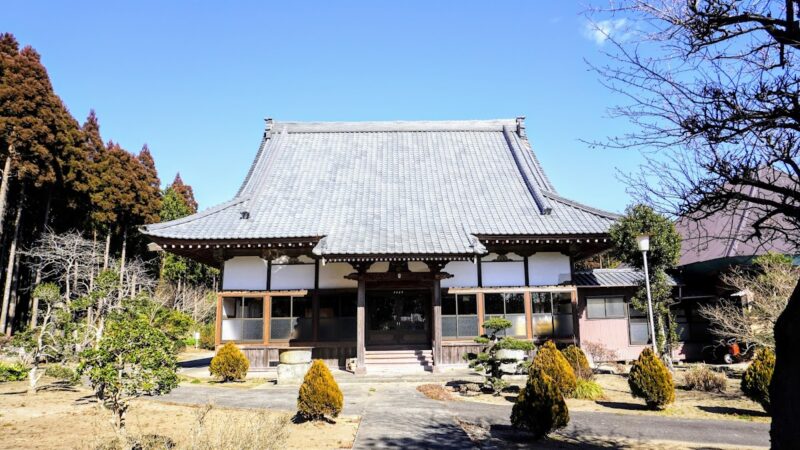
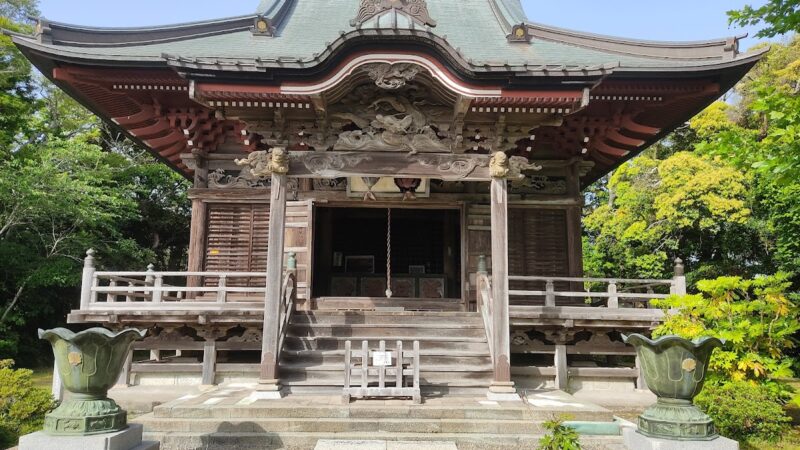
The main hall of Ishianji Temple is the central building that visitors first encounter. The principal image is enshrined here, and daily services and religious ceremonies are held. The architectural style is based on traditional Japanese style, and one can feel the warmth of wooden architecture.
Inside the main hall, Buddhist statues and implements are arranged, creating a solemn atmosphere. Visitors can clasp their hands together in front of the main hall and offer their prayers in peace.
Natural Environment of the Temple Grounds
The grounds of Ishianji Temple offer opportunities to enjoy the changing seasons. In spring, cherry blossoms and plum blossoms; in summer, lush greenery; in autumn, vibrant autumn leaves; and in winter, a serene snowscape—each season offers a different and beautiful sight.
Many of the trees on the temple grounds have grown over many years, serving as living witnesses to the temple’s history. This natural environment is an important element that provides peace of mind to visitors.
Stone Monuments and Memorials
Within the temple grounds, there may be stone monuments and memorials commemorating the temple’s history and local events. These are valuable resources for historical research and serve to convey the thoughts and feelings of people from the past to the present.
Annual Events and Memorial Services
Regular Events
As a Buddhist temple, Ishianji holds various events throughout the year. The main events include the following:
- New Year’s Day First Shrine Visit: Prayers are offered for safety and happiness throughout the year as the new year begins.
- Spring and Autumn Equinoxes: Many parishioners visit the temple during these important times for ancestral worship.
- Obon Memorial Service: A traditional event to welcome and honor the spirits of ancestors.
- New Year’s Eve Bell Ringing: The temple bell is rung 108 times on New Year’s Eve to dispel worldly desires.
Special Memorial Services
Temples sometimes hold special memorial services unique to their own, such as the founding anniversary or the anniversary of the principal deity. These events also serve as important community events for parishioners and local residents.
Goshuin (Temple Seal) Information
About the Issuance of Goshuin
In recent years, collecting Goshuin has become popular as part of temple and shrine visits. It is possible that Ishianji Temple also offers Goshuin. Goshuin are not merely commemorative stamps, but valuable items bestowed by temples as proof of worship.
When receiving a Goshuin (temple stamp), please observe the following etiquette:
- First, visit the main hall before receiving your Goshuin.
- Prepare a Goshuincho (avoid using notebooks or blank paper).
- Request using polite language.
- Prepare your offering (hatsuho-ryo).
- Wait quietly while your Goshuin is being written.
Characteristics of Goshuin
Each temple’s Goshuin features the temple’s name, the name of the principal deity, and the date written in ink, followed by a red seal. The Goshuin of Sekianji Temple likely reflects the unique characteristics of the temple.
Access Information
Access by Public Transportation
Access to Sekianji Temple by public transportation varies depending on the distance from the nearest station and the availability of bus routes. For temples in Chiba Prefecture, the following transportation options are available:
- Train: Use the nearest JR or private railway station.
- Bus: If using a bus from the station, check the nearest bus stop.
- Walking: It may be possible to access the temple on foot from the station or bus stop.
We recommend checking the latest timetables and service status before your visit.
Access by Car
If visiting by private car, you can search for a route by entering the temple name or address into your car’s navigation system. It’s a good idea to check access routes from major roads in Chiba Prefecture in advance.
Regarding parking availability, we recommend contacting the temple in advance or referring to visitor information. Smaller temples may not have dedicated parking, so it’s a good idea to research nearby coin-operated parking lots.
Nearby Tourist Attractions
When visiting Sekianji Temple, combining your visit with a tour of nearby tourist attractions will make your trip more fulfilling. Chiba Prefecture has many historical sites and natural scenic spots, allowing you to create a sightseeing plan that combines temple and shrine visits.
Manners and Points for Visiting Temples
Basic Manners for Visiting Temples
When visiting a temple, please observe the following basic manners:
- Bow at the Temple Gate: Bow before entering the temple grounds.
- Be Quiet: Do not speak loudly on the temple grounds and remain quiet.
- Photography: Take photographs only in permitted areas; check beforehand, especially inside the main hall.
- Attire: Dress modestly and cleanly.
- Smoking and Eating: Refrain from smoking and eating outside designated areas.
Proper Worship Etiquette
The basic worship etiquette at Buddhist temples is as follows:
- Straighten your posture in front of the main hall.
- Bow.
- Quietly place your offering.
- Ring the bell if there is one.
- Pray with your hands clasped together (do not clap).
- Bow and leave.
Note that, unlike Shinto shrines, you do not clap at temples.
Cultural Significance of Sekianji Temple
Connection to the Local Community
Sekianji Temple has functioned not merely as a religious institution, but as a central presence in the local community. Through the danka (parishioner) system, it has maintained strong ties with local residents and has been deeply involved in people’s lives through weddings, funerals, and annual events.
Even today, it plays an important role as a place for transmitting local history and culture, and as a place for intergenerational exchange.
Value as a Cultural Asset
The tangible and intangible cultural assets held by Sekianji Temple, including temple architecture, Buddhist statues, Buddhist implements, and ancient documents, are valuable resources for understanding the history of the region. These are not simply relics of the past, but offer many lessons and insights to us who live in the present.
Advice for Visitors
Best Time to Visit
The best times to visit Sekianji Temple are as follows:
- Spring (March-May): Cherry blossoms and fresh greenery are beautiful, and the weather is mild.
- Autumn (September-November): The autumn leaves are at their peak, and it’s a pleasant season.
- New Year’s Eve and New Year’s Day: You can experience a special atmosphere with New Year’s visits and the ringing of the temple bells on New Year’s Eve.
Be sure to take precautions against the heat in summer and the cold in winter.
Time Required
The time required to visit Sekianji Temple varies depending on the size of the grounds and the number of points of interest, but generally, you should allow 30 minutes to an hour. If you plan to stroll around the grounds thoroughly or collect a temple stamp, we recommend allowing a little more time.
Useful Items to Bring
- Goshuincho (stamp book): For receiving temple stamps
- Small change: For offerings and donations
- Camera: To record memories (please observe photography etiquette)
- Comfortable walking shoes: For strolling around the temple grounds
- Weather-appropriate equipment: Parasol, rain gear, warm clothing, etc.
Temple Culture in Chiba Prefecture
Buddhist History of Boso
Chiba Prefecture (Boso region) is a region where Buddhist culture has flourished since ancient times. From the Nara period to the Heian period, many temples were built, forming the foundation of the region’s spiritual culture.
In the Middle Ages, influenced by the Kamakura Shogunate, the number of Zen Buddhist temples increased, and because Nichiren Shonin, the founder of the Nichiren sect, was from Boshu (present-day southern Chiba Prefecture), many Nichiren Buddhist temples can also be found.
The Role of Ishianji Temple
Ishianji Temple plays a vital role in Chiba Prefecture’s rich Buddhist culture, preserving the region’s history and culture. While it may not be a large-scale tourist temple, its significance as a deeply rooted place of faith in the community is immense.
Cooperation in Temple Maintenance
The Danka System and Temple Management
Many temples in Japan are operated through maintenance fees (donations) from their parishioners. Ishianji Temple is no exception, and is maintained through the support of its parishioners and followers.
Maintaining a temple involves many expenses, including building repairs, grounds maintenance, and the performance of religious ceremonies. Even general visitors who are not parishioners can contribute to the temple’s maintenance through offerings such as donations and fees for temple seals.
Volunteer Activities
Some temples accept volunteers for activities such as cleaning the grounds and assisting with events. Participating in these activities can deepen your connection with the temple.
Temples in the Digital Age
Utilizing Online Information
In modern times, many temples disseminate information through websites and social media. It is possible to find basic information and event schedules for Sekianji Temple online.
Before visiting, we recommend checking the official website and related information to confirm the latest opening hours and any special events.
Virtual Worship
Since the COVID-19 pandemic, new forms of religious activities, such as online memorial services and virtual worship, have spread. For those living far away or unable to visit in person for any reason, the use of such digital technologies is a beneficial option.
Summary
Sekianji Temple, a historic temple located in Chiba Prefecture, has supported local faith and culture. This article comprehensively introduced useful information for visiting Sekianji Temple, including its historical background, highlights of the grounds, worship etiquette, and access information.
Visiting a temple is not merely sightseeing; it is a valuable opportunity to experience traditional Japanese culture and find inner peace. When visiting Sekianji Temple, we hope you will use the manners and points introduced in this article as a reference to have a meaningful experience.
By joining your hands in prayer in the tranquil temple grounds and reflecting on the place of faith that our ancestors have preserved and passed down, you can find peace of mind away from the hustle and bustle of everyday life. We hope that your visit to Sekianji Temple will be a memorable experience for you.