A Thorough Explanation of the History, Access, and Features of Honkyu-ji Temple (Midori-ku, Chiba City, Chiba Prefecture)
Honkyu-ji Temple, located in Takatsudo-cho, Midori-ku, Chiba City, Chiba Prefecture, is a historic Nichiren Buddhist temple that has attracted the faith of the local community. This article provides a detailed explanation of everything you need to know about this temple, from its basic information and historical background to the features of its grounds and how to access it.
Basic Information about Honkyu-ji Temple
Honkyu-ji Temple is a Nichiren Buddhist temple located at 450 Takatsudo-cho, Midori-ku, Chiba City, Chiba Prefecture. Midori-ku is located in the southeastern part of Chiba City and is known as an area where rich natural environments and residential areas are in harmony.
Location and Access
Location:
450 Takatsudo-cho, Midori-ku, Chiba City, Chiba Prefecture 267-0066
The nearest station to Honkyu-ji Temple is Kamatori Station on the JR Sotobo Line. Kamatori Station is a central station in Midori-ku, Chiba City, and commercial facilities and residential areas spread out around the station. The temple is accessible on foot or by bus from the station.
If traveling by car, take major roads such as the Keiyo Expressway or Chiba-Togane Expressway towards Midori Ward and head towards the Takatsudo-cho area. The surrounding area is a mix of residential and agricultural land, and the temple is located in a quiet environment.
Sect and Principal Image
Sect: Nichiren Buddhism
Principal Image: A principal image based on the teachings of Nichiren Shonin
Nichiren Buddhism is a Buddhist sect founded by Nichiren Shonin during the Kamakura period, characterized by a faith centered on chanting the mantra “Namu Myoho Renge Kyo.” Chiba Prefecture is a place associated with Nichiren Shonin, and many Nichiren Buddhism temples exist there. Honkyu-ji Temple is one of them and has played a central role in the local faith.
Deep Relationship Between Nichiren Buddhism and Chiba Prefecture
Chiba Prefecture is an extremely important region for Nichiren Buddhism. Nichiren Shonin was from Awa Province (present-day southern Chiba Prefecture), and many important temples, including Tanjoji Temple (Kamogawa City), are scattered throughout the prefecture.
Major Nichiren Buddhist Temples in Chiba Prefecture
Numerous Nichiren Buddhist temples, including head temples and sub-head temples, exist within Chiba Prefecture. Representative examples include:
- Nakayama Hokkeji Temple (Ichikawa City): Nationally known as a major head temple of the Nichiren sect.
- Hondo-ji Temple (Matsudo City): Popular with tourists as a hydrangea temple.
- Tanjoji Temple (Kamogawa City): A temple built on the birthplace of Nichiren Shonin.
- Seichōji Temple (Kamogawa City): A sacred site where Nichiren Shonin founded his sect.
Along with these famous temples, community-based temples like Honkyūji Temple support Nichiren Buddhist faith in Chiba Prefecture.
Historical Background of Midori Ward, Chiba City
Midori Ward is an administrative district that was created in 1992 when Chiba City became a designated city. Prior to that, it was part of Chiba City, and even further back, it was a rural area belonging to Chiba County.
Changes from the Edo Period to the Meiji Period
During the Edo period, the area of present-day Midori Ward was mainly composed of scattered villages centered on agriculture. As a region under the influence of the Chiba clan, various temples and shrines were built from the medieval to the early modern period. It is believed that Honkyu-ji Temple also functioned as a center of local faith during this time.
In the Meiji period, despite the impact of the anti-Buddhist movement, many temples survived and maintained their role as centers of local communities. Changes in religious policy and administrative reorganization during the Meiji period led to changes in the notation and management systems of temple locations.
Modern Midori Ward, Chiba City
Present-day Midori Ward is known as a relatively green area within Chiba City. While residential development is progressing, farmland and rural landscapes remain, creating an environment where urban life and nature coexist. Takatsudo-cho, where Honkyu-ji Temple is located, is an area that reflects these characteristics of Midori Ward.
Honkyu-ji Temple Grounds and Features
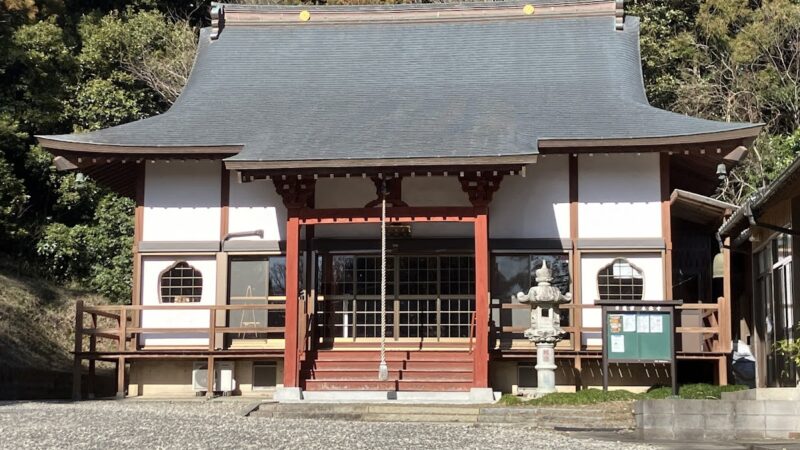
Honkyu-ji Temple grounds are located in a quiet environment in Midori Ward, Chiba City. As a Nichiren Buddhist temple, religious facilities, including the main hall, are arranged within the grounds.
Layout of the Temple Grounds
Nichiren Buddhist temple grounds generally have the following components:
- Main Hall: The central building where the principal image is enshrined and where religious services and ceremonies are held.
- Bell Tower: A facility where the temple bell is hung and the time is announced.
- Cemetery: The burial grounds of parishioners.
- Priest’s Quarters: The living space of the head priest and the temple office.
Honkyu-ji Temple also has the basic layout of a Nichiren Buddhist temple and supports the religious life of local believers.
Annual Events and Memorial Services
Nichiren Buddhist temples hold various memorial services and events throughout the year:
- Oeshiki: A memorial service centered around the anniversary of Nichiren Shonin’s death (October 13th)
- Obon: An important period for ancestor worship
- Spring and Autumn Equinox: Equinox memorial service
- New Year: New Year’s prayers
Through these events, Honkyu-ji Temple deepens its ties with its parishioners and local residents.
Temple Network in the Midori Ward Area of Chiba City
In addition to Honkyu-ji Temple, there are many other temples in Chiba City. Nichiren Buddhist temples, in particular, are scattered throughout the city, forming a network of interconnected faith areas.
Major Temples in Chiba City
Chuo Ward:
- Chiba-dera Temple (Shingon Buddhism): An ancient temple that gave its name to Chiba City.
- Hongyo-ji Temple (Kenpon Hokke Buddhism): A Hokke-style temple located in Hamano-cho.
Wakaba Ward:
- Numerous Nichiren Buddhist temples are scattered throughout the ward.
Midori Ward:
- Community-based temples, including Honkyu-ji Temple.
These temples, each with its own unique history and role in its respective region, contribute to the overall religious culture of Chiba City.
The Role of Honkyu-ji Temple as a Nichiren Buddhist Temple
Honkyu-ji Temple, as a Nichiren Buddhist temple, plays the following roles:
The Danka System and Local Community
Many temples in Japan operate under the Danka system. A Danka is a family that supports a specific temple as their family temple, and the temple performs funerals, memorial services, and ancestral rites for the Danka. Honkyu-ji Temple also supports the transmission of faith across generations by building deep relationships with local Danka.
Missionary and Educational Activities
Nichiren Buddhist temples pray for peace in society and the happiness of people, based on the principle of “establishing righteousness and securing peace for the nation.” Honkyu-ji Temple also engages in activities to spread the teachings of Nichiren Shonin, providing opportunities for believers to deepen their faith through Dharma talks and study sessions.
Preservation of Cultural Properties
Many temples possess valuable cultural properties that convey the history and culture of the region. Buildings, Buddhist statues, ancient documents, and other items inherited from the Edo and Meiji periods serve as important resources for understanding the region’s history.
Temple Culture and Characteristics of Chiba Prefecture
Chiba Prefecture, along with other prefectures in the Kanto region such as Tokyo, Saitama, and Kanagawa, is a region with a rich temple culture.
Characteristics of Temples in the Kanto Region
Temples in the Kanto region are characterized by a large number of temples belonging to new Buddhist sects (such as Jodo-shu, Jodo Shinshu, Nichiren-shu, and Rinzai-shu) that developed after the Kamakura period. Chiba Prefecture is no exception, and is particularly known for its high density of Nichiren Buddhist temples.
During the Edo period, while influenced by the urban culture centered around Edo (present-day Tokyo), each region developed its own unique temple culture. The area around Chiba City, where Honkyu-ji Temple is located, also enjoyed active cultural exchange due to its convenient transportation links to Edo.
Distribution of Temples in Chiba Prefecture
Chiba Prefecture has numerous temples, representing a wide variety of sects:
- Nichiren Buddhism: Boasts the largest number of temples in the prefecture
- Shingon Buddhism: Many ancient temples, including large temples such as Naritasan Shinsho-ji Temple
- Jodo Buddhism/Jodo Shinshu Buddhism: Widely followed Nembutsu-based sects
- Soto Zen/Rinzai Zen: Zen temples are scattered throughout the region
This diversity speaks to the richness of Chiba Prefecture’s religious culture.
Visiting Honkyu-ji Temple and Etiquette
When visiting a temple, it is important to observe basic etiquette.
Basic Etiquette for Visiting a Temple
- Bow at the Temple Gate: Bow before entering the temple grounds.
- Be Quiet: Be quiet within the temple grounds and be considerate of other visitors.
- Worship at the Main Hall: Join your hands in prayer in front of the main hall and offer your prayers with sincerity.
- Photography: Permission may be required to take photographs within the temple grounds.
- Attire: Modest, understated clothing is preferable.
Etiquette at Nichiren Buddhist Temples
In Nichiren Buddhism, chanting the mantra “Namu Myoho Renge Kyo” is fundamental. When praying in the main hall, chant this mantra silently or aloud.
Temples and Modern Society
In modern society, the role of temples is changing. In addition to the traditional danka system and funeral rites, temples are also expected to fulfill new social roles.
As a Hub for Local Communities
In today’s society, characterized by a declining birthrate and an aging population, temples are strengthening their function as hubs for local communities. An increasing number of temples are contributing to local communities through diverse activities such as monitoring the elderly, supporting childcare, and hosting local events.
Mental Care and Counseling
In today’s stressful society, temples serve as a haven for people seeking peace of mind. Mental care through activities such as listening by monks, Zen meditation sessions, and sutra copying sessions is gaining attention.
Cultural Inheritance and Education
Temples are also important places for transmitting traditional Japanese culture. Cultural activities such as Buddhist art, architecture, music (including chanting), calligraphy, and tea ceremony are being used to pass on culture to the next generation.
The Charm of Midori Ward, Chiba City, and Honkyu-ji Temple
Midori Ward in Chiba City is an attractive area where urban functions and the natural environment are in harmony.
Characteristics of Midori Ward
Midori Ward has the following characteristics:
- Abundant Nature: Large parks such as Showa no Mori (Showa Forest) are located here, providing abundant green spaces.
- Excellent Living Environment: Many residential areas are systematically developed.
- Convenient Transportation: Good access to central Tokyo via the JR Sotobo Line and Keiyo Expressway.
- History and Culture: Numerous ancient temples, shrines, and historical sites are scattered throughout the ward.
Honkyu-ji Temple plays a vital role as a spiritual pillar for the community within this Midori Ward environment.
Nearby Attractions
Around Honkyu-ji Temple, there are several attractions unique to Midori Ward, Chiba City:
- Showa no Mori: One of Chiba City’s largest comprehensive parks.
- Izumi Nature Park: Enjoy the changing seasons.
- Toke Castle Ruins: A historical site with the remains of a medieval castle.
Visiting these spots in conjunction with a temple visit will allow you to more deeply appreciate the charm of Midori Ward.
The Future and Prospects of Honkyu-ji Temple
Honkyu-ji Temple is expected to continue deepening its ties with the local community as a Nichiren Buddhist temple in Midori Ward, Chiba City.
Inheritance of Tradition and Innovation
While preserving the traditional teachings and rituals of the Nichiren sect, flexible responses to the needs of modern society are required. Temple management adapted to the new era, such as online memorial services and information dissemination using social media, is being explored.
Strengthening Collaboration with the Community
Strengthening collaboration with other religious facilities, community associations, and NPOs in the community is also an important issue, contributing to the revitalization of the entire region. It is also expected to function as a disaster prevention base and a hub for disseminating local culture.
Summary: The Role of Honkyu-ji Temple
Located in Takatsudo-cho, Midori Ward, Chiba City, Chiba Prefecture, Honkyu-ji Temple has supported the faith of the community throughout its long history as a Nichiren Buddhist temple. In Chiba Prefecture, a land associated with Nichiren Shonin, Honkyu-ji Temple is one of many Nichiren Buddhist temples, serving as a spiritual pillar for its parishioners and local residents.
From the Edo period to the Meiji era and into the present day, the role of temples has changed amidst societal shifts, but their essential role as a spiritual haven for people remains unchanged. Honkyu-ji Temple will continue to uphold its traditions while adapting to the new era, functioning as a central presence in the local community of Midori Ward, Chiba City.
While Chiba Prefecture boasts prominent Nichiren Buddhist temples such as Nakayama Hokkeji and Hondo-ji, community-based temples like Honkyu-ji support people’s daily religious lives throughout the region. This network of faith, woven by these temples, forms the rich religious culture of Chiba Prefecture.
By visiting Honkyu-ji Temple, you can experience the teachings of Nichiren Buddhism and feel the history and culture of Midori Ward, Chiba City. Finding peace of mind in the tranquil temple grounds and spending time away from the hustle and bustle of daily life will be a valuable experience for modern people.