Complete Guide to Chozenji Temple (Asahi City, Chiba Prefecture) | History, Aizen Myoo, and Access Information
Located in Nonaka, Asahi City, Chiba Prefecture, Chozenji Temple is an ancient temple of the Shingon Chizan sect, founded in 1401. Its principal image, the Aizen Myoo statue, is revered as a deity of matchmaking. With over 600 years of history, this temple is a valuable resource for preserving the region’s history and culture. This article provides a detailed overview of Chozenji Temple, including its history, highlights, and access information.
Basic Information about Chōzenji Temple
Location: 2042-1 Nonaka, Asahi City, Chiba Prefecture
Sect: Shingon-shu Chizan-ha
Mountain Name: Daigozan
Founded: September, 1401 (Ōei 8)
Founder: Chōhan Oshō
Principal Image: Aizen Myōō statue
Chōzenji Temple is located in Asahi City, in the northeastern part of Chiba Prefecture, near Kujūkuri Beach. As a temple belonging to the Shingon-shu Chizan-ha sect, it has played a central role in local faith.
History of Chōzenji Temple
Founding and Founder
Chōzenji Temple was founded in September, 1401 (Ōei 8). The founder was Chōhan Oshō, a Dharma descendant of the great high priest Jitsuken of Kongōōin Temple on Mount Daigo in Uji County, Yamashiro Province (present-day Kyoto Prefecture). The fact that Chozenji Temple was founded by a high-ranking priest dispatched from Daigosan Kongoin, an important center of the Shingon sect, indicates that it was positioned as a temple of high status from the beginning.
The Oei era corresponds to the mid-Muromachi period, a turbulent time in the Kanto region where the Kamakura Shogun and the Kanto Kanrei (deputy shogun of the Kanto region) vied for power. In this context, the fact that a high-ranking priest was invited from Daigosan in Kyoto to establish a temple speaks to the high cultural and spiritual standards sought by influential figures in this region.
Relationship with Daigosan Kongoin
The founding priest, Abbot Chohan, is considered the sixth-generation Dharma descendant of Daigosan Kongoin Grand Abbot Jitsuken. Daigosan is home to Daigoji Temple, the head temple of the Daigo branch of the Shingon sect, and has been known as an important training ground for Shingon esoteric Buddhism since the Heian period. Kongoin is one of the most prestigious temples within this region. With its founding by Abbot Chōhan, who possessed this distinguished lineage, Chōzenji Temple was established from its inception as a temple that transmitted the orthodox teachings of Shingon Esoteric Buddhism. Its strong ties to the central Buddhist community in Kyoto are rare for a regional temple, enhancing Chōzenji Temple’s historical value.
Relationship with Shiinauchi Castle
It is said that Shiinauchi Castle once stood to the west of Chōzenji Temple. The Shiina clan was a branch of the Chiba clan and a samurai family that ruled this region. In medieval Kanto, it was common for powerful samurai families to build family temples, and it is believed that Chōzenji Temple also developed in close connection with the Shiina clan.
The close proximity of the castle and temple demonstrates the close relationship between the samurai class and Buddhism. It is presumed that Chōzenji Temple functioned not merely as a religious facility, but as a spiritual pillar for the regional rulers and as a cultural center. While very few remains of Shiinauchi Castle exist today, the existence of Chōzenji Temple serves as a valuable witness to the history of that time.
Characteristics of the Principal Image, Aizen Myōō
What is Aizen Myōō?
The principal image of Chōzenji Temple is Aizen Myōō. Aizen Myōō is one of the important deities in Shingon Esoteric Buddhism, believed to possess the power to transform worldly desires into enlightenment. In particular, because of its ability to purify lust and transform it into the Bodhisattva spirit, it is widely worshipped as the “Buddha of matchmaking between men and women.”
Aizen Myōō is usually depicted with a red body, a wrathful expression, and six arms. This fierce appearance symbolizes the powerful force that overcomes worldly desires. Although it may seem contradictory, Aizen Myōō does not reject lust, but rather is a compassionate being that transforms it into a path to enlightenment.
Characteristics of the Aizen Myoo Statue at Chōzenji Temple
The Aizen Myoo statue at Chōzenji Temple is a valuable Buddhist statue that faithfully preserves traditional techniques. It is a seated statue made using the kiyosegi-zukuri (joined wood) technique, combining multiple pieces of wood. Kiyosegi-zukuri is a technique that developed after the Kamakura period, and it not only allows for the efficient production of large Buddhist statues but also reduces wood shrinkage and distortion.
This statue demonstrates the high skill of the Buddhist sculptor and accurately expresses the doctrines of Shingon Esoteric Buddhism. The seated form represents a posture of meditation and ascetic practice, emphasizing the importance of inner discipline to believers.
Faith in Matchmaking
Aizen Myoo is worshipped as the “Buddha of matchmaking between men and women,” and Chōzenji Temple is visited by worshippers seeking good fortune in love. This belief developed from the doctrine that Aizen Myoo “purifies lust and leads to enlightenment.”
In Shingon Esoteric Buddhism, the emphasis is not on rejecting worldly desires, but on transforming them into a force for enlightenment. Similarly, love between men and women, when guided correctly, can become a force for mutual upliftment and growth. Faith in Aizen Myoo (Aizen Myoo) holds a deeper meaning, not merely for romantic fulfillment, but for the desire for true love and personal growth.
About the Shingon Chizan School
Characteristics of the Shingon Chizan School
The Shingon Chizan School, to which Chōzenji Temple belongs, is one of the major branches of Shingon Buddhism. Its head temple is Chishakuin, located in Higashiyama-ku, Kyoto City, Kyoto Prefecture, and it has approximately 3,000 temples nationwide.
Shingon Buddhism is a branch of Esoteric Buddhism founded in the early Heian period by Kūkai (Kōbō Daishi), and it preaches Sokushin Jōbutsu (becoming a Buddha in this very body). The Chizan school was established when Chishakuin separated from Negoro-ji Temple during the Sengoku period and developed throughout the Edo period. It has a tradition of emphasizing learning and ascetic practice, and has produced many learned monks.
Practice of Shingon Esoteric Buddhism
In Shingon Buddhism, the three mysteries of body, speech, and mind are emphasized. The goal is to attain Buddhahood in this lifetime by integrating the actions of the body (body mysteries), the actions of speech (speech mysteries), and the actions of the mind (mind mysteries) with the three mysteries of the Buddha. Specifically, this involves performing mudras (body mysteries), chanting mantras (speech mysteries), and integrating the mind with the Buddha (mind mysteries).
At Chōzenji Temple, these traditional practices and rituals of Shingon Esoteric Buddhism are also preserved. Esoteric Buddhist rituals such as the Goma fire ritual are still performed today as important religious events that convey the wishes of believers to the Buddha.
Highlights of Chōzenji Temple
Main Hall
The main hall of Chōzenji Temple is the central building housing the principal image, the Aizen Myōō statue. This temple possesses a solemn atmosphere befitting a Shingon Buddhist temple, and its structure is well-suited to esoteric Buddhist rituals. Inside the main hall, in addition to the principal image, various Buddhist statues and mandalas are enshrined, allowing visitors to experience the worldview of Shingon Esoteric Buddhism.
When visiting, one can join their hands in prayer and bow before the main hall, calming their mind and feeling the compassion of Buddha. The tranquil atmosphere of the hall provides a precious space for self-reflection, away from the hustle and bustle of everyday life.
Atmosphere of the Temple Grounds
The grounds of Chōzenji Temple are enveloped in a calm atmosphere that reflects its more than 600-year history. Located in the rural area of Asahi City, it is a quiet environment in harmony with the surrounding nature. Ancient trees are scattered throughout the grounds, displaying different expressions throughout the seasons.
In particular, the western area, where Shiinauchi Castle is said to have once stood, is a place that evokes a sense of historical romance. Although no clear remains of the castle exist today, the topography and undulations of the land allow one to imagine the remnants of the medieval period.
Annual Events
At Chōzenji Temple, annual events are held in accordance with the traditions of the Shingon sect. Seasonal Buddhist services are held, such as the New Year’s Shushō-e (New Year’s service), the Spring and Autumn Higan-e (spring and autumn equinox services), and the Obon (Buddhist festival) Segaki-e (feeding of hungry ghosts), supporting the religious lives of the local people.
Especially on the Aizen Myōō festival day, many worshippers visit to pray for good fortune in relationships. These events are not merely religious ceremonies, but important opportunities to deepen the bonds of the local community.
Access Information
Access by Train
Nearest Station: JR Sōbu Main Line, Asahi Station
Chōzenji Temple is approximately 4 kilometers from Asahi Station. A taxi ride from the station takes about 10 minutes. Walking takes about 50 minutes, but it’s a pleasant stroll through the rural scenery of Asahi City.
Asahi Station is about 1 hour from Chiba Station and about 2 hours from Tokyo Station on the Sōbu Main Line. Using the Limited Express Shiosai train will allow you to reach the temple in a shorter time. ### Access by Car
Major Roads: National Route 126, Prefectural Road Yokaichiba-Noei Line
Approximately 30 minutes from the Daiei Interchange on the Higashi-Kanto Expressway, or approximately 40 minutes from the Sawara-Katori Interchange. If using the Choshi Connector Road, it’s approximately 35 minutes from the Yokoshiba-Hikari Interchange.
Since the area around Chozenji Temple is rural, it is recommended to check parking availability in advance. When visiting, please be considerate of local residents and avoid causing any inconvenience.
Nearby Tourist Attractions
Asahi City has other attractions besides Chozenji Temple. The Kujukuri Beach coastline is approximately 15 minutes away by car, offering magnificent views of the Pacific Ocean. Asahi City is also a thriving agricultural area, with numerous direct sales outlets where you can purchase fresh produce.
The Inubosaki Lighthouse and Choshi Electric Railway in Choshi City, as well as Katori Shrine in Katori City, are all within a 30-40 minute drive, allowing you to fully enjoy the history and nature of northeastern Chiba Prefecture by visiting them together.
History and Culture of Asahi City
Overview of Asahi City
Asahi City is a city with a population of approximately 60,000 located at the northern end of Kujukuri Beach in northeastern Chiba Prefecture. The current Asahi City was formed in 2005 through the merger of the former Asahi City, Kaijo Town, and Iioka Town. Agriculture thrives, taking advantage of the warm climate and fertile land facing the Pacific Ocean, and it boasts one of the highest cucumber production volumes in Japan.
Local History
The area around Asahi City has been inhabited since ancient times, with Jomon period shell mounds and Kofun period ruins having been discovered. In the Middle Ages, the Shiina clan, a branch of the Chiba clan, ruled the area, and Chozenji Temple was founded during this period.
During the Edo period, this region was governed as a direct territory of the shogunate and a territory of hatamoto (direct retainers of the shogun), and agriculture and fishing flourished. Sardine fishing on Kujukuri Beach was particularly famous, and dried sardines were shipped to Edo (present-day Tokyo) and the Kyoto/Osaka region as an important commodity.
Since the Meiji era, with the development of agricultural technology, the region has grown into a vegetable producing area, and continues to this day. Chōzenji Temple is a valuable cultural heritage site that has witnessed the historical changes of this region.
Manners and Etiquette for Visiting a Temple
Basic Etiquette for Visiting a Temple
When visiting a temple, please observe the following basic manners:
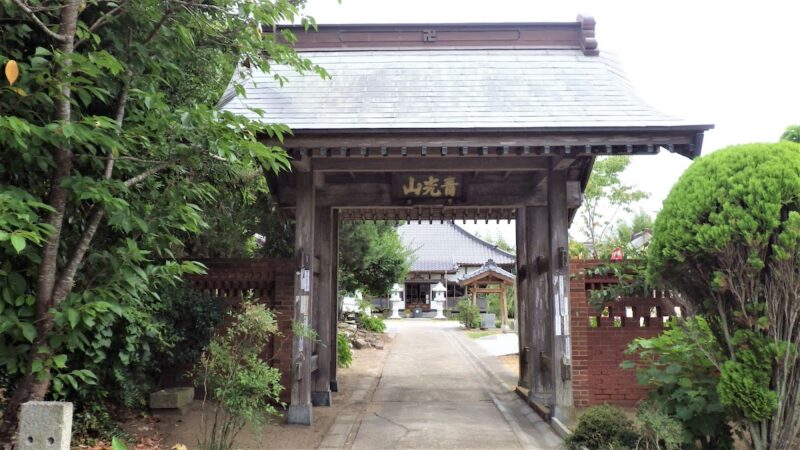
- A Bow at the Temple Gate: Before entering the temple grounds, bow at the temple gate. This shows respect for entering the world of Buddha.
- Procedure for Washing Hands: If there is a water basin for washing hands, wash your left hand first, then your right hand, and then receive water in your left hand and rinse your mouth.
- Worship at the Main Hall: Stand quietly in front of the main hall, join your hands in prayer, and offer your heartfelt respect. In Shingon Buddhism, you may also chant “Namu Daishi Henjo Kongo.”
- Be Quiet: Act quietly within the temple grounds and be considerate of other worshippers.
- Photography: Photography is prohibited in some areas, such as inside the main hall. Always check before taking pictures.
Characteristic Customs of Shingon Buddhism
In Shingon Buddhism, chanting a mantra is recommended during worship. The mantra for Aizen Myoo is “Om Makaragya Vajrashunisha Vajrasatva Jakun Bakbang.” If it’s difficult to remember, simply chanting “Namu Daishi Henjo Kongo” or “Namu Aizen Myoo” is acceptable.
What’s important is the heart, not the form. The most important thing is to face the Buddha with sincerity and to keep gratitude and wishes in your heart.
Chozenji Temple and the Local Community
As a Center of Local Faith
For over 600 years, Chozenji Temple has functioned as a spiritual pillar for the people of the region. People have visited Chozenji Temple to pray for the protection of the Buddha at various milestones in their lives, including weddings, funerals, and other ceremonies.
Even today, Chozenji Temple remains an important part of the local community. Its ties with its parishioners are strong, and community cooperation is essential for the maintenance and management of the temple and the operation of its events. This interdependence between the temple and the local community is one form of traditional Japanese social structure.
Value as a Cultural Asset
Chozenji Temple inherits not only tangible cultural assets such as buildings and Buddhist statues, but also intangible cultural assets such as the rituals and traditions of Shingon Esoteric Buddhism. These are not merely relics of the past, but living culture that should be passed on to future generations.
Chōzenji Temple provides important historical resources for learning about the region. Temple records and traditions are valuable sources of information that reveal the realities of the region that cannot be understood from written historical documents alone.
Temple Culture in Chiba Prefecture
Characteristics of Buddhism in Chiba Prefecture
Chiba Prefecture is a region where temples of various sects coexist. It is particularly characterized by a large number of Nichiren sect temples, and Tanjōji Temple is located in Kamogawa City, the birthplace of Nichiren Shonin. Furthermore, Naritasan Shinshōji Temple in Narita City is nationally famous as the head temple of the Shingon Chizan sect.
Many Shingon sect temples, such as Chōzenji Temple, also exist within the prefecture, each supporting the local faith and culture. The temple culture of Chiba Prefecture occupies an important position in understanding the history of Buddhism in the Kanto region from the medieval to the early modern period.
Other Notable Temples in Chiba Prefecture
Besides Chōzenji Temple, Chiba Prefecture boasts numerous temples of high historical and cultural value:
- Naritasan Shinshōji Temple (Narita City): The head temple of the Shingon Chizan sect, with one of the highest numbers of New Year’s visitors in Japan.
- Hondo-ji Temple (Matsudo City): A renowned Nichiren sect temple, famous for its hydrangeas and autumn leaves.
- Seichōji Temple (Kamogawa City): An important Nichiren sect temple, the site where Nichiren Shonin founded his sect.
- Tanjōji Temple (Kamogawa City): A temple built on the birthplace of Nichiren Shonin.
- Iitaka-ji Temple (Sōsa City): An ancient temple that flourished as a center of learning for the Nichiren sect.
Visiting these temples allows you to experience the rich Buddhist culture and history of Chiba Prefecture.
Summary
Chozenji Temple is an ancient temple of the Shingon Chizan sect, founded in 1401 (Oei 8). It is a valuable temple that conveys the history and culture of Asahi City, Chiba Prefecture. Founded by Abbot Chohan, who traced his lineage to Kongo-oin Temple on Mount Daigo in Kyoto, it boasts a history of over 600 years.
The principal image, a statue of Aizen Myoo, is a precious Buddhist statue created using the traditional wood-joining technique, and is revered as a deity for matchmaking. To the west of the temple lies the former site of Shiinauchi Castle, offering an interesting historical background that illustrates the relationship between medieval samurai and Buddhism.
Chozenji Temple, located in Nonaka, Asahi City, is accessible from Asahi Station on the JR Sobu Main Line and can also be visited by car. The temple grounds, nestled in a quiet rural area, are an excellent place to find peace of mind while feeling the weight of history.
When you visit Chiba Prefecture, be sure to stop by Chōzenji Temple and experience its history, culture, and the compassion of Aizen Myōō. Escape the hustle and bustle of modern life and find peace of mind in this place of faith that has been passed down for over 600 years.