Koyoji Temple (Abiko City, Chiba Prefecture) Complete Guide | History, Goshuin (Temple Seal), and Access Information
Koyoji Temple, located in Hakusan, Abiko City, Chiba Prefecture, is a historic temple belonging to the Soto Zen sect. Founded in the late 16th century, this temple has long been a center of local faith. This article comprehensively introduces information you should know before visiting Koyoji Temple, including its history, highlights, goshuin information, and access methods.
Basic Information about Koyoji Temple
Koyoji Temple is a Soto Zen temple located at 1-16-1 Hakusan, Abiko City, Chiba Prefecture. Its official name is “Jishozan Koyoji.”
Basic Temple Data
- Sect: Soto Zen
- Mountain Name: Jishozan
- Location: 1-16-1 Hakusan, Abiko City, Chiba Prefecture
- Phone Number: 04-7182-3235
- Sacred Site: 59th Temple of the New Shikoku Soma Eighty-Eight Sacred Sites
- Nearest Station: Abiko Station, JR Joban Line/Narita Line
The Soto Zen sect is a branch of Japanese Zen Buddhism founded by Zen Master Dogen, and is characterized by its emphasis on seated meditation (shikantaza). Koyo-ji Temple has inherited this tradition and has functioned as a center of regional Buddhist culture.
History and Background of Koyo-ji Temple
Founding History
Koyo-ji Temple is believed to have been founded in the late 16th century, during the period from the Sengoku period to the Azuchi-Momoyama period. The founder (the person who provided the land and funds for the temple’s establishment) is said to be Yamakata Hachiemon, a hatamoto (a direct retainer of the shogun).
A hatamoto was a samurai of the Edo period who served the shogun directly. The background to Yamakata Hachiemon’s founding of Koyo-ji Temple in this area reflects the deep faith of the samurai society at the time and the importance of Buddhist temples in the region.
Founding and Development of the Temple
The founder of Koyo-ji Temple (the monk who established the temple) was Dairyo Genju Daiosho. Dairyo Genju Daiosho was known as a high-ranking priest of the Soto Zen sect and founded Koyo-ji Temple to spread the teachings of Zen in this area.
As a Soto Zen temple, Koyo-ji Temple has served as a spiritual support for the local residents and has been deeply connected to the community through funerals, memorial services, and annual events. Throughout the Edo period, the temple cultivated relationships with local people under the danka system (parishioner system), and this tradition has been passed down to the present day.
Connection to the New Shikoku Soma Pilgrimage
Koyoji Temple is designated as the 59th temple of the New Shikoku Soma Pilgrimage (88 temples). The New Shikoku Soma Pilgrimage is a pilgrimage route established in the Kanto region, modeled after the Shikoku 88 Temple Pilgrimage, and is known as a place where devout people undertake pilgrimages.
As part of this pilgrimage, Koyoji Temple welcomes pilgrims, providing them with temple seals and a place for worship. Pilgrimages to these temples remain popular today as a form of spiritual practice for self-reflection and seeking inner peace.
Grounds and Highlights of Koyoji Temple
Main Hall
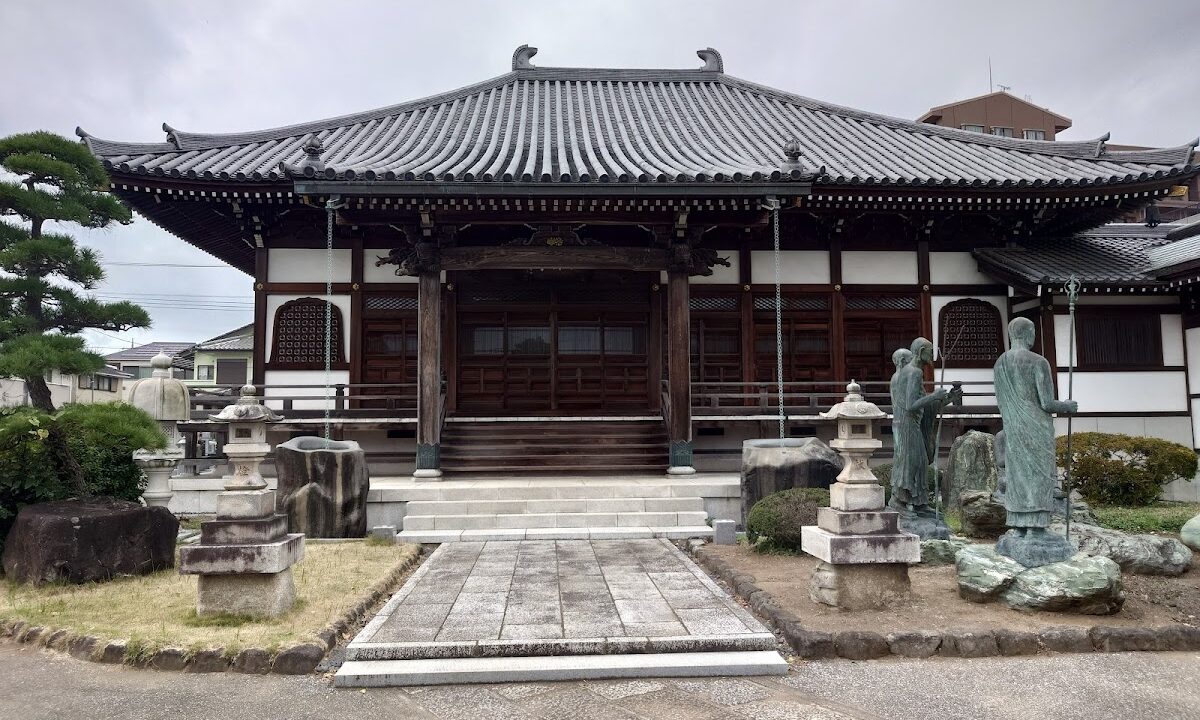
The main hall, the heart of Koyoji Temple, is a building in the traditional architectural style of the Soto Zen sect. The principal image is enshrined inside, and daily services and religious ceremonies are held there. The tranquil atmosphere of the main hall provides peace of mind to visitors.
Many main halls of Soto Zen temples also function as Zen meditation halls, and Koyo-ji Temple is also used as a place for training.
Atmosphere of the Temple Grounds
Despite being located in a residential area of Abiko City, the grounds of Koyo-ji Temple offer a quiet and peaceful space. Surrounded by trees, the grounds allow visitors to experience the changing seasons, and the scenery is particularly beautiful during the cherry blossom season in spring and the autumn foliage season.
The temple grounds also include a cemetery, which is used by parishioners to commemorate their ancestors. As a temple deeply rooted in the community, it is a place visited regularly by local residents.
Temple Gate and Stone Monument
At the entrance to the temple is a temple gate, welcoming visitors. Passing through the gate is considered to lead to a sacred space that is the world of Buddhism. Furthermore, the temple grounds are dotted with stone monuments and memorial towers that tell the story of history, allowing visitors to feel the long history of Koyoji Temple.
Goshuin (Temple Seal) Information
About the Issuance of Goshuin
Koyoji Temple issues goshuin to visitors. Goshuin are given as proof of visiting the temple, and in recent years, the number of people who collect goshuin as a hobby, known as “goshuin girls,” has increased, making them popular with a wide range of generations.
Koyoji Temple’s goshuin features the mountain name “Jishozan” and the temple name “Koyoji” written in ink, along with the temple’s seal. Sometimes, it also bears the seal of the 59th temple of the New Shikoku Soma Pilgrimage, making it a valuable item for those undertaking the pilgrimage.
Etiquette for Receiving a Goshuin (Temple Stamp)
When receiving a Goshuin, please observe the following etiquette:
- Complete your prayers first: A Goshuin is proof of your prayers, so always pray at the main hall before receiving your Goshuin.
- Prepare your Goshuincho (stamp book): Prepare a dedicated Goshuincho and present it open.
- Prepare your offering: Generally, it’s around 300 to 500 yen. Please prepare exact change to avoid needing change.
- Use polite language: Politely request, “May I have a Goshuin?”
- Wait quietly: Please wait quietly while your Goshuin is being written.
The hours for receiving Goshuin may vary depending on the temple’s schedule, so it is recommended to check by phone in advance.
Annual Events and Memorial Services
Main Annual Events
At Koyoji Temple, various events and memorial services are held throughout the year, following the traditions of the Soto Zen sect.
- New Year’s Day First Visit: Prayers are offered for safety and peace throughout the year as the new year begins.
- Spring and Autumn Equinox Memorial Services: Memorial services are held to honor ancestors.
- Obon Memorial Service: The spirits of ancestors are welcomed and honored during the Obon festival.
- New Year’s Eve Bell Ringing: The New Year’s Eve bell is rung to welcome the new year.
These events may be open to general visitors as well as temple parishioners, so those interested should inquire at the temple.
Funeral and Memorial Services
Koyoji Temple, as a local family temple, also conducts funerals and memorial services. We can send off and honor the deceased with respectful ceremonies following the customs of the Soto Zen sect. Those wishing to hold a funeral or memorial service should consult with the temple in advance to discuss the schedule and details. Even those who are not temple parishioners may be able to consult; please inquire by phone first.
Access Information
Access by Train
It is convenient to access Koyoji Temple using public transportation.
Nearest Station: JR Joban Line/Narita Line “Abiko Station”
Koyoji Temple is approximately a 10-minute walk from Abiko Station. Exit the north exit of the station and head towards Hakusan through the residential area. There may be signs along the way, but if you are unsure, it is recommended to use a map app on your smartphone.
Access by Car
The following route is convenient if you are visiting by car.
- Joban Expressway: Approximately 15 minutes from Kashiwa Interchange
- National Route 6: From Abiko city center towards Hakusan area
While there may be parking spaces for visitors at Koyoji Temple, spaces may be limited. Therefore, on days when congestion is expected due to religious services, we recommend using public transportation.
Nearby Tourist Attractions
Abiko City has many places worth visiting besides Koyoji Temple.
- Teganuma Lake: A beautiful lake spanning Abiko and Kashiwa cities, perfect for cycling and strolling.
- Shirakaba Literary Museum: Exhibits materials related to literary figures associated with Abiko City.
- Former Murakawa Villa: You can tour a villa architecture from the Taisho era.
- Bird Museum: A natural history museum focusing on the birds of Teganuma Lake.
Why not visit these tourist attractions in conjunction with your visit to Koyoji Temple?
About the Soto Zen School
Teachings of the Soto Zen School
The Soto Zen School, to which Koyoji Temple belongs, is a branch of Zen Buddhism introduced to Japan by Zen Master Dogen during the Kamakura period. The core of Soto Zen teachings is “Shikantaza,” that is, simply and wholeheartedly practicing zazen (seated meditation).
Through zazen, the aim is to look inward and attain enlightenment. In Soto Zen, all aspects of daily life are considered practice, and everyday activities such as eating and cleaning are valued as “samu” (work).
The Two Major Head Temples of the Soto Zen School
The Soto Zen School has two major head temples:
- Eiheiji (Fukui Prefecture): A temple founded by Zen Master Dogen
- Sojiji (Tsurumi Ward, Yokohama City): A temple founded by Zen Master Keizan (originally located in Ishikawa Prefecture)
Koyoji Temple also operates as a local temple while maintaining connections with these head temples.
Abiko City and Buddhist Culture
History of Abiko City
Abiko City is located in the northwestern part of Chiba Prefecture, a naturally rich area facing Lake Teganuma. It has been inhabited since ancient times, and Jomon period ruins have been discovered there. During the Edo period, it flourished as a post town on the Mito Highway, and from the Meiji era onward, it was a popular resort area for cultural figures.
Temple Culture of Abiko City
Abiko City is home to many temples, including Koyo-ji Temple. These temples have served as spiritual support for local residents while transmitting the teachings of their respective sects.
Temples are not merely religious facilities; they have functioned as centers of the local community, serving as venues for festivals, events, and education. Even today, this role remains unchanged, and they cherish their ties with the local community.
Manners and Etiquette for Visiting Temples
Basic Manners for Visiting Temples
When visiting Koyo-ji Temple, please observe the following basic manners:
- Attire: Please wear clean, understated clothing. Avoid revealing clothing.
- Bow at the temple gate: Bow before passing through the temple gate.
- Walk quietly: Walk quietly within the temple grounds and refrain from speaking loudly.
- Photography: Some areas prohibit photography, so please check before taking pictures.
- Offering money: When praying at the main hall, quietly offer your money.
- Praying with clasped hands: Before the Buddha, clasp your hands together and pray with sincerity.
About Zen Meditation Experiences
Some Soto Zen temples hold Zen meditation sessions for the general public. It may be possible to experience Zen meditation at Koyo-ji Temple, so please inquire with the temple if you are interested.
Zen meditation is a valuable opportunity to calm the mind and reflect on oneself. Beginners are often given careful instruction, so feel free to participate.
Inquiries about Koyoji Temple
Contact Information
You can contact Koyoji Temple using the following methods:
- Phone Number: 04-7182-3235
- Address: 1-16-1 Hakusan, Abiko City, Chiba Prefecture 270-1154
For information regarding visiting hours, event schedules, Goshuin (temple stamp) issuance, and Zen meditation sessions, it is recommended to call in advance.
Notes for Visitors
- Visiting Hours: Generally, daytime visits are possible, but please avoid early mornings and late nights.
- Consideration During Memorial Services: If a memorial service or funeral is taking place, please observe quietly or visit at another time.
- Parking: Parking spaces may be limited, so please use public transportation whenever possible.
Summary
Koyoji Temple, located in Abiko City, Chiba Prefecture, is a historic Soto Zen temple founded in the late 16th century. Founded by Hatamoto Yamadaka Hachiemon and established by Abbot Dairyo Genju, this temple is also known as the 59th temple on the New Shikoku Soma Eighty-Eight Sacred Sites Pilgrimage.
Nearby in a quiet residential area, the temple grounds are enveloped in a tranquil atmosphere, offering peace of mind to visitors. The temple also offers Goshuin (temple stamps), making it a recommended temple for pilgrims and those who enjoy collecting Goshuin.
Its convenient location, approximately a 10-minute walk from JR Abiko Station, is another attractive feature. When visiting Abiko City, be sure to visit Koyo-ji Temple and experience the atmosphere of this historic temple. It’s also recommended to visit in conjunction with sightseeing around Lake Teganuma.
Experience the teachings of the Soto Zen sect, and the time spent calming your mind through Zen meditation and worship will be a precious moment away from the hustle and bustle of everyday life. Koyo-ji Temple, as a temple deeply rooted in the community, will undoubtedly continue to be a source of spiritual support for many people.