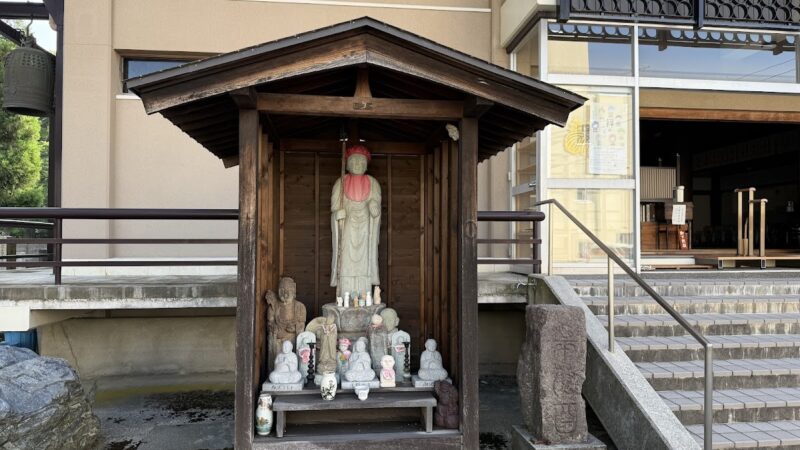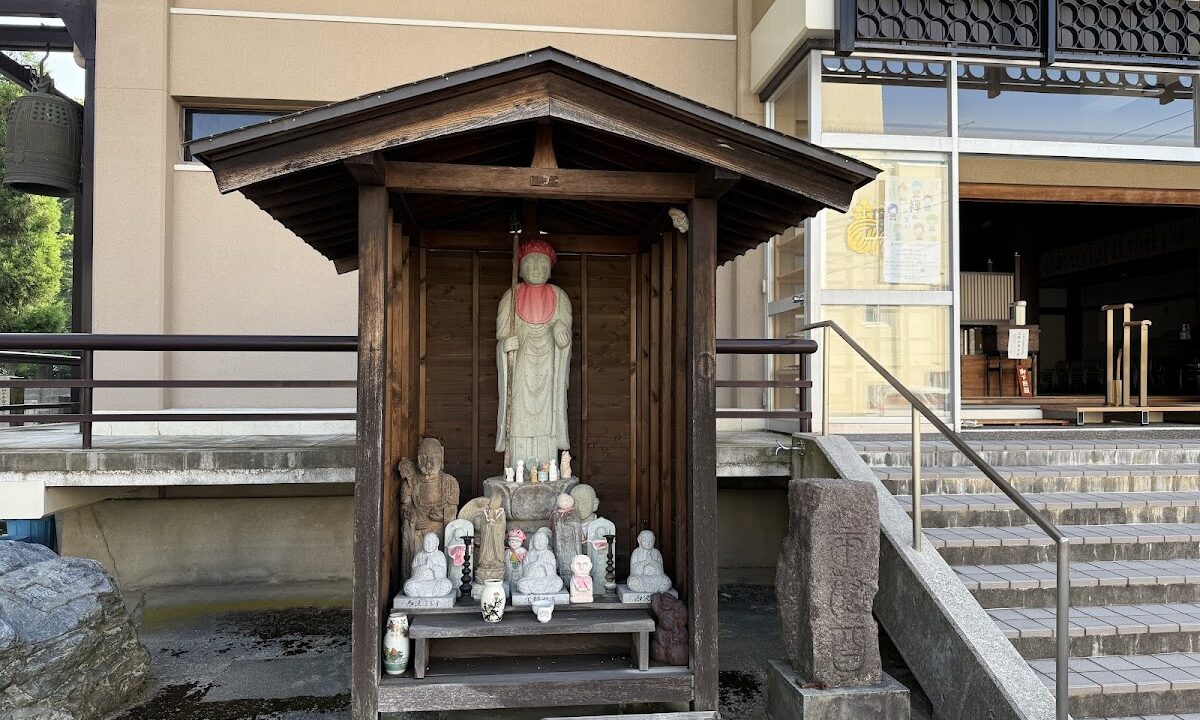
Keiganji Temple (Rakanji Temple) Complete Guide | An Ancient Soto Zen Temple in Kanazawa City, Ishikawa Prefecture, Enshrining Five Hundred Arhats
Keiganji Temple, located in Teramachi 1-chome, Kanazawa City, Ishikawa Prefecture, is a Soto Zen temple also known as “Five Hundred Arhats” or “Rakanji Temple” due to its enshrinement of 500 Arhat statues. Since its founding in the early Edo period, it has overcome numerous difficulties and continues to attract the faith of the people of Kanazawa. This article provides a detailed introduction to Keiganji Temple, including its history, highlights, the allure of the Five Hundred Arhats, and visiting information.
Basic Information about Keiganji Temple
Official Name: Tenshozan Keiganji Temple
Sect: Soto Zen
Common Name: Five Hundred Arhats, Rakanji Temple
Location: 1-6-46 Teramachi, Kanazawa City, Ishikawa Prefecture 921-8033
Phone Number: 076-241-1985
Visiting Hours: Grounds (Free), Buildings (Reservation Required)
Keiganji Temple is located in a corner of the Teramachi temple district in Kanazawa City, in a historical area where many temples are concentrated. Teramachi was formed during the Kaga Domain period by gathering temples, and it remains a valuable cultural heritage site that still retains traces of its former glory.
History of Keiganji Temple
From Founding to the Great Fire of Kyoho
Keiganji Temple was founded in Kan’ei 19 (1642). The temple was founded by the seventh abbot of Kaizenji Temple, Zen Master Kakuhōrin, at the behest of Abbot Keigan Tairan in Tenma-machi, Kanazawa City (present-day Katamachi, Chuo-dori, and Nagamachi area). This period coincided with the establishment of the Edo Shogunate and the cultural development of the Kaga Domain.
Initially, Keiganji Temple was located in Tenma-machi, the heart of Kanazawa, but it was destroyed by a great fire that struck Kanazawa in 1729. This fire caused immense damage to the city of Kanazawa, destroying many temples and private homes.
Relocation and Reconstruction in Teramachi
Following the destruction in the Great Fire of 1729, Keiganji Temple was relocated and rebuilt in its current location in Teramachi 1-chome in 1730. This relocation was also related to the Kaga Domain’s temple policy, which aimed to consolidate temples in one location for fire prevention and defense purposes.
The relocation to Teramachi marked a new chapter in Keiganji Temple’s history. It continued its temple activities in the tranquil environment of the current Teramachi.
History of the Five Hundred Arhats
Keiganji Temple became widely known for its “Five Hundred Arhats” in 1809 (Bunka 6). The enshrinement of the Five Hundred Arhats began at the behest of the 19th abbot, Kaiun Tenrin. This grand project was not completed in one generation, but continued under the 20th abbot, Enkai, and the 21st abbot, Rankyu, finally completing all 500 Arhat statues.
The creation and enshrinement of the Five Hundred Arhats represented the deep faith and ancestral veneration of the people at that time. This great achievement was accomplished through the cooperation of many parishioners and believers.
Fire and Reconstruction in the Showa Era
Keiganji Temple was struck by fire again in April 1962 (Showa 37). This fire destroyed many of the 500 Arhat statues that had been enshrined there for many years. The loss of these precious cultural artifacts, passed down since the Edo period, caused a great shock to the local community.
However, the people of Keiganji Temple did not give up. They vowed to rebuild the statues and, with the cooperation of parishioners, believers, and local residents, undertook the reconstruction of the 500 Arhat statues. This reconstruction project took many years, but in 1987 (Showa 62), a completion ceremony was held, and the current 500 Arhat statues were completed.
What are the 500 Arhat?
Meaning and Origin of Arhat
Arhat is an abbreviation of “Arhat” in Buddhism, derived from the Sanskrit word “arhat.” An Arhat is a saint who has overcome worldly desires and attained enlightenment. Among the disciples of Shakyamuni Buddha, particularly outstanding practitioners were respected as Arhat.
The Five Hundred Arhats represent the 500 senior disciples who are said to have compiled Buddhist scriptures after the Buddha’s death. These Arhats are characterized by their diverse expressions and postures, possessing a relatable, human-like quality.
Characteristics of the Five Hundred Arhats at Keiganji Temple
The Five Hundred Arhats at Keiganji Temple are enshrined in the Arhat Hall within the main hall. Each statue has a different face and posture, displaying a wide variety of expressions, from smiling to serious to meditating.
There is a legend that if you walk around the Arhat Hall, you will inevitably encounter an Arhat statue that resembles yourself or someone close to you. This is known as the “Arhat with a karmic connection,” and many visitors enjoy the pleasure of searching for an Arhat that resonates with them.
The current Five Hundred Arhats, rebuilt in 1987, were carefully crafted by modern artisans using traditional techniques. Efforts were made to recreate their original appearance as closely as possible, based on records and memories of the Arhat statues before the fire.
Highlights of Keiganji Temple
Main Hall and Arhat Hall
The main hall is the heart of Keiganji Temple. The principal image is enshrined within, and daily religious services are performed here. In the solemn atmosphere characteristic of a Soto Zen temple, one can quietly practice Zen meditation and other forms of contemplation.
Adjacent to the main hall is the Arhat Hall, where 500 Arhat statues are neatly arranged. Walking around the Arhat Hall and observing the expressions of each statue, one is struck by their diversity and artistry. The unique expressions of each Arhat soothe the viewer’s heart and make the teachings of Buddhism feel more accessible.
Atmosphere of the Temple Grounds
Located in Teramachi 1-chome, Keiganji Temple’s grounds are enveloped in a quiet and peaceful atmosphere. Many other temples are located nearby, and the entire Teramachi area maintains a historical landscape.
Seasonal flowers are planted on the temple grounds, allowing visitors to enjoy the beauty of each season: cherry blossoms in spring, lush greenery in summer, and vibrant autumn leaves. Away from the hustle and bustle of the city, this is a space where you can pray in peace.
Connection to the Teramachi Temple District
Keiganji Temple is located in Teramachi, known as one of Kanazawa’s three major temple districts. More than 70 temples are gathered in this area, forming a unique historical landscape. When visiting Keiganji Temple, exploring the surrounding temples will allow you to gain a deeper understanding of Kanazawa’s temple culture.
The Teramachi temple district also served as a defensive base for the Kaga Domain, with a system in place where monks and parishioners would take on defensive duties in case of emergency. Currently, it is a popular tourist spot, attracting many visitors.
Information on Visiting and Viewing
Visiting Hours and Fees
Visiting the grounds of Keiganji Temple is free of charge. However, if you wish to view the main hall or the Rakan-do hall, you must make a reservation by phone in advance.
Admission Fee: Free entry to the temple grounds; reservations required for entry into the buildings.
Reservation Phone Number: 076-241-1985
Visiting the buildings offers a rare opportunity to see the 500 Arhat statues up close. For group visits or if you wish to carefully observe the Arhat statues, advance reservations are recommended.
Access Information
Using Public Transportation:
From Kanazawa Station, taking a bus is convenient to reach Keiganji Temple.
- Take a bus bound for Heiwa-machi from the Kanazawa Station East Exit Bus Terminal.
- Get off at the “Teramachi 1-chome” bus stop.
- Approximately 2 minutes on foot from the bus stop.
The bus ride takes approximately 15-20 minutes. You can also use the sightseeing bus that tours major tourist spots in Kanazawa City, allowing you to combine your visit with other sightseeing.
Using a Car:
Approximately 10 minutes by car from Kanazawa Station. However, the roads around Teramachi are narrow and parking is limited, so we recommend using public transportation.
Manners for Visiting
Keiganji Temple is a religious facility that is still active. Please observe the following manners when visiting:
- Be quiet within the temple grounds
- Take photographs only in designated areas
- Always make a reservation to view the buildings
- Avoid visiting during religious services or ceremonies
- Take your trash with you
The Five Hundred Arhats statues, in particular, are objects of worship and works of art. It is important to view them with respect.
Nearby Tourist Attractions
Other Temples in the Teramachi Temple District
Around Keiganji Temple, there are many historical temples such as Myoryu-ji Temple (Ninja Temple), Fushimi-dera Temple, and Uho-in Temple. Each temple has its own unique history and characteristics, making for an enjoyable stroll through Teramachi.
Nishi Chaya District
Within walking distance of Keiganji Temple is Nishi Chaya District, one of Kanazawa’s three geisha districts. You can stroll through the charming streets lined with traditional teahouse architecture.
Sai River and Sakurabashi Bridge
The Sai River, flowing west of Teramachi, is one of Kanazawa’s important rivers. The view from Sakurabashi Bridge over the Sai River is beautiful, and many people visit, especially during cherry blossom season.
Keiganji Temple and the Soto Zen School
Keiganji Temple is a Soto Zen temple belonging to the Ishikawa Prefecture Soto Zen Office. The Soto Zen school is a branch of Zen Buddhism founded by Zen Master Dogen, and emphasizes “Shikantaza,” that is, single-minded devotion to seated meditation.
Many Soto Zen temples in Ishikawa Prefecture belong to the Ishikawa Prefecture Soto Zen Office, and Keiganji Temple is one of them, contributing to the preservation of local Buddhist culture. Regular seated meditation sessions and Dharma talks are held, providing opportunities for the general public to participate.
Annual Events at Keiganji Temple
Keiganji Temple holds various Buddhist events throughout the year. The main events include the following:
- New Year’s Prayer Service: A Buddhist service praying for happiness in the new year
- Spring Equinox Service: An ancestral memorial service during the spring equinox
- Obon Festival: An ancestral memorial service during the Obon festival
- Autumn Equinox Service: A Buddhist service during the autumn equinox
- Founder’s Memorial Service: A memorial service commemorating the temple’s founder, Zen Master Kakuhōrin
Some of these events are open not only to temple parishioners but also to general visitors. Please contact the temple directly for details.
Cultural Significance of Keiganji Temple
Keiganji Temple is more than just a religious facility; it is an important presence that conveys the history and culture of Kanazawa. The tradition of the Five Hundred Arhats, which has continued since the Edo period, is a valuable cultural heritage that conveys the state of faith during the Kaga Domain era to the present day.
The reconstruction after the Showa-era fire demonstrated the strong unity of the local community and their unwavering commitment to cultural heritage preservation. The current collection of 500 Arhat statues is a fusion of traditional techniques and modern craftsmanship, making it highly significant from the perspective of cultural heritage restoration.
Summary
Located in Teramachi 1-chome, Kanazawa City, Ishikawa Prefecture, Keiganji Temple (Rakanji Temple) is a Soto Zen Buddhist temple with a history of over 380 years since its founding in 1642. Having overcome numerous difficulties, including destruction in the Great Kyoho Fire and relocation to Teramachi, the placement of the 500 Arhat statues from the Bunka era, and the Showa-era fire and subsequent reconstruction, it continues to attract the faith of the people of Kanazawa.
Each of the 500 Arhat statues possesses a unique expression, allowing visitors to feel the teachings of Buddhism intimately. The legend that “if you walk around the Rakan Hall, you are sure to encounter an Arhat statue that resembles yourself or someone close to you” continues to attract many visitors.
Located in a prime location, just a 15-minute bus ride from Kanazawa Station towards Heiwa-machi and a 2-minute walk from the Teramachi 1-chome bus stop, this temple is easily accessible for tourists. While admission to the temple grounds is free, visits to the buildings require reservations.
As part of the Teramachi temple district, visiting Keiganji Temple along with other nearby temples and tourist attractions will allow you to gain a deeper understanding of Kanazawa’s history and culture. Keiganji Temple, a testament to the faith and culture passed down from the past to the present, will undoubtedly continue to be an important cultural heritage of Kanazawa.