Complete Guide to Jukyoji Temple (Kanazawa City, Ishikawa Prefecture) | Visiting the History of the Seven Rice Jizo and the Weeping Uprising
Located in the temple complex at the foot of Mt. Utatsu in Kanazawa City, Ishikawa Prefecture, Jukyoji Temple is a Jodo sect temple that conveys the tragedy of the “Weeping Uprising,” a popular uprising during the Edo period. The Seven Rice Jizo statues enshrined on the temple grounds are a precious historical artifact that tells the story of the suffering of ordinary people who agonized over soaring rice prices and the feelings of those who commemorated them, continuing to touch the hearts of many visitors to Kanazawa.
History and Origin of Jukyoji Temple
Founding and Founder
Jukyoji Temple is said to have been founded in 1623 (Genna 9) by Choyo Ryogan Donkei, the fifth head priest of Nyoraidera Temple in Kanazawa. In the early Edo period, under the rule of Maeda Toshitsune, the third lord of the Kaga Domain, many temples were established at the foot of Mt. Utatsuyama as part of the development of temples in Kanazawa Castle town. Jukyoji Temple was also built during this period and has a history of nearly 400 years as a center for spreading the teachings of the Jodo sect.
The temple complex at the foot of Mt. Utatsuyama also served as a defensive stronghold for Kanazawa Castle. The dense arrangement of temples was designed to function as a fort protecting the castle town in times of emergency. Jukyoji Temple also occupied an important position within this urban planning.
The Ansei Weeping Uprising and the Construction of the Seven Rice Jizo Statues
Jukyoji Temple became widely known due to the popular uprising known as the “Weeping Uprising,” which occurred in 1858 (Ansei 5). That year, a major earthquake struck the Kaga Domain, followed by a prolonged period of poor harvests due to heavy rains. As a result, rice prices skyrocketed, plunging ordinary people into extreme poverty.
At the time, Mount Utatsu was off-limits to townspeople, but the starving masses defied the ban and climbed the mountain, directly appealing to the feudal lord that “rice is too expensive to eat.” While this appeal temporarily stabilized rice prices, the domain considered the participants rioters and imposed harsh punishments: five were executed and two died in prison.
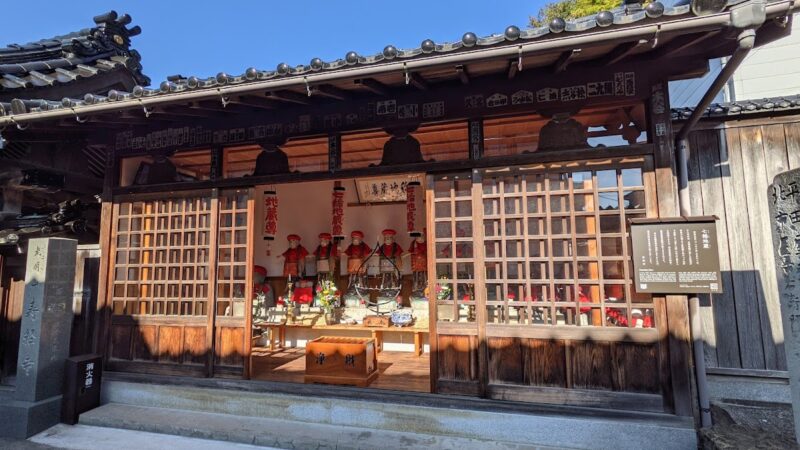
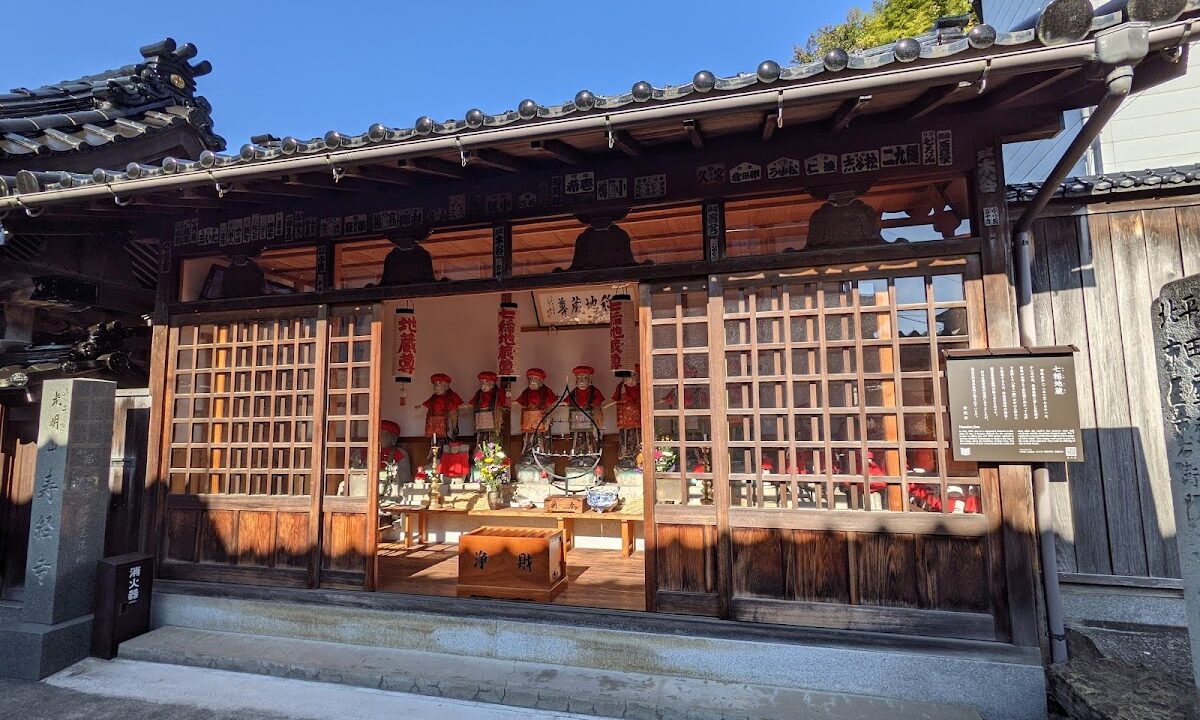
To commemorate this tragic event and comfort the souls of the victims, seven Jizo statues holding rice stalks were erected in front of the gate of Jukyo-ji Temple. These are known as the “Seven Rice Jizo.” Their embrace symbolizes the people’s desperate need for food and their suffering.
Highlights of Jukyoji Temple
Seven Rice-Hearing Jizo Statues
The greatest highlight of Jukyoji Temple is undoubtedly the seven rice-hearing Jizo statues lined up within the temple grounds. The sight of each Jizo statue holding a rice stalk is unique and rarely seen in other temples. The number seven represents the seven victims who lost their lives in the Weeping Uprising.
The serene expressions of the Jizo statues evoke a sense of solace for the souls of those who perished in suffering, and a wish that such a tragedy will never happen again. Even today, locals and tourists visit and offer prayers.
Main Hall and Temple Grounds
The main hall of Jukyoji Temple exhibits a tranquil atmosphere typical of a Jodo sect temple. Located in a quiet environment at the foot of Mount Utatsu, it offers a peaceful space away from the hustle and bustle of Kanazawa city. The temple grounds are well-maintained, allowing visitors to enjoy the beauty of each season.
Especially during the cherry blossom season in spring and the autumn foliage season, the entire group of temples at the foot of Mt. Utatsuyama presents a beautiful landscape, and Jukyoji Temple, as part of this scenery, soothes the hearts of visitors.
As part of the Mt. Utatsuyama Temple Group
Jukyoji Temple is part of the “Mt. Utatsuyama Temple Group,” a cluster of approximately 70 temples located at the foot of Mt. Utatsuyama in Kanazawa. This group of temples is a valuable cultural heritage that conveys the remnants of Edo-period urban planning, and visitors can explore multiple temples while walking along the cobblestone paths.
When visiting Jukyoji Temple, exploring the surrounding temples as well will allow you to gain a deeper understanding of Kanazawa’s history and culture.
Basic Information
Temple Information
- Temple Name: Jukyoji Temple
- Sect: Jodo Sect
- Principal Image: Amida Buddha
- Founded: Genna 9 (1623)
- Founder: Choyo Ryogan Donkei
- Chief Priest: Sawazaki Ryoei
Location and Contact Information
- Address: 1-31-5 Higashiyama, Kanazawa City, Ishikawa Prefecture
- Postal Code: 〒920-0831
- Phone Number: Please inquire with the Kanazawa City Tourism Association or at the temple itself.
Access Method
Access by Public Transportation
By Bus
- Take the Hokutetsu Bus from the JR Kanazawa Station East Exit Bus Terminal
- Get off at the “Hashibacho” bus stop, approximately 5 minutes on foot
- Alternatively, get off at the “Higashiyama” bus stop and walk for about 3 minutes.
- Travel time: Approximately 15-20 minutes from Kanazawa Station
The Kanazawa sightseeing buses, “Jokamachi Kanazawa Loop Bus” and “Machi Bus,” are also convenient. Take a bus heading towards Higashi Chaya District and get off at the nearest bus stop.
Access by Car
- From Kanazawa East IC on the Hokuriku Expressway: Approximately 15 minutes
- From Kanazawa West IC on the Hokuriku Expressway: Approximately 20 minutes
- From Kanazawa Station: Approximately 10 minutes
The roads around the temples at the foot of Mt. Utatsuyama are narrow and parking spaces are limited, so we recommend using public transportation. If you visit by car, it is best to use a paid parking lot around Higashi Chaya District and explore on foot.
Visiting Information
- Visiting Hours: Grounds are freely accessible (please check beforehand for viewing the interior of the main hall)
- Admission Fee: Free
- Closed Days: None
- Estimated Time Required: Approximately 15-30 minutes
The Seven Rice Jizo statues are located on the temple grounds and can be visited at any time. However, please be mindful of quiet and respectful conduct, as temple events and ceremonies may be taking place.
About Goshuin (Temple Seals)
Goshuin (temple seals) are available at Jukyoji Temple. Those wishing to receive a goshuin should speak to staff at the main hall or the temple office after their visit. Bringing a goshuincho (stamp book) is recommended.
The goshuin will have the temple name and principal image name written in ink, and a red seal stamped on it. Goshuin are not merely commemorative stamps, but rather cherished proof of your visit, so please handle them with care.
Goshuin (Temple Stamp) Information
- Offering Fee: Usually around 300-500 yen (Please check on-site)
- Reception Hours: During daytime visiting hours (Please check on-site for details)
Nearby Tourist Spots
Higashi Chaya District
Located about a 10-minute walk from Jukyoji Temple, Higashi Chaya District is one of Kanazawa’s most representative tourist attractions. Edo-period teahouses line the streets, creating a beautiful atmosphere with its cobblestone streets. Cafes, craft shops, and shops selling gold leaf products line the streets, making it a pleasant place to stroll.
Kazue-machi Chaya District
Located along the Asano River, Kazue-machi Chaya District is also within walking distance of Jukyoji Temple. It has a quieter and more relaxed atmosphere than Higashi Chaya District, and boasts beautiful riverside scenery.
Utatsuyama Park
Climbing Utatsuyama Mountain, where Jukyoji Temple is located, leads to Utatsuyama Park, offering panoramic views of Kanazawa city. From the observation deck, you can enjoy views of Kanazawa city and the Sea of Japan, and the scenery at sunset is particularly spectacular.
Kanazawa Castle Park and Kenrokuen Garden
Kanazawa Castle Park and Kenrokuen Garden, classic Kanazawa tourist spots, are also located about 10-15 minutes away by bus or taxi. Visiting them together with Jukyoji Temple allows you to experience Kanazawa’s history and culture from multiple perspectives.
Manners and Precautions for Visiting a Temple
Basic Manners for Visiting a Temple
- Bow at the Temple Gate: When entering a temple, bow at the temple gate before entering the grounds.
- Be Quiet: Temples are places of prayer. Refrain from loud conversations and noisy behavior.
- Photography Manners: Photography is generally permitted, but remember to be considerate of the inside of the main hall and other visitors.
- Offering a Coin: When visiting a temple, offer a coin with sincerity. There is no set amount.
- Dress Code: There are no specific dress code requirements, but please avoid revealing clothing and dress modestly.
Mindset for Visiting the Seven Rice Jizo Statues
The Seven Rice Jizo Statues are an important cultural heritage site that conveys the history of the suffering and sacrifice of the common people. It is important to visit with respect, understanding the historical background, rather than simply as a tourist spot.
Historical Significance of Jukyoji Temple
As a Record of Common People’s History
The Seven Rice Jizo Statues at Jukyoji Temple are valuable historical evidence that conveys the lives and hardships of the common people during the Edo period. While many historical sites relate to those in power or the samurai class, heritage sites that tell history from the perspective of ordinary people are precious.
The Ansei Weeping Uprising was an incident in which people suffering from famine risked their lives to protest, and it is an important event for understanding the social structure and economic conditions of the time. Jukyoji Temple plays a role in passing on this history to future generations.
Place in Kanazawa’s Urban History
The temple complex at the foot of Mt. Utatsuyama was formed as part of the urban planning of the Kaga Domain. Jukyoji Temple, as part of this complex, is an important element that tells the story of the origins and development of Kanazawa, a castle town.
The temple complex served multiple roles, not only as religious facilities but also as a defensive base for the castle town, a fire prevention measure, and a part of shaping the urban landscape. These temples, which still remain today, convey the wisdom and ingenuity of Edo-period urban planning.
Annual Events and Special Viewings
As a Jodo sect temple, Jukyoji Temple holds various religious services and events throughout the year.
Main Annual Events
- New Year’s Day: Shusho-e (New Year’s Buddhist service)
- Spring Equinox: Higan-e Buddhist service
- Obon: Urabon-e (Buddhist festival)
- Autumn Equinox: Higan-e Buddhist service
- New Year’s Eve: New Year’s Eve bell ringing
During special events, the interior of the main hall, which is usually closed to the public, may be opened. It is recommended to check the detailed schedule and content in advance.
The Role of Jukyo-ji Temple in Kanazawa Tourism
While Kenrokuen Garden, Kanazawa Castle, and Higashi Chaya District are well-known major tourist destinations in Kanazawa, visiting temples with historical backgrounds like Jukyo-ji Temple allows for a deeper understanding of Kanazawa.
Recommended Sightseeing Route
Half-Day Course
- Travel by bus from Kanazawa Station
- Stroll through Higashi Chaya District (60 minutes)
- Visit Jukyo-ji Temple (30 minutes)
- Stroll through the temples at the foot of Utatsuyama Mountain (60 minutes)
- Stroll through Kazue-machi Chaya District (30 minutes)
Full-Day Course
- Morning: Kanazawa Castle Park & Kenrokuen Garden
- Afternoon: Higashi Chaya District, Jukyo-ji Temple, & temples at the foot of Utatsuyama Mountain
- Evening: Kazue-machi Chaya District & Asano River area
Summary
Jukyo-ji Temple, located in Higashiyama, Kanazawa City, Ishikawa Prefecture, is a Jodo sect temple known for its Seven Rice Jizo statues, which convey the suffering of the people during the Edo period. It preserves the memory of the historical event known as the “Weeping Uprising” of 1858, playing an important role in commemorating the victims and passing on history.
As part of the temple complex at the foot of Mt. Utatsuyama, Jukyoji Temple is a cultural heritage site that tells the story of Kanazawa’s urban history. Visiting it along with other nearby tourist spots such as Higashi Chaya District will allow you to gain a deeper understanding of Kanazawa’s history and culture.
Spending time praying to the Seven Rice Jizo statues in the tranquil temple grounds and reflecting on the suffering and wishes of the people will be a valuable experience even for those of us living in the modern age. When you visit Kanazawa, be sure to stop by Jukyoji Temple and feel the weight of history.