
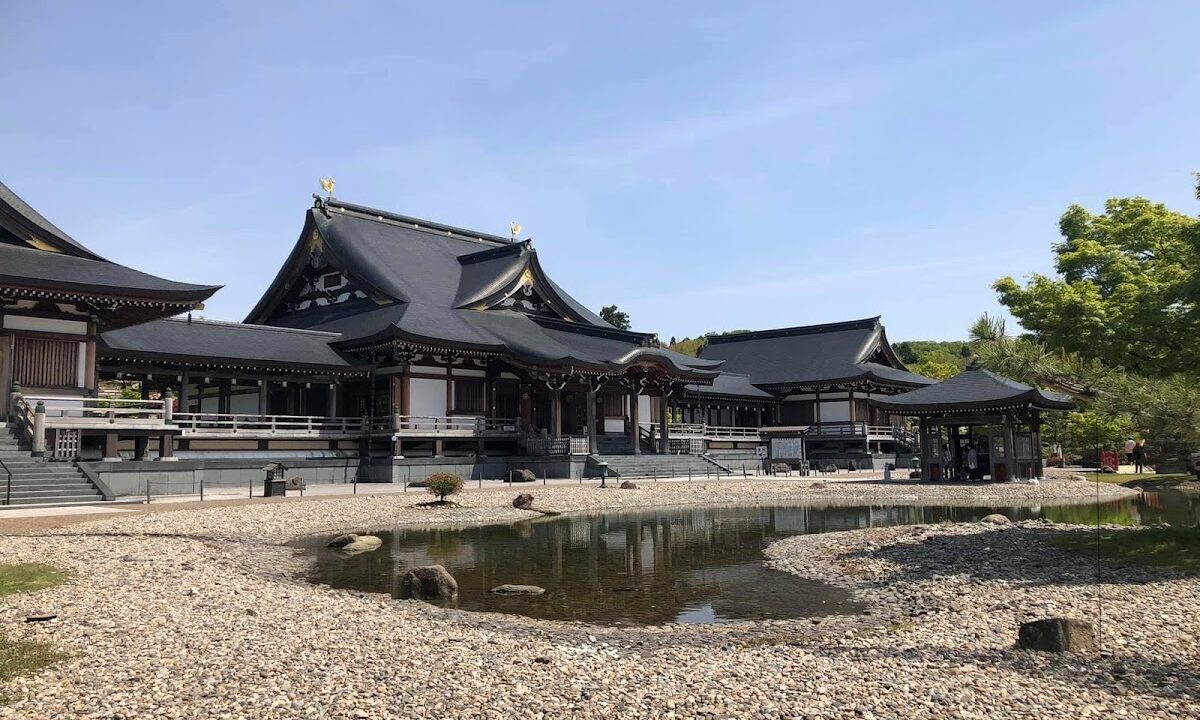
Complete Guide to Kurikara Fudoji Temple (Ishikawa Prefecture) | History, Highlights, and Access Information for One of Japan’s Three Fudo Temples
Located in Tsubata-machi, Kahoku-gun, Ishikawa Prefecture, Kurikara Fudoji Temple is a special head temple of the Koyasan Shingon sect, boasting a history of approximately 1300 years. Situated on the Kurikara Pass, straddling the border between Ishikawa and Toyama Prefectures, it is known as one of Japan’s Three Fudo Temples, alongside Narita Fudoji (Chiba Prefecture) and Oyama Fudoji (Kanagawa Prefecture), attracting numerous pilgrims from across the country.
This article comprehensively introduces all the information you need to know before visiting Kurikara Fudoji Temple, including its history, highlights of the main hall and Nishinobo Hōōden, information on temple stamps, seasonal attractions, and access methods.
History and Origins of Kurikara Fudoji Temple
Founded in 718 AD
The history of Kurikara Fudoji Temple dates back approximately 1300 years to 718 AD. At the request of Empress Gensho, the Indian high priest Zenmui Sanzo prayed for national peace and security on Mount Kurikara. He witnessed a black dragon ascending from Fudōgaike Pond. Deeply impressed by this mystical sight, Zenmui Sanzo carved a statue of the dragon and enshrined it as Kurikara Fudō Myōō, marking the beginning of the temple.
This principal image has a unique form, with a black dragon coiled around a sword, and is known as a rare form of Fudō Myōō in Japan. The name Kurikara originates from the Sanskrit word “kulihah,” meaning “black dragon of perfect fortune and virtue.” The entire mountain came to be called Kurikara-yama from the name of this principal image.
Deep Connection with Kobo Daishi
It is said that in 812 (Kōnin 3), Kobo Daishi (Kukai), the founder of the Shingon sect, visited this place and enshrined a statue of Fudo Myoo. Kobo Daishi was deeply impressed by the miraculous powers of Kurikara Fudo Myoo and designated this place as an important sacred site of Shingon Esoteric Buddhism.
Due to this historical background, Kurikara Fudo-ji Temple, as a special head temple of the Koyasan Shingon sect, still adheres to the teachings of the founder Kobo Daishi and its philosophy is to perform pure works that benefit the world and its people.
Status as one of Japan’s Three Fudo Temples
Kurikara Fudo-ji Temple is counted as one of Japan’s Three Fudo Temples, along with Narita Fudo-son in Chiba Prefecture and Oyama Fudo-son in Kanagawa Prefecture. While there are various theories, it has been widely known since ancient times as a center of Fudo Myoo worship, and especially on the 28th of each month, a large number of worshippers visit from both within and outside Ishikawa Prefecture.
Fudo Myoo is worshipped as a Buddha who cuts off worldly desires and saves people, and it is a popular place to pray for the fulfillment of various wishes such as family safety, business prosperity, traffic safety, good fortune, and protection from evil, all of which are elevated as pure wishes.
Highlights of the Mountaintop Main Hall
Main Hall and Inner Sanctuary
The mountaintop main hall, located at the summit of Kurikara Pass, is the central temple complex of Kurikara Fudo-ji Temple. It can be accessed in about 10 minutes from the Kariyasu Kita 2nd exit of National Route 8. Near the main hall is the inner sanctuary, where it is believed that if you hold the staff for warding off evil, chant “Namu Dainichi Daisei Fudo Myoo,” and swing it down three times, you will be rid of suffering and misfortune.
The principal deity, Kurikara Fudo Myoo, is enshrined in the inner sanctuary, and its miraculous presence serves as a spiritual anchor for many believers. The temple grounds are enveloped in a tranquil atmosphere, allowing visitors to calm their minds and offer prayers.
A Stunning Spot for Double Cherry Blossoms
One of the greatest attractions of the mountaintop main hall is the thousands of double cherry blossoms that bloom in spring. They are typically in full bloom from late April to early May, painting the entire temple grounds in a delicate pink. During this time, the “Kurikara-san Double Cherry Blossom Festival” is held, attracting many visitors.
From the mountaintop, you can enjoy a magnificent view of the Tateyama mountain range and the Sea of Japan. The contrast between the double cherry blossoms and the majestic nature is breathtaking. On clear days, the snow-capped peaks of the Tateyama mountain range stretch out beyond Toyama Bay, creating a spectacular view unique to the Hokuriku region.
Relationship with the Historic National Highway “Hokuriku Road”
The Kurikara Pass is traversed by the historic National Highway “Hokuriku Road,” which was an important transportation route from ancient to medieval times. This road was a major route connecting Kyoto and the Hokuriku region, and many travelers and samurai crossed this pass.
Particularly famous is the “Battle of Kurikara Pass,” one of the battles of the Genpei War. Known as the site of the ancient battle where Kiso Yoshinaka defeated the large army of the Taira clan in 1183, historical sites reminiscent of that time are scattered around the temple grounds.
The Charm of Nishinobo Hōōden
A Modern Temple Building with Barrier-Free Access
Separate from the main hall at the mountaintop, Nishinobo Hōōden, located at the bottom of the pass on the Ishikawa Prefecture side, is a facility that has been developed to be more easily accessible for worshippers. The address is 128 Takebashi-ku, Tsubata-machi, Kahoku-gun, Ishikawa Prefecture, and it is open from 9:00 to 17:00, and is open for worship all year round. A major feature of the Hōōden (Phoenix Hall) is its barrier-free ramp. It is designed to be easily accessible for wheelchair users and those with mobility issues, creating a welcoming environment for people of all ages.
A Garden with Seasonal Flowers
Nishinobo Hōōden boasts a beautiful garden with a pond, where visitors can enjoy seasonal flowers. Cherry blossoms and wisteria bloom in spring, hydrangeas in summer, autumn leaves in fall, and camellias in winter, each season offering a different and beautiful sight.
While incorporating traditional Japanese garden styles, the garden is designed with a modern sensibility, creating a space where one can relax and unwind while strolling. Carp swim in the pond, and the sound of the water further enhances the tranquil atmosphere.
Convenient Access
Nishinobo Hōōden is located approximately 20 minutes by car from the Oyabe Interchange on the Hokuriku Expressway and approximately 40 minutes by car from the Kanazawa-Higashi Interchange. Furthermore, it boasts excellent access, being approximately 15 minutes by car from IR Tsubata Station and approximately 10 minutes by car from IR Kurikara Station.
Parking is also available, making it convenient for those visiting by car. For those who find access to the mountaintop main hall difficult or are short on time, we recommend visiting the Nishinobo Hōōden first.
Goshuin (Temple Seal) and Amulets
Goshuin of Kurikara Fudōji Temple
At Kurikara Fudōji Temple, you can receive a goshuin at both the mountaintop main hall and the Nishinobo Hōōden. The goshuin features the calligraphy and red seal of “Kurikara Fudō Myōō,” a majestic design that reflects its status as one of Japan’s three great Fudō temples.
Goshuin notebooks are also sold, and the original Kurikara Fudōji Temple designs are popular as souvenirs of your visit. For those collecting goshuin, the goshuin of one of Japan’s three great Fudō temples holds special value.
Good Fortune and Protection from Evil Amulets
Kurikara Fudoji Temple offers a variety of amulets. Particularly popular are those for traffic safety, family safety, business prosperity, and good fortune and protection from evil. It is believed that the wisdom of Fudo Myoo (Acala) will grant the wishes of worshippers.
The experience of using the evil-repelling staff is also popular; in the inner sanctuary, visitors can experience warding off misfortune by actually swinging the staff. This ritual leaves a lasting impression on many visitors.
Annual Events and Temple Festivals
Temple Festival on the 28th of Every Month
At Kurikara Fudoji Temple, the 28th of every month is designated as a temple festival day, and a special Buddhist service is held on this day. Many worshippers from within and outside the prefecture visit the temple on this day, making the grounds even more lively than usual.
Stalls are sometimes set up on the festival day, providing an opportunity for interaction with the local community. It is believed that regularly visiting the temple deepens one’s connection with Fudo Myoo (Acala).
Double Cherry Blossom Festival
The “Kurikara-san Double Cherry Blossom Festival,” held annually from late April to early May, is the largest event at Kurikara Fudo-ji Temple. Thousands of double cherry blossoms bloom amidst various events, attracting many tourists.
During the festival, the trees are illuminated at night, allowing visitors to enjoy the magical sight of the cherry blossoms after dark. The view of the double cherry blossoms against the backdrop of the Tateyama mountain range is known as one of the most spectacular spring scenes in the Hokuriku region.
Other Annual Events
Kurikara Fudo-ji Temple holds various events throughout the year, including New Year’s Day visits, Setsubun bean-throwing ceremonies, and Obon memorial services. These events are deeply rooted in the local community, and the temple, as a sacred site of worship since ancient times, contributes significantly to the local area.
Nearby Tourist Attractions
Historical Sites of Kurikara Pass
Numerous historical sites remain around Kurikara Fudoji Temple, marking the site of the Genpei War. Visitors can explore the location of the “Fire Ox Strategy” where Kiso Yoshinaka defeated the Taira army, as well as memorial towers for the warriors of that time.
For history buffs, combining a temple visit with a tour of these historical sites will allow for a deeper understanding of the history of Kurikara Pass.
Tourist Facilities in Tsubata Town
Tsubata Town, where Kurikara Fudoji Temple is located, offers a variety of other tourist attractions. At the “Kurikara Genpei no Sato” roadside station, you can purchase local specialties and fresh agricultural products, as well as enjoy exhibits related to the Genpei War.
Tsubata Town is also close to Kanazawa City, providing easy access to popular tourist spots such as Kenrokuen Garden and Kanazawa Castle. Incorporating a visit to Kurikara Fudoji Temple into your Hokuriku sightseeing itinerary will make for a more fulfilling trip.
Access Information
Access by Car
To the Main Hall at the Summit:
- Approximately 20 minutes from Oyabe IC on the Hokuriku Expressway
- Approximately 40 minutes from Kanazawa-Higashi IC on the Hokuriku Expressway
- Approximately 10 minutes from the Kariyasu-Kita No. 2 exit on National Route 8
To Nishinobo Phoenix Hall:
- Approximately 20 minutes from Oyabe IC on the Hokuriku Expressway
- Approximately 40 minutes from Kanazawa-Higashi IC on the Hokuriku Expressway
Both facilities have ample parking available and are free of charge. However, congestion is expected during events such as the Yaezakura Festival, so early arrival is recommended.
Access by Public Transportation
Train and Taxi:
- Approximately 15 minutes by taxi from IR Tsubata Station (Nishinobo Hōōden)
- Approximately 10 minutes by taxi from IR Kurikara Station (Nishinobo Hōōden)
When using public transportation, taking a taxi from the nearest station is convenient. Since bus services are limited, it is recommended to check the timetable in advance.
Address and Basic Information
Main Hall at the Summit:
- Address: 2 Kurikara, Tsubata-machi, Kahoku-gun, Ishikawa Prefecture 929-0413
- Visiting Hours: Grounds are freely accessible (the main hall has time restrictions)
Nishinobo Phoenix Hall:
- Address: 128 Takebashi, Tsubata-machi, Kahoku-gun, Ishikawa Prefecture 929-0426
- Opening Hours: 9:00 AM – 5:00 PM
- Closed: Open all year round
Precautions and Manners for Visiting
Clothing and Items to Bring
Since Kurikara Fudoji Temple is located at the summit, comfortable shoes and clothing are recommended, especially when visiting the main hall at the summit. While the weather is relatively mild from spring to autumn, snow and ice are possible in winter, so warm clothing and non-slip shoes are necessary.
If you wish to receive a Goshuin (temple stamp), please remember to bring your Goshuincho (stamp book). It’s also convenient to have some small change for offerings and cash for purchasing amulets.
Visiting Etiquette
Please be mindful that this is a sacred site and strive to pray quietly. Photography is generally permitted, but there are areas where photography is prohibited, such as inside the main hall, so please follow the signs.
When experiencing the exorcism staff at the inner sanctuary, please be considerate of other worshippers and follow the rules. Also, to protect the natural environment of the temple grounds, please be sure to take your trash with you.
Seasonal Charms
Spring (April-May)
Spring at Kurikara Fudoji Temple is undoubtedly the season of double-flowered cherry blossoms. The sight of thousands of double-flowered cherry trees in full bloom is breathtaking, and the spectacular view with the Tateyama mountain range in the background captivates many photography enthusiasts. During the double-flowered cherry blossom festival, the trees are illuminated at night, allowing you to enjoy a magical atmosphere.
Summer (June-August)
Kurikara Fudoji Temple, with its beautiful fresh greenery in summer, is popular with visitors seeking respite from the heat. The mountaintop is cooler than the lowlands, making it an ideal summer retreat. In the garden of Nishinobo Hōōden, hydrangeas are in full bloom, creating a serene and tranquil atmosphere.
Autumn (September-November)
In autumn, the trees on the temple grounds change color, making it a famous spot for viewing autumn foliage. The best time to visit is especially from late October to early November, when the contrast between the mountains dyed in red and yellow and the main hall is magnificent. Under the clear autumn sky, the view of the Tateyama mountain range becomes even more beautiful.
Winter (December-March)
In winter, Kurikara Fudoji Temple is enveloped in a snowy landscape, exuding a serene atmosphere. The snow-covered main hall displays a majestic beauty, offering a unique winter charm. However, caution is necessary due to snow accumulation and icy roads. Many worshippers visit during the New Year’s pilgrimage season.
Faith and Wishes of Kurikara Fudōji Temple
Teachings of Fudō Myōō
Kurikara Fudō Myōō is considered an incarnation of Dainichi Nyorai and symbolizes the flame of wisdom that cuts through worldly desires. The black dragon coiled around the sword represents the power to devour worldly desires, and is believed to dispel the doubts in the hearts of worshippers and guide them to the right path.
It is believed that by chanting “Namu Dainichi Daisei Fudō Myōō,” one receives the protection of Fudō Myōō and is protected from various calamities.
Benefits and Faith
Kurikara Fudoji Temple is believed to offer the following benefits:
- Family Safety: Protection of family health and happiness
- Business Prosperity: Prayers for business success and development
- Traffic Safety: Prayers for safe travels and accident-free journeys
- Good Fortune and Protection from Evil: Protection from evil during unlucky years and improved luck
- Academic Success: Passing exams and academic improvement
- Healing from Illness: Recovery of health and protection from illness
Many visitors come to Kurikara Fudoji Temple with these wishes in mind.
Summary
Kurikara Fudoji Temple is one of Japan’s three most famous Fudoji temples, with a history of approximately 1300 years, and is a representative sacred site of Ishikawa Prefecture. Founded in 718 AD by Zenmui Sanzo Hoshi, it is a historically significant temple where Kobo Daishi also enshrined a statue of Fudoji in 812 AD. At the mountaintop main hall, you can enjoy breathtaking views of the Tateyama mountain range and the Sea of Japan, along with thousands of double-flowered cherry trees. At the Nishinobo Phoenix Hall, a barrier-free facility, you can admire the gardens that change with the seasons. The temple’s goshuin (stamped seals) and amulets are also popular, and the temple is bustling with many visitors on the 28th of each month, which is its festival day.
With easy access from the Hokuriku Expressway, it can be easily combined with sightseeing in Kanazawa. Kurikara Fudoji Temple possesses different charms throughout the seasons: double-flowered cherry blossoms in spring, lush greenery in summer, vibrant autumn leaves, and snowy winter landscapes. Why not visit this historic sacred site? The flame of wisdom of Fudō Myōō will elevate your wishes into pure desires and guide you toward their fulfillment.


