Complete Guide to Seikoji Temple (Hakusan City, Ishikawa Prefecture) | Temple and Highlights Associated with Kaga no Chiyojo
Located in Hakusan City, Ishikawa Prefecture, Seikoji Temple is known as a temple associated with Kaga no Chiyojo, a leading female haiku poet of the Edo period. Belonging to the Shinshu Otani sect, this temple boasts several buildings designated as nationally registered tangible cultural properties, including Chiyo-ni’s tomb, inscribed with Chiyojo’s death poem. It is an important cultural spot in Ishikawa Prefecture, attracting many worshippers and literature enthusiasts.
History and Overview of Seikoji Temple
Seikoji Temple, a Shinshu Otani sect temple, is located in the heart of Hakusan City. This temple has gained particular attention due to its deep connection with Kaga no Chiyojo, a female haiku poet who was active in the mid-Edo period.
Chiyojo was born in 1703 in Mattō, Kaga Province (present-day Hakusan City), and displayed her talent for haiku from a young age. Chiyo-jo, known for her haiku “Morning glories have taken my well bucket, so I beg for water,” left behind many excellent haiku throughout her life and was highly regarded as a female haiku poet. In her later years, she became deeply devoted to Seikōji Temple and passed away there in 1775 at the age of 73.
Within the grounds of Seikōji Temple, facilities and monuments commemorating Chiyo-jo have been established, and it now functions as a center for Chiyo-jo research. Development of the temple continued even after the Meiji era, and in the Showa era, the Chiyo-ni-dō and Sōfū-an were built to commemorate the 150th anniversary of Chiyo-jo’s death, demonstrating ongoing efforts to pass on Chiyo-jo’s legacy to future generations.
Temples Associated with Chiyo-jo in Kaga
The reason Seikōji Temple has become widely known as “a temple associated with Chiyo-jo in Kaga” lies in the deep spiritual connection between Chiyo-jo and the temple.
While mastering the art of haiku, Chiyo-jo deepened her devotion to Buddhism in the latter half of her life. She deeply resonated with the teachings of Shin Buddhism and considered Seikōji Temple her spiritual sanctuary. Her death poem, “Looking at the moon, I find this world delightful,” is a famous verse expressing gratitude for this life and hope for the next.
Chiyojo not only left behind numerous haiku poems during her lifetime, but also displayed exceptional talent in calligraphy and painting. Many of her works were donated to Seikōji Temple and are still carefully preserved there today. These relics are valuable historical documents that convey Chiyojo’s artistic talent and profound spirituality.
Chiyojo’s Tomb
The Chiyojo Tomb, standing within the temple grounds, is a monument inscribed with Chiyojo’s death poem. This stone monument serves as a spiritual anchor for visitors who remember Chiyojo, and is visited by many haiku enthusiasts and literary scholars. Standing before the Chiyojo Tomb, one can feel the weight of the words left behind by this Edo-period female haiku poet and the way of life she lived.
The stone monument still bears the clear, carefully carved inscriptions, and is well-maintained through regular upkeep. Especially during the cherry blossom season in spring and the autumn foliage season, visitors can enjoy the beautiful scenery harmonizing with the surrounding nature.
Chiyo-ni-do Hall
Built in 1935 to commemorate the 150th anniversary of Chiyojo’s death, Chiyo-ni-do Hall is designated as a National Registered Tangible Cultural Property. This building was designed and constructed by Saburo Yoshida, a renowned sculptor from Ishikawa Prefecture.
Inside Chiyo-ni-do Hall, portraits of Chiyojo and related materials are displayed, allowing visitors to learn in detail about her life and achievements. The architectural style is also highly regarded as an example of excellent technology from the early Showa period, making it a building of high architectural historical value. The interior decorations feature intricate carvings, conveying the high level of craftsmanship of the time.
Sofu-an Hermitage
Sofu-an Hermitage, built around the same time as Chiyo-ni-do Hall, is also designated as a National Registered Tangible Cultural Property. This building functions as a tea room, embodying the culture of haiku and tea ceremony that Chiyo-jo loved.
The name Kusafū-an derives from “Kusafū,” one of Chiyo-jo’s haiku pen names. The building embodies the beauty of traditional Japanese architecture, characterized by its simple yet refined spatial composition. It is still used for cultural events and haiku gatherings, serving as a venue for activities that carry on Chiyo-jo’s spirit.
National Registered Tangible Cultural Property
In addition to Chiyo-ni-dō and Kusafū-an, several other nationally registered tangible cultural properties exist within the grounds of Shōkōji Temple.
Main Hall
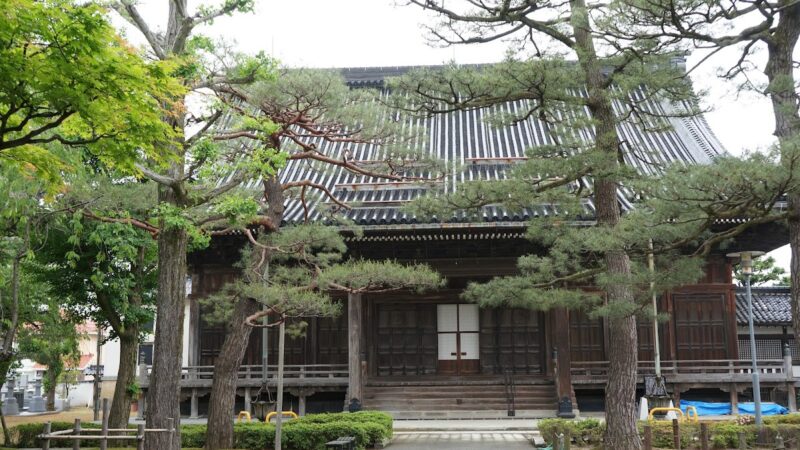
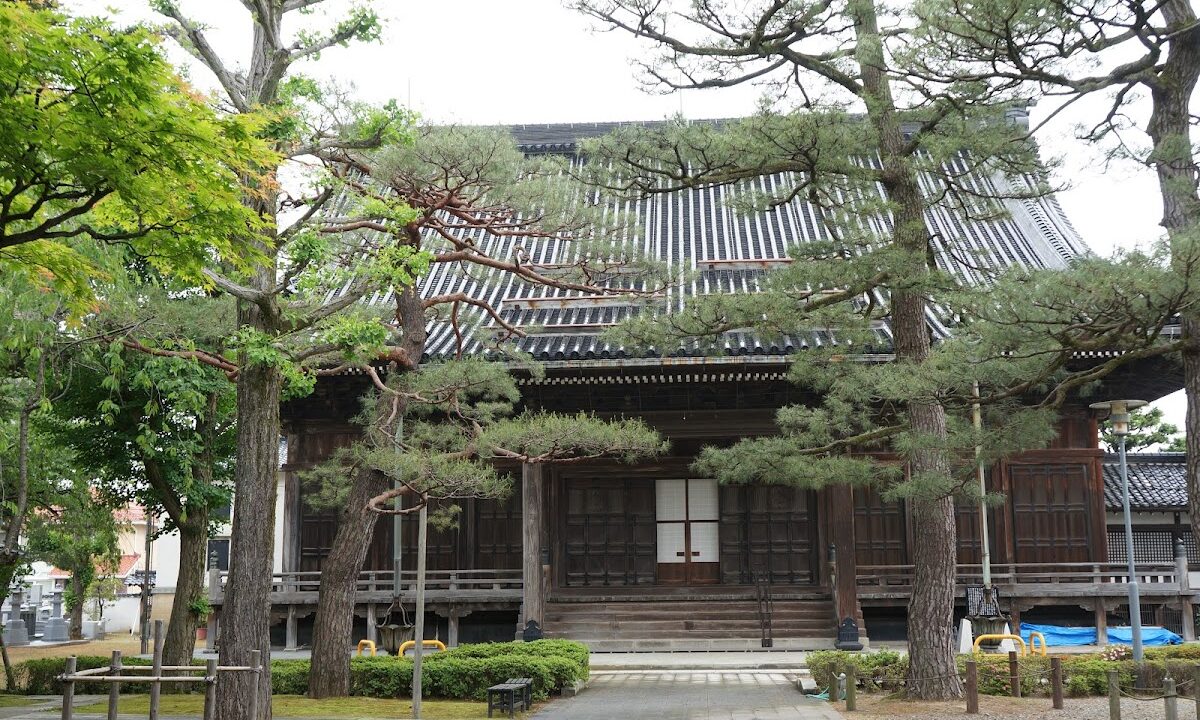
Built in 1898 (Meiji 31), the main hall of Shōkōji Temple is a magnificent wooden, single-story building with a tiled roof, covering an area of 577 square meters. It stands facing south at the rear of the central part of the temple grounds and has a typical floor plan for a Shinshu Buddhist main hall.
The main hall is constructed entirely of cylindrical columns, giving it a dignified appearance. Inside, the transoms are carved by the ninth-generation Iwakura Rihachi, a master craftsman from Inami, Toyama Prefecture. The central Buddha statue is depicted in the form of a hollow hall and a net. These transom carvings are highly regarded as an excellent example of the traditional Inami carving techniques.
The temple retains the characteristics of Meiji-era temple architecture in excellent condition and is designated as a Registered Tangible Cultural Property, making it a historically valuable structure. Regular restoration work maintains its original beauty.
Temple Gate
Built in 1956 (Showa 31), the temple gate is a wooden, tiled, four-legged gate with a gable roof and tiled roof, measuring 2.6 meters wide. Dragon carvings adorn the spaces between the main pillars, and intricate carvings are also found on the wooden brackets and around the doors.
This temple gate is characterized by its high level of ornamentation and is valued as an example of excellent temple architecture from the mid-Showa period. The dragon carvings are particularly magnificent and captivate visitors. When you pass through the temple gate and enter the grounds, be sure to pay attention to the intricate decorations.
Bell Tower
The bell tower of Seikoji Temple is also designated as a Registered Tangible Cultural Property. Of particular note is that the original design for the bell was created by the world-renowned printmaker, Shiko Munakata.
Shiko Munakata was a printmaker from Aomori Prefecture, known for his unique and powerful style. The original design for the Seikoji Temple bell also showcases his distinctive style and holds high value as religious art. While harmonizing with the temple grounds, the bell tower leaves a deep impression on visitors with its artistic merit.
Kaga no Chiyojo Memorial Hall
The memorial hall located within the temple grounds is a facility that exhibits the belongings and related materials of Kaga no Chiyojo. Here you can see items that Chiyojo cherished during her lifetime, as well as her calligraphy, paintings, and haiku poems.
Exhibition Contents
The Chiyojo Ihokan Museum presents an exhibition structure that traces the life of Chiyojo in chronological order. From her early haiku training, to her time studying under Matsuo Basho’s disciple Kagami Shiko, and her later years when she developed her own unique style, visitors can learn in detail about the evolution of her life and works.
Exhibits include haiku poems written by Chiyojo herself, calligraphy, paintings, and personal belongings. The poem “Morning glories have taken my well bucket, so I beg for water” written on a haiku poem is a particularly popular exhibit, attracting the attention of many visitors. Also on display are her brushes, inkstone, and kimono, offering a glimpse into the life of a female cultural figure of the Edo period.
Visiting Information
The admission fee to the Chiyojo Ihokan Museum in Kaga is 200 yen. Visiting hours are from 9:00 AM to 4:00 PM, and the museum is open year-round (however, it may be closed irregularly). The exhibits are sometimes changed seasonally, so you can discover something new each time you visit.
The museum also offers books and materials about Chiyojo, making it a valuable source of information for haiku researchers and literature enthusiasts. Chiyojo-related goods and books are also available for purchase as souvenirs of your visit.
Highlights of the Temple Grounds
The grounds of Seikoji Temple offer not only historical sites related to Chiyojo but also a space where you can enjoy the beauty of nature throughout the seasons.
Garden
The temple garden is designed based on the traditional aesthetics of Japanese gardens. The stone arrangements and plantings are harmonious, displaying different expressions depending on the season. Cherry blossoms bloom in spring, the greenery deepens in summer, the autumn leaves are beautiful, and the snowscape in winter creates a serene atmosphere.
Haiku monuments are placed throughout the garden, allowing you to appreciate the poems of Chiyojo and other haiku poets while strolling. Benches are also provided, allowing you to sit down and enjoy the atmosphere of the temple grounds.
Approach to the Temple
The approach leading from the temple gate to the main hall is beautifully paved with stone. Seasonal flowers are planted on both sides, gently welcoming visitors. As you walk along the approach, you can reflect on the history of the temple, which dates back to the Edo period.
Basic Information
Location and Contact Information
- Address: 56-1 Nakamachi, Hakusan City, Ishikawa Prefecture 924-0877
- Phone Number: 076-275-0161
- Sect: Shinshu Otani School
- Corporate Number: 3220005002702
Visiting Hours and Fees
- Visiting Hours: 9:00 AM – 4:00 PM
- Closed Days: Open all year round (occasional irregular closures)
- Admission Fee: Free entry to the grounds; 200 yen for the Kaga no Chiyojo Ihokan Museum
Access
Access by Train
- Approximately 7 minutes on foot from JR Hokuriku Main Line “Matsuto Station”
- Very convenient access, within walking distance from the station
Access by Car
- Approximately 10 minutes by car from the Hokuriku Expressway “Hakusan IC”
- Parking is available on the temple grounds or nearby (please inquire in advance for details).
Access by Bus
- Hakusan City Community Bus is also available (a few minutes’ walk from the nearest bus stop).
Estimated Visiting Time
Including a stroll through the temple grounds and a visit to the Ihokan Museum, approximately 60 to 90 minutes is a good estimate. If you wish to carefully view the exhibits or spend time leisurely in the garden, we recommend allowing about 2 hours.
Surrounding Area Information
There are several tourist attractions in Hakusan City scattered around Seikoji Temple.
Other Tourist Attractions in Hakusan City
Hakusan City is located at the foot of the sacred Mount Hakusan, a region where rich nature and historical culture are intertwined. When visiting Seikoji Temple, we recommend also visiting the following spots.
- Hakusan Hime Shrine: An ancient shrine known as the head shrine of Hakusan faith.
- Matsuto Furusato-kan: A facility where you can learn about the history and culture of the region.
- Shishiku Plateau: An observation spot offering panoramic views of Hakusan City.
- Tedori Gorge: A natural spot where you can enjoy the beautiful scenery of a gorge.
Gourmet Food & Souvenirs
Around Hakusan City, you can enjoy dishes and specialty products made with local ingredients. Dishes using Kaga vegetables, sake made with the underground water of Hakusan, and local Japanese sweets are popular. Near Seikoji Temple, there is also a shop selling sweets related to Chiyome.
Accommodation
Hakusan City has various types of accommodations, including hot spring inns and business hotels. In particular, the Hakusan Onsenkyo hot spring area offers high-quality hot springs and dishes made with local ingredients.
Points to Note When Visiting Seikoji Temple
Dress Code & Manners
Seikoji Temple is an active temple and religious facility. Please pay attention to the following points when visiting. – Please behave quietly within the temple grounds and avoid disturbing other visitors.
- Photography is only permitted in designated areas (photography may be prohibited inside the main hall, etc.).
- Please choose modest and modest clothing.
- Please do not touch the buildings or exhibits.
Recommended Time to Visit
Seikoji Temple is open year-round, but the following times are especially recommended:
- Spring (late March to April): Cherry blossoms bloom, creating a vibrant atmosphere within the temple grounds.
- Early Summer (May to June): The fresh greenery is beautiful, and you can enjoy a stroll in the refreshing weather.
- Autumn (October to November): The autumn leaves are at their peak, offering a deeply evocative landscape.
- Winter (December to February): The tranquil atmosphere amidst the snowy scenery is exceptional.
Special Events
Seikoji Temple sometimes holds special memorial services and haiku gatherings to coincide with Chiyojo’s death anniversary and other anniversaries. Participating in these events allows you to experience Chiyo-jo’s world more deeply. You can check the event schedule by contacting the temple directly or through the Hakusan City tourism information website.
Chiyo-jo’s Haiku and Cultural Significance
Chiyo-jo of Kaga was a rare figure who gained high acclaim in the world of haiku during the Edo period, a time when women faced significant social constraints. Her representative haiku, “Morning glories entwine the well bucket, forcing me to beg for water,” demonstrates her talent for poetically elevating trivial everyday events.
This haiku depicts a scene where, seeing morning glories entwined around a well bucket, one is unable to destroy its beauty and instead begs for water from a neighbor. It expresses a gentle gaze towards nature and a sensitivity to finding beauty in everyday life.
Chiyo-jo’s haiku were unique, blending a delicate feminine sensibility with a Buddhist worldview. Her later poems convey a sense of impermanence and reflection on the afterlife, revealing a profound spirituality.
Seikoji Temple plays a vital role in passing on Chiyojo’s achievements to future generations, making it an indispensable place in the history of Japanese haiku culture.
Summary
Seikoji Temple in Hakusan City, Ishikawa Prefecture, is a temple of high literary and architectural value as it is associated with the female haiku poet, Kaga no Chiyojo. The group of buildings designated as a nationally registered tangible cultural property, the Ihokan (a museum displaying Chiyojo’s belongings), and the beautiful temple grounds that change with the seasons deeply impress visitors.
While fulfilling its religious role as a temple of the Shinshu Otani sect, Seikoji Temple also functions as a cultural facility, making it a must-visit spot when visiting Ishikawa Prefecture. Its convenient location within walking distance of Mattō Station is another attractive feature.
By experiencing Chiyojo’s life and works, you can learn about the world of female cultural figures of the Edo period and appreciate the depth of traditional Japanese culture. It is a representative cultural spot in Hakusan City, recommended not only for history buffs and haiku lovers, but for anyone interested in Japanese culture.