
Complete Guide to Sojiji Soin Temple (Ishikawa Prefecture): 700 Years of History, Important Cultural Properties, and Recovery from the Noto Peninsula Earthquake
Nearby in Monzen-machi, Wajima City, Ishikawa Prefecture, Sojiji Soin is a renowned temple boasting a history of over 700 years as the head temple of the Soto Zen sect. Founded in 1321 by Zen Master Keizan Jokin, this temple once played a crucial role in the history of Japanese Buddhism as a central training ground for the Soto Zen sect. This article provides a detailed explanation of this sacred site, covering its history, buildings, cultural properties, and recovery from the 2024 Noto Peninsula Earthquake.
What is Sojiji Soin Temple?
Sojiji Soin is a Soto Zen temple located in Monzen-machi, Wajima City, Ishikawa Prefecture, and its mountain name is Shogakuzan. It is also commonly known as Nozan or Gakuzan.
Soji-ji Temple, along with Eihei-ji Temple, is known as one of the two major head temples of the Soto Zen sect. However, the current head temple is located in Tsurumi, Yokohama City, Kanagawa Prefecture. The Noto Soji-ji Temple was renamed “Soin” (祖院) during the Meiji era and became a branch temple, considered the birthplace of the Soto Zen sect. It still functions as a Zen training ground and is revered as a central temple of the Soto Zen sect.
Location and Access
Soji-ji Soin is located on the Sea of Japan side of the Noto Peninsula, approximately 15 minutes by car from the center of Wajima City. It stands in an area that once flourished as a temple town, and historical temple-related buildings are scattered throughout the surrounding area.
History of Sojiji Temple
Founding and Development (Kamakura Period – Muromachi Period)
The history of Sojiji Temple dates back to the middle of the Kamakura period, in Genko 1 (1321). It was founded by Keizan Jokin Zenji, the founder of the Soto Zen sect. Keizan Zenji spread the teachings of the Soto Zen sect and trained many disciples.
Of particular note are Gasan Joseki Zenji, the second patriarch who inherited Keizan Zenji’s teachings, and his disciples. The Five Sages, high-ranking monks who emerged from Gasan Zenji’s school, spread the Soto Zen sect throughout Japan and developed Sojiji Temple into the central training ground of the Japanese Soto Zen sect.
Prosperity in the Edo Period
During the Edo period, it was officially recognized by the shogunate as the head temple of the Soto Zen sect. Under the patronage of the Kaga Domain, it attracted deep faith from local residents and followers throughout the country. The area surrounding the temple flourished as a temple town, becoming a major religious city where many monks came for training.
The Great Fire of the Meiji Era and the Relocation of the Head Temple
On April 13, 1898 (Meiji 31), Sojiji Temple was struck by a devastating fire. Many of the temple buildings were destroyed, and the temple suffered immense damage.
Following this great fire, the functions of the head temple were relocated to Tsurumi, Yokohama City, Kanagawa Prefecture, between 1910 (Meiji 43) and 1911 (Meiji 44). The relocation site became “Sōjiji Temple, the head temple,” and the Sōjiji Temple in Noto was renamed “Sōjiji Soin” and treated as a branch temple.
Reconstruction and Restoration (Taisho-Showa Era)
Even after the head temple relocated, reconstruction continued in Noto. From the Taisho to the Showa era, the main buildings such as the main gate, Buddha hall, and lecture hall were successively rebuilt, and Sōjiji Soin began to carve out a new history.
The buildings that survived the great fire and the rebuilt buildings harmonize, conveying the dignity of the fundamental training ground to this day. In particular, the buildings made entirely of zelkova wood are valuable examples that convey the techniques of traditional temple architecture.
The Heisei and Reiwa Eras
Throughout the Heisei era, Sōjiji Soin welcomed many worshippers and tourists as the ancestral mausoleum of the Sōtō Zen sect and as a representative tourist attraction of the Noto region. It also maintained its function as a Zen training ground, and monks from both Japan and abroad visited to train. ## Main Buildings and Temple Layout
The grounds of Sojiji Temple (Soji-ji Soin) contain numerous buildings of high historical value. Below is a detailed explanation of the main temple buildings.
Sanmon (Main Gate)
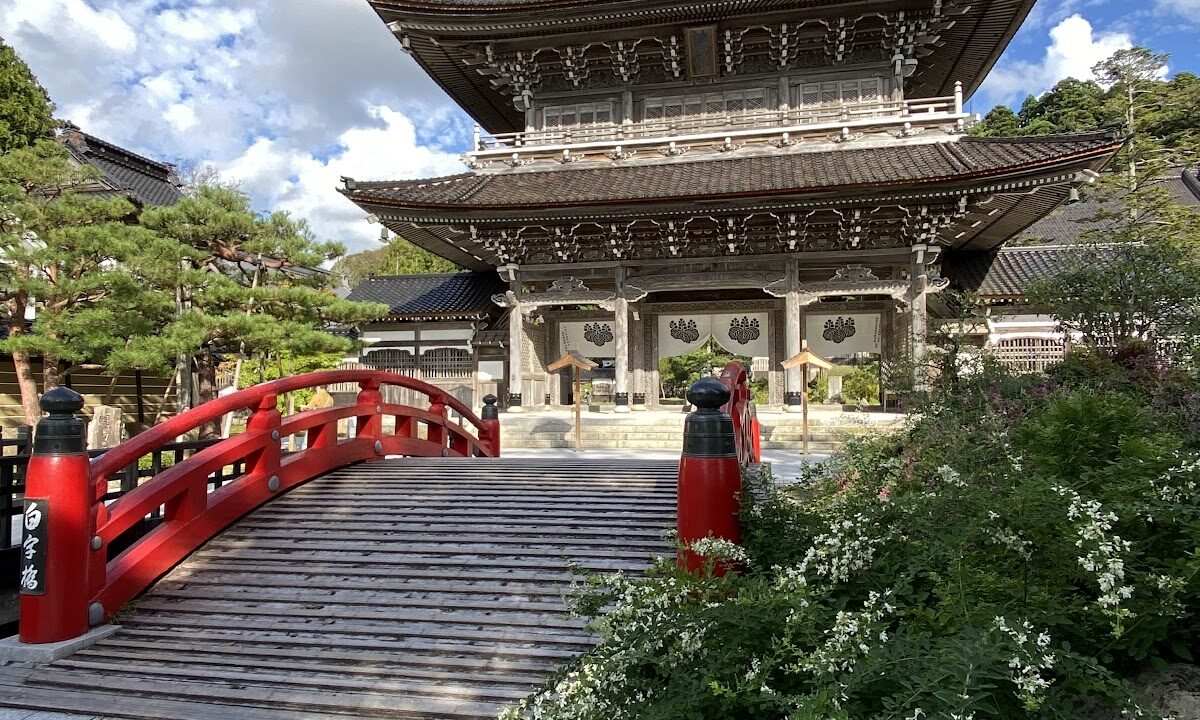
The first thing you see upon entering the temple grounds is the imposing Sanmon. Constructed entirely of zelkova wood, this gate is particularly dignified among the rebuilt structures after the great fire, overwhelming visitors. Also known as the Sanmon, it symbolizes the three gates of liberation in Buddhism (the gate of emptiness, the gate of formlessness, and the gate of wishlessness).
Buddha Hall
The Buddha Hall is the central building housing the principal image. The rebuilt Buddha Hall follows the traditional Zen Buddhist style, and the statue of Shakyamuni Buddha, the principal image, is enshrined inside. Daily religious services are conducted in a solemn atmosphere.
Hatto (Dharma Hall)
The Hatto is the place where the head priest preaches the Dharma and where important Buddhist ceremonies are held. It boasts a vast space and is designed to accommodate many monks and believers. The ceiling is adorned with magnificent decorations, embodying the solemnity of a Zen temple.
Sodo (Zen Hall)
The Sodo is where trainee monks practice zazen (seated meditation) and is the core building of a Zen temple. Here, monks dedicate themselves to their daily training and cultivate the spirit of Zen. While general visitors often only view the exterior, its serene presence evokes the spirit of Zen.
Daizodo (Great Ancestor Hall)
The Daizodo is a building dedicated to the founder, Zen Master Keizan. It is a particularly important place of worship for followers of the Soto Zen sect, attracting many visitors. Inside, a statue of Zen Master Keizan and related cultural artifacts are enshrined.
Sutra Repository
The Sutra Repository is a building that stores Buddhist scriptures. It houses valuable scriptures and documents, and contains important materials for Buddhist research. Its architectural style is unique, and it is a building of high cultural value.
Corridors
The corridors that wind through the temple grounds are important structures connecting the various buildings. Designed to allow movement within the grounds without getting wet even in rainy weather, they also serve a practical role in supporting the daily lives of the monks. Walking through the corridors allows one to grasp the overall layout of the vast temple grounds.
Important Cultural Properties (Nationally Designated) and Registered Tangible Cultural Properties
Designation as an Important Cultural Property in 2024
On December 9, 2024, 16 buildings of Sojiji Temple’s main hall were designated as Important Cultural Properties by the national government. This is a groundbreaking event, signifying that the historical and cultural value of Sojiji Temple’s main hall has been recognized at the national level.
The designated buildings include major temple complexes such as the main gate, Buddha hall, lecture hall, monks’ hall, ancestral hall, and sutra repository. Although these buildings were rebuilt after the Great Fire of the Meiji era, they faithfully inherit the techniques of traditional Zen Buddhist architecture and are considered masterpieces of modern temple architecture.
Characteristics of the Buildings
The buildings designated as Important Cultural Properties have the following characteristics:
- All Zelkova Wood Construction: Many of the main buildings are luxuriously constructed using zelkova wood, highlighting the texture and durability of the wood.
- Zen Buddhist Style: A faithful reproduction of the Zen Buddhist architectural style introduced from China.
- Large-Scale Temple Layout: The vast grounds convey the grandeur of its former status as a major head temple.
- Modern Reconstruction Techniques: Excellent architectural techniques from the Meiji, Taisho, and Showa periods are condensed into these buildings.
Registered Tangible Cultural Properties
Even before the designation as Important Cultural Properties, Sojiji Temple had several Registered Tangible Cultural Properties. These cultural assets are also important elements that constitute the historical value of the temple.
The Noto Peninsula Earthquake and the Path to Recovery
Damage from the 2024 Noto Peninsula Earthquake
The Noto Peninsula Earthquake, which occurred on January 1, 2024, caused extensive damage to Sojiji Temple. The massive earthquake, with a magnitude of 7.6, damaged many buildings.
Falling roof tiles, cracks in walls, and tilting pillars were observed throughout the temple grounds, and at one point, all visits were suspended. This sacred site, with its 700-year history, faced another major challenge.
Efforts Towards Reopening
Approximately five and a half months after the earthquake, on June 15, 2024, Sojiji Temple reopened some areas to the public. With a strong determination to “still move forward,” it took its first step towards recovery.
The following restrictions were in place upon reopening:
- No entry into the corridor: For safety reasons, walking around the temple grounds via the corridor was restricted.
- Exterior viewing only: The Great Ancestor Hall, Monks’ Hall, Main Gate, Buddha Hall, Sutra Repository, etc., could only be viewed from the outside.
- Visiting hours: 9:00 AM to 3:00 PM
- Admission fee: Free admission for the time being.
Support for Reconstruction and Future Prospects
The reconstruction of Sojiji Temple’s ancestral temple is receiving support from the entire Soto Zen sect, the cooperation of local residents, and support from across the country. With its designation as an Important Cultural Property, national restoration support is also expected.
While complete reconstruction is expected to take a long time, temple officials have expressed their determination to “definitely restore it to its original form as the ancestral temple of Noto.”
Sojiji Temple as a Training Center
Zen Training
Sojiji Temple still functions as a Zen training center. Monks from all over Japan gather here to engage in rigorous Zen training. Traditional Zen practices such as early morning zazen, alms-seeking, and samu (work) are practiced daily.
Kōjin Fugin and Prayers
At Sojiji Temple, prayers are offered before the Sanbō Daikōjin, the guardian deity of the head temple. Due to its location on the Noto Peninsula facing the Sea of Japan, prayers for maritime safety and other matters have been actively offered since ancient times.
The Kōjin Fugin, performed daily in the early morning without fail, is an important part of Sojiji Temple’s daily routine. Various prayers are also accepted at any time, fulfilling the wishes of believers and the general public.
Successive Abbots and Kowa Shusui
Keizan Jōkin Zenji (Founder)
Keizan Jōkin Zenji (1268-1325), the founder of Sōji-ji Temple, is revered as the founder of the Sōtō Zen sect. His contributions to inheriting the teachings of Dōgen Zenji, the founder of Eihei-ji Temple, and spreading them widely among the people are immeasurable.
Gasan Shōsoku Zenji (Second Patriarch)
Gasan Shōsoku Zenji (1275-1365) inherited the teachings of Keizan Zenji and greatly developed Sōji-ji Temple. He nurtured 25 particularly outstanding disciples (the Twenty-Five Sages), and among them, five of the most outstanding were called the Five Sages. These Five Sages spread Sōtō Zen throughout Japan, laying the foundation for the present-day Sōtō Zen sect.
The Lineage of the Five Sages
The five sages of Zen Master Gasan are the following eminent monks:
- Tsūgen Jakurei
- Daitetsu Sōrei
- Jakuen Myōshō
- Mutan Sokan
- Daichi Zenkan
The lineages derived from these eminent monks spread throughout Japan, and many Sōtō Zen temples still belong to these lineages today.
Abbots in Modern Times
Even after the relocation of the head temple in the Meiji era, successive excellent abbots have served at Sōjiji Temple’s main temple, dedicating themselves to its maintenance and development. Each abbot has upheld the traditions of Zen while adapting to the changing times in temple management.
History and Culture of the Temple Town
Formation of the Temple Town
With the development of Sōjiji Temple, a temple town was formed around the temple. The area has fostered a unique culture as a religious city, with numerous lodgings for monks and pilgrims, shops, and artisan workshops lining the streets.
Connections with the Community
Sōjiji Temple is not merely a religious institution; it has also functioned as a center of the local community. It is deeply connected to the local community in various aspects, including local festivals, education, and welfare.
Even in the recovery efforts following the Noto Peninsula earthquake, Sōjiji Temple and the local residents faced difficulties together, demonstrating the strength of their bond once again.
Visiting Information and Access
Visiting Hours and Admission Fees
Normal Visiting Information (Before the Earthquake):
- Visiting Hours: 8:00 AM – 5:00 PM (Subject to change depending on the season)
- Admission Fee: Adults 400 yen, Junior and Senior High School Students 300 yen, Elementary School Students 200 yen
Current Visiting Information (After reopening on June 15, 2024):
- Visiting Hours: 9:00 AM – 3:00 PM
- Admission Fee: Free for the time being
- Restrictions: Only certain areas are accessible, mainly exterior viewing
*We recommend checking the official website for the latest visiting information.
Access Methods
Access by Car:
- Approximately 40 minutes from Noto Airport
- Approximately 15 minutes from the center of Wajima City
- Approximately 40 minutes from the Anamizu IC on the Noto Satoyama Expressway
Public Transportation:
- Immediately after alighting at the “Sojiji Soin-mae” bus stop on the Hokuriku Railway Bus
- Approximately 2 hours by express bus from JR Kanazawa Station
Parking:
- Free parking available (approximately 100 regular cars)
- Large buses can be parked
Nearby Tourist Attractions
When visiting Sojiji Temple, we recommend also visiting the following nearby spots:
- Wajima Morning Market: One of Japan’s three major morning markets
- Shirayone Senmaida Rice Terraces: Rice terraces designated as a World Agricultural Heritage site
- Wajima Lacquerware Hall: Exhibition facility for the traditional craft of Wajima lacquerware
- Noto Kongo: A scenic spot created by the rough waves of the Sea of Japan
Cultural Significance of Sojiji Temple
Position in the History of Japanese Buddhism
Sojiji Temple holds an extremely important position in the history of Japanese Buddhism, particularly in the history of the Soto Zen sect. While Eiheiji Temple is considered the place where Zen Master Dogen established the doctrines of the Soto Zen sect, Sojiji Temple functioned as a base for missionary work to the common people by Zen Master Keizan.
The complementary roles of these two main temples allowed the Soto Zen sect to develop into one of Japan’s largest Buddhist sects.
Value in Architectural History
The buildings of Sojiji Temple are historically significant as quintessential examples of Zen Buddhist architecture. In particular, the reconstructed buildings from the Meiji to the early Showa period are highly regarded as excellent works that inherited traditional techniques while incorporating modern technology.
The buildings, constructed entirely of zelkova wood, represent the pinnacle of woodworking technology at the time, and many aspects are difficult to reproduce today.
Value as a Tourism Resource
As a representative tourist attraction of the Noto Peninsula, Sojiji Temple has attracted many tourists from both Japan and abroad. Many foreign tourists interested in Zen culture also visit, and it functions as a place for international cultural exchange.
It has also made a significant contribution to the local economy; the shops and accommodations in the temple town have developed in close connection with Sojiji Temple.
The Four Seasons of Sojiji Temple
Spring: Cherry Blossoms and Fresh Greenery
In spring, Sojiji Temple is renowned for its cherry blossoms blooming throughout the grounds. Ancient cherry trees harmonize beautifully with the historic buildings, creating a truly exceptional sight. The best time to see them is from mid-April to late April.
Summer: Deep Green and Serenity
In summer, the temple grounds are enveloped in deep green. Amidst the sound of cicadas, zazen (seated meditation) in the Zen hall offers a unique sense of tranquility. Early morning visits are especially recommended.
Autumn: Famous for Autumn Foliage
From late October to mid-November, the temple grounds display magnificent autumn colors. The view of the foliage from the corridors is particularly breathtaking.
Winter: The Majesty of Snowscapes
Winter in Noto is harsh, and the temple grounds are covered in snow. The snow-covered temple buildings exude a majestic atmosphere, allowing one to feel the spirituality of Zen more deeply.
Summary: Towards the Future of Sojiji Temple
Sojiji Temple has overcome numerous difficulties throughout its more than 700-year history. Facing major challenges such as the Great Fire of the Meiji era, the relocation of the head temple, and the Noto Peninsula Earthquake of the Reiwa era, its resilience in recovering each time embodies the very spirit of Zen.
The designation as an Important Cultural Property in December 2024 is proof that the cultural value of Sojiji Temple has been recognized at a national level, and will provide a significant boost to future preservation and restoration activities.
While recovery from the Noto Peninsula Earthquake is still ongoing, efforts are underway involving temple officials, local residents, believers nationwide, and the government working together. Complete recovery will take time, but Sojiji Temple will surely regain its former glory and pass on its history to future generations.
When you visit Ishikawa Prefecture and the Noto Peninsula, be sure to stop by Sojiji Temple and experience its historical significance, architectural beauty, and the spirit of Zen. This place of prayer and practice, which has been passed down for over 700 years, offers much for us living in the modern age.


