Complete Guide to Fukushima Tenmangu Shrine (Osaka Prefecture) | History, Goshuin (Shrine Seal), and Access Information
Fukushima Tenmangu Shrine, located in Fukushima Ward, Osaka City, is a historic shrine dedicated to Sugawara no Michizane, known as the god of learning. With a history dating back to the Heian period, it has been affectionately known locally as “Kami no Tenjin” (Upper Tenjin). This article provides detailed information useful for visitors, including the history of Fukushima Tenmangu Shrine, its enshrined deities, highlights of the grounds, annual events, goshuin information, and access methods.
History and Origins of Fukushima Tenmangu Shrine
Circumstances of its Founding and its Connection to Sugawara no Michizane
The history of Fukushima Tenmangu Shrine dates back to the Heian period, specifically the 4th year of the Shotai era (901 AD). In that year, when Sugawara no Michizane was exiled to Dazaifu, he visited his aunt, Kakuju-ni, at Domyoji Temple in Kawachi Province, before attempting to travel to Kyushu by boat on the Yodo River. It is said that the place where Sugawara no Michizane waited for favorable winds was the current site of Fukushima Tenmangu Shrine.
Because Michizane stopped at this place while waiting for his ship to depart, the local people admired him and built a shrine to commemorate his virtues. The shrine was founded in 907 AD (Engi 7), and the annual festival began to be held the following year, 908 AD (Engi 8). This festival has continued for over 1100 years and remains the most important ritual of the shrine.
History of the Three Fukushima Tenjin Shrines and the Joint Enshrinement
Previously, there were three Tenmangu shrines in Fukushima, known as “Kami no Tenjin,” “Naka no Tenjin,” and “Shimo no Tenjin.” Fukushima Tenmangu Shrine was “Kami no Tenjin,” also known as “Tenmangu Kami no Sha.”
Due to the destruction of the Pacific War, Tenmangu Naka no Sha, known as “Naka no Tenjin,” lost its shrine building. After the war, the Kami-no-sha (Upper Shrine) of Tenmangu Shrine merged with the Naka-no-sha (Middle Shrine), and the two shrines became one, changing their name to “Fukushima Tenmangu Shrine,” which remains to this day. This merger ensured the continuation of the tradition of Tenjin worship in Fukushima, and the shrine continues to play a vital role as a spiritual pillar of the community.
Former Shrine Rank and Local Position
Fukushima Tenmangu Shrine’s former shrine rank was that of a village shrine. Under the Meiji-era shrine ranking system, it was designated a village shrine and has been revered as the local guardian deity. Currently, it belongs to the Osaka Prefectural Shrine Association and, as an important shrine in Fukushima Ward, Osaka City, receives fervent devotion from local residents and worshippers.
Despite its location in the city center, the shrine grounds are enveloped in a tranquil atmosphere, often described as a place where “time seems to stand still.” Surrounded by buildings and houses, it remains a precious presence, preserving history and tradition.
Deities and Divine Virtues
Main Deity: Sugawara no Michizane
The main deity enshrined at Fukushima Tenmangu Shrine is Sugawara no Michizane. Michizane was a scholar and politician of the Heian period, known for his outstanding learning and honest character. However, he became embroiled in political strife and was unjustly exiled to Dazaifu, ending his life in despair.
After his death, it was believed that Michizane’s vengeful spirit would bring disaster to the capital, so the imperial court built Tenmangu shrines throughout the country to appease his spirit. Eventually, Michizane came to be revered as Tenjin-sama, and became particularly worshipped nationwide as the god of learning.
At Fukushima Tenmangu Shrine, due to the legend that Michizane actually visited this place, it is believed to have particularly strong divine virtues for academic success, passing exams, and improving academic performance. Many students and their parents visit the shrine during exam season.
Enshrined Deities and Their Divine Virtues
Fukushima Tenmangu Shrine enshrines three deities in addition to its main deity, Sugawara no Michizane.
Okuninushi-no-Mikoto is a deity affectionately known as “Okuni-sama.” He is the god of nation-building and is believed to bestow blessings of abundant harvests, business prosperity, and matchmaking. He is also widely worshipped as a god of good fortune, attracting many visitors praying for family safety and good luck.
Kotoshironushi-no-Mikoto is a deity known as “Ebisu-sama.” He is the god of the sea and fishing, as well as revered as a god of business prosperity, industrial development, and matchmaking. As one of the Seven Lucky Gods, Ebisu-sama enjoys strong devotion from those in business.
Sukunahikona-no-Mikoto is a deity who, along with Okuninushi-no-Mikoto, played a key role in nation-building. He is known as the god of medicine, hot springs, and incantations. He is believed to bestow blessings of healing illnesses and promoting health and longevity.
With these enshrined deities, Fukushima Tenmangu Shrine is a place that fulfills a variety of wishes, including academic success, business prosperity, matchmaking, and good health.
Highlights of the Shrine Grounds
Atmosphere of the Shrine and Grounds
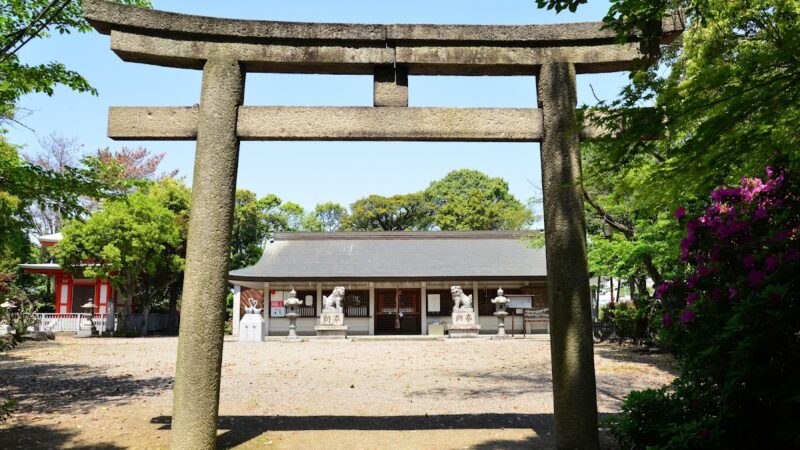
Fukushima Tenmangu Shrine is located in the heart of Fukushima Ward, Osaka City, facing Naniwa-suji Street. While surrounded by the hustle and bustle of the city with people and cars passing by, stepping through the torii gate reveals a tranquil space.
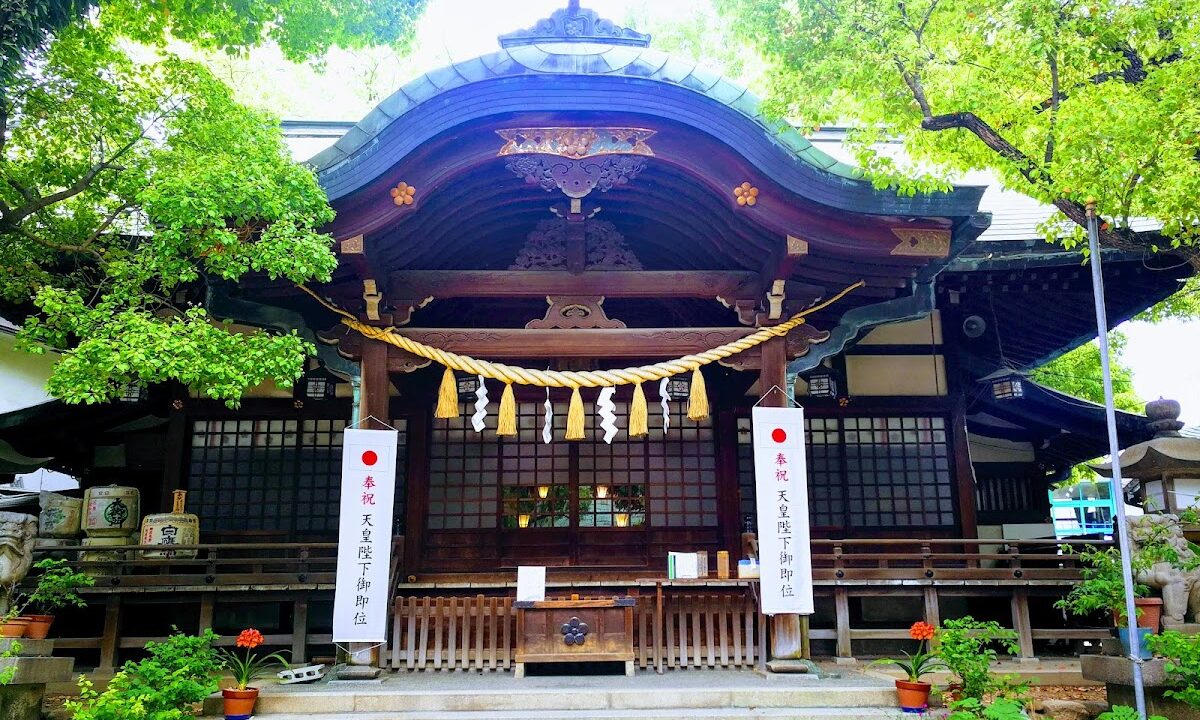
Although the shrine building was rebuilt after the war, it retains the traditional style of shrine architecture, creating a solemn atmosphere. The grounds are not particularly large, but they are meticulously maintained and clean, allowing visitors to offer their prayers in peace. ### Sacred Ox Statues and Tenjin Faith
Ox statues are often found at Tenmangu shrines, due to the deep connection between Sugawara no Michizane and oxen. Michizane was born in the Year of the Ox, and there is a legend that when he died in Dazaifu, his burial place was established at the spot where the ox-drawn cart carrying his body became immobile.
Fukushima Tenmangu Shrine also houses a sacred ox statue, and it is believed that visitors receive wisdom by stroking the ox’s head. Students, especially those preparing for exams, can be seen stroking the ox to pray for success in their exams and academic improvement.
Shrines and Stone Monuments
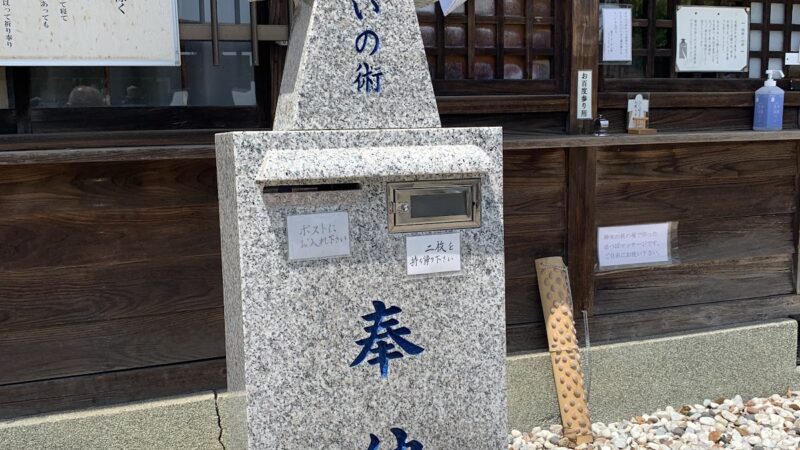
Besides the main shrine, several stone monuments and memorials are erected within the grounds. These are valuable cultural assets that tell the story of Fukushima Tenmangu Shrine’s long history and its connection to the local community.
When visiting, we recommend taking your time to explore not only the main shrine but the entire grounds, feeling the weight of history. Despite being a small shrine in the heart of the city, it holds over 1100 years of history. ## Annual Events and Festivals
Grand Festival (Autumn Festival)
The most important of Fukushima Tenmangu Shrine’s annual events is the Grand Festival (Autumn Festival), held every year on October 21st. This ceremony is a venerable tradition dating back to the 8th year of the Engi era (908 AD), the year after the shrine’s founding, boasting a history of over 1100 years.
Traditionally, it was held on the 21st day of the 9th month of the lunar calendar, but since the Meiji Restoration, it has been held on the 21st day of the 10th month of the Gregorian calendar. The Grand Festival, along with the Spring Festival and the Niiname-sai (Harvest Festival), is one of the shrine’s three major festivals, and is considered the most prestigious of them all.
During the Grand Festival, solemn rituals are performed by Shinto priests, and parishioners and devotees attend to express gratitude for divine blessings and pray for the peace and prosperity of the region.
Spring Festival and Niiname-sai Festival
The Spring Festival is a ceremony held in spring to pray for a bountiful harvest and business prosperity. The Niiname-sai Festival is held on November 23rd and is a ceremony to give thanks for the year’s harvest. These, along with the Grand Festival, are considered the three major festivals of Fukushima Tenmangu Shrine.
Other Annual Events
Fukushima Tenmangu Shrine holds various ceremonies throughout the year. Traditional Japanese Shinto rituals such as the New Year’s Day Festival, Setsubun Festival, and Summer Purification Ceremony are preserved, making it a place of worship closely intertwined with the lives of the local people.
During the New Year’s visit period, many worshippers visit to pray for safety and prosperity in the new year. The shrine is also bustling with worshippers praying for success during exam season.
Goshuin (Shrine Seal) Information
About the Issuance of Goshuin
Fukushima Tenmangu Shrine offers Goshuin (shrine seals). Goshuin (temple/shrine stamps) are cherished by many visitors as proof of their visit and as a way to forge a connection with the shrine.
If you wish to receive a goshuin, please inquire at the shrine office. However, since priests may be absent, it is recommended to call ahead to confirm if you wish to receive a goshuin.
Goshuin Design and Features
The goshuin at Fukushima Tenmangu Shrine features the shrine’s name and date of visit written in ink, along with the shrine’s seal. The simple yet dignified design reflects the refined character of a Tenmangu shrine.
If you do not have a goshuincho (stamp book), you can receive one at the shrine office (availability may vary).
Precautions Regarding Goshuin Receipt
Goshuin are a memento of your shrine visit and are not like a stamp rally. It is proper etiquette to receive a goshuin only after completing your prayers.
Also, goshuin may not be available if priests are absent due to ceremonies or rituals. Especially if you are visiting from afar specifically to obtain a Goshuin (temple/shrine stamp), we strongly recommend calling ahead to confirm availability.
Access Information
Access by Train
Fukushima Tenmangu Shrine is easily accessible by public transportation. The nearest stations are as follows:
JR Tozai Line “Shin-Fukushima Station” (approx. 5-minute walk)
Hanshin Electric Railway Main Line “Fukushima Station” (approx. 7-minute walk)
JR Osaka Loop Line “Fukushima Station” (approx. 8-minute walk)
Osaka Metro Sennichimae Line “Noda-Hanshin Station” (approx. 10-minute walk)
All stations are within walking distance, and the shrine is easily accessible from Osaka Station and the Umeda area. Shin-Fukushima Station is the closest; simply exit the station and head south along Naniwa-suji Street to arrive immediately.
Access by Car and Parking
If you are coming by car, the nearest exits are the Hanshin Expressway “Fukushima Exit” or “Umeda Exit.” However, there is no dedicated parking lot for the shrine, so please use nearby coin-operated parking lots.
Due to its location in the heart of Fukushima Ward, there are several coin-operated parking lots nearby, but they can get crowded on holidays and during the New Year’s pilgrimage season. We recommend using public transportation whenever possible.
Location and Contact Information
Location: 2-8-1 Fukushima, Fukushima Ward, Osaka City, Osaka Prefecture 553-0003
Phone Number: 06-6451-5907
Opening Hours: 6:00
Closing Hours: 18:00
While you are free to visit during opening hours, if you wish to receive a Goshuin (temple/shrine stamp) or other amulets, you must visit during the hours when a Shinto priest is present. We recommend confirming by phone in advance.
The Charm of Fukushima Tenmangu Shrine and Recommendations for Visiting
A Silent Sanctuary in the City
The greatest charm of Fukushima Tenmangu Shrine is that, despite being located amidst the hustle and bustle of central Osaka, stepping onto the shrine grounds reveals a world of tranquility. Although it’s a small shrine surrounded by buildings and houses, over 1100 years of history breathes within its grounds.
It’s a recommended spot not only for local residents but also for tourists visiting Osaka, as a place to stop by and calm your mind amidst your busy daily life.
Academic Achievement and Diverse Divine Virtues
Fukushima Tenmangu Shrine, with Sugawara no Michizane as its main deity, is widely known as a shrine for academic achievement and prayers for passing exams. Many visitors come not only as students but also as working adults preparing for qualification exams or promotion exams.
Furthermore, because Okuninushi-no-Mikoto, Kotoshironushi-no-Mikoto, and Sukunahikona-no-Mikoto are enshrined as auxiliary deities, it is a shrine that can fulfill a variety of wishes, including business prosperity, matchmaking, and good health. Its charm lies in its broad appeal, allowing visitors to pray at various milestones and for different wishes in life.
A Place of Worship Rooted in the Community
Fukushima Tenmangu Shrine is not a large-scale tourist shrine, but that’s precisely why it’s a warm and welcoming shrine deeply rooted in the community. It is carefully preserved by local parishioners and devotees, serving as a spiritual pillar for the local community.
Throughout the year, local people participate in the festivals, ensuring the continuation of traditions. This close-knit, community-oriented atmosphere is a major attraction of Fukushima Tenmangu Shrine.
Hidden Gem of Osaka Sightseeing
While Osaka Castle and Dotonbori are famous Osaka tourist spots, visiting a small, historic shrine like Fukushima Tenmangu Shrine allows you to discover a different side of Osaka. Its convenient location within walking distance of Osaka Station and the Umeda area makes it a great place to stop by during your sightseeing.
It’s especially recommended for those interested in history, shrines and temples, and those collecting Goshuin (shrine stamps).
Summary
Fukushima Tenmangu Shrine is a venerable shrine with a history of over 1100 years, dating back to the Heian period. It has a legend that Sugawara no Michizane waited for favorable winds on his way to Dazaifu, and has been revered by local people as the god of learning.
This shrine has a history of carrying on the Tenjin faith of Fukushima, having enshrined the Nakano-sha shrine of Tenmangu Shrine, which was lost in the war. Despite being in the heart of the city, it maintains a tranquil atmosphere, making it a precious space for peaceful worship.
It offers a variety of divine blessings, including academic success, passing exams, business prosperity, matchmaking, and good health, making it a shrine worth visiting at various milestones in life. It’s easily accessible from Osaka Station and the Umeda area, so please be sure to visit when you’re in Osaka.
The shrine is open from 6:00 to 18:00, but if you wish to receive a Goshuin (shrine stamp) or other items, it is recommended to call in advance to confirm the priest’s presence. Visit Fukushima Tenmangu Shrine, where history and tradition breathe life into, and receive its divine blessings in a peaceful atmosphere.