Complete Guide to Asahi Shinmei Shrine (Osaka Prefecture): History, Goshuin (Shrine Seal), and Access Information
Asahi Shinmei Shrine, located in Konohana Ward, Osaka City, is a historic shrine where Minamoto no Yoshitsune and Sanada Yukimura are said to have prayed for victory in battle. As one of the three major Shinmei shrines in Osaka (the three major Shinmei shrines of Naniwa), it has long been revered and remains a beloved local guardian shrine. This article comprehensively covers everything you need to know before visiting Asahi Shinmei Shrine, including its detailed history, enshrined deities, goshuin information, access methods, and annual events.
Basic Information about Asahi Shinmei Shrine
Location: 1-6-21 Kasugade-Naka, Konohana-ku, Osaka City, Osaka Prefecture
Phone Number: 06-6461-8238
Nearest Station: Approximately 12 minutes on foot from the north exit of Chidoribashi Station on the Hanshin Namba Line
Visiting Hours: Open 24 hours (Shrine office has limited hours)
Parking: Available (limited number of spaces)
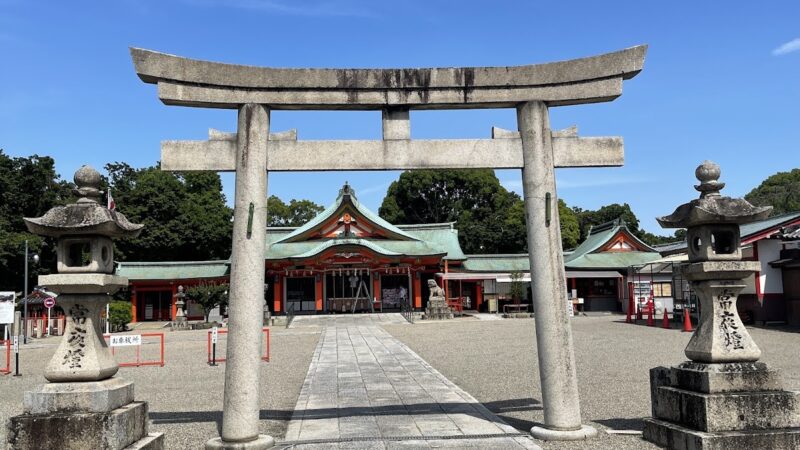
Asahi Shinmei Shrine is a community-oriented shrine located in a residential area of Konohana-ku, Osaka City. While the grounds are not particularly large, it is a well-maintained and clean space, cherished as a place of worship for local residents.
History and Origins of Asahi Shinmei Shrine
Origin as one of the Three Shinmei Shrines of Naniwa
An essential aspect of discussing the history of Asahi Shinmei Shrine is its position as one of the “Three Shinmei Shrines of Naniwa (Osaka Three Shinmei Shrines).” Osaka once had three Shinto shrines: Asahi, Nichu, and Yuhi, each an important place of worship. Asahi Shinmei Shrine was one of them, and has long been cherished by the people of Osaka.
Originally, Asahi Shinmei Shrine was located in Kanzaki-cho, Chuo-ku (formerly Higashi-ku), Osaka City. This location is known as the site where Minamoto no Yoshitsune and Kajiwara Kagetoki had their “Sakaro no Yashiro” (Reverse Oar Debate) during the Genpei War. Legend says that Yoshitsune prayed for victory at this shrine and successfully defeated the Taira clan. For this reason, Asahi Shinmei Shrine is also known by the alternative name “Sakaro no Yashiro” (Reverse Oar Shrine).
Merger with Kōtaijinja Shrine
Meanwhile, in Kawagishi-cho, Konohana-ku (formerly Minami-Shinden), Kōtaijinja Shrine, founded during the Tenpō era (1830-1844), protected the area as the guardian deity. This Kōtaijinja Shrine functioned as a spiritual pillar for the local residents alongside the development of Minami-Shinden.
In 1907 (Meiji 40), Asahi Shinmei-gu and Kōtaijinja Shrine were merged, and the shrine’s name was changed to “Asahi Shinmei-sha.” This merger unified the history and beliefs of the two shrines.
Relocation to the Current Location
In 1931 (Showa 6), Asahi Shinmei-sha relocated to its current location in Kasugade-naka, Konohana-ku. This location was selected as part of the land readjustment accompanying Osaka City’s urban development, and for over 90 years since then, it has stood as the guardian deity of the region.
In 1994 (Heisei 6), the former main shrine of Kasuga Taisha in Nara was received, and “Kasuga-sha” was rebuilt within the grounds. As a result, multiple deities are now enshrined within the grounds of Asahi Shinmei-sha, making it a more diverse place of worship.
Deities Enshrined
The following deities are enshrined at Asahi Shinmei-sha: ### Amaterasu Omikami
The principal deity enshrined here is Amaterasu Omikami, the supreme deity in Japanese mythology. She is the sun goddess and revered as the ancestral deity of the Imperial family. The name “Shinmei-sha” is used for shrines dedicated to Amaterasu Omikami, and she is the central deity of Asahi Shinmei-sha.
Yamato-hime no Mikoto
She is an important princess who played a key role in the founding of Ise Grand Shrine as Amaterasu Omikami’s representative. She is an indispensable figure in the history of the shrine and is often enshrined in Shinmei-sha shrines.
Kasuga no Okami
This deity was enshrined here when Kasuga Shrine was rebuilt in 1994. Kasuga-no-Okami is a collective term for four deities: Takemikazuchi-no-Mikoto, Futsunushi-no-Mikoto, Amenokoyane-no-Mikoto, and Himegami.
Sugawara no Michizane
Sugawara no Michizane, widely worshipped as the god of learning, is also enshrined here. During exam season, many worshippers visit to pray for academic success.
In this way, Asahi Shinmei Shrine is a shrine that enshrines multiple deities, and worshippers can visit seeking various blessings.
Goshuin (Shrine Seal) Information
Asahi Shinmei Shrine offers Goshuin.
Goshuin (Shrine Stamp) Reception: At the shrine office (advance contact recommended as staff may be absent).
Offering Fee: Usually around 300-500 yen.
Goshuincho (Shrine Stamp Book): Availability must be confirmed.
The goshuin features the calligraphy of “Asahi Shinmei-sha” and the shrine’s seal. Its simple yet powerful calligraphy is popular among goshuin collectors. However, since there may not always be a resident priest, it is recommended to call ahead to confirm if you definitely want a goshuin.
Access Methods
Access by Train
From Hanshin Namba Line “Chidoribashi Station”:
Approximately 12 minutes on foot from the north exit. Head north from the station and you will arrive after passing through the residential area of Kasugade-cho. The directions are relatively easy to follow, and locals will kindly guide you.
From JR Loop Line “Nishikujo Station”:
Approximately 20 minutes on foot, or using the bus is convenient.
Access by Bus
Get off at the “Kasugade” bus stop on the Osaka City Bus.
Approximately 250 meters south, about a 3-minute walk. This is the most convenient access method if you use the bus.
Access by Car
Approximately 5 minutes from the “Nishikujo Exit” of the Hanshin Expressway. There are a few parking spaces on the shrine grounds, but since the number is limited, we recommend using public transportation during New Year’s visits and festivals.
Annual Festivals and Events
Asahi Shinmei Shrine Summer Festival
This is the most important festival of Asahi Shinmei Shrine, held every summer. In recent years, the scale has been reduced, and only the Shinto rituals are performed, but in the past, the shrine grounds were lined with stalls and bustled with many worshippers. For locals, it is a nostalgic event filled with childhood memories.
Konohana Ward Ichiban Festival
Asahi Shinmei Shrine participates in this festival, which is jointly held by shrines in Konohana Ward. It continues to this day as an important event that deepens community bonds. ### New Year’s Visit
From New Year’s Day to the third day of the year, many visitors, mainly local residents, come for their first shrine visit of the year. It’s relatively uncrowded, making it an attractive place for a leisurely visit.
Monthly Festival
A monthly festival is held on a fixed day each month, where prayers are offered for the safety and prosperity of the community.
Highlights of the Shrine Grounds
Main Hall
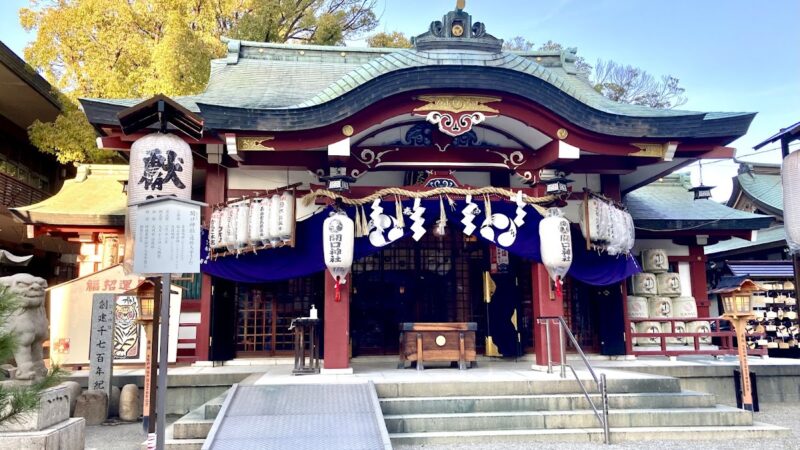
The main hall, built during the relocation in 1931 (Showa 6), is simple yet exudes a sense of dignity. Regular repairs are carried out, maintaining its excellent condition.
Kasuga Shrine
Rebuilt in 1994 (Heisei 6), the Kasuga Shrine is a relocated building from the former main shrine of Kasuga Taisha in Nara, and is a structure of high historical value. It stands independently from the main hall, allowing visitors to worship Kasuga Okami.
Shrine Office
The shrine office, located in a corner of the grounds, handles the issuance of Goshuin (shrine stamps) and the acceptance of prayer requests. Since there are times when Shinto priests are not permanently stationed there, it is recommended to check before visiting. ### Atmosphere of the Shrine Grounds
Despite being located in a residential area of an urban center, the shrine grounds are enveloped in a tranquil atmosphere. While there aren’t many trees, the grounds are meticulously maintained, creating a clean and pleasant space for worship.
Asahi Shinmei Shrine and Minamoto no Yoshitsune/Sanada Yukimura
The Debate on the Reverse Oar and Minamoto no Yoshitsune
During the Genpei War, the famous “Debate on the Reverse Oar” took place between Minamoto no Yoshitsune and Kajiwara Kagetoki. This was a tactical debate about whether ships should be equipped with reverse oars (oars used for rowing backward). Yoshitsune argued that “since we intend to win, there’s no need to prepare for retreat,” and prayed for victory at Asahi Shinmei Shrine. As a result of his success in defeating the Taira clan, this shrine is believed to bring good fortune in battles and competitions.
Sanada Yukimura’s Prayer for Victory
It is said that Sanada Yukimura (Sanada Nobushige) prayed for victory at Asahi Shinmei Shrine during the Siege of Osaka. As a shrine revered by samurai warriors, it is well-known among history enthusiasts.
Nearby Tourist Attractions
Universal Studios Japan (USJ)
USJ, located about 10 minutes by car or 15 minutes by train from Asahi Shinmei Shrine, is one of Osaka’s leading theme parks. An increasing number of tourists visit the shrine before or after visiting USJ.
Maishima Sports Island
A cluster of sports facilities facing Osaka Bay, with excellent BBQ facilities and other amenities. Ideal for family leisure.
Historical Walks in Konohana Ward
Besides Asahi Shinmei Shrine, Konohana Ward has numerous historical sites. A historical walk exploring the area’s history, using the historical guide pamphlets issued by the ward office, is highly recommended.
Manners and Points for Visiting the Shrine
Proper Way to Visit
- Bow before passing through the torii gate.
- Cleanse your hands and mouth at the water basin.
- Bow twice, clap twice, and bow once in front of the main shrine.
- If visiting the Kasuga Shrine, follow the same procedure.
Photography
Photography is generally permitted on the shrine grounds, but please be considerate of other visitors. Photography inside the main shrine may be prohibited.
Attire
There are no specific dress code requirements, but appropriate attire for a sacred place is desirable.
Connection to the Community
Asahi Shinmei Shrine plays a central role in the local community as the tutelary shrine of the Kasugade area in Konohana Ward. It has close ties with local neighborhood associations and children’s groups, and the shrine grounds are sometimes used as a meeting place for community events.
As the eras shifted from Showa to Heisei and then to Reiwa, the local population and lifestyles changed dramatically, but Asahi Shinmei Shrine continued to exist as a spiritual pillar of the community.
Contact Information
Asahi Shinmei Shrine
Phone: 06-6461-8238
Address: 1-6-21 Kasugade-Naka, Konohana-ku, Osaka City, Osaka Prefecture
Osaka City Konohana Ward Office, Policy Co-creation Division (Inquiries regarding the ward’s history)
Phone: 06-6466-9683
Fax: 06-6462-0942
Summary
Asahi Shinmei Shrine, one of the three major Shinmei shrines of Naniwa, boasts a long history and is a venerable shrine with connections to historical figures such as Minamoto no Yoshitsune and Sanada Yukimura. While undergoing changes with the times, including the merger in 1907 (Meiji 40), relocation in 1931 (Showa 6), and reconstruction of Kasuga Shrine in 1994 (Heisei 6), it has been cherished as a place of worship for the community.
Nestled quietly in a residential area of Konohana Ward, the shrine grounds offer a perfect escape from the hustle and bustle of the city and a place to find peace of mind. It’s a shrine worth visiting for a variety of reasons, whether you’re seeking a Goshuin (shrine stamp), interested in history, or simply want to experience local culture.
When visiting tourist spots in Konohana Ward, such as Universal Studios Japan (USJ), be sure to stop by Asahi Shinmei Shrine. It will be a valuable experience that allows you to touch upon a part of Osaka’s history and culture.