Wakamiya Hachiman Daijingu Shrine (Osaka Prefecture) Complete Guide | Benefits, History, Goshuin (Shrine Seal), and Access Information
Wakamiya Hachiman Daijingu Shrine, located in Gamo, Joto Ward, Osaka City, is a shrine affectionately known locally as “Wakamiya-san” or “Gamou’s West-facing Hachiman-san.” It enshrines Emperor Nintoku, who built the first Naniwa Palace, and has long been a place of worship for the local people. This article provides a detailed introduction to this historic shrine, including its history, benefits, highlights within the grounds, goshuin (shrine seal), and access information.
History and Origins of Wakamiya Hachiman Daijingu Shrine
Origin of its Founding and its Connection to Emperor Nintoku
While the exact founding date of Wakamiya Hachiman Daijingu Shrine is unclear, it is said to have been established by villagers who invited a deity to commemorate the benevolent rule and virtues of Emperor Nintoku, the 16th emperor who first established the capital in Naniwa (Namba). Emperor Nintoku, known for the anecdote of “the people’s hearth,” has long been revered as a benevolent ruler.
The enshrined deity, Wakamiya Hachiman Omikami, refers to Emperor Nintoku. Because this region has long flourished as agricultural land, the shrine has been worshipped as a place to pray for abundant harvests and regional prosperity.
Characteristics of the Shrine Grounds and Natural Environment
The grounds of Wakamiya Hachiman Omikami Shrine have historically been located on a small hill within the village. It is said that the grounds were densely covered with large trees such as camphor trees and hackberry trees, creating a dark atmosphere even during the day.
In particular, the ancient camphor tree was revered as a sacred tree and stood tall on the grounds until 1885 (Meiji 18). Even today, many trees remain on the shrine grounds, and 11 trees, including camphor trees and hackberry trees, were designated as Osaka City Protected Forests on October 31, 1997.
Located near the Neyagawa River (formerly the Yamato River) and a transportation hub where ancient roads intersected from east to west, this location has played an important role as the center of the region.
The Winter Siege of Osaka and Satake Yoshinobu’s Camp
Wakamiya Hachiman Grand Shrine played a historical role in the Winter Siege of Osaka in 1614. It is said that Satake Yoshinobu, a general on the Tokugawa side, set up camp on the shrine grounds and prayed for victory during this battle.
Satake Yoshinobu was a daimyo of Hitachi Province (present-day Ibaraki Prefecture). He was transferred to Dewa Province (Akita Prefecture) due to his actions at the Battle of Sekigahara, but he participated in the Siege of Osaka on the Tokugawa side. This historical episode demonstrates that Wakamiya Hachiman Grand Shrine was not merely a local guardian shrine, but a prestigious shrine revered even by Sengoku period warlords.
Benefits and Divine Virtues
Main Benefits
Wakamiya Hachiman Grand Shrine, dedicated to Emperor Nintoku, is believed to offer the following benefits:
- Victory and Guaranteed Success: Since Satake Yoshinobu prayed here for victory during the Winter Siege of Osaka, many worshippers visit to pray for success in competitions and passing exams.
- Business Prosperity: As a shrine that has watched over the development of local commerce, prayers for business prosperity are also popular.
- Abundant Harvest: Located on land suitable for agriculture, it has long been a place of worship for praying for bountiful harvests.
- Safe Childbirth: Due to Emperor Nintoku’s compassionate heart, it is also worshipped as a guardian deity for safe childbirth and child-rearing.
- Family Safety: As the local guardian deity, it protects the health and peace of families.
- Fulfillment of Wishes and Overall Good Fortune: As a deity that grants various wishes, it is believed to offer a wide range of benefits.
The Meaning of “West-Facing Hachiman Shrine”
Wakamiya Hachiman Grand Shrine is known locally as “Gamō’s West-Facing Hachiman Shrine.” This name comes from the fact that the shrine’s main hall faces west. While most shrines face south or east, this westward orientation is unusual and is thought to have been determined by the local topography and relationship with old roads.
This unique orientation is one of the reasons why the shrine is so beloved by the local people.
Highlights of the Shrine Grounds
Worship Hall and Main Hall
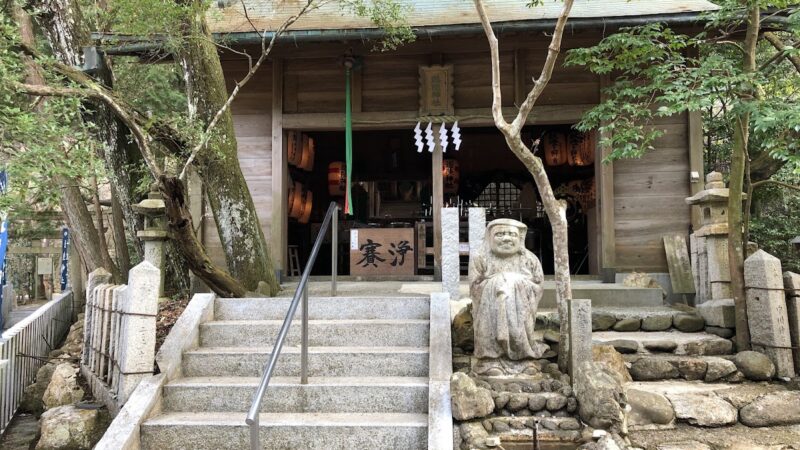
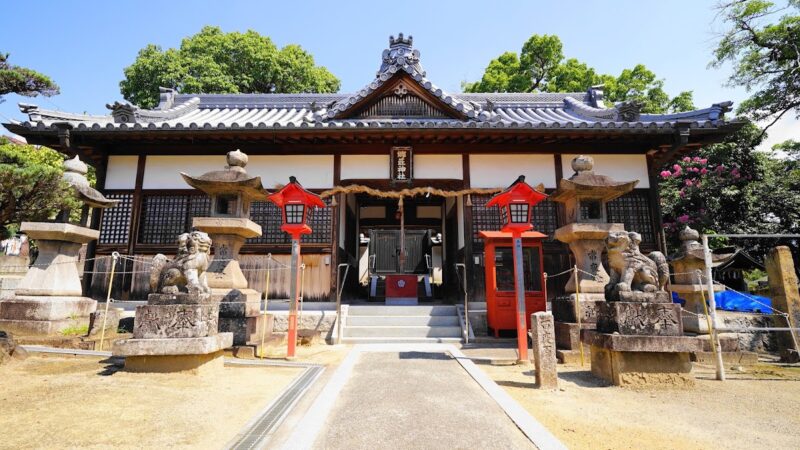
Upon entering the shrine grounds, the first thing that catches the eye is the magnificent worship hall. In the worship hall, worshippers express their daily gratitude and wishes to the gods. The main hall enshrines Emperor Nintoku, and a solemn atmosphere permeates the area.
In front of the worship hall is an ema (votive tablet) rack where worshippers have dedicated ema with various wishes. You can see ema with diverse wishes, such as prayers for passing exams, business prosperity, and family safety.
Osaka City Protected Forest
One of the most distinctive features of Wakamiya Hachiman Grand Shrine is its rich natural environment. Eleven trees within the shrine grounds, including camphor trees and hackberry trees, were designated as an Osaka City Protected Forest on October 31, 1997.
It is rare to find a shrine in an urban area with so many large trees preserved. The camphor trees, in particular, have a long history of being revered as sacred trees, bringing a sacred atmosphere to the shrine grounds. The greenery of the trees displays different expressions throughout the seasons, providing peace and tranquility to visitors.
Shrine Office and Souvenirs
At the shrine office, you can receive goshuin (shrine stamps), amulets, ema (votive tablets), and other souvenirs. As a shrine deeply rooted in the community, they welcome visitors with courteous service.
About Goshuin
Goshuin are available at Wakamiya Hachiman Grand Shrine. Goshuin are popular among many visitors as proof of worship and as a tangible representation of one’s connection with the shrine.
When requesting a Goshuin (temple/shrine stamp), please do so politely at the shrine office. Bringing your Goshuincho (stamp book) is common, but if you don’t have one, you can consult with the shrine office staff.
Goshuin are only available during the shrine office’s opening hours, so it’s recommended to check before your visit.
Amulets and Souvenirs
Wakamiya Hachiman Daijingu Shrine offers a variety of amulets and souvenirs. There are amulets for victory, business prosperity, family safety, and other blessings.
Ema (votive tablets) are also available, allowing you to write your wishes and dedicate them. Write your wishes with sincerity, such as success in exams, business prosperity, or family health.
Annual Events and Festivals
Wakamiya Hachiman Daijingu Shrine holds various festivals and events throughout the year. As the local guardian shrine, it attracts local people for seasonal events such as Hatsumode (first shrine visit of the year), Setsubun Festival, and the annual grand festival.
Especially during the annual festival, the entire area is enveloped in a festive atmosphere, bustling with many worshippers. You can truly feel the shrine’s role as the center of the local community.
Access Information
Basic Information
Address: 4-3-16 Gamo, Joto-ku, Osaka City, Osaka Prefecture
Phone: 06-6931-5927
Access by Train
Wakamiya Hachiman Daijingu Shrine is easily accessible by public transportation.
Access from the Nearest Station
From Osaka Metro Gamo-Yonchome Station (Most Convenient Access)
- Approximately 4-5 minutes on foot from Exit 4 of Gamo-Yonchome Station on the Osaka Metro Nagahori Tsurumi-ryokuchi Line
- Approximately 4-5 minutes on foot from Exit 4 of Gamo-Yonchome Station on the Osaka Metro Imazato Line
From Imazato Station
- From Kyobashi Station on the JR Gakken Toshi Line (Katacho Line) towards Hanaten Station
- From Shin-Osaka Station on the JR Osaka Higashi Line towards Kyuhoji Station
- Approximately 10 minutes on foot from Imazato Station on the Osaka Metro Imazato Line
Walking Route
Exit from Exit 4 of Gamo-Yonchome Station and head east. It is located in a residential area, and the greenery of the preserved forest serves as a landmark. Since it is located near the Neyagawa River, it is recommended to visit in conjunction with a stroll along the river.
Access by Car and Parking
If visiting by car, access is possible via the Hanshin Expressway. However, it is recommended to check in advance whether there is a dedicated parking lot on the shrine grounds. There are also coin-operated parking lots in the surrounding area, which you can use.
Nearby Attractions
Stroll along the Neyagawa River
The Neyagawa River flows south of Wakamiya Hachiman Daijingu Shrine. This river, once part of the Yamato River, has a well-maintained promenade suitable for strolling. Enjoying the riverside nature in conjunction with visiting the shrine is highly recommended.
Historical Walks in Joto Ward
Besides Wakamiya Hachiman Daijingu Shrine, Joto Ward is dotted with historical sites and landmarks. You can enjoy a walking course visiting multiple spots while experiencing the region’s history.
Manners and Etiquette for Visiting a Shrine
Basic Etiquette for Visiting a Shrine
There are basic manners for visiting a shrine:
- Bow before passing through the torii gate: This is a sign of respect before entering the sacred area.
- Purify yourself at the water basin: Purify your left hand, right hand, and mouth in that order.
- Avoid walking in the center of the path: The center is considered the path of the gods.
- Worship at the main hall: Two bows, two claps, and one bow is the basic procedure.
Attire and Mindset for Visiting a Shrine
There are no specific dress code requirements, but it is desirable to wear clothing that reflects the sacred nature of the place. Also, please pray quietly and be considerate of other visitors.
Connection with the Community
Wakamiya Hachiman Daijingu Shrine is not merely a tourist spot, but a guardian shrine deeply rooted in the lives of the local people. It functions as a place that fosters community bonds through local festivals and events.
For locals visiting Wakamiya Hachiman Grand Shrine for important life events such as New Year’s visits, Shichi-Go-San (a traditional rite of passage for children), and exorcisms, Wakamiya Hachiman Grand Shrine is a spiritual haven. In rapidly urbanizing Osaka, the existence of such a community-based shrine is invaluable and plays a crucial role in the preservation of local culture.
Best Season for Visiting
Wakamiya Hachiman Grand Shrine can be visited year-round, but each season offers its own unique charm.
Spring: The season of fresh greenery, with the shrine grounds enveloped in beautiful foliage.
Summer: The shade of the large trees provides coolness, making it a comfortable oasis in the city.
Autumn: While there are fewer autumn leaves, the pleasant weather makes it ideal for visiting.
Winter: Especially bustling during the New Year’s period, with many people visiting to offer prayers for the new year.
The shrine grounds’ preserved forest is mainly composed of camphor trees that maintain their greenery throughout the seasons, allowing visitors to experience abundant nature no matter when they visit.
Summary
Wakamiya Hachiman Daijingu Shrine (Joto-ku, Osaka City, Osaka Prefecture) is a historic shrine dedicated to Emperor Nintoku and has long been cherished by the local community. It is a historical site where Satake Yoshinobu set up camp during the Winter Siege of Osaka, and is believed to offer various blessings, including good fortune in victory, business prosperity, abundant harvests, safe childbirth, and family safety.
The shrine grounds contain 11 trees designated as Osaka City’s protected forest, preserving a rich natural environment despite its urban location. Its unique layout, affectionately known locally as “Gamo’s West-Facing Hachiman-san,” is also a distinctive feature.
It is easily accessible, approximately a 4-5 minute walk from Gamo-Yonchome Station on the Osaka Metro, and offers Goshuin (shrine stamps) and amulets. As a local guardian shrine and a place where you can feel the romance of history, why not visit it at least once?
At Wakamiya Hachiman Daijingu Shrine, where the spirit of Emperor Nintoku’s benevolent rule is still conveyed, you can quietly pray and gain new vitality.