Complete Guide to Fukae Inari Shrine (Osaka Prefecture) | History, Deities, Goshuin (Shrine Seal), and Access Information
Fukae Inari Shrine, located in Higashinari Ward, Osaka City, is a historical shrine said to have been founded during the Wado era (708-715). Designated as a historical site by Osaka Prefecture and Osaka City as the Kasasui Village Ruins, it has deep ties to the traditional craft of Fukae sedge hats and continues to welcome many visitors as a center of local culture and faith.
This article comprehensively introduces information you should know before visiting Fukae Inari Shrine, including its detailed history, enshrined deities, highlights of the grounds, goshuin information, annual events, and detailed access methods.
History and Origins of Fukae Inari Shrine
Origin of Founding and Relationship with the Kasasui Clan
The origins of Fukae Inari Shrine can be traced back to the reign of Emperor Suinin. The Kasasui clan’s ancestors settled in Miyaura, Kasasui Island, Higashinari District, Settsu Province (present-day Fukae-Minami 3-chome), and it is said that the shrine’s origins lie in the enshrinement of Shita-teruhime-no-Mikoto.
Later, during the Wado era (early 8th century) of Empress Genmei’s reign, a divided spirit from Yamashiro Province’s Inari Shrine (present-day Fushimi Inari Taisha) was invited, and it is said that the current form of Fukae Inari Shrine was established. This area has long been home to a group of artisans called the Kasasuibe, who were known for their production of sedge hats.
Shrine Renovation by Toyotomi Hideyori
It is said that the shrine was renovated by Toyotomi Hideyori in 1603 (Keicho 8). This period, when the Toyotomi family was based at Osaka Castle, indicates that Fukae Inari Shrine was recognized as an important center of worship in the region.
Changes Since the Edo Period
The shrine building was rebuilt in 1760 (Hōreki 10), and extensive repairs were carried out in 1796 (Kansei 8). Throughout the Edo period, it continued to attract the faith of local residents as the tutelary deity of Fukae Village.
The current main hall and worship hall were rebuilt in 1994 (Heisei 6) along with the shrine office, preserving the beauty of traditional shrine architecture while welcoming modern worshippers.
Deities and Divine Virtues
Main Deity
The main deity of Fukae Inari Shrine is Uga-no-Mitama-no-Kami. Uga-no-Mitama-no-Kami is a central deity of Inari, widely worshipped as the god of abundant harvests, business prosperity, and industrial development.
Enshrined Deities
In addition to the main deity, two other deities are enshrined, and it is believed that Shitateluhime-no-Mikoto is one of them. Shita-teruhime-no-Mikoto is a goddess who appears in the myth of the transfer of the land, and is believed to have divine virtues for matchmaking and family safety.
Divine Virtues
Fukae Inari Shrine is believed to have the following divine virtues, and various prayers are offered there:
- Business Prosperity: A representative divine virtue of Inari-sama
- Abundant Harvest: Blessings of agriculture and food
- Family Safety: Peace and health of the family
- Protection from Evil: Protection from disaster
- Prayer for Safe Childbirth: Safe childbirth
- Academic Success: Improvement of academics
- Traffic Safety: Purification of automobiles, etc.
Kasamui-mura Ruins and Fukae Sugagasa
Significance of Historic Site Designation
The grounds of Fukae Inari Shrine are designated as a historical site by Osaka Prefecture and Osaka City as the “Kasamui-mura Ruins” and the “Place Associated with Fukae Sugagasa.” This is an important cultural heritage that shows that the Fukae region is a land with a tradition of hat making that has continued since ancient times. ### History of the Kasasui-be (Hat Sewing Group)
The Kasasui-be was one of the occupational groups under the ancient Shinabe (merchant) system, producing sedge hats for the imperial court and nobility. The Fukae area flourished as a center of hat making due to the abundance of high-quality sedge.
Characteristics of Fukae Sedge Hats
Sedge hats made in Fukae were known for their high quality, particularly their excellent rain-proofing capabilities. During the Edo period, they became widely known as “Fukae-gasa” (Fukae hats) and were distributed throughout Japan as one of Osaka’s famous products. The techniques are still passed down today as a traditional craft.
Highlights of the Shrine Grounds
Main Hall and Worship Hall
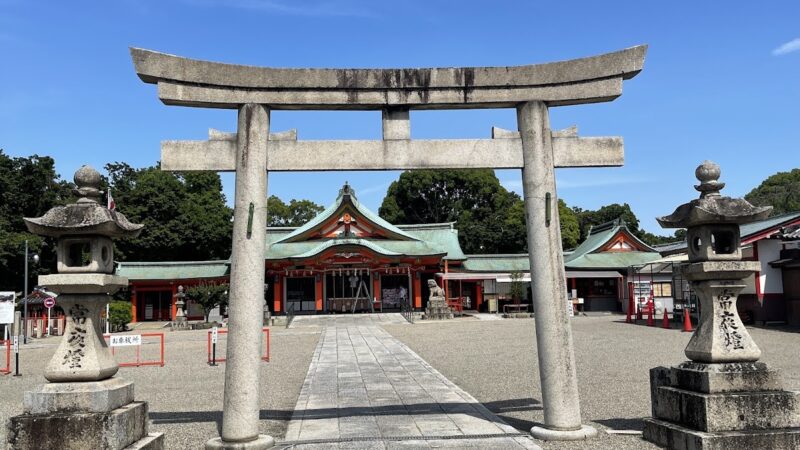
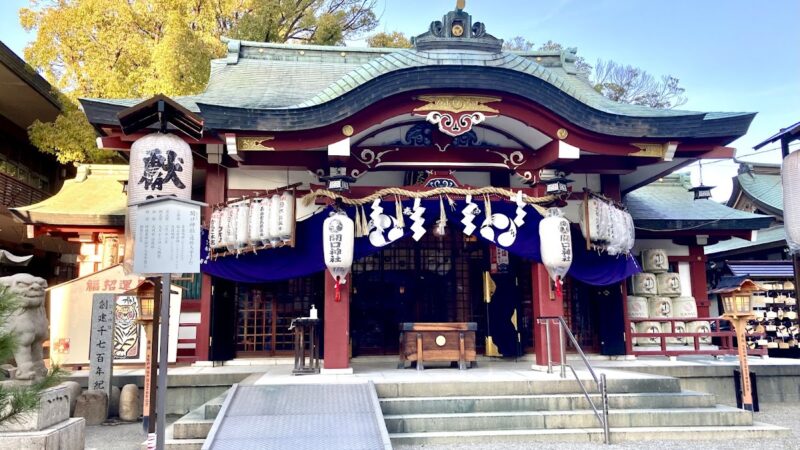
The main hall and worship hall, rebuilt in 1994, maintain the traditional style of shrine architecture while possessing a clean and bright atmosphere. The contrast between the vermilion pillars and white walls is beautiful, creating a solemn appearance befitting an Inari shrine.
Shrine Office
The shrine office, renovated at the same time as the main hall and worship hall, handles the issuance of Goshuin (shrine stamps) and the acceptance of various prayer requests. Its courteous service to visitors is highly regarded, and one can feel the warmth of a shrine deeply rooted in the community.
Atmosphere of the Shrine Grounds
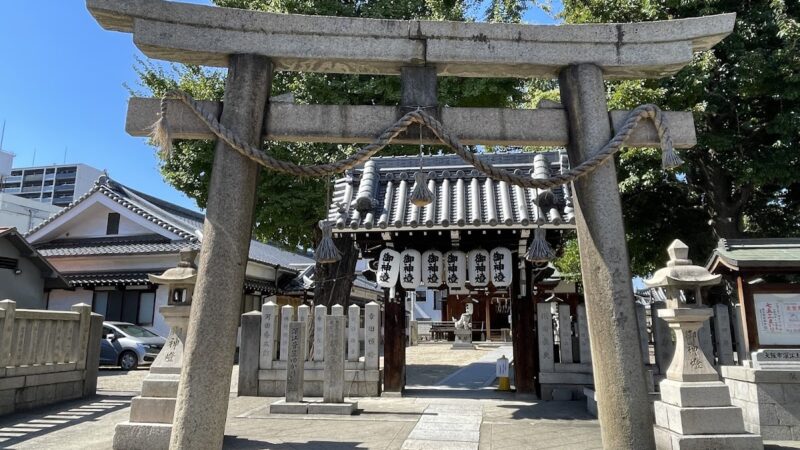
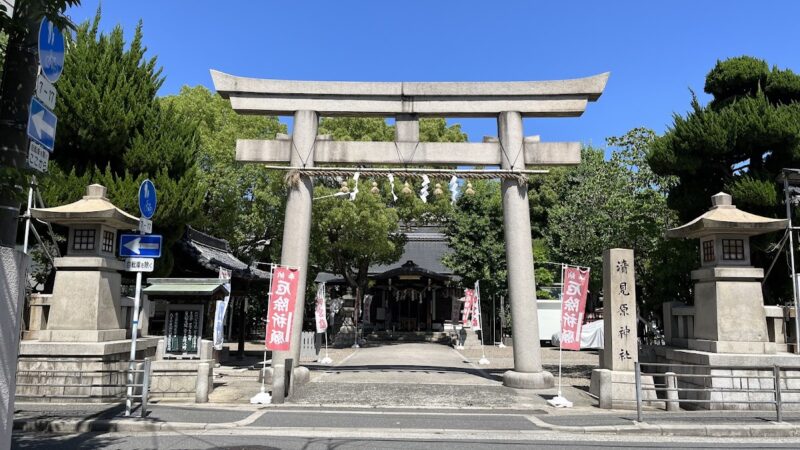
Despite its urban location, the shrine grounds are enveloped in a tranquil atmosphere. As a long-established local guardian shrine, it is cherished by the community, and people can be seen visiting regularly. Many families visit, and it plays a central role in the local community.
Goshuin and Goshuincho (Stamp Book) Information
About Goshuin
Fukae Inari Shrine offers Goshuin, but it may not always be possible to obtain them directly at the shrine. Those wishing to receive a Goshuin are advised to confirm in advance by phone (06-6971-4223).
The issuance times and methods may change due to the shrine’s circumstances, so it is best to confirm before visiting.
Goshuincho (Stamp Book)
Please contact the Fukae Inari Shrine directly regarding the availability of their original goshuincho.
Annual Events and Festivals
Fukae Inari Shrine Summer Festival
The most representative festival of Fukae Inari Shrine is the Summer Festival. Local danjiri (festival floats) parade through the town, filling the air with the sounds of bells and drums. The sight of adults riding on the large floats, accompanied by energetic shouts, draws spectators into the festive atmosphere.
This festival, a community effort, is an important event for passing on Fukae’s traditional culture to future generations.
Other Annual Events
- Hatsumode (First Shrine Visit of the New Year): The shrine is bustling with worshippers in the new year.
- Setsubun Festival: Prayers for protection against evil.
- Reitaisai (Grand Festival): The most important festival of the year.
- Shichi-Go-San (Seven-Five-Three Festival): A visit to celebrate the growth of children.
Prayers and On-Site Ceremonies
Fukae Inari Shrine accepts various types of prayers as listed below. Advance reservations by phone are required for all of them.
Prayers Performed at the Shrine
- Omiyamairi: Prayers for the healthy growth of the baby
- Yakuyoke: Prayers for protection from misfortune during the unlucky year
- Shobai Hanjo: Prayers for the development of the business
- Anzan Kigan: Prayers for a safe delivery
- Gakugyo Jyu: Prayers for passing exams and improving academic performance
- Jidosha Seiwai: Prayers for traffic safety
- Other Prayers
On-Site Ceremonies
We also accept ceremonies performed by Shinto priests at the site:
- Jichinsai: Prayers for the safety of construction work
- Safety Prayer Ceremony: Prayers for safety in construction and business
- Jotosai: Ceremonies held when the framework of a building is completed
- Shunkosai: Ceremonies held when the building is completed
Reservations and Inquiries
Phone Number: 06-6971-4223
Please inquire by phone regarding reception hours and offering fees.
Access Information
Location
3-16-17 Fukae-Minami, Higashinari-ku, Osaka City, Osaka Prefecture 537-0002
Access by Train
Fukae Inari Shrine is accessible on foot from several nearby stations.
From Kintetsu Osaka Line “Fuse Station”
- Approximately 8-10 minutes on foot (approx. 625m)
- This is the most convenient access method.
- Fuse Station is a major station where the Kintetsu Osaka Line and Kintetsu Nara Line intersect.
From JR Osaka Higashi Line/Osaka Metro Sennichimae Line “Shin-Fukae Station”
- Approximately 9 minutes on foot (approx. 700m)
- Both JR and Metro lines are available.
- Easily accessible from various locations in Osaka City.
Access by Car
The shrine is accessible from Chuo-dori (National Route 308) and the Inner Ring Road. However, it is necessary to check in advance whether there is a dedicated parking lot for the shrine. There are coin-operated parking lots in the surrounding area, which can also be used. ### Surrounding Environment
Fukae Inari Shrine is located in a residential area, offering a quiet environment. There is also a shopping street nearby, allowing you to enjoy the local atmosphere after your visit.
Manners and Points for Visiting the Shrine
Basic Visiting Etiquette
- Bow before passing through the torii gate.
- Purify your body and mind at the water basin.
- Purify your left hand, right hand, and mouth in that order.
- Two bows, two claps, and one bow in front of the main hall.
- Bow deeply twice.
- Clap twice.
- Bow deeply once.
- Bow once before leaving the torii gate.
Points to Note During Visiting
- Visit quietly and be considerate of the lives of local residents.
- Take photos within the shrine grounds within reasonable limits.
- Always take your trash with you.
- Check the shrine office’s opening hours before visiting.
Recommended Visiting Time
Visiting during the quiet morning hours is recommended. Especially on weekday mornings, there are fewer people, allowing for a peaceful visit. During festivals and annual events, you can enjoy a lively atmosphere.
Nearby Attractions
Historical Spots in Fukae
The Fukae area retains historical sites that tell the story of Kasamui Village, as well as old townscapes. Enjoying a historical stroll through the area in conjunction with your shrine visit is highly recommended.
Around Fuse Station
The area around Fuse Station boasts numerous shopping streets and restaurants, making it convenient for meals and shopping after your visit. It’s an area where you can experience the old-fashioned charm of Osaka’s downtown.
The Charm of Fukae Inari Shrine
A Local Guardian Deity
The greatest charm of Fukae Inari Shrine lies in its presence as a guardian deity cherished by the local people for over 1300 years. Unlike large-scale tourist shrines, you can see local residents visiting daily, giving it a warm, living place of faith.
Historical and Cultural Value
The fact that Fukae Inari Shrine is designated as a historical site as the Kasasagi Village Ruins indicates that it is not merely a religious facility, but also a cultural asset that conveys the history of ancient Japanese history and traditional crafts. The tradition of Fukae straw hats has been passed down together with this shrine.
A Quiet Sanctuary in an Urban Area
Despite being located in a residential area of Osaka City, the shrine grounds are enveloped in a tranquil atmosphere. It provides a space where people can escape the hustle and bustle of everyday life and pray in peace, offering solace not only to local residents but also to visitors.
Frequently Asked Questions
Q: Can I get a Goshuin (shrine stamp) at Fukae Inari Shrine?
A: Goshuin are available, but they may not be available directly at the shrine. We recommend checking in advance by phone (06-6971-4223).
Q: Is there parking?
A: It is necessary to check in advance whether there is a dedicated parking lot for the shrine. There are coin-operated parking lots in the surrounding area, so please consider using those.
Q: Is there parking available?**
A: It is necessary to check in advance whether there is a dedicated parking lot for the shrine. There are coin-operated parking lots nearby, so please consider using those. Q: I would like to receive a prayer. Do I need a reservation?
A: Yes, reservations are required for all types of prayers. Please make a reservation by phone (06-6971-4223).
Q: When is the summer festival held?
A: The specific dates for the summer festival may vary from year to year. Please contact the shrine for details.
Q: How long does it take to get there from the nearest station?
A: It’s about an 8-10 minute walk from Kintetsu Fuse Station and about a 9 minute walk from Shin-Fukae Station.
Summary
Fukae Inari Shrine has a history of over 1300 years since its founding during the Wado era, and is a venerable shrine designated as a historical site as the Kasasagi-mura ruins. With traditions such as the renovation of the shrine by Toyotomi Hideyori and its deep connection to Fukae sedge hats, it remains a center of local faith and culture, possessing high historical and cultural value.
Fukae Inari Shrine offers various blessings, including business prosperity, family safety, and protection from evil, and accommodates a wide range of prayers, from baby blessings to ground-breaking ceremonies. Its convenient location, within walking distance of Fuse Station, is also a major draw.
When visiting Higashinari Ward in Osaka City, be sure to visit Fukae Inari Shrine and experience its long history and the warmth of the local community.
Fukae Inari Shrine
- Address: 3-16-17 Fukae-Minami, Higashinari Ward, Osaka City, Osaka Prefecture 537-0002
- Phone: 06-6971-4223
- Access: Approximately 8-10 minutes on foot from Kintetsu Fuse Station, approximately 9 minutes on foot from Shin-Fukae Station
- Official Website: https://www.fukaeinarijinja.jp/