Amenokoyane-no-Mikoto Shrine (Minoh City, Osaka Prefecture) Complete Guide | History, Goshuin (Shrine Seal), and Access Information
Amenokoyane-no-Mikoto Shrine, located in Segawa, Minoh City, Osaka Prefecture, is a historic shrine dedicated to Amenokoyane-no-Mikoto, the ancestral deity of the Fujiwara clan. Locally known as “Segawa Shrine” or “Ryū no Miya,” it is a historical shrine quietly nestled in a residential area.
This article comprehensively introduces information useful for visiting Amenokoyane-no-Mikoto Shrine, including its history, details of the enshrined deity, highlights of the grounds, goshuin information, and access methods.
Basic Information on Amenokoyane-no-Mikoto Shrine
Amenokoyane-no-Mikoto Shrine is located in the Segawa district, in the northern part of Minoh City, Osaka Prefecture. It is approximately a 13 to 30-minute walk from Sakurai Station on the Hankyu Minoh Line, and the surrounding area is a quiet residential neighborhood.
Basic Data
- Official Name: Amenokoyane-no-Mikoto Shrine
- Common Name: Segawa Shrine, Ryunomiya
- Former Name: Kasuga Shrine
- Location: 1-22-20 Segawa, Minoh City, Osaka Prefecture
- Deity Enshrined: Amenokoyane-no-Mikoto
- Shrine Rank: Village Shrine
- Annual Festival Day: Third Sunday of October
History and Origins of Amenokoyane-no-Mikoto Shrine
Origin of Founding
Amenokoyane-no-Mikoto Shrine was formerly known as “Kasuga Shrine” and was founded as a shrine dedicated to Amenokoyane-no-Mikoto, the ancestral deity of Fujiwara no Kamatari. The Fujiwara clan was one of the most powerful noble families in Japanese history, and they have a history of revering Amenokoyane-no-Mikoto as their tutelary deity.
The Segawa area has been developed since ancient times, and the enshrinement of Amenokoyane-no-Mikoto in this area is considered the beginning of the shrine. As the local tutelary deity, it has long been revered by the local people.
Changes Since the Meiji Era
Due to the reform of the shrine system during the Meiji era, Amenokoyane-no-Mikoto Shrine was designated a village shrine. It was during this period that its official name became “Amenokoyane-no-Mikoto Shrine,” which it remains to this day.
Although it suffered damage during the war in the Showa era, the shrine buildings were maintained through the efforts of local residents, and it continues to be a central place of worship in the region as a shrine belonging to the Osaka Prefectural Shrine Association.
Origin of “Ryū no Miya” (Dragon Palace)
The reason why Amenokoyane-no-Mikoto Shrine is called “Ryū no Miya” (Dragon Palace) is said to be due to the presence of legends related to dragon god worship within the shrine grounds. It is believed that this nickname arose from the long-standing beliefs surrounding water sources and rainmaking, and the enshrinement of the dragon god.
About the Deity: Amenokoyane-no-Mikoto
About Amenokoyane-no-Mikoto
Amenokoyane-no-Mikoto is a deity appearing in Japanese mythology, playing a particularly important role in the Kojiki and Nihon Shoki. Ame-no-Koyane-no-Mikoto is known as the god who recited prayers in front of the cave where Amaterasu Omikami hid, thus contributing to luring her out.
Divine Nature and Divine Virtues
Ame-no-Koyane-no-Mikoto is believed to possess the following divine qualities:
- God of Kotodama: The god who governs the power of words
- God of Rituals: The god who presides over Shinto rituals and ceremonies
- God of Wisdom: The god who bestows learning and wisdom
Main Divine Virtues (Benefits):
- Academic success and passing exams
- Business prosperity
- Family safety
- Protection from evil and good fortune
- Matchmaking
- Success in professions involving words (teachers, lawyers, announcers, etc.)
Relationship with the Fujiwara Clan
Ame-no-Koyane-no-Mikoto is considered the ancestral god of the Fujiwara clan (Nakatomi clan). The Fujiwara clan, beginning with Fujiwara no Kamatari, claimed descent from Amenokoyane-no-Mikoto and worshipped him as the principal deity at Kasuga Shrines, including Kasuga Taisha in Nara.
The fact that Amenokoyane-no-Mikoto Shrine was also called Kasuga Shrine indicates its connection to Kasuga Taisha.
Highlights of the Shrine Grounds
Shrine Buildings
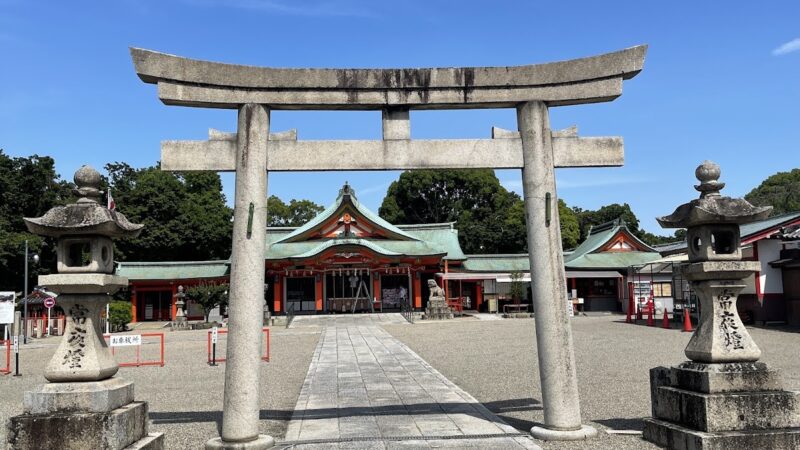
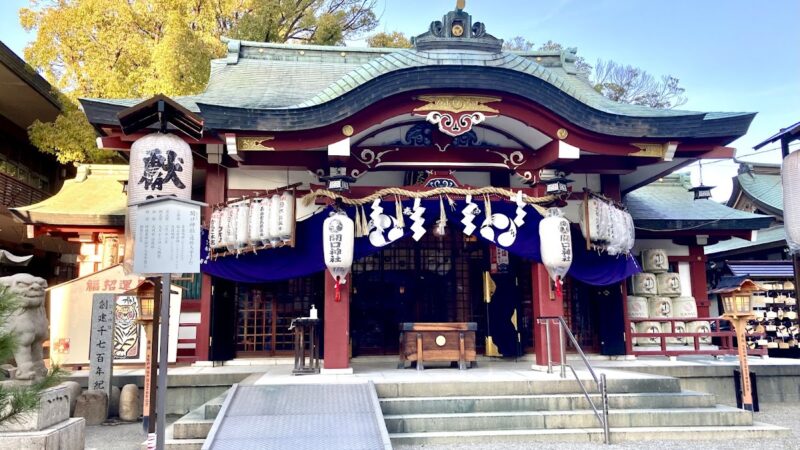
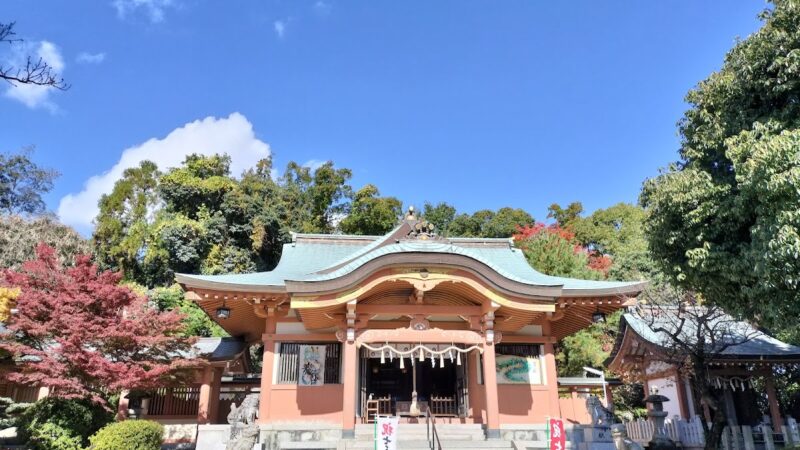
Despite being located in a residential area, the shrine buildings of Amenokoyane-no-Mikoto Shrine maintain a tranquil atmosphere. The main hall is built in a traditional shrine architectural style and is meticulously maintained.
At the worship hall, local residents visit daily, quietly offering their prayers. While it is a small shrine, its warm, community-oriented atmosphere is a defining characteristic.
Atmosphere of the Shrine Grounds
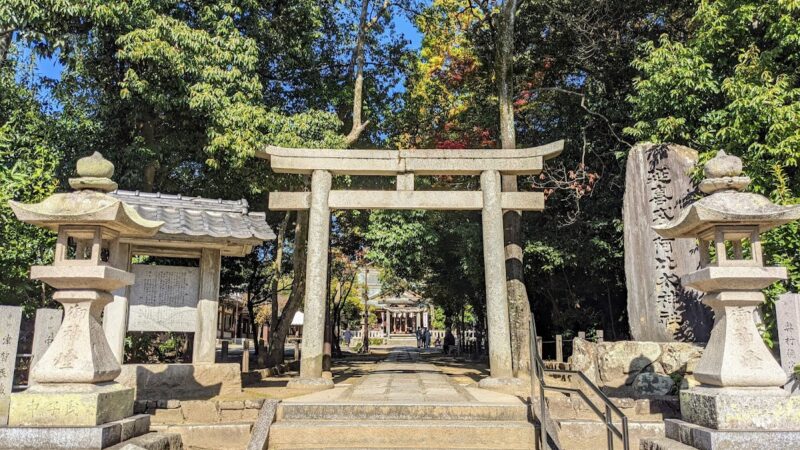
Although the shrine grounds are not large due to its location in a residential area, they are well-maintained and exude a sacred atmosphere. Although the distance from the approach to the shrine is short, passing through the torii gate evokes a sense of tranquility, far removed from the secular world.
The shrine grounds contain ancient trees and stone monuments, giving a sense of its long history. For locals in particular, it is a place of cherished spiritual solace, a place they have known since childhood.
Surrounding Natural Environment
Minoh City is blessed with abundant nature, and the area surrounding Amenokoyane-no-Mikoto Shrine is also surrounded by lush greenery. It is relatively close to Minoh Falls and Minoh Park, allowing visitors to enjoy a nature walk in conjunction with their visit.
About Goshuin (Shrine Seals) and Goshuincho (Shrine Seal Books)
Issuance of Goshuin (Shrine Seals)
Regarding the issuance of Goshuin at Amenokoyane-no-Mikoto Shrine, it is recommended to check in advance, as there may not always be a permanently staffed shrine office. As it is a small shrine, there may be times when the head priest is not present.
If you wish to receive a Goshuin (temple/shrine stamp), please follow these methods:
- Check the shrine office during your visit: Contact information may be posted on the shrine grounds.
- Inquire with the Osaka Prefectural Shrine Association: You can inquire through the relevant shrine association.
- Handling at nearby shrines: If the shrine is managed by multiple shrines, the Goshuin may be issued at another shrine.
Characteristics of the Goshuin
The Goshuin of Amenokoyane-no-Mikoto Shrine is simple yet dignified, featuring the shrine’s name and the name of the enshrined deity written in ink, stamped with the shrine’s seal. Sometimes, the common name “Segawa Shrine” is also included.
Those who collect Goshuin cherish them as a memento of their visit and as proof of their connection with the deity.
Access Methods
Access by Train
Nearest Station: Hankyu Minoo Line “Sakurai Station”
Access from Sakurai Station:
- Walking: Approximately 13-30 minutes (approximately 1.5 km)
- Exit the station and head northwest.
- Walk through the residential area towards the Segawa district.
- The route can be complex in some parts, so we recommend using a smartphone map app.
Access by Bus
Using Hankyu Bus
- Nearest bus stop: “Segawa” bus stop
- Approximately 20 minutes on foot from the Segawa bus stop
Since bus service is limited, we recommend checking the timetable in advance.
Access by Car
If traveling by car
- From Osaka city: Approximately 30-40 minutes via National Route 171
- Parking: There may be a dedicated parking lot on the shrine grounds, but space is limited.
- As the surrounding area is residential, please avoid street parking and consider using nearby paid parking lots.
Notes on Access
- Located in a residential area: It is located slightly off the main road, so first-time visitors should use a map app.
- Some roads are narrow: If visiting by car, please pay attention to the width of the roads.
- Few landmarks: There are no large signs, so please rely on the address or a map to find your way.
Etiquette and Manners for Worship
Basic Worship Etiquette
Worship at Amenokoyane-no-Mikoto Shrine follows the general etiquette for visiting a shrine:
- Bow before passing through the torii gate: This is a courtesy when entering the sacred area.
- Walk along the edge of the path: The center is considered the path for the gods.
- Purify yourself at the water basin: If there is a water basin, purify your hands and mouth.
- Worship at the main hall:
- Quietly place your offering in the offering box.
- Ring the bell if there is one.
- Two bows, two claps, one bow (two bows, two claps, one bow).
- Quietly observe the shrine grounds: Take photographs only where permitted.
Mindset when visiting
Although it is a small shrine, it is an important place of worship for the local community. Please observe the following points:
- Visit in silence: As the shrine is located in a residential area, please refrain from loud conversations.
- Take your trash home: Please keep the shrine grounds clean.
- Do not trespass on private property: As the surrounding area is residential, please be mindful of the distinction between the shrine grounds and private property.
- Photography etiquette: While photographing the shrine building is permitted, please be considerate and avoid including nearby houses in your photos.
Annual Events and Festivals
Annual Festival (Autumn Festival)
The annual festival of Amenokoyane-no-Mikoto Shrine is held every year on the third Sunday of October. Local parishioners and devotees gather, and the festival is solemnly conducted as the shrine’s most important ritual.
After the Shinto rituals, a celebratory feast (naorai) is held, fulfilling a role as a community event.
Other Events
- New Year’s Day Festival: Prayers for the New Year
- Setsubun Festival: Prayers for warding off evil and bringing good fortune
- Summer Purification Ceremony: A Shinto ritual to cleanse away sins and impurities accumulated over the past six months
As this is a small shrine, there are no large-scale festivals, but warm, community-based events are held regularly.
Nearby Attractions and Related Shrines
Tourist Spots in the Minoo Area
When visiting Amenokoyane-no-Mikoto Shrine, you can also visit other tourist spots in the Minoo area:
Minoo Falls (Minoo Great Falls)
- A famous waterfall selected as one of Japan’s Top 100 Waterfalls
- Approximately 10-15 minutes by car from Amenokoyane-no-Mikoto Shrine
- Also famous as a spot for autumn foliage
Minoo Park
- A prefectural park rich in nature
- Hiking trails are available
Katsuoji Temple
- An ancient temple known as the “Temple of Good Fortune”
- A temple famous for its Daruma dolls
Nearby Shrines
Takianji Temple
- An ancient temple near Minoo Falls
- Known as a sacred site for Shugendo (mountain asceticism)
Minoo-san Takianji Benzaiten
- Benefits for business prosperity and improvement in performing arts
Kasuga Shrine (Other Kasuga-related Shrines)
- There are several other shrines in Osaka Prefecture that enshrine Amenokoyane-no-Mikoto.
Major Shrines Enshrining Amenokoyane-no-Mikoto
Amenokoyane-no-Mikoto is enshrined in shrines throughout Japan, but here are some particularly famous ones:
Kasuga Taisha (Nara Prefecture)
This is the head shrine of all Kasuga shrines nationwide, enshrining Amenokoyane-no-Mikoto as one of its main deities. It is a highly prestigious shrine registered as a World Heritage Site and is known for its connection to the Fujiwara clan.
Hiraoka Shrine (Higashi-Osaka City, Osaka Prefecture)
Also known as “Moto-Kasuga,” this is an ancient shrine said to have enshrined Amenokoyane-no-Mikoto before Kasuga Taisha. It is one of the most prestigious shrines in Osaka Prefecture.
- Location: 7-16 Izumoi-cho, Higashi-Osaka City, Osaka Prefecture
- Access: Immediately next to Hiraoka Station on the Kintetsu Nara Line
Yoshida Shrine (Kyoto Prefecture)
Located in Sakyo-ku, Kyoto City, this shrine is famous for its Setsubun Festival. It enshrines Amenokoyane-no-Mikoto as its main deity. ## Prayers at Amenokoyane-no-Mikoto Shrine
Recommended Prayers
Based on the divine virtues of Amenokoyane-no-Mikoto, the following prayers are especially recommended:
Prayers for Academic Success and Passing Exams
- Prayers for passing exams for students
- Prayers for success in qualification exams
- Prayers for improvement in academic ability
Improved Career Luck
- Success in professions that use words (teachers, lawyers, announcers, salespeople, etc.)
- Prayers for successful business negotiations
- Success in job hunting
Family Safety and Protection from Evil
- Health and safety of family members
- Prayers for protection from evil during unlucky years
Best Time to Visit
- Before exam season: Many people visit to pray for academic success
- New Year: Reporting one’s plans for the year to the gods
- During the annual festival: The most sacred time at the shrine
- For those who want to pray quietly: Weekday mornings are recommended
Visitor Feedback and Reviews
Here are some comments from people who have actually visited Amenokoyane-no-Mikoto Shrine:
“It’s a quiet shrine nestled in a residential area. Although small, it’s meticulously maintained, and you can feel how much it’s cherished by the local community.”
“I walked to the shrine from Sakurai Station. It’s a bit of a distance, but it was nice to walk through the residential area and feel the local atmosphere.”
“Amenokoyane-no-Mikoto is the deity enshrined at my family’s tutelary shrine, and I’ve always been curious about this shrine. I was so happy to finally be able to visit.”
“It seems to be affectionately known as Segawa Shrine by the locals. It’s a small shrine, but you can feel the history.”
Summary: Points to Consider When Visiting Amenokoyane-no-Mikoto Shrine
Amenokoyane-no-Mikoto Shrine (Segawa Shrine) is a community-oriented shrine located in a residential area of Minoh City, Osaka Prefecture. It enshrines Amenokoyane-no-Mikoto, the ancestral deity of the Fujiwara clan, and is especially recommended for visitors praying for academic success or success through the power of words.
Points to Note When Visiting:
- Access: Approximately 13-30 minutes on foot from Hankyu Sakurai Station. Since it’s located in a residential area, using a map app is recommended.
- Goshuin (Shrine Seal): There may not always be a permanent shrine office, so please check in advance if you wish to receive one.
- Visiting Hours: While you can generally visit the shrine grounds freely, it’s best to avoid early mornings and late evenings.
- Nearby Attractions: Visiting the shrine in conjunction with Minoo Falls or Minoo Park is also recommended.
- Manners: As it’s located in a residential area, please be mindful of quiet and respectful worship.
Although small in scale, Amenokoyane-no-Mikoto Shrine boasts a long history and is supported by local faith. It’s a precious shrine where you can pray in a peaceful environment, allowing you to calm your mind. When visiting the Minoo area, please be sure to stop by.