Ryusenji Temple (Nobeoka City, Miyazaki Prefecture) Complete Guide | Goshuin (Temple Seal), History, and Access Information
Ryusenji Temple, located in Nishishina-cho, Nobeoka City, Miyazaki Prefecture, is an ancient temple of the Shingon Daigo sect with a history of approximately 400 years. As the 31st temple of the Kyushu 88 Sacred Sites and 108 Pilgrimage, and as a temple enshrining Daikokuten, one of the Seven Lucky Gods of Nobeoka, it attracts fervent devotion not only from locals but also from pilgrims nationwide.
This article comprehensively introduces all the information you need to know before visiting Ryusenji Temple, including its history, goshuin (temple seal) information, highlights, worship methods, and access information.
Basic Information about Ryusenji Temple
Official Name: Daienzan Myojitsuin Ryusenji
Sect: Shingon-shu Daigo-ha
Principal Image: Kamamochi Daikokuten (a rare form holding a sickle in his right hand)
Location: 1-4211 Nishishina-cho, Nobeoka City, Miyazaki Prefecture
Pilgrimage Site: 31st temple of the Kyushu Eighty-Eight Sacred Sites and One Hundred and Eight Pilgrimage Sites
Seven Lucky Gods: Nobeoka Seven Lucky Gods, Daikokuten
Goshuin (Temple Seal): Available
Ryusenji Temple is located west of the center of Nobeoka City, quietly nestled in a residential area. The temple grounds are well-maintained, allowing for a peaceful and tranquil atmosphere for worship.
History and Origins of Ryusenji Temple
Founding History
The history of Ryusenji Temple dates back approximately 400 years to the early Edo period. In 1616 (Genna 2), Kakueimon Taniyama, who visited Nobeoka from Yamato Province (present-day Nara Prefecture), founded the temple as a training ground for Shugendo (mountain asceticism).
Initially established as “Myōjitsu-in,” it served as a base for Shugendo, a place for mountain training and prayer. It is said that Kakueimon, who moved from Yamato Province, felt a spiritual presence in this area and founded the temple.
Characteristics of the Principal Image and Beliefs
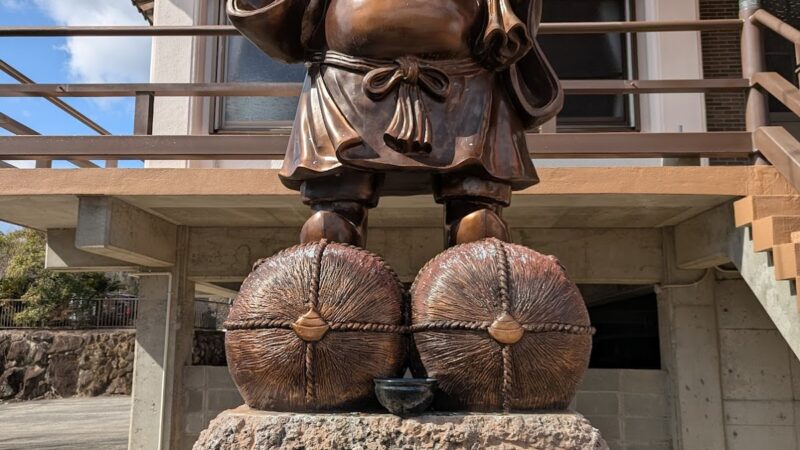
The principal image of Ryūsen-ji Temple is a very rare form of Daikokuten (god of wealth) called “Kamamochi Daikokuten” (Daikokuten with a Sickle). While Daikokuten is generally known for holding a magic mallet, the Daikokuten at Ryūsen-ji Temple holds a sickle in its right hand.
This unique appearance strongly reflects its character as a guardian deity of agriculture, and it has received particularly fervent devotion from farmers praying for abundant harvests and protection of their fields. The area around Nobeoka has long been a thriving agricultural region, and Ryusenji Temple has played an important role as a spiritual supporter of the local agriculture.
Enshrinement of Dakiniten
Along with the principal image, the sickle-holding Daikokuten, Ryusenji Temple also enshrines Dakiniten. Dakiniten is a Buddhist deity associated with Inari worship and is believed to bring prosperity in business and abundant harvests.
By enshrining both Daikokuten and Dakiniten, deities who preside over fertility and prosperity, Ryusenji Temple has clearly established its character as a temple that protects the local industry and livelihood.
As a Prayer Site for the Feudal Lord
During the Edo period, Ryusenji Temple also played an important role as a prayer site for the lord of the Nobeoka domain. Records show that feudal lords and their retainers requested incantations and prayers at Ryusenji Temple to pray for political stability and the peace and well-being of their people.
As a temple with a tradition of Shugendo (mountain asceticism), Ryusenji Temple’s incantations and prayers were believed to possess powerful spiritual efficacy, and it is thought that they were involved in the official religious ceremonies of the domain. This historical background has contributed to the high status and deep faith that Ryusenji Temple maintains to this day.
Conversion to the Shingon-shu Daigo-ha
Due to the Meiji-era decree separating Shinto and Buddhism and abolishing Shugendo, Shugendo temples throughout Japan were forced to undergo a major transformation. Ryusenji Temple also changed its sect from Shugendo to the Shingon-shu Daigo-ha during this period.
The Shingon-shu Daigo-ha is a branch of the Shingon sect with Daigoji Temple in Kyoto as its head temple, and it has deep historical ties to Shugendo. While Ryusenji Temple has changed its religious sect, it continues to uphold the tradition of incantations and prayers from the Shugendo era, as well as the worship of Daikokuten and Dakiniten.
About the Kyushu Eighty-Eight Sacred Sites and 108 Temples
Overview of the Sacred Sites
Ryusenji Temple is designated as the 31st temple of the Kyushu Eighty-Eight Sacred Sites and 108 Temples. This pilgrimage route in the Kyushu region visits places associated with Kobo Daishi (Kukai), and was established in imitation of the Shikoku Eighty-Eight Sacred Sites.
The Kyushu Eighty-Eight Sacred Sites and 108 Temples span seven prefectures in Kyushu: Fukuoka, Saga, Nagasaki, Kumamoto, Oita, Miyazaki, and Kagoshima. It is an important pilgrimage route for spreading the worship of Kobo Daishi and the teachings of Shingon Buddhism.
Significance of Pilgrimage
Pilgrimage to sacred sites is not merely sightseeing, but is considered a journey of spiritual training. It is believed that by visiting each temple, chanting sutras, and receiving a Goshuin (temple stamp), one can purify worldly desires and cleanse the mind.
Visiting the Kyushu 88 Temples and 108 Sacred Sites, including Ryusenji Temple, is a precious opportunity to follow in the footsteps of Kobo Daishi and experience his teachings. Many pilgrims undertake this pilgrimage at significant turning points in their lives or with specific wishes.
Ryusenji Temple as Temple No. 31
While there are several temples of the Kyushu 88 Temples and 108 Sacred Sites within Miyazaki Prefecture, Ryusenji Temple in Nobeoka City is one of the most important. The number 31 marks the midpoint of the pilgrimage, signifying a significant milestone for pilgrims.
Ryusenji Temple warmly welcomes pilgrims and provides courteous service for Goshuin and sutra copying. It is a beloved place for many pilgrims to rest and recover from the fatigue of their journey, and to gain renewed energy for the next temple.
Nobeoka Seven Lucky Gods and Daikokuten
What is the Nobeoka Seven Lucky Gods Pilgrimage?
In Nobeoka City, there is a form of worship called the “Nobeoka Seven Lucky Gods Pilgrimage,” which involves visiting temples and shrines within the city. The Seven Lucky Gods are Ebisu, Daikokuten, Bishamonten, Benzaiten, Fukurokuju, Jurōjin, and Hotei. It is believed that by visiting these temples, one can be protected from seven misfortunes and receive seven blessings.
Ryūsenji Temple is positioned as a temple dedicated to Daikokuten in this Nobeoka Seven Lucky Gods Pilgrimage.
The Benefits of Daikokuten
Daikokuten originally derives from Mahakala, a Hindu god from India. In Japan, he is worshipped as a god of fortune, especially for abundant harvests, business prosperity, and wealth.
The sickle-holding Daikokuten at Ryusenji Temple is particularly revered by those involved in agriculture, attracting many visitors praying for a bountiful harvest and protection of their fields. It is also widely worshipped by general visitors praying for business prosperity and family safety.
How to Pilgrimage to the Seven Lucky Gods
The Nobeoka Seven Lucky Gods pilgrimage is usually conducted from January 1st to January 7th, but it is possible to visit throughout the year. By receiving a goshuin (temple/shrine stamp) or shikishi (decorative paper) at each temple/shrine, and visiting all seven gods, your wish will be fulfilled.
The Seven Lucky Gods pilgrimage, including Ryusenji Temple, is a fun experience where you can receive blessings while experiencing the history and culture of Nobeoka City. It is a recommended pilgrimage route for both locals and tourists.
Ryusenji Temple’s Goshuin Information
Types of Goshuin
The following goshuin are available at Ryusenji Temple:
- Standard Goshuin (Temple Seal): A basic goshuin with the temple name of Ryusenji and calligraphy.
- Goshuin of the Kyushu Eighty-Eight Sacred Sites and One Hundred and Eight Temples: A goshuin marking the 31st temple on the pilgrimage.
- Goshuin of the Nobeoka Seven Lucky Gods: A goshuin of Daikokuten (the god of wealth).
Goshuin are popular among many visitors as proof of their visit and as a memento of their journey.
Goshuin Reception Hours and Location
Goshuin are usually available at the temple office or the temple’s living quarters (kuri). However, staff may be absent, so it is recommended to call ahead to confirm if you wish to receive a goshuin.
Reception Hours: Approximately 9:00 AM to 5:00 PM (approximate)
Offering Fee: Approximately 300-500 yen (may vary depending on the type of Goshuin stamp)
Manners for Receiving a Goshuin Stamp
A Goshuin stamp is not merely a stamp rally; it is a token of your visit. Please observe the following manners:
- First, visit the main hall and complete your prayers before receiving your Goshuin stamp.
- Prepare a Goshuin stamp book (avoid notebooks or colored paper).
- Request the stamp using polite language.
- Wait quietly while the stamp is being written.
- Express your gratitude with heartfelt thanks.
A Goshuin stamp is a tangible representation of your connection with the temple. It is important to treat it with respect.
Highlights of Ryusenji Temple
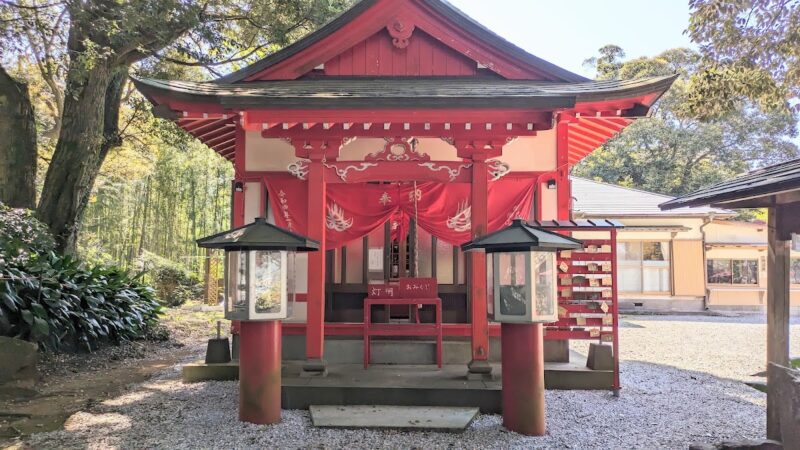
Main Hall
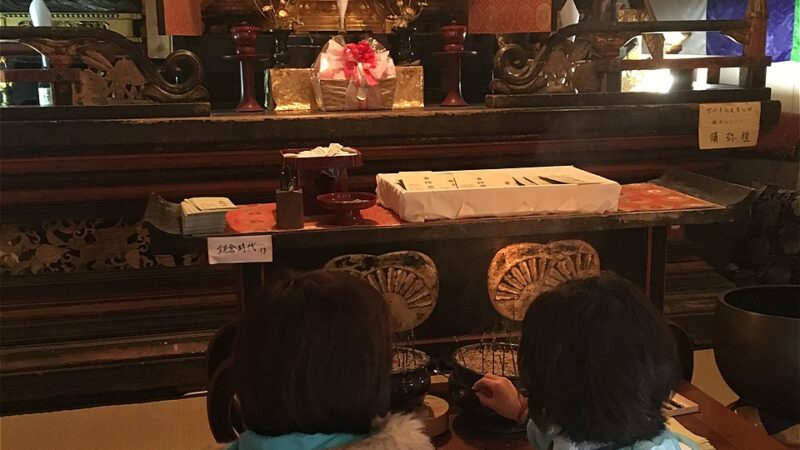
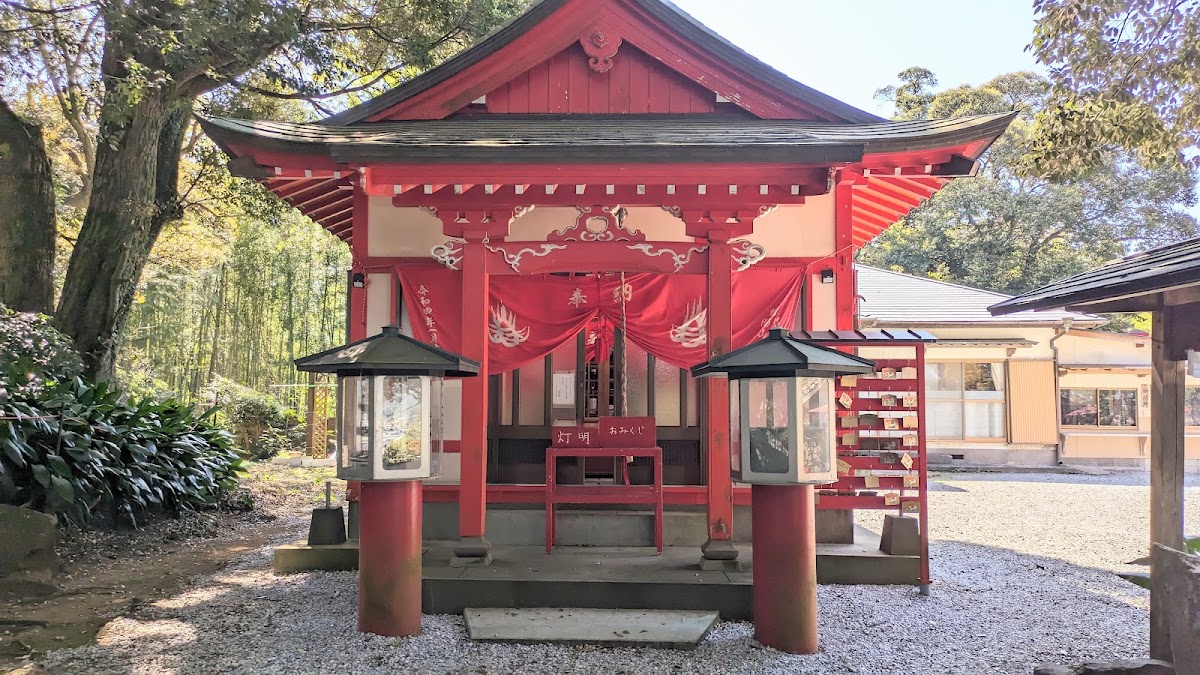
The main hall of Ryusenji Temple is a tranquil building with a traditional wooden architectural style. The main hall houses the principal images of Daikokuten (Daikokuten) and Dakiniten (Dakiniten), who are depicted holding a sickle.
Visitors can offer their prayers with heartfelt devotion in front of the main hall. In the tranquil grounds, one can escape the hustle and bustle of everyday life and find peace of mind.
Atmosphere of the Temple Grounds
Despite being located in a residential area, Ryusenji Temple’s grounds offer a serene space surrounded by trees. The well-maintained gardens and paths provide tranquility to visitors.
One of Ryusenji Temple’s charms is the opportunity to experience the beauty of nature throughout the seasons: cherry blossoms in spring, lush greenery in summer, and vibrant autumn leaves.
Stone Buddhas and Monuments
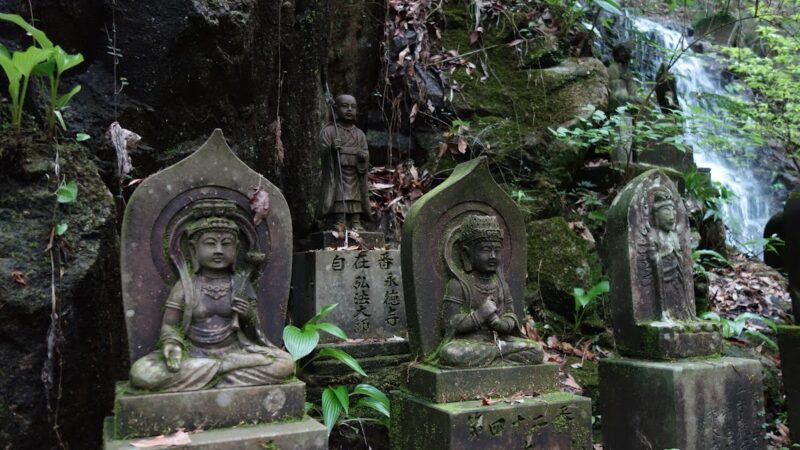
The temple grounds are dotted with historical stone Buddhas and monuments. These are testaments to the prayers of those who have worshipped Ryusenji Temple for many years, and are valuable cultural assets that tell the story of the temple’s history.
When visiting a temple, it’s a good idea to pay your respects to these stone Buddha statues and reflect on the faith of those who came before you.
How to Visit and Etiquette
Basic Flow of Visiting a Temple
- Bow Before Passing Through the Temple Gate: Before entering the temple grounds, bow to compose yourself.
- Purify at the Water Basin: If there is a water basin, purify your hands and mouth. Purify your left hand, then your right hand, then your mouth, and finally wash the handle of the ladle.
- Proceed to the Main Hall: Proceed quietly towards the main hall.
- Offer Your Offering: If there is an offering box, quietly place your offering in it.
- Pray with Hands Clasped: Bring your hands together in front of your chest and pray sincerely. Unlike Shinto shrines, do not clap your hands.
- Bow and Leave: After finishing your prayers, bow and leave the main hall.
Shingon Buddhist Etiquette
Ryusenji Temple is a Shingon Buddhist temple, so you can also pray according to Shingon Buddhist etiquette.
- Gassho: Bring both hands together in front of your chest.
- Three Bows: Bow three times.
- Chanting: If possible, chant the Heart Sutra or a mantra.
- Namu Daishi Henjo Kongo: Chant a phrase praising Kobo Daishi three times.
Pilgrims may also fill out a pilgrimage notebook or offer a handwritten copy of a sutra.
Access Information
Location
Address: 1-4211 Nishishina-cho, Nobeoka City, Miyazaki Prefecture 882-0802
Access by Car
From Nobeoka IC on the Higashi-Kyushu Expressway:
- Exit the Nobeoka IC and take National Route 10 towards Nobeoka city center.
- Arrive near Ryusenji Temple in approximately 15 minutes.
From Nobeoka City Center:
- Use National Route 388 or a prefectural road.
- Head towards Nishishina-cho in approximately 10 minutes.
Parking: Parking may be available on the temple grounds or nearby, but it is recommended to check in advance for details.
Access by Public Transportation
From JR Nobeoka Station:
- Take a local bus or taxi from Nobeoka Station.
- By bus: Take a bus bound for Nishikai, get off at the nearest bus stop, and walk for a few minutes.
- By taxi: Approximately 15 minutes.
Local Bus: Miyazaki Kotsu operates local buses within Nobeoka City, but the number of buses may be limited, so it is recommended to check the timetable in advance.
Nearby Tourist Attractions
When visiting Ryusenji Temple, you can also visit other tourist attractions in Nobeoka City.
Imayama Hachimangu Shrine: One of Nobeoka City’s representative shrines, a historical shrine.
Imayama Ebisu Shrine: Worshipped as the god of business prosperity.
Imayama Daishiji Temple: A temple dedicated to Kobo Daishi, and like Ryusenji Temple, it is a Shingon Buddhist temple.
Eijitsuzan Hontoji Temple: A historical temple in Nobeoka City.
Kasuga Shrine: A historic shrine in Nobeoka City.
Atago Shrine and Atago Shrine Inner Sanctuary: A shrine worshipped as the god of fire prevention.
Mitarai-mizu Shrine: A shrine dedicated to the god of pure water.
Gokuraku-ji Temple: A temple in Nobeoka City where you can pray in peace.
Visiting these spots will allow you to gain a deeper understanding of Nobeoka’s history and culture.
Annual Events at Ryusen-ji Temple
First Three Days of the New Year
During the New Year’s visit period, many worshippers visit Ryusen-ji Temple. It is bustling with people praying for good health, family safety, and business prosperity in the new year. Many people also visit as part of the Nobeoka Seven Lucky Gods pilgrimage.
Spring and Autumn Equinox Memorial Services
During the Equinox period, centered around the spring and autumn equinoxes, memorial services for ancestors are held. This is an important event where parishioners and local residents gather to comfort the spirits of their ancestors.
Kobo Daishi’s Memorial Day
In Shingon Buddhist temples, a memorial day is sometimes held on the 21st of each month, which is the anniversary of Kobo Daishi’s death. At Ryusenji Temple, special memorial services and prayers may also be held on this day.
Other Events
Various religious events, including local traditional events and special prayer services, are held throughout the year. Please contact the temple directly for details.
Prayers and Memorial Services Available at Ryusenji Temple
Kaji-Kiyo (Buddhist Incantations and Prayer)
Ryusenji Temple, as a temple with a tradition of Shugendo (mountain asceticism), has long focused on Kaji-Kiyo. Currently, prayers are accepted for worshippers with various wishes.
Types of Prayers:
- Family Safety
- Business Prosperity
- Recovery from Illness
- Traffic Safety
- Academic Success
- Protection from Evil
- Good Fortune
Ancestor Memorial Service/Memorial Service for Stillborn Children
We also accept memorial services to comfort the spirits of ancestors and memorial services for stillborn children. We pray for the peaceful repose of the deceased through careful chanting and prayers.
How to Apply for a Prayer
If you wish to have a prayer service, we recommend contacting the temple by phone in advance to discuss the date, time, and content of the prayer. While walk-ins may be accommodated in some cases, the head priest may be absent, so making a reservation is recommended to ensure you receive a prayer.
Mindset for Visiting Ryusenji Temple
Respect as a Place of Worship
Ryusenji Temple is a place of worship with a 400-year history. While it also has aspects of a tourist spot, please remember that it is a religious facility and visit with respect.
Maintaining Silence
It is important to remain quiet and avoid speaking loudly or making noise within the temple grounds. Please be considerate so as not to disturb the prayers of other visitors.
Photography Etiquette
Photography within the temple grounds is generally permitted, but photography inside the main hall or of Buddha statues may be prohibited. Please check and obtain permission before taking photographs.
Dress Clearly
For temple visits, clean and subdued attire is desirable. Avoid revealing or overly flashy clothing, and strive for respectful attire.
The Relationship Between Nobeoka City and Ryusenji Temple
Center of the Local Community
Ryusenji Temple is not merely a religious facility; it has also played a central role in the local community. For many years, it has supported the local community as a venue for local festivals, events, and gatherings of residents.
Cultural Value
The historical buildings, Buddha statues, and ancient documents of Ryusenji Temple are valuable cultural assets of Nobeoka City. Preserving and passing these down to future generations contributes to protecting the region’s history and culture.
Expectations as a Tourist Resource
In recent years, temple and shrine visits and collecting Goshuin (temple/shrine stamps) have become popular, and Ryusenji Temple is attracting attention as a tourist resource. As one of the 88 sacred sites and 108 holy sites of Kyushu, and as one of the Nobeoka Seven Lucky Gods, it is expected to play a role in attracting tourists from outside the city.
Summary
Ryusenji Temple is an ancient temple of the Shingon Daigo sect, located in Nobeoka City, Miyazaki Prefecture, with a history of approximately 400 years. It enshrines a rare principal image, a sickle-holding Daikokuten, and has been deeply revered by the local people as the guardian deity of agriculture.
As the 31st temple of the 88 sacred sites and 108 holy sites of Kyushu, and as the Daikokuten of the Nobeoka Seven Lucky Gods, it warmly welcomes pilgrims and visitors. Goshuin are also available, making it a recommended spot for those collecting Goshuin.
This historic temple, steeped in the traditions of Shugendo (mountain asceticism), has played a vital role as a place of prayer for feudal lords. Even today, it continues to perform various religious activities, including incantations, prayers, and ancestral rites.
When visiting Nobeoka City, be sure to visit Ryusenji Temple and experience its history and faith. You can find peace of mind in its tranquil grounds and receive the blessings of Daikokuten (the god of wealth).
By visiting other temples and shrines in Nobeoka City, such as Imayama Hachimangu Shrine, Imayama Ebisu Shrine, Imayama Daishiji Temple, Enichizan Hontoji Temple, Kasuga Shrine, Atago Shrine, Atago Shrine Okumiya, Mitarai Mizu Shrine, and Gokurakuji Temple, you can experience Nobeoka’s rich religious culture and history more deeply.
May your visit to Ryusenji Temple be a truly enriching experience.