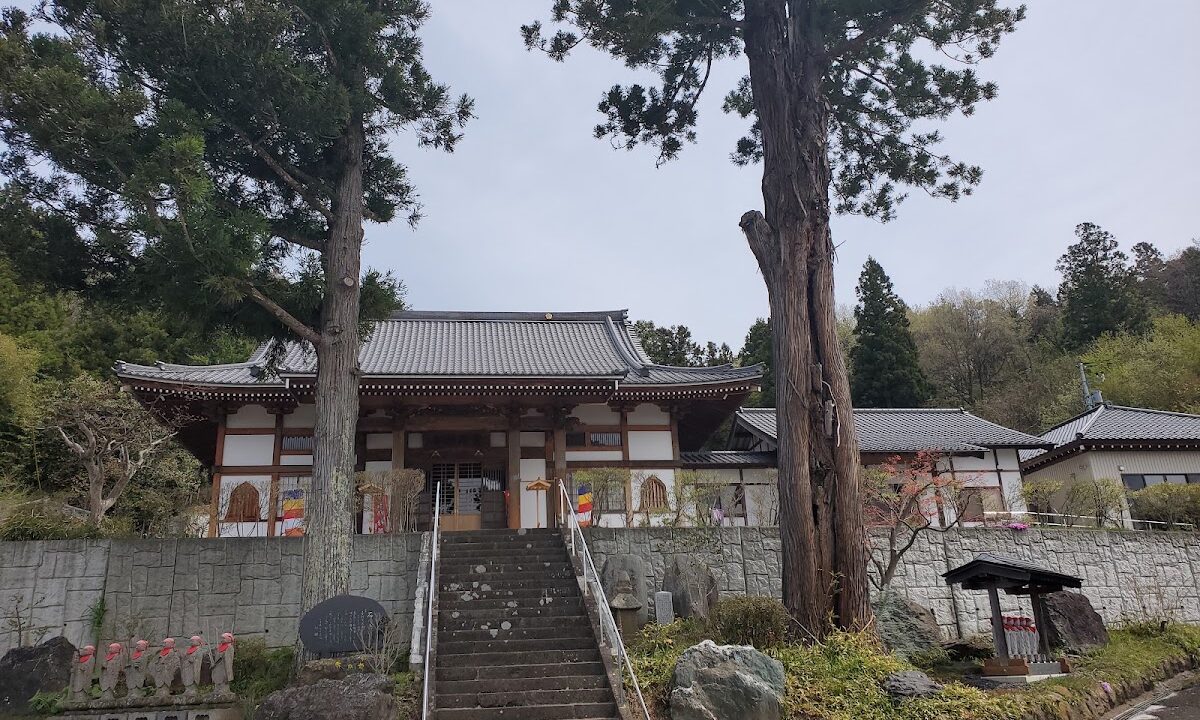
Unsaiji Temple (Iwate Prefecture) Complete Guide | History and Highlights of an Ancient Temple Associated with Minamoto no Yoshitsune
Unsaiji Temple, located in Koromogawa Haruyama, Oshu City, Iwate Prefecture, is a historic temple with a history dating back to the Heian period. Known as the temple where the memorial tablets of Minamoto no Yoshitsune and his wife, Kita no Kata, were enshrined, it is a significant historical site in the Hiraizumi cultural sphere, attracting many history enthusiasts and tourists.
Basic Information on Unsaiji Temple
Unsaiji Temple belongs to the Soto Zen sect and its mountain name is Myokozan. It is located at 63 Koromogawa Haruyama, Oshu City, Iwate Prefecture, and is conveniently located about 10 minutes by car from the center of Hiraizumi.
Location and Access
Address: 63 Haruyama, Kinugawa, Oshu City, Iwate Prefecture 029-4401
Sect: Soto Zen
Mountain Name: Myokozan
Corporate Number: 2400605000435
Transportation Access:
- Approximately 10 minutes by car from JR Hiraizumi Station
- Approximately 15 minutes by car from Hiraizumi-Maezawa IC on the Tohoku Expressway
- Bus: Buses are also available from Hiraizumi Station (advance confirmation recommended due to limited service)
Visiting Hours: 8:00 AM – 5:00 PM (advance contact recommended)
Admission Fee: Free entry to the grounds (in-person viewing of the main hall requires consultation)
History of Unsaiji Temple
The history of Unsaiji Temple dates back to the early Heian period, spanning over 1000 years. Its history is deeply intertwined with the legend of Minamoto no Yoshitsune and closely related to the rise and fall of the Oshu Fujiwara clan. ### Founding and Early Period
Unsaiji Temple is said to have been founded in 850 AD (Kashō 3) by Jikaku Daishi Ennin. Jikaku Daishi Ennin was a highly respected monk known as the third head of the Tendai sect, and he established many temples in the Tohoku region.
Initially, Unsaiji Temple was built as a branch temple of a mountain temple, the predecessor of the Tendai sect’s Kanzan Chūsonji Temple. It is believed to have played an important role as a base for Buddhist propagation and a place of training in the Tohoku region during the Heian period.
Restoration by Minamoto no Yoshitsune and his wife
The most important turning point in the history of Unsaiji Temple occurred in 1186 AD (Bunji 2). Minamoto no Yoshitsune, pursued by his brother Minamoto no Yoritomo, fled to Hiraizumi in Ōshū with twelve retainers and his wife, Far from the capital of Kyoto, in the Tohoku region, Kitano-kata likely deepened her faith in Buddhism while longing for her homeland. This restoration forged a deep connection between Unsaiji Temple and Yoshitsune and his party.
In 1189, after Yoshitsune met his end at Koromogawa Manor, attacked by Fujiwara no Yasuhira’s forces, his memorial tablet was enshrined at Unsaiji Temple. Along with Kitano-kata’s memorial tablet, memorial services have continued for many years.
Transition from the Medieval to the Early Modern Period
Throughout the medieval period, Unsaiji Temple remained a center of local faith. However, the turmoil of the Sengoku period and changes in religious policies during the Edo period led to changes in the temple’s size and sect.
During the Edo period, it was reorganized as a Soto Zen temple and has maintained that sect to this day. During this time, its role as a local parishioner temple was strengthened, and it developed into a temple deeply rooted in the community.
Modern and Contemporary History
Despite the impact of the anti-Buddhist movement during the Meiji era, Unsaiji Temple survived thanks to the support of local residents. However, it also suffered a setback when its main hall was destroyed by fire.
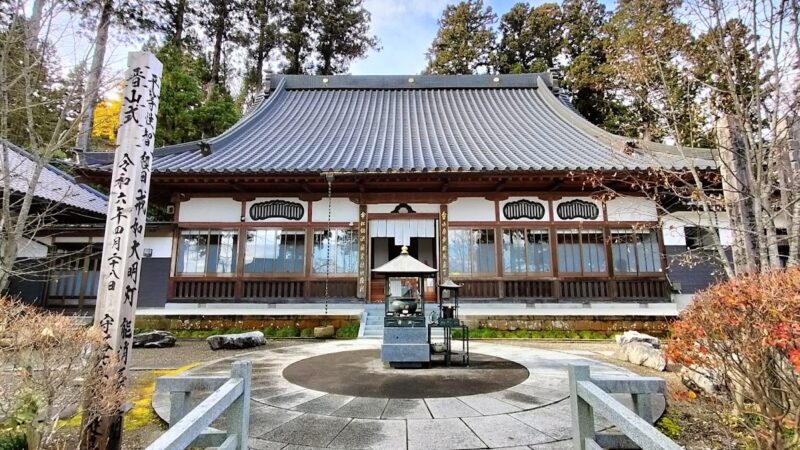
In the Heisei era, the main hall was rebuilt with the support of local people, Yoshitsune fans, and history enthusiasts. Today, Unsaiji Temple maintains its historical value while taking on new roles as a regional cultural asset and tourist attraction.
Highlights of Unsaiji Temple
Unsaiji Temple offers various points of interest that tell the story of its long history. When visiting the temple grounds, please pay attention to the following points.
Main Hall and Temple Grounds
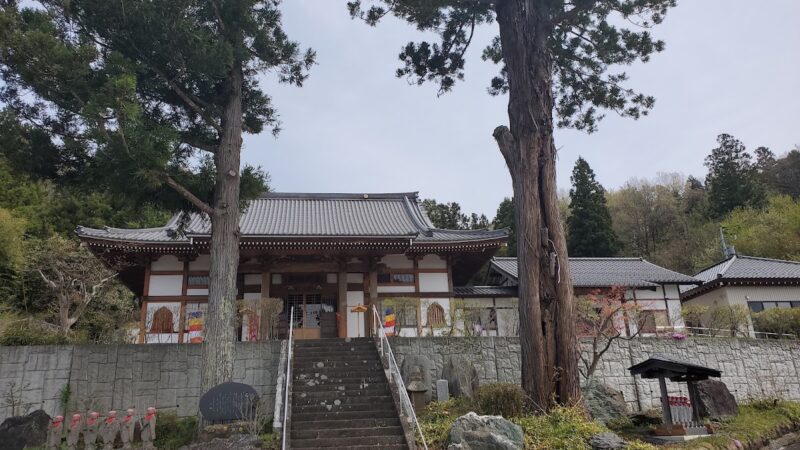
The main hall, rebuilt in the Heisei era, follows the traditional architectural style of Soto Zen temples while being constructed with modern technology. Its sturdy wooden structure is robust enough to withstand the harsh climate of the Tohoku region.
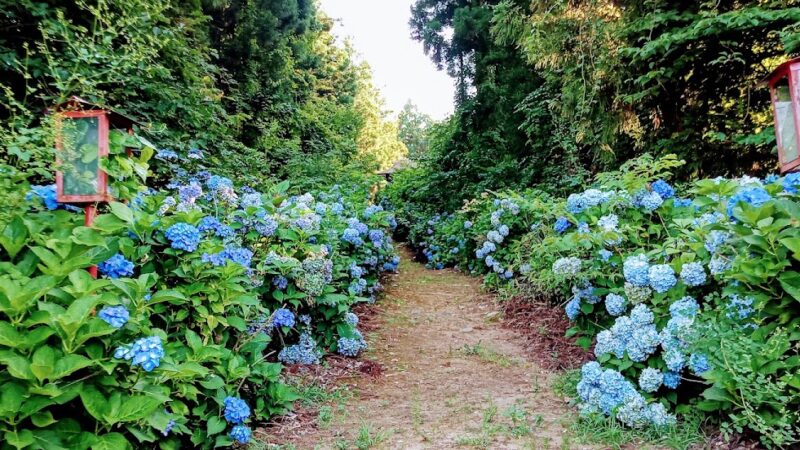
The temple grounds are enveloped in a tranquil atmosphere, offering peace of mind to visitors. The surrounding trees display different expressions throughout the seasons, and the scenery is particularly beautiful during the seasons of fresh greenery and autumn leaves.
Memorial Tablets of Minamoto no Yoshitsune and His Wife
The most distinctive feature of Unsaiji Temple is that it once housed the memorial tablets of Minamoto no Yoshitsune and His Wife. Currently, these tablets are carefully preserved in an appropriate storage environment.
Yoshitsune’s memorial tablet holds historical value as an important relic commemorating his tragic end, while His Wife’s memorial tablet is a valuable cultural asset that conveys the devotion of a woman who continuously supported her husband.
Stone Monuments and Information Boards
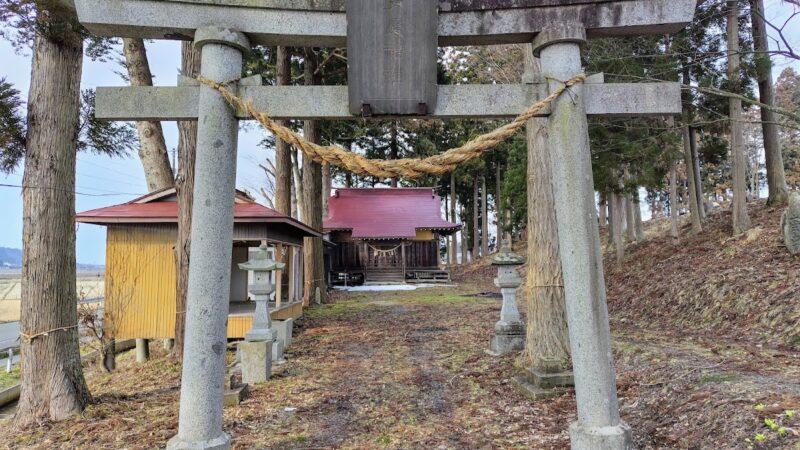
Within the temple grounds, there are information boards explaining the history of Unsaiji Temple and stone monuments indicating its connection to Yoshitsune. Reading these will allow for a deeper understanding of the temple’s historical background.
The Deep Connection Between Minamoto no Yoshitsune and Unsaiji Temple
The relationship with Minamoto no Yoshitsune is indispensable when discussing Unsaiji Temple. Let’s trace the story of Yoshitsune, from his escape to Oshu to his final moments.
Yoshitsune’s Escape to Oshu
Due to a conflict with his brother, Minamoto no Yoritomo, Minamoto no Yoshitsune left Kyoto in 1185 and, after wandering from place to place, fled to Hiraizumi in Oshu in 1186, seeking refuge with Fujiwara no Hidehira.
Hidehira warmly welcomed Yoshitsune, providing him with the Koromogawa Mansion and offering him refuge. Yoshitsune, along with twelve retainers and his wife, spent a brief period of peace in Hiraizumi.
The Reconstruction of Unsaiji Temple by the Lady of the North
Far from the capital, in Oshu, the Lady of the North found deep solace in Buddhism. Seeing the dilapidated Unsaiji Temple, she resolved to restore it, investing her own fortune to rebuild it.
This act likely served to create a place of spiritual support for Yoshitsune and his group, who were in an unstable position. Praying at the temple probably brought them a brief respite.
The Battle of Koromogawa and Yoshitsune’s End
In 1189, after the death of Fujiwara no Hidehira, his son, Fujiwara no Yasuhira, succumbed to pressure from Minamoto no Yoritomo and attacked Yoshitsune. In the Battle of Koromogawa, Yoshitsune and his wife and children committed suicide. He was 31 years old.
After Yoshitsune’s death, his memorial tablet was enshrined in Unsaiji Temple, which was restored by his wife, and was commemorated there for a long time.
Nearby Tourist Attractions
When visiting Unsaiji Temple, we recommend also visiting the historical sites of the surrounding Hiraizumi cultural sphere.
Chusonji Temple
Located about 15 minutes by car from Unsaiji Temple, Chusonji Temple is a central temple of the World Cultural Heritage site “Cultural Heritage of Hiraizumi.” Numerous national treasures and important cultural properties, including the Golden Hall, convey the glory of the Oshu Fujiwara clan to this day.
Motsuji Temple
Also registered as a World Cultural Heritage site, Motsuji Temple is known for the beauty of its Pure Land garden. The garden, centered around Oizumi Pond, embodies the Pure Land Buddhist thought of the Heian period.
Takadate Yoshitsune Hall
The Yoshitsune Hall, built on the site of the Koromogawa Mansion where Yoshitsune met his end, is an important historical site commemorating Yoshitsune. From the hilltop, you can enjoy a magnificent view of the Kitakami River and Mt. Tabane.
Yanagi-no-Gosho Ruins
The Yanagi-no-Gosho Ruins, believed to be the site of the Oshu Fujiwara clan’s government office, have yielded many artifacts through archaeological excavations, providing insight into the political center of the time.
Points to Note When Visiting Unsaiji Temple
Please note the following points when visiting Unsaiji Temple.
Visitor Etiquette
- Remember that temples are places of worship; please pray quietly.
- Follow the signs within the temple grounds when taking photographs, and refrain from taking pictures in areas where photography is prohibited, such as inside the main hall.
- If you wish to visit inside the main hall, it is recommended to contact the temple in advance.
- Parking is limited, so please share the space with others.
Seasonal Highlights
Spring (April-May): The fresh greenery is beautiful, and the temple grounds are enveloped in an atmosphere full of vitality.
Summer (June-August): Surrounded by deep green, the temple grounds are cool and perfect for calming the mind.
Autumn (September-November): The autumn leaves color the temple grounds, making it one of the most beautiful seasons.
Winter (December-March): The snow-covered temple grounds are enveloped in silence, allowing you to experience a solemn atmosphere.
Estimated Time Required
If you only wish to pray within the temple grounds, allow about 30 minutes. If you want to carefully read the explanatory signs around the temple, allow about an hour.
Unsaiji Temple and Hiraizumi Culture
Unsaiji Temple is an important component of the Hiraizumi cultural sphere. Hiraizumi culture refers to the unique Buddhist culture built by the Oshu Fujiwara clan from the 11th to the 12th centuries.
Position in Hiraizumi Culture
As evidenced by its origins as a branch temple of Chusonji Temple, Unsaiji Temple formed part of Hiraizumi’s Buddhist network. While serving as a place for mountain asceticism, it also played a role in supporting local faith.
Connection to Pure Land Buddhism
At the root of Hiraizumi culture lies Pure Land Buddhism. The Oshu Fujiwara clan’s ideal of recreating the Pure Land on earth is embodied in the architecture and gardens of Chusonji and Motsuji temples. Unsaiji Temple is also considered one of the temples influenced by this Pure Land Buddhism.
The Legend of Yoshitsune and the Modern Age
Minamoto no Yoshitsune is one of the most popular tragic heroes in Japanese history. His legend has been passed down through generations and continues to fascinate many people today.
The Spread of the Yoshitsune Legend
The story of Yoshitsune spread throughout Japan through military chronicles such as “The Tale of the Heike” and “The Chronicle of Yoshitsune.” The sympathy and empathy for unfortunate heroes are deeply rooted in the Japanese psyche, giving rise to the term “Hangan-biiki” (sympathy for the underdog).
The Legend of Yoshitsune’s Journey North
Interestingly, there is also the “Legend of Yoshitsune’s Journey North,” which claims that Yoshitsune did not die at Koromogawa, but instead traveled through Hokkaido to the continent and became Genghis Khan. While this legend is not historical fact, it demonstrates the strength of people’s feelings towards Yoshitsune.
Unsaiji Temple, as one of the origins of these Yoshitsune legends, continues to attract those seeking historical romance.
Detailed Access Information to Unsaiji Temple
Detailed access information for visiting Unsaiji Temple is summarized below.
Access by Public Transportation
Train:
- Get off at Hiraizumi Station on the JR Tohoku Main Line
- Approximately 10 minutes by taxi from the station (approx. 3km)
- Renting a car is also convenient
Bus:
- There are also local buses from Hiraizumi Station, but the number of buses is limited, so it is recommended to check the timetable in advance
- Get off at “Unsaiji-mae” or the nearest bus stop
Access by Car
Expressway:
- Approximately 15 minutes from Hiraizumi-Maezawa IC on the Tohoku Expressway
- Enter “Unsaiji” or the address “63 Koromogawa Haruyama, Oshu City, Iwate Prefecture” into your car navigation system
Parking:
- There are several parking spaces on the temple grounds (free)
- Please share the parking space during busy times
Example Sightseeing Route
Example of an efficient route when visiting in conjunction with Hiraizumi sightseeing:
- Chusonji Temple (Estimated time: 1.5-2 hours)
- Motsuji Temple (Estimated time: 1-1.5 hours)
- Lunch (Near Hiraizumi Station or at a roadside station)
- Takadate Yoshitsune-do Hall (Estimated time: 30 minutes – 1 hour)
- Unsaiji Temple (Estimated time: 30 minutes – 1 hour)
- Yanagi-no-Gosho Ruins (If time permits)
Cultural Value of Unsaiji Temple
Unsaiji Temple holds significant importance not only as a building but also from a historical and cultural perspective.
Value as a Historical Document
The fact that the memorial tablets of Minamoto no Yoshitsune and his wife were enshrined there is important as historical evidence regarding Yoshitsune’s final moments. Furthermore, as a temple dating back to the Heian period, it is a valuable resource for understanding the history of the region.
Preservation of Local Culture
As a local parishioner temple, Unsaiji Temple has been deeply connected to the community through funerals and memorial services. The existence of such a temple plays an important role in maintaining the region’s traditional culture and sense of community.
Value as a Tourist Resource
As part of the Hiraizumi cultural sphere, Unsaiji Temple is an important tourist resource. Visiting it in conjunction with the World Heritage sites of Chusonji Temple and Motsuji Temple allows for a more comprehensive understanding of Hiraizumi’s history.
Summary
Unsaiji Temple is a venerable temple with a history of over 1000 years since its founding in 850 AD. Founded by Jikaku Daishi Ennin, restored by the wife of Minamoto no Yoshitsune, and continuing to the present day, it has overcome numerous trials and tribulations.
As the temple where the memorial tablets of Minamoto no Yoshitsune and his wife were enshrined, it is an important historical site in Japanese history and an indispensable presence for understanding the Hiraizumi cultural sphere. The tranquil temple grounds offer visitors a sense of historical romance and peace of mind.
When visiting Hiraizumi, be sure to visit Unsaiji Temple in addition to the World Heritage sites of Chusonji Temple and Motsuji Temple. The time spent quietly offering prayers while reflecting on the era in which Yoshitsune and his wife lived will surely be a memorable experience.
Unsaiji Temple, located at 63 Haruyama, Kinugawa, Oshu City, Iwate Prefecture, continues to quietly tell its history today.