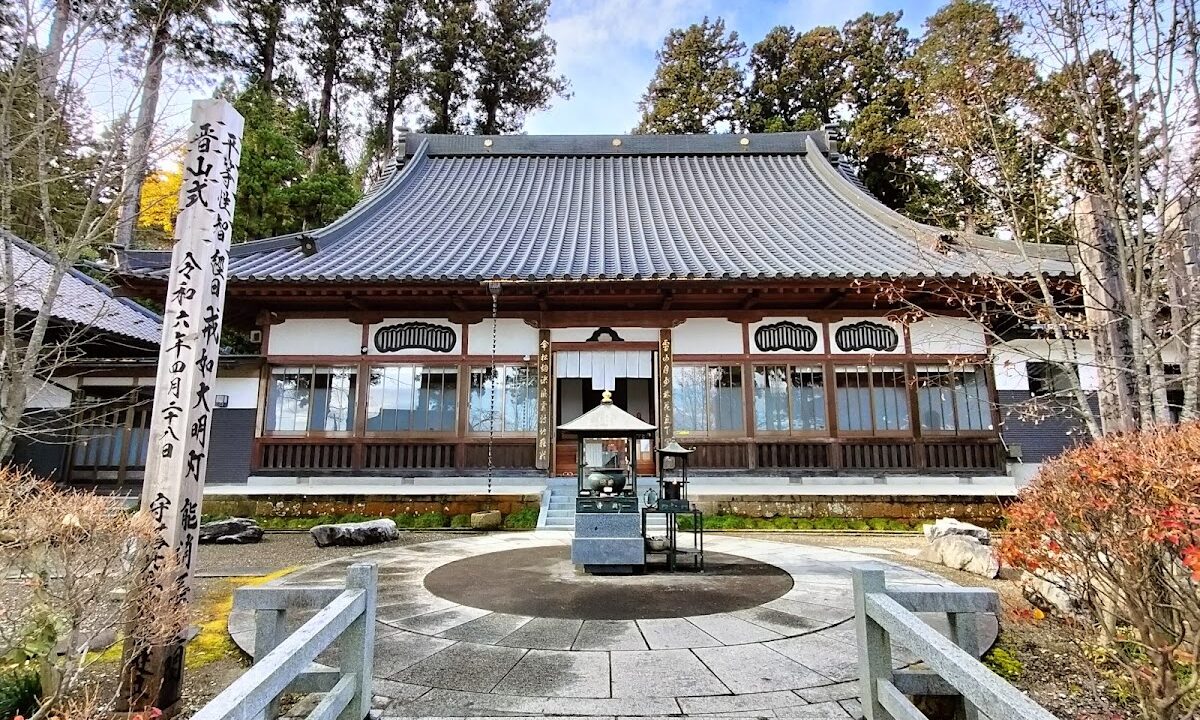
Ryutakuji Temple (Ichinoseki City, Iwate Prefecture) Complete Guide | Detailed Explanation of History, Memorial Services, Access, and Costs
Ryutakuji Temple, located in Ichinoseki City, Iwate Prefecture, is a historic temple belonging to the Soto Zen sect. This article provides detailed information for those considering interment at Ryutakuji Temple, including memorial service options such as perpetual memorial graves, tree burials, and columbariums, as well as costs, access methods, and the process for making a reservation.
Basic Information about Ryutakuji Temple
Ryutakuji Temple is a Soto Zen temple located in Ichinoseki City, Iwate Prefecture, and enshrines Shakyamuni Buddha as its principal image. The Soto Zen sect is a branch of Japanese Zen Buddhism, introduced to Japan from China by Zen Master Dogen during the Kamakura period. It is characterized by its emphasis on seated meditation (“Shikantaza”) and is one of the largest Buddhist sects in Japan, with approximately 15,000 temples throughout the country.
Basic Temple Data
- Temple Name: Ryutaku-ji Temple
- Sect: Soto Zen
- Principal Image: Shakyamuni Buddha
- Location: Ichinoseki City, Iwate Prefecture
- Religious Corporation: Registered as a Soto Zen Temple
Ichinoseki City is located in the southern part of Iwate Prefecture, near the border with Miyagi Prefecture. It offers a peaceful environment for remembering loved ones amidst a rich natural setting.
Deepening Your Understanding of Soto Zen
The Soto Zen sect, to which Ryutaku-ji Temple belongs, is a particularly historical and traditional sect among Japanese Buddhist sects. Its founder, Zen Master Dogen, traveled to China (Song Dynasty) in 1223, received the authentic transmission of Buddhist teachings from Zen Master Rujing at Tiantong Mountain, and returned to Japan.
Characteristics of Soto Zen Teachings
The teachings of Soto Zen are based on the concept of “Shusho Itto” (the unity of practice and enlightenment). This teaching emphasizes that spiritual practice and enlightenment are not separate things, but rather that the practice of Zen meditation itself is enlightenment. Every aspect of daily life is considered spiritual practice; even eating and cleaning are seen as part of Buddhist training.
In the Soto Zen school, the “Jukai” ceremony, where the deceased embarks on their journey as a disciple of Buddha, is highly valued during funerals and memorial services. This is an important ceremony where a Buddhist name is bestowed upon the deceased, establishing their status as a disciple of Buddha.
Types and Characteristics of Ryutakuji Temple’s Perpetual Memorial Graves, Tree Burials, and Columbariums
In modern times, the forms of graves have diversified, and Ryutakuji Temple also accommodates various forms of memorial services. Here, we explain the main types of memorial services and their respective characteristics.
Perpetual Memorial Graves
Perpetual memorial graves are a type of grave where the temple takes responsibility for perpetual memorial services and management. This is suitable for those without descendants or those who do not want to burden successors.
Features of Perpetual Memorial Graves:
- The temple continues memorial services in perpetuity.
- No or low annual maintenance fees.
- Peace of mind even without a successor.
- Choice between communal and individual graves.
Differences between Individual and Communal Graves
There are two main types of perpetual memorial graves: “individual graves” and “communal graves.”
Individual graves are those where the remains are placed in an individual plot for a certain period (usually 13, 17, or 33 years) before being communally interred. This is suitable for those who wish to have individual memorial services for a specific period. While the cost is higher than communal graves, it allows for individual remembrance of the deceased.
Communal graves are those where the remains are buried together with those of others from the beginning. This is suitable for those who want to keep costs down, and is characterized by a lower financial burden compared to individual graves. However, once the remains are communally interred, they cannot be retrieved.
Tree Burial
Tree burial is a type of natural burial where a tree is used as a symbol to commemorate the deceased instead of a tombstone. It is popular among those who wish to return to nature or who desire an environmentally conscious burial method.
Characteristics of Tree Burial:
- Allows you to rest in nature
- Often reduces costs as a tombstone is not required
- Often does not restrict religion or sect
- Available in individual and communal types
Columbarium
A columbarium is a facility where cremated remains are enshrined inside a building. It allows for visits regardless of weather, and demand is increasing, especially in urban areas.
Characteristics of Columbarium:
- Indoor facility allows visits regardless of weather
- Clean and well-maintained
- Often located in easily accessible places
- Various types exist, including locker-type, altar-type, and automated retrieval systems
Costs of Perpetual Memorial Graves, Tree Burials, Columbariums, and Graves at Ryutakuji Temple
Cost is one of the important factors when choosing a form of memorial service. This section explains the general cost estimates and the factors that determine those costs.
Cost Estimates
Costs vary greatly depending on the type of memorial service. The general guidelines are as follows:
Communal Grave (Perpetual Memorial Grave):
- Approximately 100,000 to 300,000 yen
- The most cost-effective option
- Annual maintenance fees are usually not required
Individual Grave (Perpetual Memorial Grave):
- Approximately 300,000 to 1,000,000 yen
- Costs vary depending on the individual interment period
- No additional fees after communal interment
Tree Burial:
- Approximately 200,000 to 800,000 yen
- Costs vary depending on whether it’s individual or communal
- Costs vary depending on the size and location of the plot
Columbarium:
- Approximately 300,000 to 1,500,000 yen
- Varies depending on the type and facilities
- Annual maintenance fees may be required
Traditional Grave (General Grave):
- 1,000,000 to 3,000,000 yen or more
- Includes gravestone cost, perpetual usage fee, and construction costs
- Annual maintenance fees are continuously required
Items Included in the Cost
The costs associated with memorial services include the following items:
- Perpetual Use Fee or Perpetual Memorial Service Fee: Fee for the right to use the land and facilities
- Gravestone or Columbarium Facility Fee: Cost of purchasing a gravestone or columbarium plot
- Construction Cost: Cost of developing and installing the cemetery
- Management Fee: Annual or lump-sum management fee
- Memorial Service Fee: Cost of services such as eye-opening ceremonies and interment ceremonies
Points to Reduce Costs
If you want to reduce the cost of memorial services, consider the following points:
- Choose a communal grave: Communal graves, which do not have an individual interment period, are the most economical.
- Choose a plan with no annual management fee: Many perpetual memorial graves do not require management fees.
- Compare multiple temples and cemeteries: Costs can vary even in the same area.
- Consider a pre-need contract: Discounts may be available by contracting in advance.
How to Book a Visit to Ryutakuji Temple’s Perpetual Memorial Graves, Tree Burial Grounds, and Columbarium
When considering interment, we strongly recommend visiting the site in person. This allows you to experience the atmosphere and environment firsthand, which cannot be fully appreciated through photos and descriptions alone.
How to Book a Visit
1. Make a Visit Reservation
If you wish to visit, it is common practice to contact the temple in advance to make a reservation. There are several ways to make a reservation:
- Reservation by phone: Call the temple directly and tell them your desired date and time.
- Reservation by internet: Make a reservation through a website specializing in perpetual memorial services or the temple’s website.
- Reservation through a referral service: Use a cemetery referral service.
When making a reservation, it is helpful to have the following information ready:
- Desired date and time of visit (first choice, second choice)
- Number of visitors
- Type of memorial service you are considering (perpetual memorial grave, tree burial, etc.)
- Prepare any questions in advance.
2. Visiting
On the day of your visit, please keep the following points in mind:
Things you should bring:
- Notebook and writing utensils
- Camera (check in advance if photography is allowed)
- List of questions
- Checklist if comparing multiple temples
Points to check during your visit:
- Cleanliness and maintenance of the facilities
- Surrounding environment and quietness
- Sunlight and ventilation
- Availability of parking and accessibility
- Availability and facilities for memorial services
- Facilities such as rest areas and restrooms
- Distance from other graves
- Availability of barrier-free access
During your visit, it’s important to see the actual place where memorial services are held and experience the ease of visiting and the environment. If you are visiting with multiple people, share your impressions.
3. Signing a contract
After your visit, if you are satisfied, you will proceed with the contract procedures. Please be sure to check the following points before signing the contract:
Pre-Contract Confirmation Items:
- Breakdown of total costs and payment method
- Details of the contract (memorial service period, management details, etc.)
- Cancellation policy
- Whether or not there is an annual management fee and the amount
- Restrictions on religious affiliation/sect
- Number of people whose ashes can be interred
- Differences depending on whether or not there is a successor
- Whether or not it is necessary to become a temple parishioner
Documents Required at Contract Signing:
- Identification (driver’s license, health insurance card, etc.)
- Seal (a registered seal may be required)
- Resident registration certificate (may be required depending on the case)
- Contract fee (down payment or full amount)
Please be sure to fully understand the contents of the contract before signing and stamping it. It is important to ask questions without hesitation if you have any questions.
Flow until interment at Ryutakuji Temple
This explains the general flow from the time of contract signing until the actual interment.
Preparations for Interment
To perform an interment, the following preparations are necessary:
- Preparation of Cremation Permit (Burial Permit): An important document issued after cremation.
- Determination of Interment Date: Consult with the temple to decide on a date (often coinciding with the 49th day or first anniversary of death).
- Arrangement of Interment Ceremony: If you wish to request chanting of sutras, make the request in advance.
- Contacting Attendees: Inform those who will be attending the interment ceremony.
- Preparation of Offering: Necessary if a memorial service is held.
Flow of the Interment Day
The interment day proceeds as follows:
- Reception: Complete the procedures at the temple’s reception.
- Interment Ceremony: Chanting of sutras and incense offering by the monk.
- Interment: Place the remains in the ossuary or grave site.
- Visiting the Deceased: Offering incense and paying respects by attendees.
- Meal (Optional): A gathering for attendees to remember the deceased.
Post-Interment Memorial Services
Even after interment, you can remember the deceased by visiting regularly. In the case of perpetual memorial graves, temples often hold regular joint memorial services.
Ryutakuji Temple Facilities Information
When choosing a temple, facilities are an important factor. We will explain the facilities of a typical temple.
Main Facilities
Main Hall:
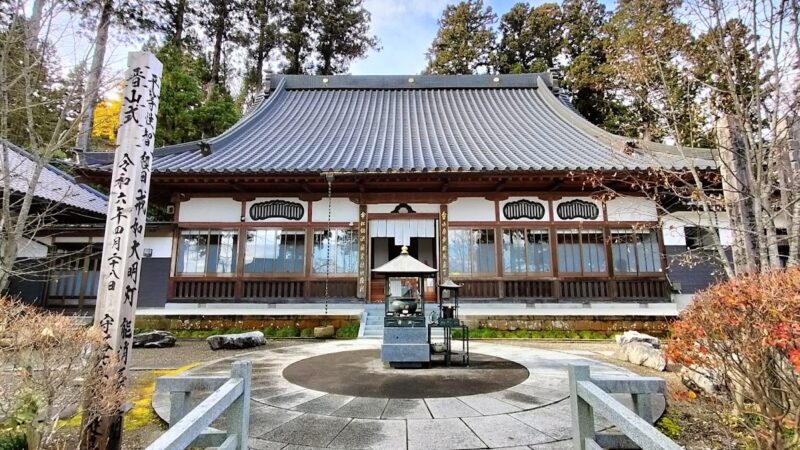
This is the central building where memorial services and funerals are held. The principal image is enshrined here and it is used during various memorial services.
Guest Hall/Meeting Hall:
This facility can be used for meals after memorial services and during memorial services. The size varies depending on the temple.
Parking:
This is an important facility when visiting. The availability of parking is a major factor, especially for the elderly and those visiting from afar.
Toilets/Rest Areas:
Clean toilets and rest areas make visiting more comfortable.
Watering Hole: A watering hole is an essential facility for arranging flowers and purifying gravestones during visits to graves.
Barrier-Free Accessibility
In an aging society, barrier-free accessibility is a crucial element:
- Installation of ramps and handrails
- Wheelchair-accessible toilets
- Flat pathways
- Installation of elevators (in the case of columbariums)
When visiting, we recommend checking for barrier-free accessibility, taking into account your future physical condition.
Access to Ryutaku-ji Temple
This explains how to access Ryutaku-ji Temple in Ichinoseki City, Iwate Prefecture.
Access by Public Transportation
Ichinoseki City is a transportation hub served by the Tohoku Shinkansen and Tohoku Main Line. Access from Ichinoseki Station is the primary route.
Access by Train:
- Get off at Ichinoseki Station on the Tohoku Shinkansen
- Get off at Ichinoseki Station on the JR Tohoku Main Line
- Take a bus or taxi from the station
Access by Bus:
There are local bus routes within Ichinoseki city, and there may be bus stops near the temple. It is recommended to check the routes and timetables in advance.
Access by Car
Using the Expressway:
- From Ichinoseki IC on the Tohoku Expressway, head towards the city center
- Enter the temple name or address into your car navigation system
Access via Local Roads:
- From major roads such as National Route 4, head towards the city center
- Utilize road signs and map apps
When accessing by car, it is important to check the availability and capacity of parking in advance. If congestion is expected, such as during memorial services, arrive early or consider using public transportation.
Access from Distant Locations
If you are visiting from outside Iwate Prefecture, the following routes are common:
From Tokyo:
- Approximately 2 hours 30 minutes by Tohoku Shinkansen to Ichinoseki Station
- Approximately 5 hours via Tohoku Expressway
From Sendai:
- Approximately 30 minutes by Tohoku Shinkansen to Ichinoseki Station
- Approximately 1 hour 30 minutes via Tohoku Expressway
From Morioka:
- Approximately 40 minutes by Tohoku Shinkansen to Ichinoseki Station
- Approximately 1 hour 30 minutes via Tohoku Expressway
Rules for Visiting and Paying Worship at Ryutaku-ji Temple
There are manners and rules to observe when visiting a temple. This explains the manners for visiting Ryutaku-ji Temple, a Soto Zen Buddhist temple.
Basic Manners for Visiting a Temple
Attire:
- For memorial services, wear mourning attire or semi-formal mourning attire.
- For regular visits, wear clean and presentable clothing.
- Avoid revealing or flashy clothing.
Items to Bring:
- Prayer beads (rosary): In the Soto Zen sect, semi-formal prayer beads are acceptable.
- Incense and flowers: These may be provided by the temple.
- Offering: If requesting a memorial service.
Etiquette for Visiting a Temple
Visiting the Main Hall:
- Bow at the temple gate before entering the grounds.
- Cleanse your hands and mouth at the water basin.
- Bow in front of the main hall.
- Place your offering (without making noise).
- Clasp your hands together and bow.
- Bow and leave.
Visiting a Grave:
- Bow in front of the grave.
- Cleanse the gravestone (pour water and wipe).
- Offer flowers.
- Offer incense.
- Bowing and Prayer
- Bow and Withdraw
Soto Zen Etiquette
The Soto Zen sect has distinctive incense offering etiquette:
Number of Incense Offerings: Twice (Press the incense to the forehead the first time, and do not press it to the forehead the second time)
How to Bow: Bring both hands together in front of your chest, fingers together
Guidelines for Offerings
Guidelines for offerings when requesting a memorial service:
- Interment Memorial Service: 30,000 to 50,000 yen
- Annual Memorial Service: 30,000 to 100,000 yen
- Travel Expenses: 5,000 to 10,000 yen (separate)
- Meal Expenses: 5,000 to 10,000 yen (if declining the meal)
Place the offering in a white envelope or a special envelope and write “Offering” on the front.
Recommended Points of Ryutaku-ji Temple
We will explain the attractions and recommended points when choosing Ryutaku-ji Temple.
Tradition and Formalities of the Soto Zen School
The Soto Zen school is one of the largest Buddhist sects in Japan, boasting a long history and tradition. You can remember your loved ones in a solemn atmosphere based on Zen teachings.
Natural Environment of Ichinoseki City
Ichinoseki City in Iwate Prefecture is surrounded by abundant nature, including the Kitakami River and Mount Kurikoma. The beautiful scenery of the four seasons provides a peaceful environment for quietly reflecting on your loved ones.
Convenient Access
Ichinoseki City has a stop on the Tohoku Shinkansen (bullet train), making it easily accessible from Tokyo and Sendai. There is also an interchange on the Tohoku Expressway, making it convenient for those traveling by car.
Peace of Mind with Perpetual Memorial Services
By choosing a perpetual memorial grave, the temple will take responsibility for continuing the memorial services, providing peace of mind for those without successors or those who do not want to burden their descendants.
Connection with the Community
As a temple rooted in the community, you can interact with local residents and participate in local events. It’s not just a place for memorial services; you can also become involved as part of the community.
Map and Surrounding Environment of Ryutaku-ji Temple
This section explains the surrounding environment of Ichinoseki City, Iwate Prefecture, where Ryutaku-ji Temple is located.
Characteristics of Ichinoseki City
Ichinoseki City is located in the southern part of Iwate Prefecture, bordering Miyagi Prefecture. It is a regional city with a population of approximately 110,000, and has flourished as a transportation hub since ancient times.
Main Tourist Spots:
- Genbikei Gorge: A gorge designated as a national scenic spot and natural monument.
- Geibikei Gorge: A scenic spot counted as one of Japan’s 100 most beautiful landscapes.
- Yotsugi Sake Brewery Memorial Hall: A facility where you can learn about the history of the region.
- Ichinoseki Onsenkyo: A hot spring resort area with multiple hot springs.
Surrounding Facilities
The following facilities are located around the temple:
Medical Institutions:
Ichinoseki City has several general hospitals and clinics, providing a well-established medical system.
Commercial Facilities:
The city center has a wide variety of supermarkets, home improvement stores, restaurants, and more. Accommodation: For those visiting from afar, hotels and inns are available around Ichinoseki Station and in the hot spring areas.
Nearby Temples and Cemeteries
Besides Ryutaku-ji Temple, there are several other temples and cemeteries in Ichinoseki City. Comparing multiple facilities will help you find a place of remembrance that best suits your needs.
We can also guide you to nearby temples and cemeteries
Besides Ryutaku-ji Temple, there are many other temples and cemeteries in Ichinoseki City and Iwate Prefecture. We recommend comparing multiple options based on your preferences regarding memorial service type, cost, and location.
Points to consider when searching for temples and cemeteries in Ichinoseki City
Choosing by Sect: Besides the Soto Zen sect, there are temples of various other sects, including Jodo-shu, Shingon-shu, and Jodo Shinshu. You can choose according to your ancestors’ sect or your own beliefs.
Choosing by Memorial Service Type: The options vary depending on your desired memorial service type, such as perpetual memorial graves, tree burials, columbariums, and traditional graves.
Choosing by Cost: Depending on your budget, there are a wide range of options, from communal graves that are more affordable to individual burial plots.
Choosing by Access: It’s important to choose a location that is easy to visit, considering the distance from your home and transportation options.
Finding Other Affordable Cemeteries in Ichinoseki City
If cost is a priority, consider the following options:
- Municipal Cemeteries: Cemeteries operated by local governments are generally more affordable.
- Communal Graves: Communal graves, which do not require individual interment periods, are the most economical option.
- Tree Burial: Since a tombstone is not required, it is less expensive than a traditional grave.
- Columbariums: Often do not require perpetual use fees, thus reducing overall costs.
How to Find Other Cemeteries in Ichinoseki City
Internet Search: You can narrow down your search criteria on websites specializing in perpetual memorial services and cemetery search sites.
Inquiring with the Local Government: You can obtain information on municipal cemeteries by contacting the Citizen Affairs Division or Environmental Division of Ichinoseki City Hall.
Consulting a Funeral Home: Local funeral homes are familiar with local temples and cemeteries, so it’s a good idea to consult them.
Direct Visit to a Temple: You can also visit a temple of interest directly to discuss memorial service options and costs.
About Ryutakuji Temple’s Reviews and Reputation
When choosing a temple or cemetery, reviews and opinions from people who have actually used their services are helpful.
Points to Check in Reviews
Management Condition: It’s important to check if the temple grounds and cemetery are kept clean and well-maintained.
Quality of Service: The politeness of the temple’s abbot and staff, and whether they answer questions thoughtfully, are also important.
Access: Reviews from people who have actually visited the temple regarding access are helpful.
Atmosphere of Memorial Services: You can learn about the progress, atmosphere, and duration of memorial services from reviews of those who have experienced them.
Points to Note When Referring to Reviews
Reviews are subjective evaluations from individuals, so it’s important to consider multiple opinions comprehensively. Also, older reviews may not reflect the current situation, so be sure to check for the latest information.
The most reliable method is to actually visit and see for yourself. You can experience the atmosphere and environment that cannot be conveyed through photos or reviews alone.
Summary: Points to Consider When Thinking About Memorial Services at Ryutaku-ji Temple
Ryutaku-ji Temple, a Soto Zen Buddhist temple located in Ichinoseki City, Iwate Prefecture, is a temple where you can remember your loved ones amidst a rich natural environment. Various memorial service options are available, including perpetual memorial graves, tree burials, and columbariums.
Checklist for Choosing Ryutaku-ji Temple
- Confirmation of Memorial Service Type: Are there options such as perpetual memorial graves, tree burials, or columbariums that meet your preferences?
- Confirmation of Costs: Total cost, annual maintenance fee, and any additional fees.
- Confirmation of Sect: Are you comfortable with the teachings and customs of the Soto Zen sect?
- Confirmation of Access: Distance from your home, transportation options, and travel time.
- Confirmation of Facilities: Availability of parking, restrooms, and memorial service facilities.
- Confirmation of Management Conditions: Are the temple grounds and facilities kept clean?
- Confirmation of Contract Details: Memorial service period, possibility of succession, and cancellation policy.
Importance of Visiting and Comparing Options
A memorial service site is an important place to remember the deceased and for bereaved families to find peace of mind. Instead of deciding based solely on brochures or website information, we strongly recommend visiting the site and comparing multiple options.
During your visit, take in the environment and atmosphere, and don’t hesitate to ask any questions you may have. Finding a suitable place for a memorial service is the best way to honor the deceased.
When considering a memorial service at Ryutaku-ji Temple, we hope you will use the information in this article as a reference, discuss it thoroughly with your family, and make the best choice.