Gachirinji Yakushido (Yamaguchi Prefecture) Complete Guide | Yamaguchi Prefecture’s Oldest Wooden Building and the Legacy of Shogen Shonin
What is Gachirinji Yakushido? The Complete Picture of Yamaguchi Prefecture’s Oldest Wooden Building
Gachirinji Yakushido, located in Tokukami-mura, Yamaguchi City, Yamaguchi Prefecture, is a valuable cultural property known as the oldest wooden building in Yamaguchi Prefecture. This temple, written as “月輪寺” but pronounced “Gachirinji,” was rebuilt in 1189 by Shunjobo Shogen, known for his reconstruction of Todaiji Temple.
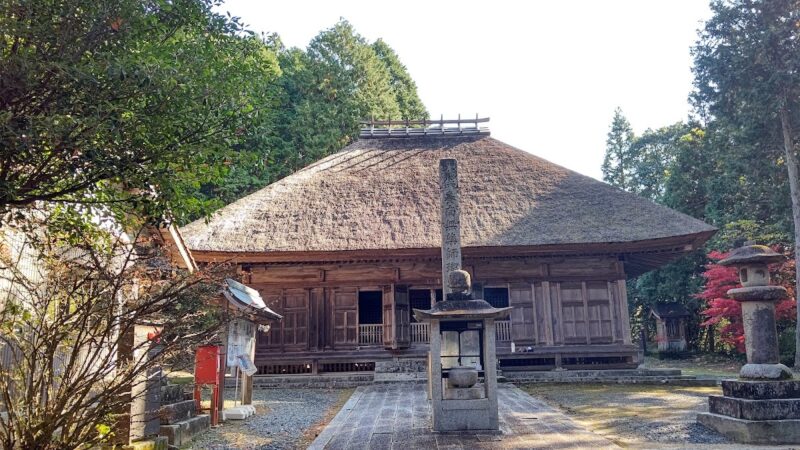
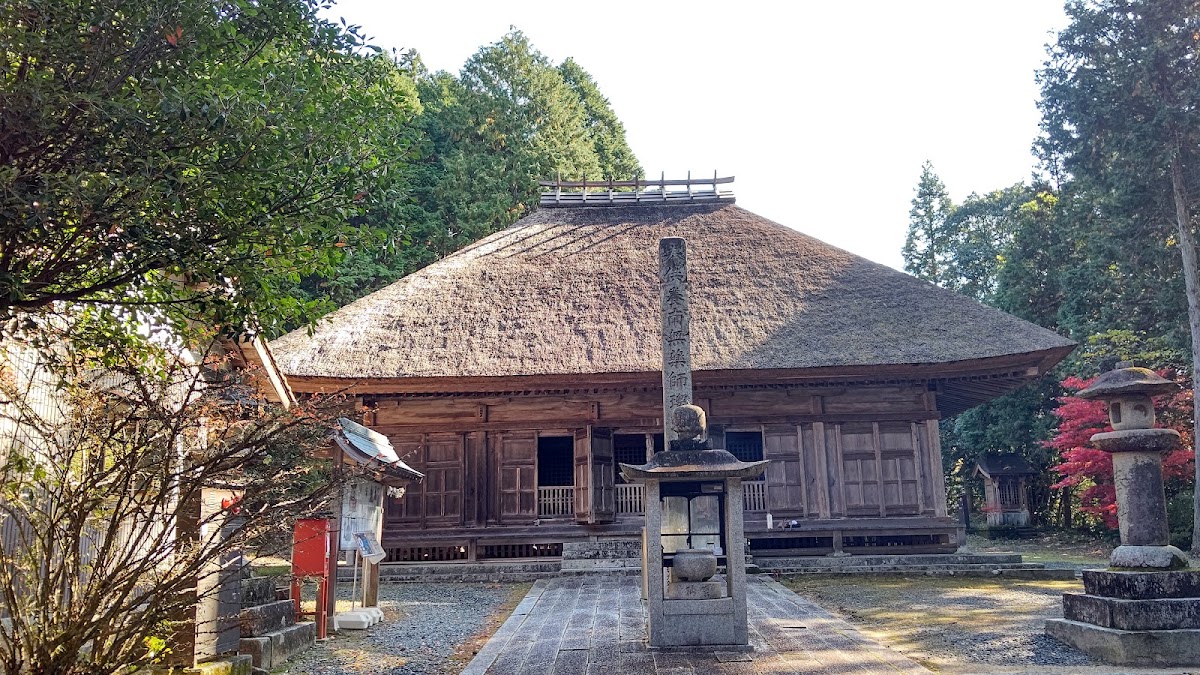
The Yakushido is designated as a National Important Cultural Property. It is a single-story, hip-roofed, thatched building with five bays (12.27 meters) and four bays (9.82 meters). As a valuable historical structure that preserves the architectural style of the late Heian period, it holds extremely high value in architectural history.
The hall houses numerous Buddhist statues, including Yakushi Nyorai (Medicine Buddha), a standing statue of Sho Kannon Bosatsu (Avalokiteshvara Bodhisattva), and statues of the Four Heavenly Kings. Both the hall and the building are designated as Important Cultural Properties. Every year on May 5th, the Yakushi Grand Festival is held, and the temple remains a beloved center of local faith.
History of Gachirinji Yakushido Hall | From Prince Shotoku to Shogen Shonin
Founding Legend and Prince Shotoku
According to temple tradition, the origins of Gachirinji Temple can be traced back to the Yakushido Hall built by Prince Shotoku in the 17th year of Emperor Suiko’s reign (609 AD). Originally located in Seiryoji Village, Sawa District (present-day Tokuji area, Yamaguchi City), it was called “Seiryozan Yakushido.” This founding legend speaks to the temple’s history as the oldest temple in Yamaguchi Prefecture.
While the legend of its founding by Prince Shotoku is a common origin story found in many ancient temples, it is an important testimony demonstrating the antiquity of Buddhist culture in this region. The Suiko era was a period when Buddhism began to take root in Japan, coinciding with the historical context in which Prince Shotoku is said to have promoted the construction of temples throughout the country.
The Heike’s Burning of Nara and the Reconstruction of Todai-ji Temple
The most important turning point in the history of the Yakushi-do Hall of Getsurin-ji Temple occurred during the Bunji era (1185-1190) at the end of the Heian period. In 1180, Todai-ji Temple suffered catastrophic damage during the burning of Nara by the Heike army led by Taira no Shigehira. The person appointed to the position of chief fundraiser for this major undertaking of rebuilding Todai-ji Temple was Shunjobo Chogen Shonin.
To secure building materials for the reconstruction of Todai-ji Temple, Chogen traveled to Suo Province (present-day Yamaguchi Prefecture). Suo Province, particularly the Tokuji region, was known as a source of high-quality timber, and a large amount of wood was cut from the lumberyards along the Saba River basin. During his stay in this area, Chōgen also devoted himself to the restoration of the dilapidated ancient temple.
Support from Fujiwara no Kanezane and the Temple Name “Getsurin-ji”
In 1189 (Bunji 5), Abbot Chōgen, with the cooperation of the then Grand Minister Fujiwara no Kanezane, restored the Yakushi-dō (Medicine Buddha Hall). Fujiwara no Kanezane, also known as “Tsukinowa-dono,” was a prominent figure in the Sekkan family and a strong supporter of Chōgen’s Tōdai-ji reconstruction project.
The Yakushi-dō, rebuilt with Kanezane’s support, was given the temple name “Getsurin-ji” as a token of gratitude. This naming demonstrates respect and gratitude to Fujiwara no Kanezane, the patron, and is an interesting historical episode illustrating the connection between temples and the aristocracy.
It is believed that the Yakushi-dō, originally located at Seiryō-ji Temple in Motokushi Village, was moved and rebuilt in its current location in Tokukami-mura, and the building constructed at that time is thought to be the existing Yakushi-dō.
Architectural Features of Gachirinji Yakushido Hall | The Essence of Heian Architecture
Building Structure and Style
The architecture of Gachirinji Yakushido Hall is a valuable historical site that strongly retains the characteristics of the late Heian period. Its size, with five bays (12.27 meters) and four bays (9.82 meters), is relatively large for a regional Yakushido hall. The single-story hipped roof with thatched roofing possesses a simple yet harmonious beauty.
The building has a structure divided into inner and outer sections, clearly separating the interior and exterior spaces. This structure is characteristic of Buddhist temple architecture in the Heian period, serving to separate the inner and outer sanctuaries.
Use of Roughly Cut Wood with an Axe
A particularly noteworthy architectural technique of Gachirinji Yakushido Hall is the use of roughly cut wood with an axe. In an era without the precise lumbering techniques of today, wood was roughly cut with axes, and its texture gives the building a unique strength and rusticity.
After comprehensively examining the materials used, processing methods, structural style, and techniques, this building is estimated to be from the Bunji Restoration period. Detailed research by architectural history experts has led to its high regard as a valuable example of late 12th-century architectural technology.
Maintenance and Preservation of Thatched Roofs
Thatched roofs are a traditional Japanese roofing style, but their maintenance requires considerable effort and skill. The thatched roof of the Gachirinji Yakushido has been preserved for over 800 years through regular re-thatching. Thatch offers excellent insulation and ventilation, protecting wooden buildings from moisture.
In modern times, the decline in thatched roof craftsmen is a serious problem, and the maintenance of thatched roofs on cultural heritage buildings is a nationwide challenge. At Gachirinji Yakushido, the transmission of this traditional technique is a crucial preservation issue. ## Buddhist Statues in the Hall | Buddhist Art of the Late Heian Period
Principal Image: Yakushi Nyorai and Other Buddhas
Inside the Yakushi-do Hall of Gatsurinji Temple, numerous Buddhist statues are enshrined, with Yakushi Nyorai as the principal image. These statues, along with the building itself, are designated as Important Cultural Properties and represent a collection of works typical of Buddhist art from the late Heian period to the early Kamakura period.
Of particular note is the wooden standing statue of Sho Kannon Bodhisattva, believed to be from the late Heian period. Its graceful form and exquisite carving clearly demonstrate the characteristics of Heian Buddhist art. Statues of the Four Heavenly Kings are also enshrined, creating a magnificent space where all the deities protecting Yakushi Nyorai are present.
Shrine and Ridgepole Inscription
As an attached designation, one shrine and two ridgepole inscriptions are also included in the Important Cultural Property designation of the Yakushi-do Hall. A shrine is a Buddhist implement used to house Buddhist statues and is an important decorative element within the building. The ridgepole inscription is a wooden plaque that records the construction date and those involved in the building, and is a valuable primary source in architectural history research.
These attached items are important evidence that tells the history of the Yakushido Hall, and together with the building, they enhance its value as a cultural property.
Chōgen Shōnin and Suō Province | The Relationship between the Reconstruction of Tōdai-ji Temple and Tokuchi
The Life and Achievements of Chōgen Shōnin
Shunjōbō Chōgen (1121-1206) was a monk who was active from the late Heian period to the early Kamakura period. He is known for accomplishing the great task of rebuilding Tōdai-ji Temple, which was lost in the burning of the temple by the Taira clan, as the chief fundraiser of Tōdai-ji Temple.
Chōgen was not merely a fundraiser, but a practical man well-versed in architectural techniques. He introduced the new architectural style “Daibutsu-yō” (Great Buddha style) from Song Dynasty China and applied it to the construction of buildings such as the South Gate of Tōdai-ji Temple. He also contributed to the reconstruction of temples in various regions, and the Yakushido Hall of Gatsurin-ji Temple is one example. ### Tokuji’s Forests and the Sabagawa River
The Tokuji region played a crucial role in the reconstruction of Todai-ji Temple due to its abundant forest resources. Large quantities of timber necessary for the reconstruction were cut from the forests along the Sabagawa River basin.
High-quality timber, such as cedar and cypress, was transported downstream via the Sabagawa River after being cut from the mountains, and then further transported to Nara via the Seto Inland Sea. The establishment of this timber distribution route was a crucial factor in making the reconstruction of Todai-ji Temple possible.
During his stay in Tokuji, Chogen also devoted himself to the development of local temples. The restoration of the Yakushido Hall at Gachirinji Temple is a prime example of how the Todai-ji reconstruction project was linked to contributions to the local community.
Chogen no Sato | A Historical Facility
Currently, the Tokuji region has a cultural facility called “Chogen no Sato,” which introduces the historical relationship between the monk Chogen and Tokuji. At this facility, you can learn about Chogen’s achievements, the Todai-ji reconstruction project, and the history of Tokuji’s timber industry. When visiting Gachirinji Yakushido, a visit to Chogen no Sato will allow you to gain a deeper understanding of its historical background. Visiting both facilities together will enable you to trace the footsteps of the monk Chogen on a historical exploration.
Highlights of Gachirinji Yakushido | Points Visitors Should Know
Points to Appreciate Architectural Beauty
When visiting Gachirinji Yakushido, paying attention to the following points will help you understand the value of the architecture more deeply.
Exterior Observation: You can feel the characteristics of Heian period architecture from the entire exterior, such as the beautiful curves of the thatched roof, the stable appearance of the hipped roof, and the texture created by the aging of the wood.
Woodworking Marks: The axe marks remaining on the pillars and beams are valuable traces that directly demonstrate the architectural techniques of the time. You can feel the warmth of handcrafted work, which is different from the precise lumber processing of today.
Structural Innovations: By observing the ingenious architectural features of both the interior and exterior buildings, the arrangement of columns, and the form of the brackets, you can truly appreciate the high level of architectural technology of the Heian period.
Yakushi Grand Festival (May 5th)
Every year on May 5th, the Yakushi Grand Festival is held, attracting many worshippers. A special Buddhist service is held on this day, and the usually quiet Yakushi Hall becomes bustling with activity. Visiting on the festival day will allow you to experience the temple’s role as a place of worship.
Surrounding Natural Environment
The Yakushi Hall of Gachirinji Temple is located in a place surrounded by the rich nature of Tokuchi. The forests surrounding the temple grounds preserve a historical landscape that has continued since the time of Chogen. Enjoying the changing seasons while visiting this historical building is one of the charms of this area.
The Yakushi Hall, which shows different expressions in each season—the fresh green of spring, the deep green of summer, the autumn leaves, and the snowy landscape of winter—offers new discoveries with every visit.
Access and Basic Information to Gachirinji Yakushido Temple
Location
Address: Tokuji-kami, Yamaguchi City, Yamaguchi Prefecture
Gachirinji Yakushido Temple is located approximately 20 kilometers northwest of central Yamaguchi City, in the mountainous area of Tokuji. It is situated in a tranquil mountain village surrounded by abundant nature.
Access Methods
Access by Car:
- Approximately 30 minutes north from central Yamaguchi City on National Route 435 towards Tokuji
- Approximately 20 minutes from the Kano Interchange on the Chugoku Expressway
- Parking: Parking spaces are available on the temple grounds or nearby (prior confirmation is recommended)
Access by Public Transportation:
- Take a bus from JR Yamaguchi Station towards Tokuji (approximately 40 minutes)
- A short walk from the nearest bus stop may be required; prior confirmation is necessary.
Due to limited public transportation options, access by car is recommended. We advise checking transportation options in advance before your visit.
Visiting Information
Visiting Hours: Normally, only the exterior is viewable. Prior confirmation is required for viewing the interior.
Admission Fee: Free (Confirmation required for viewing the interior)
Inquiries: Yamaguchi City Board of Education Cultural Properties Protection Division or Tokuji Area Tourist Information Center
As this is an Important Cultural Property, the protection of the building takes priority. If you wish to view the interior, it is important to contact and confirm in advance.
Precautions When Visiting
- To protect the cultural property, please refrain from touching the building or entering restricted areas.
- Photography is permitted, but please use flash sparingly.
- Please maintain a quiet environment and be considerate of other visitors and local residents.
- Due to the mountainous location, road conditions may vary depending on the season and weather.
Enjoying Nearby Tourist Spots
Chogen no Sato
As mentioned above, this is a cultural facility introducing the achievements of Shogen Shonin. Visiting it together with Getsurinji Yakushido will allow you to gain a deeper understanding of the history of Chogen and Tokuji. It also has experience facilities and a restaurant, making it a place you can enjoy for a whole day. ### Nature and Hot Springs of Tokuji
The Tokuji area is rich in nature, offering opportunities for outdoor activities such as ayu fishing in the Saba River, camping, and hiking. There are also hot spring facilities like Tokuji Onsen, making it possible to combine historical exploration with nature experiences.
Cultural Properties in Yamaguchi City
The central area of Yamaguchi City boasts numerous historical buildings and cultural properties, including the Rurikoji Five-Storied Pagoda, a National Treasure. A recommended itinerary involves visiting Yamaguchi City’s tourist spots before or after visiting the Gachirinji Yakushido Hall.
Cultural Value of Gachirinji Yakushido Hall
Significance as a Nationally Designated Important Cultural Property
Gachirinji Yakushido Hall was designated a Nationally Important Cultural Property on February 18, 1949. The designated name is “Gachirinji Yakushido Hall, with one shrine and two ridgepole inscriptions,” indicating that not only the building itself but also its attached cultural properties are protected.
As the oldest wooden structure in Yamaguchi Prefecture, it holds immense architectural historical value and is an indispensable relic for understanding regional Buddhist temple architecture of the late Heian period. Its historical significance as a testament to the achievements of the monk Chogen is also crucial.
Challenges of Preservation and Transmission
Passing on this wooden structure, with its history spanning over 800 years, to future generations presents many challenges. Continuous preservation and management are necessary, including maintaining the thatched roof, preventing wood deterioration, and protecting it from disasters.
Local residents, government officials, and cultural property protection experts are working together to protect this precious cultural asset. Visitors are also expected to understand and cooperate in cultural property preservation.
Summary | The Historical Weight Conveyed by Gachirinji Yakushido
Gachirinji Yakushido, as the oldest wooden structure in Yamaguchi Prefecture, is a valuable cultural asset that conveys over 800 years of history. From the legend of its founding by Prince Shotoku, to its restoration by Shunjobo Chogen, and up to the present day, this building embodies the history of Japanese Buddhist culture and architectural technology.
The Yakushido Hall, which retains the architectural style of the late Heian period, is a precious place where one can directly experience the technology and aesthetic sensibilities of that time. This building is imbued with a multi-layered historical narrative, including its connection to historically important figures such as the monk Chogen and Fujiwara no Kanezane, and its link to the reconstruction of Todai-ji Temple and the Tokuchi timber industry.
Visiting the Gachirinji Yakushido Hall, nestled in the quiet mountainous area of Tokuchi-Kamimura in Yamaguchi City, is not merely sightseeing, but an experience that delves into the depths of Japanese history and culture. The beautiful curves of the thatched roof, the texture of the wood carved by axes, the collection of Buddhist statues enshrined inside, and the rich natural surroundings—all of these harmonize to deeply move visitors.
Recognizing the importance of cultural property preservation, we hope that you will cherish this valuable historical heritage and contribute to its transmission to future generations. The Gachirinji Yakushido Hall, as a bridge of culture from the past to the present and into the future, will continue to speak to us with much to say.