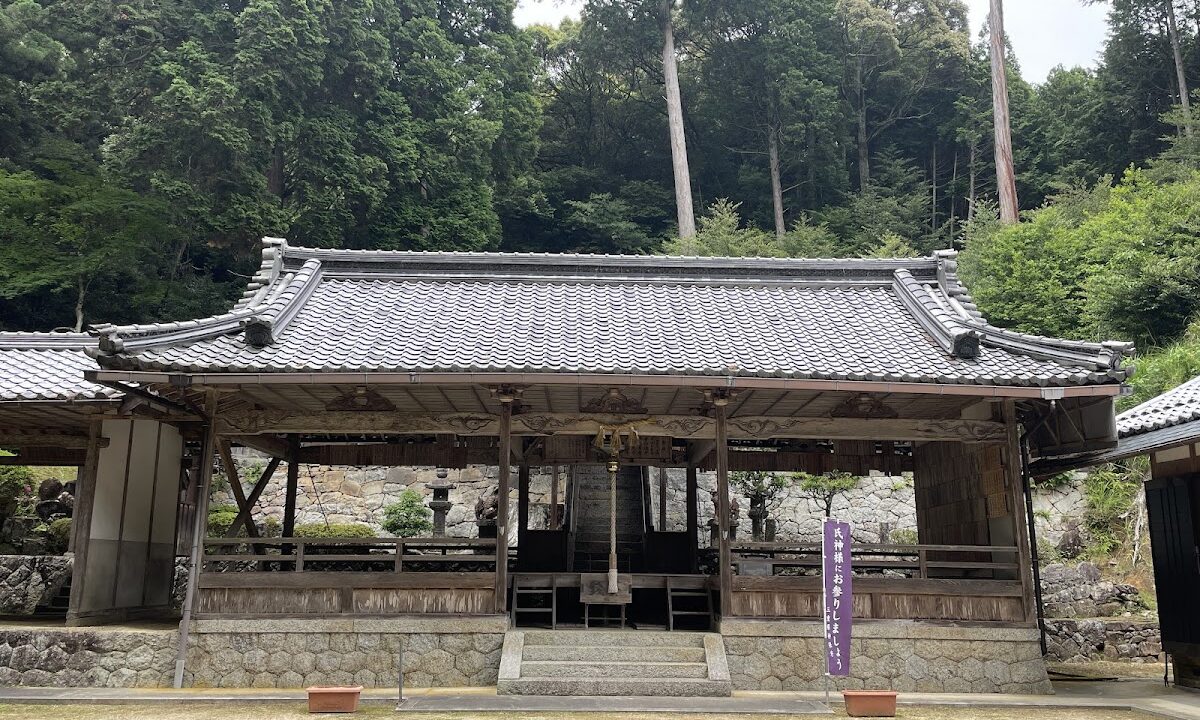
Sasa Shrine (Iga City, Mie Prefecture) Complete Guide | History, Deities, Access, and Benefits Explained in Detail
Sasa Shrine, located in Otowa, Iga City, Mie Prefecture, is a prestigious shrine boasting a history of over a thousand years as a shrine listed in the Engishiki (an ancient Japanese legal code). Along with Akuni Shrine, it is one of the earliest shrines in Iga Province to be granted a divine rank, and it remains a center of local faith, welcoming many worshippers. This article comprehensively introduces all the information you need to know before visiting Sasa Shrine, including its history, deities, benefits, and access methods.
Overview and Basic Information of Sasa Shrine
Sasa Shrine is an Engishiki-listed shrine (minor shrine) located in Otowa, Iga City, Mie Prefecture. It is situated approximately 5km north in a straight line from Iga-Ueno Station, and approximately 8km along the road. The shrine building, facing south and situated beside a mountain road, is surrounded by a tranquil natural environment, giving visitors a sacred atmosphere.
Basic Data
- Location: Otowa, Iga City, Mie Prefecture
- Shrine Rank: Engishiki-listed shrine (minor shrine), former village shrine
- Deity Enshrined: Sasatsuhiko-no-mikoto
- Annual Festival Day: Second Sunday of October
- Visiting Hours: Grounds are freely accessible (please check the shrine office’s operating hours)
History and Origins of Sasa Shrine
Founding and Ancient Beliefs
The exact founding date of Sasa Shrine is unclear, but its origins date back to ancient times. It is said that in ancient times, the shrine was not located at its current site, but rather on Sasagatake (also known as Shinodake, elevation 739m), located approximately 5km northwest on the border with Shiga Prefecture. Sasagatake has long been revered as a sacred mountain and was an object of mountain worship.
The name of the shrine, “Sasa,” is thought to be deeply connected to the name of Mount Sasagatake, as it is related to “Sasa” (bamboo grass). The shrine, located near the summit, was revered by local people as a mountain god and water god.
History of Divine Rank Granting
An important historical fact demonstrating the high status of Sasa Shrine is the record of its divine rank granting. According to the *Nihon Sandai Jitsuroku* (Chronicles of Three Reigns of Japan), in 850 AD, it was among the first shrines in Iga Province, along with Akuni Shrine, to be granted the rank of Junior Fifth Rank, Lower Grade. This is important evidence that the imperial court at the time recognized Sasa Shrine as a highly efficacious shrine.
Later, in 873 AD, it was promoted to Junior Fifth Rank, Upper Grade, further increasing the shrine’s status. In the Heian period, being granted a divine rank signified that the shrine was considered nationally important, indicating that Sasa Shrine held a special position in Iga Province.
Status as an Engishiki Shrine
The Engishiki Jinmyocho (a list of shrines compiled in 927 AD) lists “Sasa Shrine” as a Shikinaisha (shrine listed in the Engishiki) in Abai District, Iga Province. Engishiki shrines are historically significant shrines officially recognized by the imperial court, and 2,861 shrines nationwide (492 major shrines and 2,369 minor shrines) were selected. While Sasa Shrine is classified as a minor shrine, this is due to the size of the shrine buildings and the frequency of offerings at the time, and does not diminish its importance as a place of worship.
There were 20 Shikinaisha within Iga Province, but Sasa Shrine held a special status as one of the earliest shrines to be granted a divine rank.
Legend of Fire and Relocation
Regarding the relocation to its current location, a legend remains that a fire was the catalyst. During the Bunroku era (1592-1596), the shrine on Sasagatake Mountain was destroyed by fire, and it is believed that it was subsequently relocated to its current location in Otowa.
Besides the fire, another theory suggests that the relocation was also due to considerations for easier access for worshippers. It has been suggested that the relocation to a more accessible location was planned, as worship was difficult when the shrine was located near the mountaintop.
From Early Modern to Modern Periods
During the Edo period, it was revered as the local tutelary deity and received the respect of feudal lords and influential local figures. In the Meiji era’s reform of the shrine system, it was ranked as a village shrine and continued to play an important role in the local community.
Even after the establishment of the Association of Shinto Shrines after the war, it has maintained its traditions as a shrine listed in the Engishiki (an ancient Japanese legal code) and continues to serve as a spiritual pillar of the region.
Deity and Divine Virtues
Sasatsuhiko-no-Mikoto
The deity enshrined at Sasa Shrine is Sasatsuhiko-no-Mikoto. While there are few detailed descriptions of this deity in ancient texts, and much about it remains shrouded in mystery, it is believed to have strong characteristics as a guardian deity of the region and a mountain god.
The name “Tsuhiko” is a suffix used in ancient times to indicate a male deity, and it is presumed that this deity is a local or mountain god associated with the place name “Sasa” and Mount Sasagatake. As a deity linked to mountain worship, it has played a role in ensuring abundant harvests, family safety, and the peace and security of the region.
Benefits and Faith
The following are some of the benefits that have been worshipped at Sasa Shrine since ancient times:
- Abundant Harvest and Protection of Agriculture: The mountain god has been revered as the god who controls water sources and brings the blessing of water essential for agriculture.
- Family Safety: As the local guardian deity, it protects the health and safety of families.
- Protection from Misfortune and Disaster: Due to its history of relocation after a fire, it is believed to have the power to ward off disasters.
- Regional Peace and Tranquility: Since ancient times, it has been a place where people prayed for the peace and prosperity of the community as the guardian deity of the entire region.
Highlights of the Shrine Grounds
Shrine Buildings and Grounds Layout
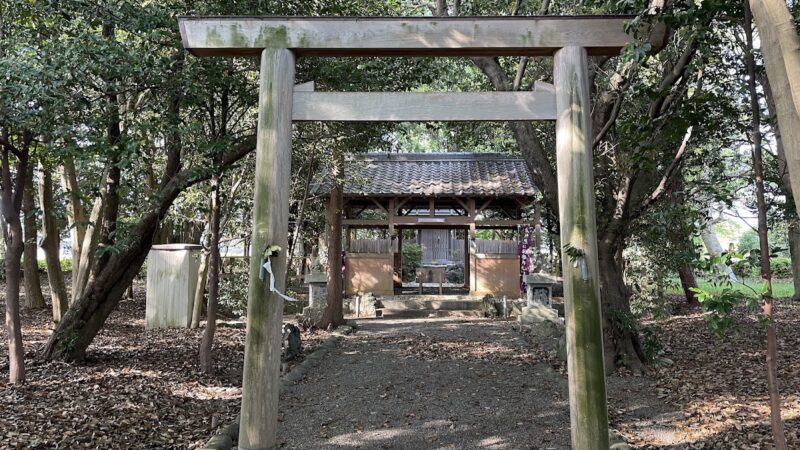
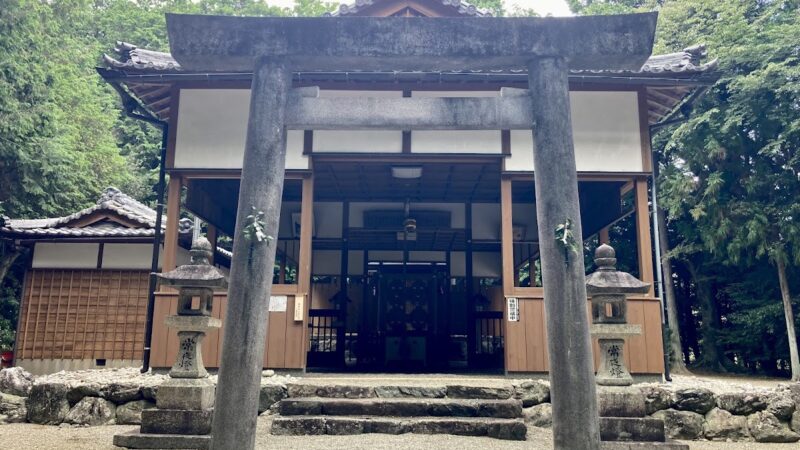
The grounds of Sasa Shrine are located facing south along a mountain path. Passing through the torii gate, a tranquil path leads to the main shrine.
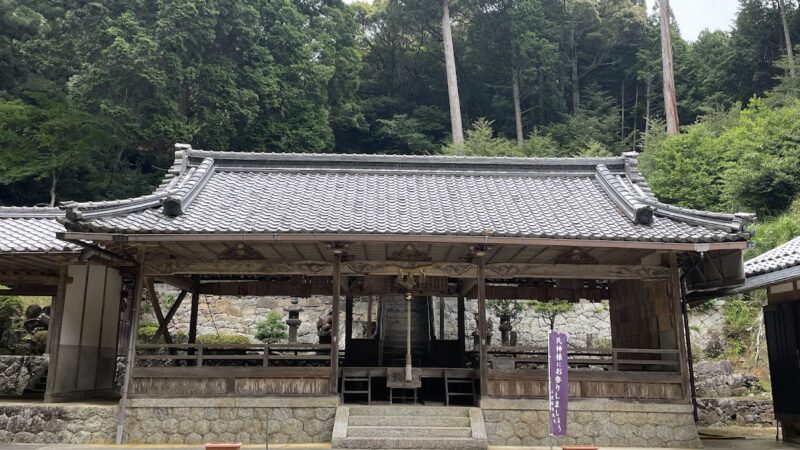
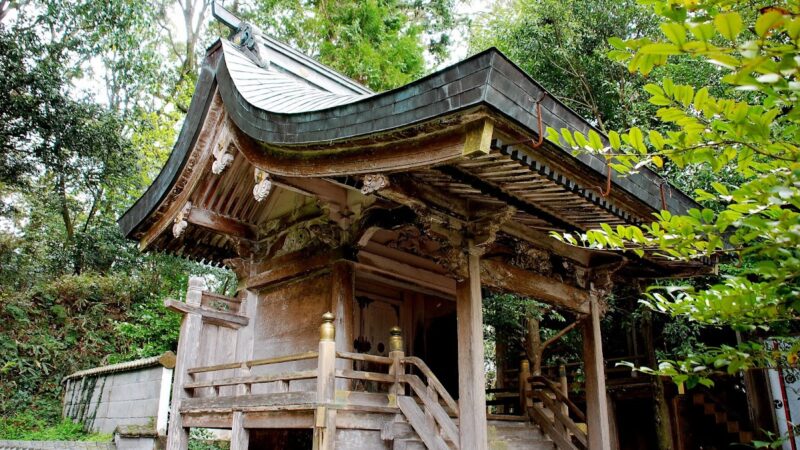
The main shrine is built in a traditional shrine architectural style, possessing a dignified presence that reflects its long history. Surrounded by abundant nature, it is an ideal space to escape the hustle and bustle of the city and find peace of mind.
Natural Environment and Seasonal Scenery
One of the charms of Sasa Shrine is its beautiful natural scenery throughout the seasons. In spring, fresh greenery colors the shrine grounds, and in summer, it is enveloped in deep green. In autumn, the autumn leaves are beautiful, and in winter, you can enjoy the tranquil snowscape.
Located in a mountainous area, the air is pure and a sacred atmosphere permeates the area, giving it aspects of a power spot.
Shrines Enshrined at Sasa Shrine
Due to the shrine consolidation policy of the Meiji era, several small shrines in the surrounding area were merged into Sasa Shrine. As a result, Sasa Shrine became a central shrine integrating multiple local faiths.
The merged shrines included local small shrines and tutelary shrines, and the beliefs and traditions of each shrine have been passed down to Sasa Shrine. Therefore, Sasa Shrine is not just a place of worship for a single deity, but a comprehensive place of worship for the gods of the entire region.
Access and Transportation Information
Access by Public Transportation
Sasa Shrine is located in a mountainous area, making access by public transportation somewhat inconvenient.
- Nearest Station: Iga Railway “Iga-Ueno Station”
- Distance from Station: Approximately 5km in a straight line, approximately 8km by road
- Taxi: Approximately 15-20 minutes by taxi from Iga-Ueno Station
- Bus Route: There may be bus routes to Otowa, but the number of services is limited, so prior confirmation is necessary.
Access by Car
Visiting by private car is the most convenient option.
- Meihan Expressway: Approximately 15 minutes from “Ueno IC”
- National Route 163: From Iga-Ueno city center towards Otowa
- Parking: There is parking space for visitors on the shrine grounds (spaces are limited, so please be aware of congestion).
If using a car navigation system, searching for “Sasa Shrine, Iga City, Otowa” will be helpful. Please drive carefully as the route involves mountain roads.
Manners and Etiquette for Visiting the Shrine
Basic Etiquette for Visiting the Shrine
When visiting Sasa Shrine, please observe the following basic etiquette.
- Bow at the Torii Gate: Bow before passing through the torii gate to show respect for entering the sacred area.
- Purification at the Water Basin: Purify your hands and mouth at the water basin (hold the ladle in your right hand and wash your left hand → switch to your left hand and wash your right hand → switch back to your right hand, receive water in your left hand and rinse your mouth → stand the ladle upright and wash the handle).
- Walking the Path: The center of the path is considered the path of the gods, so walk along the edges.
- Worship at the Main Hall: Two bows, two claps, one bow (bow deeply twice → clap twice → silently recite your wish → bow deeply once).
Clothing and Items to Bring When Visiting
There are no specific dress code requirements, but it is desirable to wear clothing that reflects the sacred nature of the place. Since it is located in a mountainous area, prepare comfortable shoes and clothing appropriate for the season.
Nearby Tourist Attractions
Major Tourist Attractions in Iga City
When visiting Sasa Shrine, be sure to explore other tourist spots in Iga City.
- Iga Ueno Castle: A famous castle built by Todo Takatora, with magnificent high stone walls.
- Ninja Museum: A facility where you can learn about the history and culture of Iga-ryu ninjas.
- Akuni Shrine: A Shikinaisha (shrine listed in the Engishiki) that received divine rank at the same time as Sasa Shrine.
- Ueno Tenjin Shrine: A shrine dedicated to Sugawara no Michizane, famous for its autumn grand festival, the “Ueno Tenjin Festival.”
Nature Walking Spots
- Sasagatake: The former site of Sasa Shrine, popular as a hiking course.
- Aoyama Plateau: A plateau lined with wind turbines for wind power generation, offering magnificent views.
Annual Festivals and Events
Various festivals and events are held at Sasa Shrine throughout the year.
Annual Festival (Second Sunday of October)
The most important festival, the annual festival, is held every year on the second Sunday of October. Local parishioners and devotees gather to pray for a bountiful harvest and peace in the community. Following the Shinto ritual, a celebratory feast (naorai) is held, providing an opportunity to deepen the bonds of the local community.
Other Annual Events
- New Year’s Day Festival: Prayers for happiness in the new year
- Spring Festival: Celebration of the arrival of spring and prayers for safety in agricultural work
- Summer Purification Ceremony: A Shinto ritual to purify and cleanse away the impurities accumulated over the past six months
- Autumn Festival: A festival of gratitude for the harvest
The Position of Sasa Shrine in Iga Province
There are 20 shrines listed in the Engishiki Jinmyocho (a list of shrines compiled in the Heian period) in Iga Province. Among them, Sasa Shrine holds a special position as one of the earliest shrines to be granted divine rank, alongside Akuni Shrine.
Major Shikinaisha Shrines of Iga Province
- Akuni Shrine: The highest-ranking shrine, considered the Ichinomiya (first-ranked shrine) of Iga Province.
- Sasa Shrine: The shrine introduced in this article.
- Ueki Shrine: A Shikinaisha shrine located in Iga City.
- Urufushine Shrine: A Shikinaisha shrine located in Nabari City.
These Shikinaisha shrines were centers of faith in ancient Iga Province and are important legacies that convey the history and culture of the region to the present day.
Cultural Assets and Historical Value of Sasa Shrine
Sasa Shrine possesses cultural assets and historical materials accumulated over its long history. Its treasures and ancient documents are valuable historical materials for the study of the history of the Iga region.
Academic Value as an Engishiki Shrine
Engishiki shrines are extremely important in the study of ancient Japanese history. In the case of Sasa Shrine, the record of the conferment of divine rank is clearly stated in the *Nihon Sandai Jitsuroku* (True Records of Three Reigns of Japan), making it a valuable example for understanding the religious situation in Iga Province in the 9th century.
Visitor Voices and Reviews
Visitors to Sasa Shrine have shared the following impressions:
- “A shrine enveloped in a quiet and sacred atmosphere. I felt as if my soul was being cleansed.”
- “It was deeply moving to be able to visit a historical shrine listed in the *Engishiki* (ancient Japanese legal code).”
- “Located in a rich natural environment, I was able to forget the hustle and bustle of the city and worship at my leisure.”
- “Access is somewhat inconvenient, but that allows for a quiet and peaceful worship experience.”
Sasa Shrine and the Local Community
Sasa Shrine is not merely a tourist spot; it plays an important role as a spiritual pillar of the local community. Through annual festivals and events, the bonds among local residents are deepened, and traditional culture is passed down to the next generation.
Community activities centered around the shrine, such as maintenance and management activities by the parishioners’ organization and traditional education for local children, are still actively carried out.
Visiting Other Shikinaisha Shrines in Mie Prefecture
Mie Prefecture boasts numerous historical shrines, most notably Ise Grand Shrine. When visiting Sasa Shrine, we recommend also visiting other Shikinaisha shrines within the prefecture.
Model Course for Shrine Pilgrimage in the Iga Region
- Akuni Shrine: The Ichinomiya (first-ranked shrine) of Iga Province, an ancient shrine comparable to Sasa Shrine.
- Sasa Shrine: The shrine introduced in this article.
- Ueki Shrine: A Shikinaisha shrine within Iga City.
- Ueno Tenjin Shrine: A shrine dedicated to the god of learning.
A pilgrimage to collect Goshuin (shrine stamps) by visiting these shrines in one day is also popular.
Summary: The Significance of Visiting Sasa Shrine
Sasa Shrine, as a Shikinaisha shrine with over a thousand years of history, has played a central role in the faith and culture of the Iga region. This shrine boasts a multi-layered history, including a legend of its relocation from Sasagatake Mountain, the granting of divine rank during the Heian period, and deep ties to the local community.
Even today, it remains a precious place where one can find peace of mind amidst tranquil natural surroundings and reflect on ancient beliefs. When visiting Mie Prefecture, why not consider visiting not only Ise Grand Shrine but also other ancient, community-based shrines like Sasa Shrine?
For history enthusiasts, shrine-visiting enthusiasts, power spot seekers, and anyone seeking a peaceful environment to calm their mind, Sasa Shrine is well worth a visit. Experience the spirit of ancient Japanese faith at this ancient shrine nestled quietly in the mountains of Iga.