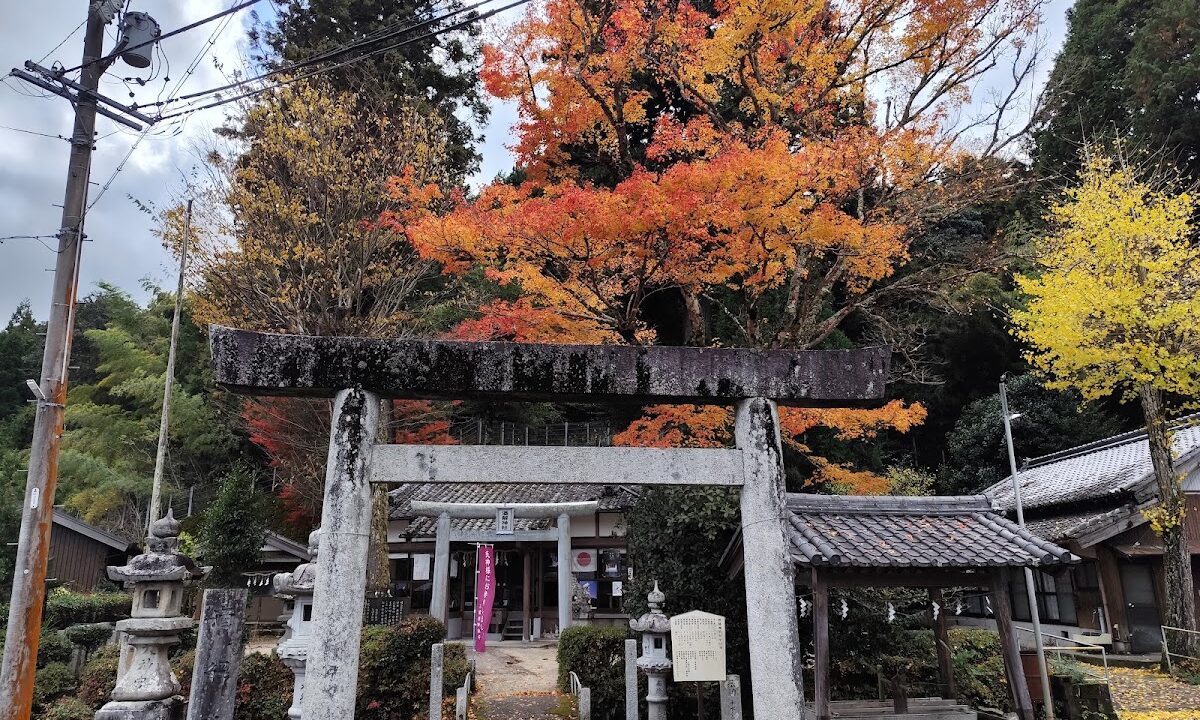
Sakatoke Shrine (Iga City, Mie Prefecture) Complete Guide: History, Deities, and Access Information
Sakatoke Shrine, nestled quietly in the mountainous region of Iga City, Mie Prefecture, is a venerable shrine that has long been revered as an Engishiki-listed shrine. Surrounded by the deep green of the Nunobiki Mountains, this shrine is a valuable presence that conveys the history and culture of the region, attracting attention from many worshippers and history researchers.
This article provides a detailed explanation of Sakatoke Shrine, located in Sakashita, Iga City, Mie Prefecture, including its historical background, deities, connection to the local community, and access methods.
Basic Information on Sakatoke Shrine
Official Name and Location
Sakatoke Shrine is located in Sakashita, Iga City, Mie Prefecture (formerly Oyamada Village, Ayama District). It is also known as “Sakage Shrine” and is beloved by the local people. It is situated in a mountainous area at an altitude of approximately 370 meters, in a quiet environment near the source of the Kizu River.
Basic Data:
- Location: Sakashita, Iga City, Mie Prefecture
- Former Place Name: Oyamada Village, Ayama District
- Elevation: Approximately 370 meters
- Religious Organization: Association of Shinto Shrines
- Shrine Rank: Shikinaisha (Listed in the Engishiki Jinmyocho)
Origin of the Place Name “Sakashita”
The name of the settlement, “Sakashita,” is thought to originate from the worship of Sakatoke-no-kami. The prevailing theory is that “Sakatoke” transformed into “Sakage” and then “Sakashita,” becoming the current place name “Sakashita.” This close connection between the shrine name and the place name speaks to the historical importance of Sakatoke Shrine in this region.
Deities and Divine Virtues
Main Deity: Konohanasakuya-hime no Mikoto
The main deity of Sakatoke Shrine is Konohanasakuya-hime no Mikoto. Konohanasakuya-hime is a goddess in Japanese mythology known as a symbol of beauty and purity, and is also worshipped as the goddess of Mount Fuji.
Konohanasakuya-hime is the consort of Ninigi-no-Mikoto, who appears in the myth of the descent of the heavenly grandchild, and is believed to possess the following divine virtues:
- Safe childbirth and fertility: From the legend of her safely giving birth to three princes amidst flames.
- Matchmaking: From her character as a beautiful princess goddess.
- Protection from fire: Derived from the myth of giving birth in flames.
- Protection from sake brewing: Also related to the shrine’s name, “Sakatoke”.
Meaning of “Sakatoke”
There are several interpretations of the shrine’s name, “Sakatoke”. One theory suggests it indicates her character as a goddess of sake brewing and sake, and is thought to be related to Konohanasakuya-hime’s aspect as a goddess of grain and fertility.
Furthermore, “Toke” (解) also means “to release” or “to purify,” and there is an interpretation that it is related to the purification ritual using sake.
Enshrined Deities
Besides Konohanasakuya-hime no Mikoto, it is said that several other deities are enshrined, but detailed records are limited. According to local tradition, the shrine also has characteristics of a mountain god and a water god, and has attracted worship related to agriculture and water for daily life.
History of Sakatoke Shrine
Founding and Ancient Records
The founding date of Sakatoke Shrine is not clear, but records confirm that it already existed from the Nara period to the Heian period.
Listing in the Engishiki Jinmyocho
Sakatoke Shrine is listed in the Engishiki Jinmyocho, compiled in the mid-Heian period (927), as a Shikinaisha (shrine listed in the Engishiki) in Abai District, Iga Province. Shrines listed in the Engishiki Jinmyocho (a list of shrines compiled in the Heian period) are called “Shikinaisha,” indicating that they were high-ranking shrines that received special reverence from the imperial court.
The Engishiki records these shrines as receiving offerings (heihaku) at important rituals such as the Tsukinami-no-matsuri (monthly festival) and Niiname-sai (harvest festival), indicating their significant position within the national religious system in ancient times.
Changes in the Middle Ages
In the Middle Ages, the social structure of the Iga region changed dramatically with the rise of samurai power. Sakatoki Shrine, while affected by the times, continued to maintain its worship as the local tutelary deity.
During the Sengoku period (Warring States period), Iga Province became a battleground, including Oda Nobunaga’s invasion of Iga, but Sakatoki Shrine, located in a mountainous area, is thought to have been relatively spared from the ravages of war.
Developments in the Early Modern and Modern Periods
During the Edo period, under the rule of the Todo clan, it was revered as the local tutelary deity. Records and inscriptions from this period remain, confirming the construction and repair of the shrine buildings.
With the Meiji-era separation of Shinto and Buddhism, the previously syncretic form of Shinto-Buddhist belief was reorganized and incorporated into the modern shrine system. Under the Meiji-era shrine ranking system, it was ranked as a village shrine, maintaining its status as a central shrine in the region.
Modern Sakatoki Shrine
Currently, Sakatoki Shrine belongs to the Association of Shinto Shrines and continues to attract worshippers as the local tutelary deity. Despite being located in a depopulated mountainous area, it is maintained and managed by local residents, and Shinto rituals such as the annual festival are still being passed down.
Shrine Buildings and Grounds
Shrine Architecture
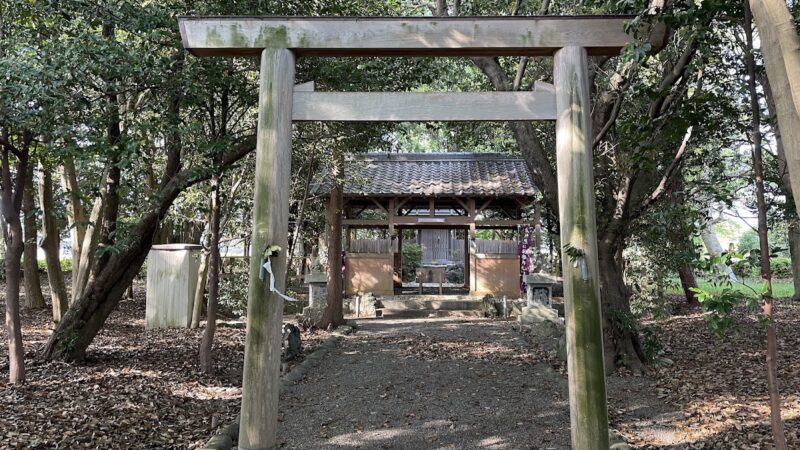
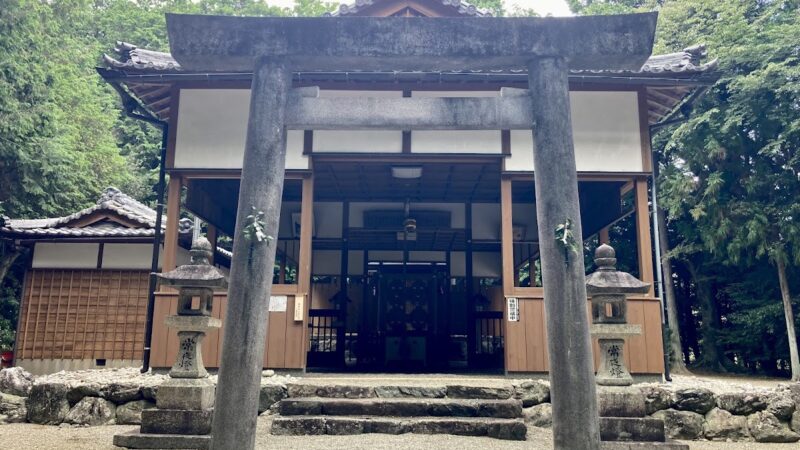
The shrine buildings of Sakatoki Shrine are simple yet dignified, typical of shrines in mountainous areas. The main hall is protected by a protective structure, preserving the traditional shrine architectural style of the Iga region.
The worship hall is located in front of the main hall, serving as a place for worshippers to offer prayers. The shrine grounds, utilizing the mountain slope, are a design that skillfully takes advantage of the natural terrain.
Natural Environment of the Shrine Grounds
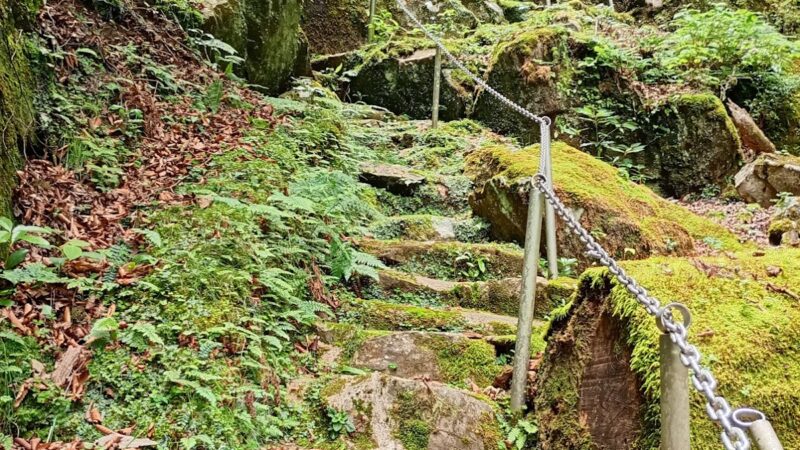
Surrounded by the deep forests of the Nunobiki Mountains, the shrine grounds offer the enjoyment of natural beauty throughout the seasons. Particularly beautiful scenery unfolds during the following seasons:
- Spring: Fresh greenery and mountain cherry blossoms adorn the grounds.
- Summer: Deep greenery and cool shade soothe visitors.
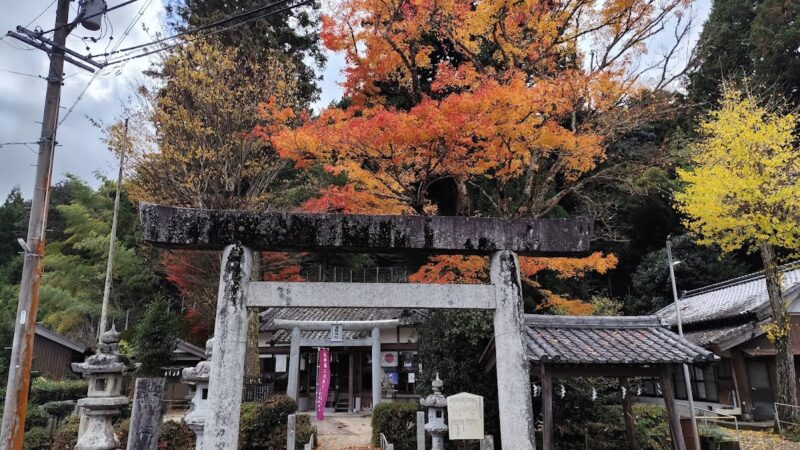
- Autumn: Autumn leaves color the mountains, creating a tranquil atmosphere.
- Winter: Snow-covered grounds are enveloped in a sacred atmosphere.
Located in a mountainous area at an altitude of 370 meters, the shrine is close to the headwaters of the Kizu River system, blessed with clean water and air.
Subsidiary Shrines
It is said that several subsidiary shrines are enshrined within the grounds of Sakatoke Shrine. These reflect local beliefs and history, and are revered alongside the main deity as guardian deities of the region.
Annual Events and Festivals
Annual Festival
At Sakatoke Shrine, various Shinto rituals are performed throughout the year. Particularly important is the annual festival (reisai), where local people gather to express gratitude to the gods and pray for a bountiful harvest and peace in the community.
Connection with the Community
In a mountainous area experiencing depopulation, the festivals of Sakatoke Shrine play a vital role in maintaining the local community. The maintenance and management activities of the shrine by parishioners and local residents foster bonds across generations.
Sakatoke Shrine and Beliefs in the Iga Region
Shikinaisha Shrines of Iga Province
Several Shikinaisha shrines listed in the Engishiki Jinmyocho (a list of shrines compiled in the Heian period) exist in Iga Province, and Sakatoke Shrine is one of them. The Iga region has had deep ties with the imperial court since ancient times, and the existence of Shikinaisha shrines demonstrates its historical importance.
Connection with Mountain Worship
Sakatoke Shrine, situated in the Nunobiki Mountains, is thought to have deep connections with mountain worship. The deities of the mountains and water were particularly important objects of worship for people engaged in agriculture.
God of Water Sources
Due to its location near the source of the Kizu River, it also attracted worshippers as a god of water. Clean water is essential for life, and Sakatoke Shrine has been cherished by the local people as a god protecting the water source.
Relationship with Shrines of the Same Name
Tamadeyori Matsurikitaru Sakatoke Shrine in Kyoto
There is also a shrine named “Sakatoke Shrine” on Mt. Tenno in Oyamazaki-cho, Kyoto Prefecture. Its official name is “Tamadeyori Matsurikitaru Sakatoke Shrine,” and it is also known as a historically significant shrine.
The Sakatoke Shrine on Mt. Tenno enshrines Susanoo-no-Mikoto as its main deity, and because it is located on Mt. Tenno, famous for the Battle of Yamazaki, it is a popular spot for history buffs.
Commonality of Names
The existence of shrines with the same name in two geographically distant areas—Iga City, Mie Prefecture, and Oyamazaki Town, Kyoto Prefecture—is an intriguing phenomenon. The shared, unique deity name “Saketoki” suggests the possibility of a common religious transmission or a shared ritual system related to sake brewing in ancient times.
However, the two shrines differ in their enshrined deities and histories, and a direct relationship is not clear. They should be understood as separate shrines with their own unique histories and beliefs.
Access and Visiting Information
Detailed Location
Address: Sakashita, Iga City, Mie Prefecture
Saketoki Shrine is located in the mountainous area of the Nunobiki Mountains in the southeastern part of Iga City. Due to its remote location near the source of the Kizu River, access by public transportation is difficult.
Access by Car
The most convenient way to visit Sakatoke Shrine is by private car:
- From the Meihan Expressway:
- Exit the Meihan Expressway at either the “Ouchi IC” or “Ueno IC”
- Take National Route 368 towards Iga city center
- Take the prefectural road to Sakashita area (approx. 40-50 minutes)
- From Iga city center:
- Take National Route 368 southeast
- Take the Oyamada area to Sakashita (approx. 30 minutes)
Precautions
- Mountain roads: Driving requires caution as the roads are narrow mountain roads.
- Navigation settings: Search for “Iga City Sakashita” and also check local signs.
- Winter visits: Winter tires are recommended due to the possibility of snow and ice.
- Mobile phone reception: Signal strength may be unstable in mountainous areas.
Guidelines for Visiting the Shrine
Saketoki Shrine is a shrine protected as the local guardian deity. Please keep the following points in mind when visiting the shrine:
- Maintain cleanliness of the shrine grounds and always take your trash with you.
- Do not trespass on private property or farmland.
- Respect the quiet environment and avoid making noise.
- Take photographs with moderation.
- Be considerate of the lives of local residents.
Nearby Attractions
The area around Sakatoke Shrine is dotted with tourist spots unique to the Iga region:
- Iga Ueno Castle: A famous castle built by Todo Takatora (approximately 40 minutes by car)
- Iga-ryu Ninja Museum: A facility where you can learn about the history and culture of ninjas.
- Aoyama Plateau: A scenic spot lined with wind turbines for wind power generation.
- Akame Forty-Eight Waterfalls: One of the leading waterfall spots in the Kansai region (approximately 50 minutes by car)
Cultural Value of Sakatoke Shrine
Importance as a Shikinaisha Shrine
The fact that Sakatoke Shrine is listed in the Engishiki Jinmyocho (a list of shrines compiled in the Heian period) is proof that it has been considered nationally important since ancient times. The fact that it was recognized as a shrine receiving offerings from the imperial court under the Ritsuryo system of the Heian period demonstrates its high status.
Resources for Local History Research
The existence of Sakatoki Shrine provides valuable clues for studying the ancient history of the Iga region. The shrine’s ridgepole inscriptions, records, and local traditions are important sources of information in local history research where documentary sources are limited.
Contribution to Place Name Research
The theory that the place name “Sakashita” originates from “Sakatoki-no-kami” is a good example of the relationship between shrines and place names. Such research on place names is of great significance in understanding the formation process of Japanese regional culture.
Challenges of Preservation and Succession
Depopulation and Shrine Maintenance
In the mountainous areas of Iga City, population decline and aging are progressing, making the maintenance and management of shrines a major challenge. The decrease in parishioners is making it increasingly difficult to continue festivals and repair shrine buildings.
The Need for Cultural Property Protection
To pass on the historical and cultural value of Sakatoke Shrine to future generations, appropriate protection and documentation are necessary. A multifaceted approach is required, including the maintenance of buildings, the preservation of ancient documents, and the documentation of oral traditions.
Collaboration with Regional Development
It is conceivable to create new value by utilizing the shrine as a regional resource and linking it with tourism and education. However, careful consideration is needed to avoid compromising the sacredness of the place of worship.
Summary
Sakatoke Shrine, located in Sakashita, Iga City, Mie Prefecture, is a venerable shrine with a long history dating back to ancient times, listed in the Engishiki (ancient Japanese legal code). Its main deity is Konohanasakuya-hime no Mikoto, and it has attracted local devotion as the god of mountains and water.
Located in a mountainous area of the Nunobiki Mountains at an altitude of approximately 370 meters, it is close to the source of the Kizu River and blessed with a clean natural environment. The Sakashita Shrine is deeply connected to the origin of its place name, and its history is characterized by the close relationship between the shrine and the surrounding community.
Despite facing the modern challenge of depopulation, the Sakashita Shrine’s faith and culture are preserved through the efforts of local residents. Its tranquil grounds allow visitors to feel the breath of ancient faith.
When visiting the Iga region, why not stop by this historic shrine and experience the profound depth of faith and culture rooted in rural Japan? Located deep in the mountains, it quietly holds the remnants of over a thousand years of human prayer and activity.