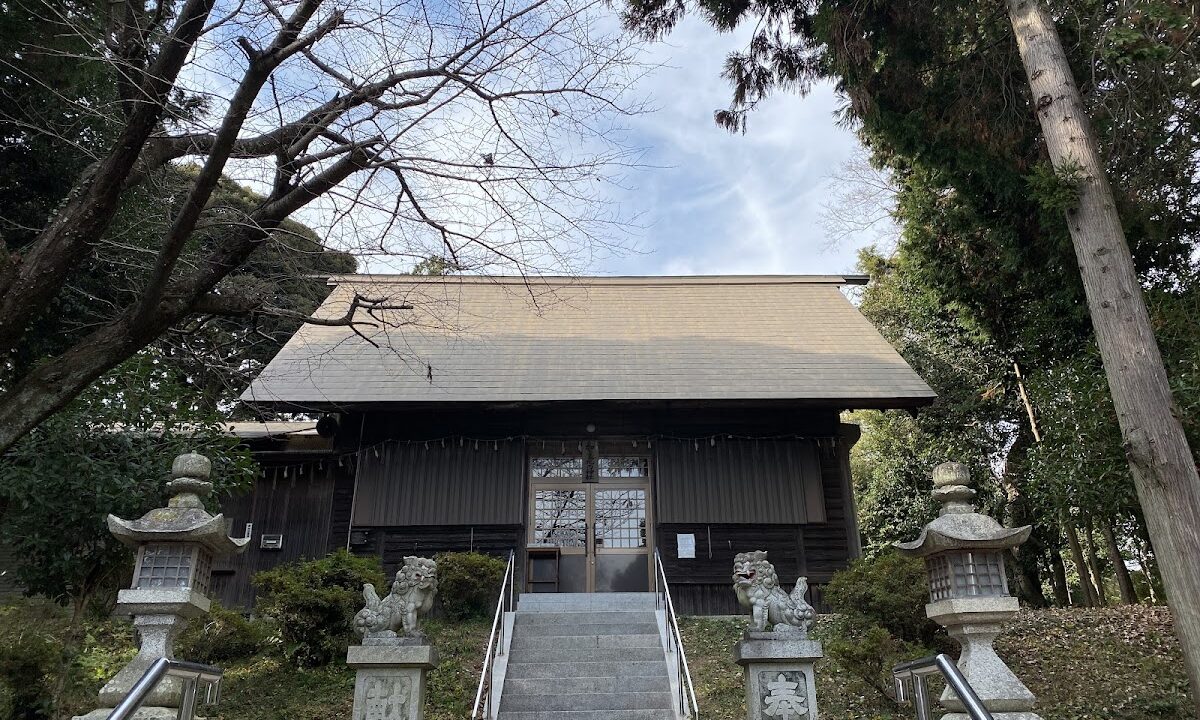
Karahino Shrine (Tsu City, Mie Prefecture) Complete Guide | History and Access Information for the Original Ise Shrine, Katahi-no-miya
Karahino Shrine, located in Fujikata-Mori, Tsu City, Mie Prefecture, is one of the important relocation sites when Princess Yamato-hime carried Amaterasu Omikami on her pilgrimage. Known as a site of the original Ise Shrine tradition, this shrine is a historically significant shrine listed in the Engishiki Jinmyocho (a list of shrines compiled in the Heian period) and has long been revered as the local tutelary deity.
This article comprehensively introduces all the information you need to know before visiting Karahino Shrine, including its detailed history, enshrined deities, highlights within the grounds, access methods, and information on Goshuin (shrine stamps).
What is Karahino Shrine?
Karahino Shrine is a shrine listed in the Engishiki Jinmyocho, located in Ano District, Ise Province (present-day Tsu City, Mie Prefecture). It is listed as “Karahino Shrine” in the Engishiki Jinmyocho, indicating that it has played an important role in this region since ancient times.
Its most distinctive feature is that it is traditionally considered one of the “original Ise” sites, the site of the palace where Princess Yamato-hime no Mikoto carried Amaterasu Omikami on her pilgrimage. During the reign of Emperor Suinin, when Princess Yamato-hime no Mikoto traveled from Yamato Province to Ise Province in search of a suitable place to enshrine Amaterasu Omikami, it is said that she established “Katahinomiya” or “Katahinomiya” at this location and stayed there for four years.
Currently, the shrine enshrines Mikuratana-no-kami and Izunome-no-kami as its main deities, and also enshrines 17 other deities, including Amaterasu Omikami.
History of Karahino Shrine
The Era of the Original Ise “Katahinomiya”
The history of Karahino Shrine dates back to the reign of Emperor Suinin. When Princess Yamato-hime traveled from Yamato Province to various locations in search of a permanent resting place for Amaterasu Omikami, she built a palace in this Fujikata area.
This palace was called “Ichishi Fujikata Katahinomiya” or “Asaka Fujikata Katahinomiya.” The name “Katahi” is said to originate from the fact that, due to the inconvenient water supply in this area, water was transported using buckets and pipes.
After staying in this area for four years, Princess Yamato-hime moved to another location in search of a more ideal resting place. Ultimately, Amaterasu Omikami would be enshrined at the site of the present-day Inner Shrine of Ise Grand Shrine, but these four years at Katahinomiya are recorded as an important period in her pilgrimage to the original Ise Shrine.
Establishment as a Shikinaisha Shrine
After Amaterasu Omikami was moved elsewhere, the shrine site was dedicated to Mikura Itakage-no-kami and Izunome-no-kami, and came to be known as “Karahino Shrine.” The Engishiki Jinmyocho (compiled in 927) lists it as “Karahino Shrine, Ano District, Ise Province,” indicating that it was already recognized as a Shikinaisha shrine during the Heian period.
A Shikinaisha shrine is one listed in the Engishiki Jinmyocho, signifying special reverence from the imperial court. While Karahino Shrine is classified as a minor shrine, its importance as a site associated with the legend of Moto-Ise (original Ise Shrine) has attracted faith beyond the local area.
Changes in the Modern Era
Throughout the Edo period, Karahino Shrine was revered as the local tutelary deity, but in the modern era, it faced a major challenge. In 1950 (Showa 25), the shrine buildings were destroyed by fire caused by sparks from a nearby fire, resulting in the loss of many structures.
Subsequently, reconstruction progressed over many years, and in 1996, a special opportunity arose. The outer sanctuary of the Inner Shrine, which had been dismantled during the Shikinen Sengu (periodic rebuilding) of Ise Grand Shrine, was received and used to construct the main sanctuary.
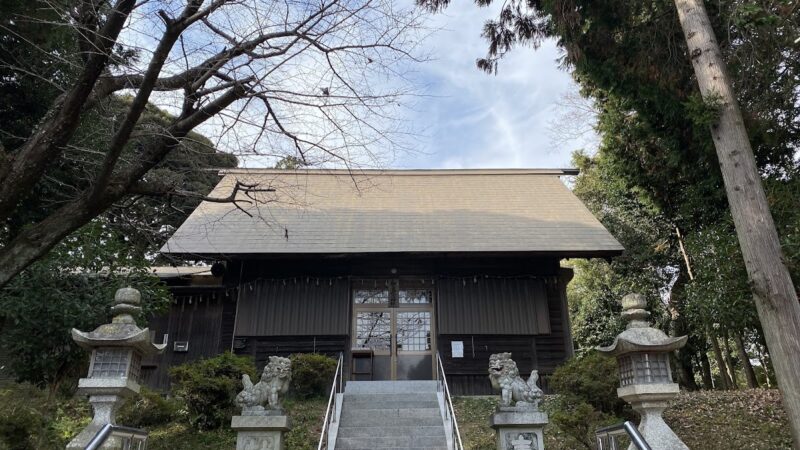
This resulted in the reconstruction of a dignified shrine building befitting the Moto-Ise site, which has deep ties to Ise Grand Shrine. The current main sanctuary is a valuable structure that inherits the architectural style of Ise Grand Shrine and attracts the attention of worshippers.
Deities and Divine Virtues
Main Deity
Mikuratanakami
Mikuratanakami is known as the deity who presides over shinsen (offerings to the gods). “Mikura” means sacred storehouse, and “Tanakami” means shelf; this deity is responsible for storing and managing the food offered to the gods. It is believed to bestow blessings such as abundant harvests, food safety, and business prosperity.
Izunome-no-kami
Izunome-no-kami is worshipped as the water goddess who presides over wells and springs. “Izu” means pure water, and she is a goddess who protects water, the source of life. It is thought that there is a deep meaning in her enshrinement in the Katahi-no-miya area, where water resources were inconvenient. She bestows blessings such as protection from water-related disasters, protection of agriculture, and peace and tranquility in daily life.
Enshrined Deities
In addition to the main deity, the following deities are enshrined at Karahino Shrine:
- Amaterasu Omikami: As this is a traditional site of Moto-Ise, Amaterasu Omikami, who was once enshrined here, is also enshrined here.
- 14 other deities
In total, 17 deities are enshrined, making it a shrine that brings together various local beliefs.
Divine Virtues
At Karahino Shrine, the following divine virtues are believed to be present:
- Abundant harvests and agricultural prosperity
- Business success and venture success
- Protection from water-related disasters and water safety
- Family safety and protection of the community
- Good fortune and prosperity
Due to its sacred location as a former Ise Shrine, many worshippers visit the shrine to pray for the fulfillment of their wishes and for blessings during life’s turning points.
Highlights of the Shrine Grounds
Main Hall
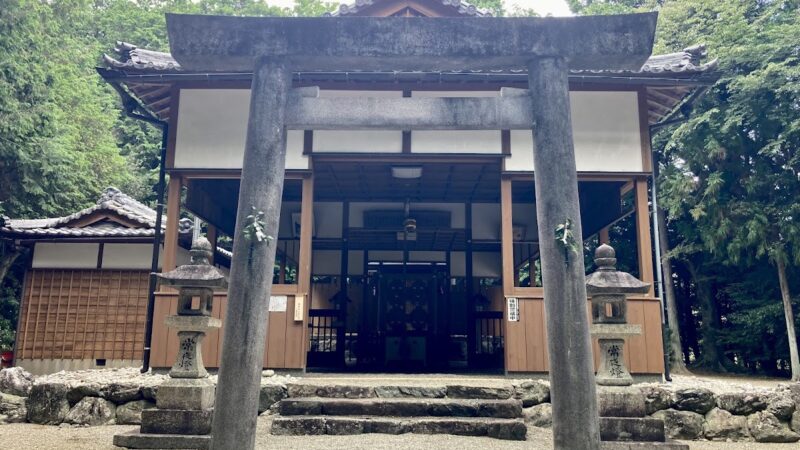
The main hall, constructed in 1996 using the outer sanctuary of the Inner Shrine of Ise Grand Shrine, is the greatest highlight of Karahino Shrine. The Shinto-style building, inheriting the architectural style of Ise Grand Shrine, is simple yet dignified.
It is a valuable structure that evokes a sense of historical connection, standing in the former Ise site with architecture associated with Ise Grand Shrine.
Torii Gate and Approach
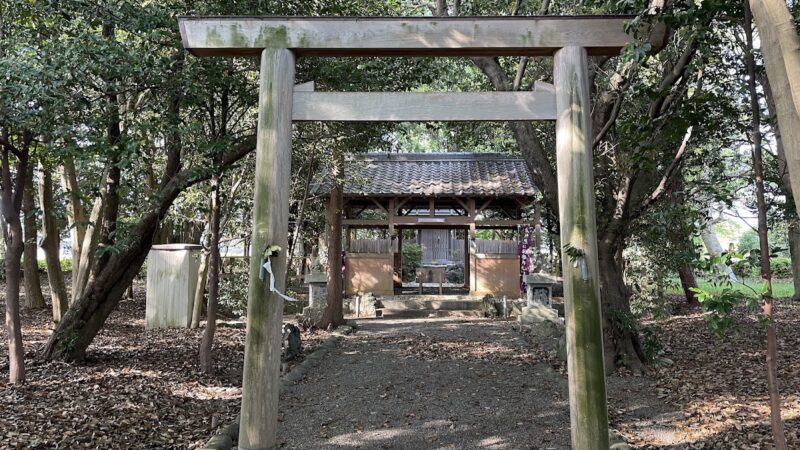
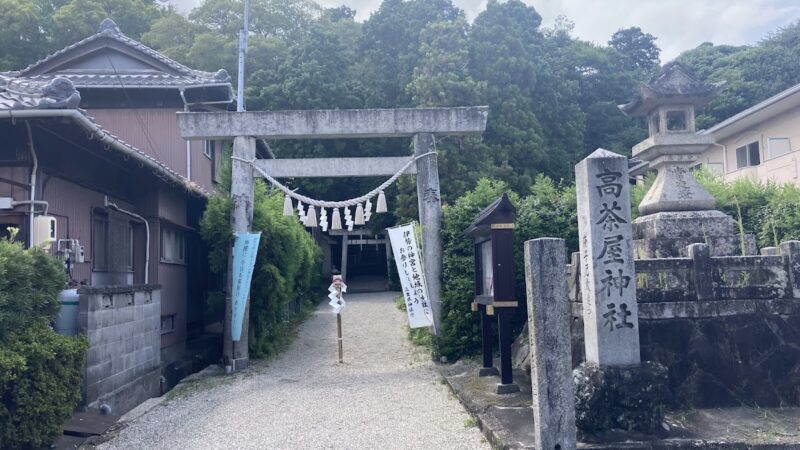
The torii gate, marking the entrance to the shrine grounds, stands solemnly amidst a quiet residential area. The path leading to the torii is narrow and impassable by car, so caution is advised when visiting.
Although the approach is short, stepping onto it allows you to feel the atmosphere of a sacred space, far removed from the hustle and bustle of everyday life.
Shrine Grove and Natural Environment
The shrine grounds are surrounded by lush greenery, with ancient trees telling the story of the shrine’s long history. The environment, where you can feel the changing seasons, provides peace of mind to visitors.
Especially during the seasons of fresh greenery and autumn leaves, the trees on the grounds display beautiful colors, attracting many visitors who come to take photographs.
Detailed Information on Karahino Shrine
Basic Information
- Official Name: Shikinaisha Karahino Shrine
- Reading: Karahino Jinja
- Location: 335 Fujikata Morime, Tsu City, Mie Prefecture
- Deities Enshrined: Mikura Itakage-no-kami, Izunome-no-kami, Amaterasu Omikami, and 17 other deities
- Shrine Rank: Shikinaisha (Minor Shrine), Former Village Shrine
- Annual Festival Day: Local festivals are held throughout the year
Access
Access by Train
- Approximately 15 minutes on foot from Minamigaoka Station on the Kintetsu Nagoya Line
- Approximately 15 minutes by taxi from Tsu Station on the JR Kisei Main Line and Kintetsu Nagoya Line
Minamigaoka Station is the nearest station, but the route from the station to the shrine is through a residential area. Since there are few signs, it is recommended to check the route in advance using a map app.
Access by Car
- Approximately 20 minutes from the Tsu Interchange on the Ise Expressway
- Accessible via a prefectural road from National Route 23
The area around the shrine is a residential area with narrow roads, so please drive with caution. You can drive up to the torii gate, but you cannot pass through.
Parking
There is no dedicated parking lot for the shrine. When visiting, please be careful not to park on the street and be considerate of the neighbors. If possible, we recommend using public transportation.
Visiting Hours
While you can generally visit the shrine grounds freely, there is no permanent shrine office, so please refer to the instructions below regarding Goshuin (shrine stamps).
Visiting during quiet times such as early morning or evening is recommended, but please be considerate of noise levels as the surrounding area is residential.
About Goshuin
Since there is no permanent shrine office at Karahino Shrine, Goshuin are available at the affiliated shrine, Yuki Shrine.
About Yuki Shrine
- Location: 2341 Fujikata, Tsu City, Mie Prefecture
- Access: Approximately 10 minutes on foot from Yuki-jinja-mae Station on the Kintetsu Nagoya Line
- Features: Known as a famous spot for plum blossoms, approximately 300 weeping plum trees bloom every year from late February to early March.
Yuki Shrine is about a 5-minute drive from Karahino Shrine. We recommend visiting both shrines together.
About Obtaining Goshuin (Shrine Seals)
At the Yuki Shrine office, you can request a Goshuin from Karahino Shrine. The offering fee is generally around 300 to 500 yen.
If you do not have a Goshuincho (stamp book), Yuki Shrine also offers original Goshuincho, so this is a good opportunity to obtain one.
Nearby Attractions
Yuki Shrine
As mentioned earlier, Yuki Shrine, a shrine under the jurisdiction of Karahino Shrine, is nationally known as a famous spot for plum blossoms. It is counted as one of the fifteen shrines of the Kenmu Restoration and is a historically significant shrine dedicated to Yuki Munehiro, a military commander of the Nanboku-cho period.
Even outside of plum blossom season, the lush grounds are perfect for a stroll, and visiting both Karahino Shrine and Yuki Shrine will make for a more fulfilling shrine visit.
Tourist Spots in Tsu City
- Tsu Castle Ruins: The site of a castle built by Oda Nobukane, the younger brother of Oda Nobunaga, now developed as a park.
- Gotemba Coast: A beautiful coastline with white sand and green pine trees, bustling with beachgoers in the summer.
- Sakakibara Onsen: A famous hot spring known as “Nanaguri no Yu,” said to have high skin-beautifying effects.
Why not enjoy sightseeing in Tsu City in conjunction with your visit to Karahino Shrine?
Manners and Precautions for Visiting a Shrine
Basic Manners for Visiting a Shrine
- Bow before passing through the torii gate: Show respect when entering the sacred area.
- Avoid the center of the approach: The center is considered the path of the gods.
- Purify yourself at the water basin: If there is a water basin at Karahino Shrine, purify your hands and mouth.
- Two bows, two claps, one bow: Follow the general etiquette for visiting a shrine.
Points to Pay Special Attention to
- Residential area: Be mindful of quiet worship and refrain from loud conversations and noise.
- Narrow roads: When accessing by car, be sure to pay close attention to oncoming vehicles and pedestrians.
- Limited parking space: Avoid long-term parking and worship promptly.
- Photography: If photography is prohibited in certain areas, such as inside the main hall, please follow the instructions.
Appropriate Attire for Visiting a Shrine
No special formal attire is required, but please wear clean clothing that is respectful to the gods. Since there may be steps and gravel paths within the shrine grounds, comfortable walking shoes are recommended.
Karahino Shrine as part of the Moto-Ise Pilgrimage
Karahino Shrine is one of the important Moto-Ise shrines on the pilgrimage route of Princess Yamato-hime. For those interested in the Moto-Ise pilgrimage, we introduce related information.
What is Moto-Ise?
Moto-Ise refers to the places where Amaterasu Omikami was temporarily enshrined before she was enshrined at the current Ise Grand Shrine. Princess Yamato-hime traveled from Yamato Province to Ise Province for approximately 25 years, establishing shrines in several locations during that time.
Major Former Ise Shrines in Mie Prefecture
- Karahino Shrine (Tsu City): Katahi-no-miya, 4-year stay
- Igari Shrine (Matsusaka City): Iino-Takamiya, 4-year stay
- Okouchi Shrine (Matsusaka City): Yada-no-miya, 4-year stay
- Takihara-no-miya (Taiki Town): Still exists today as a sub-shrine of Ise Grand Shrine
By visiting these former Ise shrines, you can trace the footsteps of Princess Yamato-hime and experience the history of the establishment of Ise Grand Shrine.
The Significance of Visiting Former Ise Shrines
Visiting former Ise shrines is not merely sightseeing, but a spiritual journey that touches the very core of Japanese Shinto. Each former Ise shrine has its own unique history and beliefs, and visiting them deepens your understanding of Japanese culture and history.
Karahino Shrine, in particular, has a deep connection to water management among the former Ise shrines, and is a valuable place where you can imagine the lifestyle of the time, symbolized by the name “Katahi.”
Recommended Itinerary for Visiting Karahino Shrine
Half-Day Course
Morning
- 9:00 Arrive at Kintetsu Minamigaoka Station
- 9:15 Visit Karahino Shrine (30 minutes)
- 10:00 Travel to Yuki Shrine
- 10:15 Visit Yuki Shrine and receive a Goshuin (stamp) (60 minutes)
- 11:30 Lunch in Tsu City
Afternoon
- 13:00 Stroll around Tsu Castle Ruins
- 14:00 Purchase souvenirs around Tsu Station
- 15:00 Return home
Full-Day Course
In addition to the half-day course, you can make your day more fulfilling by adding a bath at Sakakibara Onsen or a stroll along Gotemba Beach in the afternoon.
Recommended Seasons
- Spring (Late February to Early March): The plum blossoms at Yuki Shrine are in full bloom. The Best Time to Visit Both Shrines
- Early Summer (May-June): Beautiful fresh greenery, perfect for a refreshing visit.
- Autumn (November): The season of autumn leaves. The trees on the shrine grounds change color.
- New Year’s: The time for the first shrine visit of the year. Recommended for New Year’s prayers.
Summary
Karahino Shrine is a Shikinaisha (shrine listed in the Engishiki) quietly situated in Tsu City, Mie Prefecture, and holds significant historical value as the site of the legend of the original Ise Shrine, “Katahinomiya.” Its history, that Princess Yamatohime stayed there for four years carrying Amaterasu Omikami, tells a precious page in the history of Japanese Shinto.
Having overcome the ordeal of a fire in 1950, the shrine achieved a restoration befitting its original location, with the main hall rebuilt in 1996 using buildings removed from the Ise Grand Shrine during its relocation ceremony. Currently, Karahino Shrine enshrines Mikuraitagaki-no-kami and Izunome-no-kami as its main deities and is revered as the local tutelary deity.
Despite being located in a residential area, stepping onto the grounds of Karahino Shrine envelops you in a sacred atmosphere. It’s a shrine you should definitely visit before or after visiting Ise Grand Shrine, or as part of a pilgrimage to the original Ise shrines.
Since the Goshuin (shrine stamp) is given at the affiliated Yuki Shrine, visiting both shrines together will make for a more fulfilling shrine pilgrimage. Yuki Shrine is especially bustling with visitors during the plum blossom season, so why not take this opportunity to visit?
For those seeking a quiet time of prayer, those interested in Japanese history and Shinto, or those on a pilgrimage to the original Ise shrines, Karahino Shrine will offer a memorable pilgrimage experience. When visiting Tsu City in Mie Prefecture, be sure to stop by this historic shrine.