Suhara Taisha Shrine (Ise City, Mie Prefecture) Complete Guide | Thorough Explanation of Deities, Goshuin (Shrine Seals), Access, and History
Suhara Taisha Shrine, located in Ichinoki, Ise City, Mie Prefecture, is a historic shrine situated west of Tsukiyomi-no-miya, a sub-shrine of the Outer Shrine of Ise Grand Shrine. It has long been revered as the tutelary deity of the Suhara area and is known as a prestigious shrine, hence its title “Taisha” (Grand Shrine). This article comprehensively explains everything you need to know before visiting Suhara Taisha Shrine, from its history, enshrined deities, and highlights within the grounds to information on goshuin (shrine seals) and access methods.
History and Origins of Suhara Taisha Shrine
Founding and Ancient Appearance
While the exact founding date of Suhara Taisha Shrine is unknown, it is a historic shrine that has been worshipped as the tutelary deity of the Suhara area since ancient times. The origin of the shrine’s name has an interesting historical background.
In ancient times, the area where our shrine now stands was a region where a tributary of the Miyagawa River flowed, and it is said to have been located on the riverbank, on a sandbar called Suhara. Due to this geographical feature, it was initially simply called “Taisha” (Grand Shrine), but later the place name was added, becoming “Suhara no Taisha” (Suhara Grand Shrine), and eventually the current name “Suhara Taisha” (Suhara Grand Shrine).
Positioning as one of the Eight Yamada Ubusunagami Shrines
Suhara Taisha has played an important role in the local community as the tutelary deity of the Suhara district, one of the three districts of Yamada in Ise. A tutelary deity is a god who protects the people born in that land, and is the most familiar and important presence for the people of the region.
As one of the Eight Yamada Ubusunagami Shrines, Suhara Taisha has functioned as a center of faith closely intertwined with the daily lives of local residents in a special area at the foot of Ise Grand Shrine. Until recently, it was deeply revered by the local people, and it continues to be carefully preserved by its parishioners.
Changes in the Shrine’s Name
As evidenced by its original title, “Grand Shrine,” Suhara Grand Shrine has long been recognized as a highly prestigious shrine. The addition of the two-character place name “Suhara” is thought to have occurred during a period when the geographical divisions of the surrounding area became clearer with the region’s development.
This change in the shrine’s name is not merely a change of name, but rather reflects the development of the local community and the evolving role of the shrine.
About the Deities Enshrined
Main Deities: Gods Born from the Vow Between Amaterasu Omikami and Susanoo-no-Mikoto
The main deities enshrined at Suhara Grand Shrine are the eight gods, also known as the “Eight Princes,” born from the “vow” (ukei) made between Amaterasu Omikami and Susanoo-no-Mikoto.
Masaka Akatsukachihayahiame no Oshihomimi no Mikoto
The first son of Amaterasu Omikami, and the foremost of the eight princes. He is the father of Ninigi no Mikoto, known for the descent of the heavenly grandchild.
Amenohohi no Mikoto
Considered the ancestral deity of the Izumo no Kuni no Miyatsuko (governors of Izumo Province), he also appears in the myth of the transfer of the land.
Amatsuhikone no Mikoto
A deity with characteristics of an agricultural god.
Ikutsuhikone no Mikoto
A deity with characteristics of a thunder god, and considered a god related to the growth of crops.
Kumano Kusubi no Mikoto
A deity associated with Kumano faith.
Takiribime-no-Mikoto
One of the three Munakata goddesses, known as the goddess of safe voyages.
Ichikishima-hime-no-Mikoto
Also one of the three Munakata goddesses, famous for being syncretized with Benzaiten.
Takitsu-hime-no-Mikoto
One of the three Munakata goddesses.
Other Enshrined Deities
Besides Hachioji, several other deities are enshrined at Suhara Grand Shrine.
Konohanasakuya-hime-no-Mikoto
The consort of Ninigi-no-Mikoto, worshipped as the goddess of safe childbirth and child-rearing.
Oyamatsumi-no-Kami
The god of mountains, and the father of Konohanasakuya-hime-no-Mikoto.
Sugawara no Michizane
He is a real historical figure widely known as the god of learning.
In addition to these deities, one unidentified deity is also enshrined, making this a shrine with diverse divine virtues that has responded to various wishes of the local community.
Highlights of the Shrine Grounds
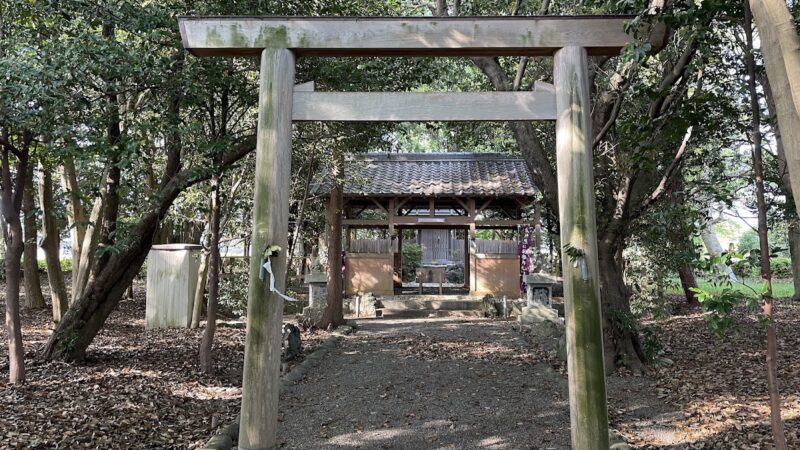
Torii Gate and Approach
The grounds of Suhara Taisha Shrine are located west of Tsukiyomi-no-miya Shrine, across the road. It’s about a 10-minute walk west from Ise City Station, a shrine quietly nestled in the city.
Passing through the torii gate, a well-maintained approach leads to the main hall. The grounds are not particularly vast, but they are kept clean and exude a tranquil atmosphere. Its characteristic feature is that it maintains a sacred serene despite its urban location.
Worship Hall and Main Sanctuary
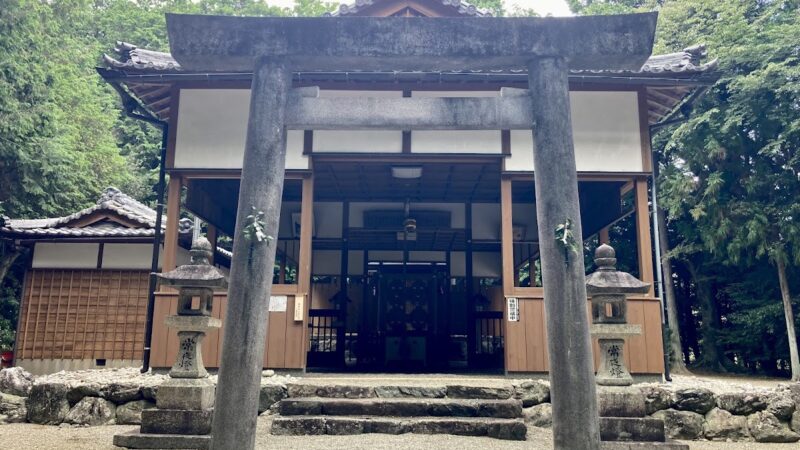
The worship hall is built in the traditional shrine architectural style, possessing a simple yet dignified appearance. The main shrine is located behind the worship hall, and the enshrined deity is solemnly worshipped there.
When praying, please follow the proper etiquette of two bows, two claps, and one bow. It is important to show respect to the deity who has protected the region as the local guardian deity.
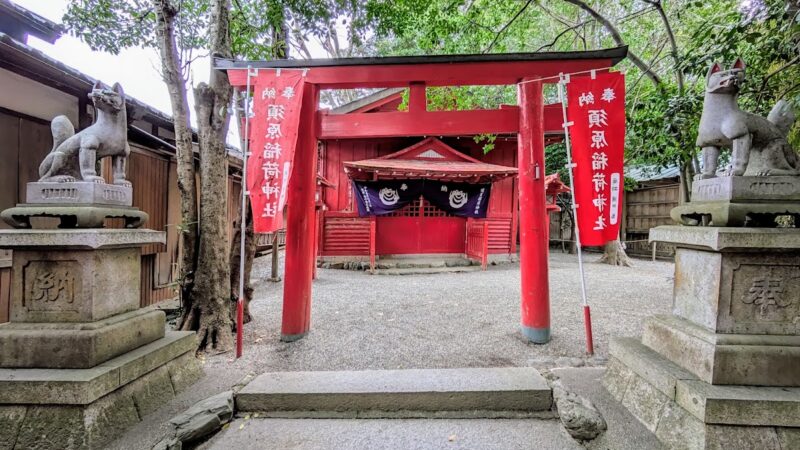
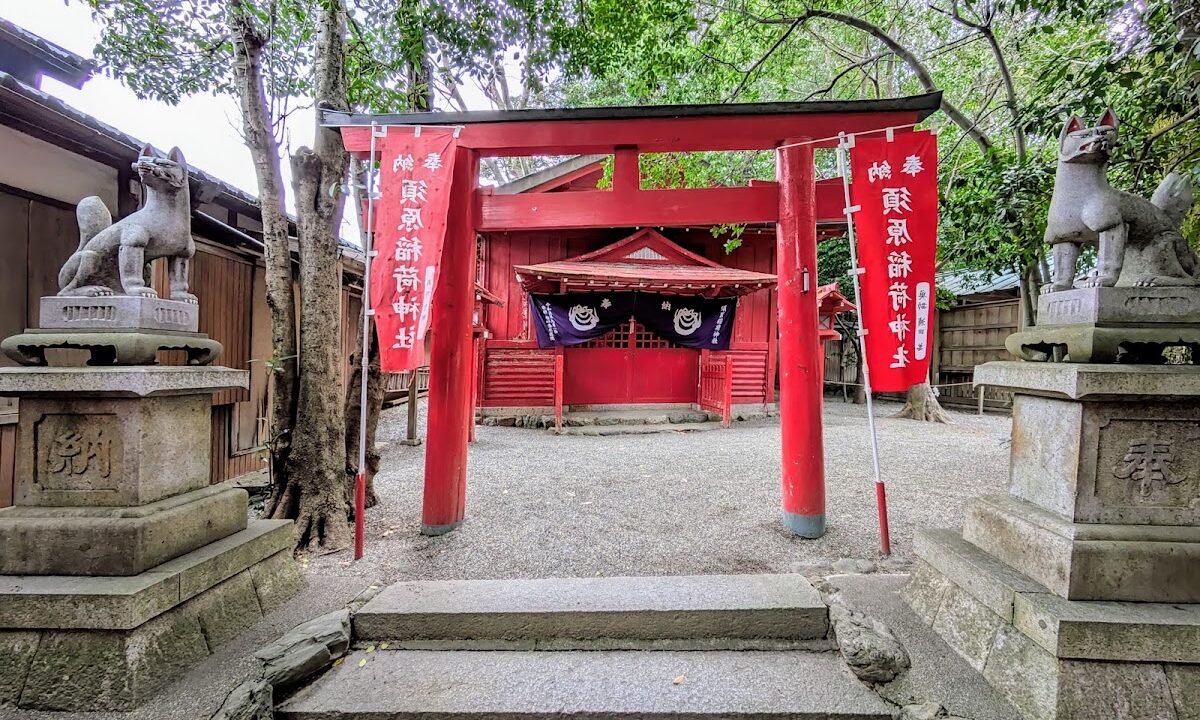
Suhara Inari Shrine
The Suhara Inari Shrine is also located within the shrine grounds. Inari is widely worshipped as the god of abundant harvests and business prosperity, and many people visit it along with Suhara Grand Shrine.
The presence of the Inari Shrine within the grounds indicates that Suhara Grand Shrine has been involved not only in agriculture but also in the development of commerce. You can feel the history of the shrine, which has walked hand in hand with the development of Ise, a commercial city.
Shrine Office and Souvenirs
The shrine office is often only open in the mornings, so if you wish to receive a goshuin (shrine stamp) or souvenirs, it is recommended to visit in the morning. However, opening hours may vary, so if you want to be sure to receive a goshuin, it is recommended to check in advance.
Goshuin (Shrine Seal) Information
Goshuin of Suhara Taisha Shrine
You can receive a goshuin at Suhara Taisha Shrine. The goshuin features the calligraphy of “Suhara Taisha” and the shrine’s seal, and is a popular memento of your visit.
As mentioned above, the shrine office is often only open in the mornings, so those wishing to receive a goshuin are advised to plan their visit for the morning. Especially on weekends and holidays, staff may be absent, so for certainty, weekday mornings are best.
Etiquette When Receiving a Goshuin
A goshuin is not merely a stamp; it is a token of your visit. Please observe the following etiquette.
- First, visit the main shrine before receiving your Goshuin (shrine stamp).
- Prepare your Goshuincho (stamp book) (avoid using a notepad or blank paper).
- Prepare your offering (usually around 300-500 yen).
- Don’t forget to express your gratitude to the shrine staff.
Access Information
Access by Train
Nearest Station
- JR Sangū Line “Ise-shi Station”
- Kintetsu Yamada Line “Ise-shi Station”
Travel Time from Station
Approximately 10 minutes on foot west from Ise-shi Station.
Directions
- Exit Ise-shi Station and head west.
- Head towards Tsukiyomi-no-miya (approximately 8 minutes on foot from the station).
- Suhara Taisha Shrine is located west of Tsukiyomi-no-miya, across the road.
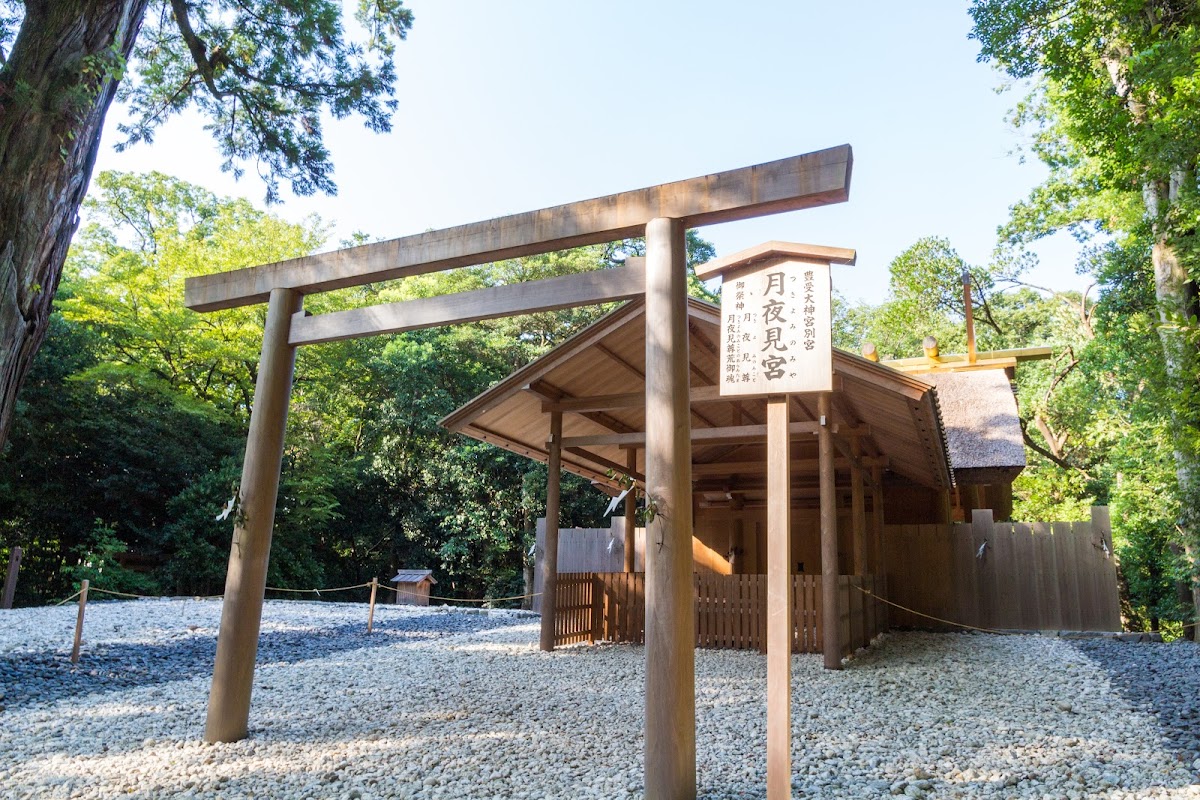
Using Tsukiyomi-no-miya as a landmark will make it easier to find. Tsukiyomi-no-miya is a relatively large shrine building as a sub-shrine of the Outer Shrine of Ise Grand Shrine, and there are plenty of signs.
Access by Car
Location
1-3-6 Ichinoki, Ise City, Mie Prefecture 516-0079
Parking
It is recommended to check in advance whether there is a dedicated parking lot. There are coin-operated parking lots nearby, but they can be crowded with visitors to Ise Grand Shrine, so consider using public transportation.
Car Navigation Settings
If you cannot find “Suhara Taisha,” set “Tsukiyomi-no-miya” as your destination and search to the west of it for easier navigation.
Nearby Tourist Spots
The area around Suhara Taisha is home to several major spots for Ise pilgrimage.
Tsukiyomi-no-miya
A short walk away. A prestigious shrine dedicated to Tsukuyomi-no-Mikoto, a sub-shrine of the Outer Shrine.
Ise Grand Shrine Outer Shrine (Toyouke Daijingu)
Approximately 15 minutes on foot. An important shrine that serves as the starting point for Ise pilgrimage.
Ise Grand Shrine (Naiku)
Approximately 10 minutes by bus. This is Japan’s most prestigious shrine, dedicated to Amaterasu Omikami.
Okage Yokocho/Oharai-machi
A temple town surrounding the Naiku. Enjoy street food and souvenir shopping.
Visiting Suhara Taisha Shrine in conjunction with a visit to Ise Grand Shrine will allow you to experience a deeper understanding of Ise’s religious culture.
Points to Note and Recommended Times for Visiting
Suitable Times for Visiting
Since Suhara Taisha Shrine is located in the city center, it is generally possible to visit anytime during the day. However, please consider the following points.
Morning (9:00 AM – 12:00 PM)
- High probability of receiving a Goshuin (temple/shrine stamp)
- Enjoy a refreshing atmosphere for worship
- Easy to combine with visits to Tsukiyomi-no-miya or Geku (Outer Shrine)
Weekdays
- Enjoy a quiet worship experience
- High probability of the shrine office being open
- Relatively less crowded parking lots in the surrounding area
Annual Events
As this shrine is deeply rooted in the community as a local tutelary deity, local festivals and annual events are held here. For detailed festival schedules, please check with the shrine office during your visit or consult local information.
Attire and Manners for Worship
There are no specific dress code requirements, but please observe basic shrine etiquette.
- Dress neatly when visiting the shrine.
- Bow when passing through the torii gate.
- Avoid walking in the center of the path (the center is the path of the gods).
- Take photographs with consideration for those around you.
- Visit the shrine in silence.
The Charm and Characteristics of Suhara Taisha Shrine
Experience the Local Faith of Ise
Despite being located at the foot of Ise Grand Shrine, one of Japan’s most representative shrines, Suhara Taisha Shrine stands out as a unique local tutelary shrine. While Ise Grand Shrine is the center of national and nationwide faith, Suhara Taisha Shrine has functioned as a shrine closely intertwined with the daily lives of local residents.
This contrast is extremely interesting for understanding the multi-layered nature of Japanese Shinto culture. Visiting not only large shrines but also small local shrines will lead to a deeper understanding of Japanese culture.
A Valuable Example of Hachioji Faith
Shrines that enshrine Hachioji, born from the oath between Amaterasu Omikami and Susanoo-no-Mikoto, as their main deity are rare throughout Japan, and Suhara Taisha Shrine is one such rare example.
Hachioji faith, in that it enshrines the children of Amaterasu Omikami, the ancestral deity of the Imperial family, can be seen as reflecting the unique characteristics of the Ise region. Its geographical proximity to Ise Grand Shrine may have influenced this composition of deities.
A Quiet Worship Environment
In contrast to the bustling tourist-filled Ise Grand Shrine, Suhara Taisha Shrine maintains a quiet worship environment. Visitors can take time to slowly connect with the deities and reflect on themselves.
The fact that it maintains a tranquil sacred space despite being located in an urban area is a testament to the respect and careful management of the local community towards the shrine.
How to Enjoy Your Visit After Visiting Suhara Taisha Shrine
Combining a Visit with Ise Grand Shrine
Suhara Taisha Shrine is approximately a 15-minute walk from the Outer Shrine of Ise Grand Shrine. Visiting Suhara Taisha Shrine before or after visiting the Outer Shrine will make your Ise pilgrimage more fulfilling.
Recommended Route
- Arrive at Ise City Station
- Visit Suhara Taisha Shrine (10-minute walk)
- Visit Tsukiyomi-no-miya Shrine (short walk)
- Visit the Outer Shrine (15-minute walk)
- Take a bus to the Inner Shrine
- Visit the Inner Shrine
- Stroll through Okage Yokocho and Oharai-machi
This route allows you to efficiently visit the major shrines of Ise.
Local Cuisine
Around Ise City Station and the Outer Shrine, there are many restaurants serving Ise specialties such as Ise Udon and Tekone Sushi. Enjoying Ise cuisine after your visit is a highlight of your trip.
Ise Udon
A specialty dish of Ise, featuring thick, soft noodles topped with a rich sauce.
Tekone Sushi
A local dish of marinated bonito or tuna served on vinegared rice.
Akabuku Mochi
A classic Ise souvenir. Perfect as a sweet treat after visiting the shrine.
Learning about Ise’s History
If you have time, consider visiting facilities where you can learn about Ise’s history and culture.
Jingu Chokokan/Jingu Nogyokan
Exhibits materials related to the history and rituals of Ise Grand Shrine.
Okageza
An exhibition facility located within Okage Yokocho, recreating an Ise pilgrimage from the Edo period.
Summary
Suhara Taisha Shrine is a historical shrine located in the city center of Ise, Mie Prefecture. Located west of Tsukiyomi-no-miya Shrine, Suhara Taisha Shrine is a rare shrine nationwide that enshrines Hachioji as its main deity, and has long been revered by the local community as the tutelary deity of the Suhara area.
Despite being located at the foot of Ise Grand Shrine, Japan’s most prestigious shrine, Suhara Taisha Shrine maintains a community-oriented faith, making it a valuable place that allows us to feel the diversity and depth of Japanese Shinto culture.
Its easy accessibility, just a 10-minute walk from Ise City Station, is another attractive feature. When visiting Ise Grand Shrine, be sure to also visit Suhara Taisha Shrine. Calming your mind in the tranquil grounds and experiencing the warm divine blessings of the tutelary deity will make your Ise pilgrimage even more fulfilling.
If you wish to receive a Goshuin (shrine stamp), it is recommended to visit in the morning. Please show respect to the shrine, which has been carefully preserved by the local community, and observe proper etiquette during your visit.
We hope that your visit to Suhara Taisha Shrine will be a memorable experience for you.