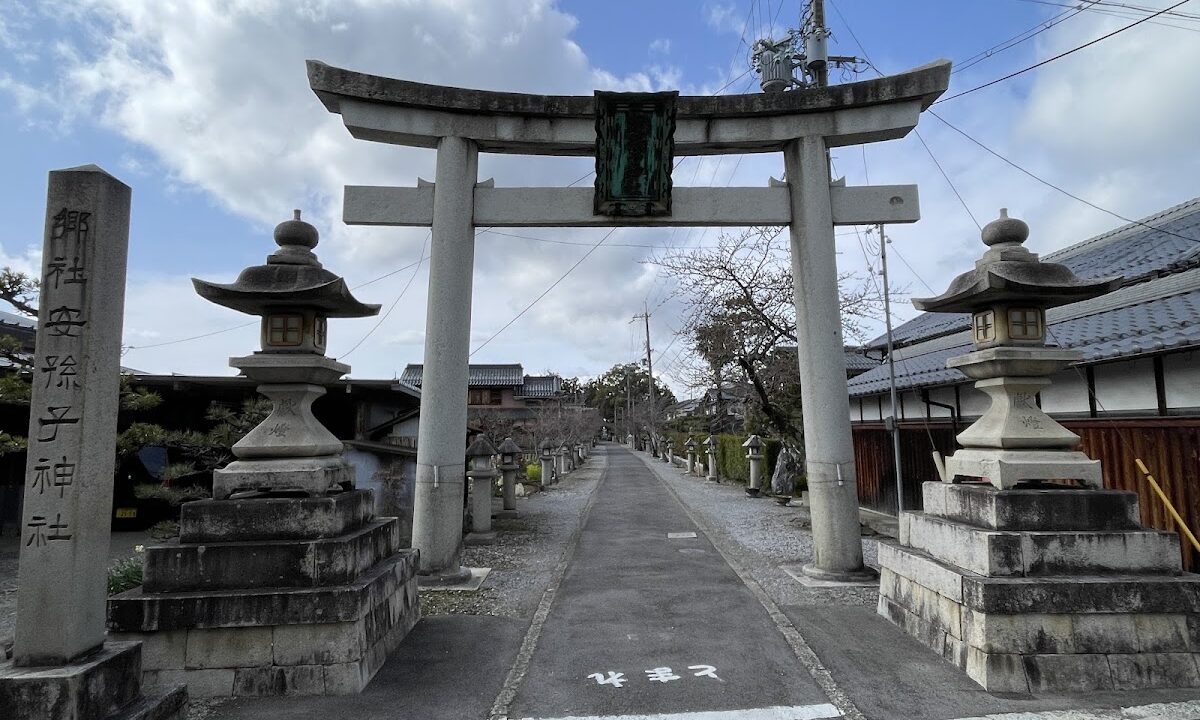
About Abiko Shrine | A Historic Local Shrine in Aisho-cho, Shiga Prefecture
Abiko Shrine is a Shinto shrine located in Abiko, Aisho-cho, Echi-gun, Shiga Prefecture. Formerly known as “Amawakahiko Shrine,” it is a prestigious shrine that was designated a local shrine during the Meiji era. Belonging to the Shiga Prefectural Shrine Association, it is an important shrine with a long history as a center of local faith.
Aisho-cho is located in the eastern part of Shiga Prefecture, on the eastern shore of Lake Biwa, and has flourished as a transportation hub since ancient times. Abiko Shrine, situated in this area, has a history connected to the imperial lineage of Emperor Kaika and has received deep reverence not only from local residents but also from samurai families.
While there are approximately 1,436 shrines in Shiga Prefecture, Abiko Shrine is particularly historically valuable, and is a shrine that was recognized by the imperial court from ancient times, as evidenced by its mention in the Sandai Jitsuroku (a historical record).
The Deity Enshrined at Abiko Shrine | The History of the Shrine’s Deity, Ame-no-Wakahiko-no-Mikoto
The deity enshrined at Abiko Shrine is Ame-no-Wakahiko-no-Mikoto. Ame-no-Wakahiko-no-Mikoto is a god appearing in Japanese mythology, known as a god who descended to earth at the command of Amaterasu-Omikami.
About Ame-no-Wakahiko-no-Mikoto
Ame-no-Wakahiko-no-Mikoto is an important god in mythology, appearing in the Kojiki and Nihon Shoki. He is one of the gods dispatched by Amaterasu-Omikami to pacify Ashihara-no-Nakatsukuni (the Central Land of Reed Plains), and is said to possess a beautiful appearance and noble lineage.
In mythology, after descending to earth, Ame-no-Wakahiko-no-Mikoto married Shita-teruhime, the daughter of Okuninushi-no-Kami, and lived a life on earth. However, because he failed to fulfill his mission from heaven, he ultimately lost his life to an arrow shot from the heavens.
Why was Ame-no-Wakahiko-no-Mikoto enshrined in Abiko?
The origin of Ame-no-Wakahiko-no-Mikoto’s enshrinement at Abiko Shrine traces back to the imperial lineage of Emperor Kaika. While the exact founding date is unclear, it is said that descendants of Shiraga-no-Ō, the fourth-generation descendant of Hikoimasu-no-Ō (a son of Emperor Kaika), resided in this area and enshrined Ame-no-Wakahiko-no-Mikoto as their ancestral deity.
This tradition indicates that Abiko was a settlement of clans connected to the imperial lineage since ancient times, and speaks to the high status of the shrine.
History of Abiko Shrine | From the Sandai Jitsuroku to the Present
Records of the Heian Period | The Granting of Divine Ranks as Seen in the Sandai Jitsuroku
The most important document in discussing the history of Abiko Shrine is the “Nihon Sandai Jitsuroku” (The True Records of Three Reigns of Japan). This historical record is an official history compiled in the early Heian period, documenting the achievements of three emperors: Emperor Seiwa, Emperor Yozei, and Emperor Koko.
The entry for Jogan 13 (871) contains the entry, “In the year of Jinshin, the rank of Senior Sixth Rank was bestowed upon Ama-no-Wakamiko-no-Kami of Omi Province, Junior Fifth Rank, Lower Grade.” This indicates that the rank of Ama-no-Wakamiko-no-Kami (Ama-no-Wakahiko-no-Mikoto), enshrined in Omi Province (present-day Shiga Prefecture), was elevated from Senior Sixth Rank to Junior Fifth Rank, Lower Grade.
This record is an important historical document proving that Abiko Shrine was already recognized by the imperial court and had established its status as an official shrine during the Heian period. The bestowal of a rank was an indicator of the shrine’s status and importance, showing that Abiko Shrine functioned as a major shrine in the region.
Medieval Period | Reverence from Samurai and Shrine Building Development
In the medieval period, Abiko Shrine began to attract reverence from samurai families. In particular, samurai families of Omi Province, including the Sasaki clan, protected the shrine and contributed to its development.
The Sasaki clan was a prestigious family descended from the Omi Genji clan, and served as the shugo (military governor) of Omi Province from the Kamakura period to the Muromachi period. They provided the following support to Abiko Shrine:
- Donation of sacred rice fields: Donating rice fields to produce the rice necessary for the shrine’s rituals
- Construction of shrine buildings: Supporting the construction and repair of the main hall, worship hall, etc.
- Protection of festivals: Providing financial support for the continuation of festivals throughout the year
Thanks to this support from samurai families, Abiko Shrine maintained its position as a center of local faith throughout the medieval period.
Kannon Shrine and Eleven-Faced Thousand-Armed Kannon Statue
Within the grounds of Abiko Shrine is the Kannon Shrine, where an Eleven-Faced Thousand-Armed Kannon statue is enshrined. This Kannon statue is an important cultural property that shows the remnants of the era when Shinto and Buddhism were integrated, a time of syncretism between Shinto and Buddhism. Shinto-Buddhist syncretism (Shinbutsu-shugo) is a religious form that combined Japan’s ancient Shinto with the introduced Buddhism, and it continued from the Nara period to the early Meiji era. Many shrines had attached temples (Jinguji or Bettoji) where both Shinto and Buddhist deities were worshipped.
The Kannon Shrine at Abiko Shrine is also part of this tradition, and it has responded to the diverse religious needs of the local residents. The Eleven-Faced Thousand-Armed Kannon, a symbol of compassion that watches over all directions and saves all sentient beings with its many hands, continues to attract worshippers today.
Changes in the Meiji Era | Shrine Name Change and Promotion to a Local Shrine
The Meiji era was a period of significant transformation in Japan’s shrine system. The Meiji government issued the Shinto-Buddhist Separation Order, prohibiting the previous Shinto-Buddhist syncretism. It also established a modern shrine system and placed shrines under state control.
Abiko Shrine also underwent the following changes during this period:
Early Meiji Period: Called “Amawakahiko Shrine”
Meiji 9 (1876): Ranked as a village shrine
Meiji 12 (1879): Renamed “Abiko Shrine”
Meiji 14 (1881): Promoted to a regional shrine, designated for offerings of sacred food and cloth
The promotion to a regional shrine signifies a significant increase in the shrine’s status. In the shrine ranking system, there was a hierarchy of prefectural shrines following government-supported and national shrines, and below them were regional shrines, village shrines, and unranked shrines. The rank of regional shrine was given to major shrines within a county, indicating Abiko Shrine’s important position in the region.
The designation of a shrine as eligible for the provision of sacred food and cloth means that the prefecture provides the necessary expenses (sacred food and cloth) for the shrine’s rituals, signifying that it is a publicly recognized shrine.
Abiko Shrine in the Modern Era
After the war, shrines were separated from state control and became independent religious corporations. Abiko Shrine, as a religious corporation under the Religious Corporations Act, continues to attract worshippers as the local guardian deity.
Even today, various rituals are performed throughout the year, and it functions as a spiritual center for local residents. Belonging to the Shiga Prefectural Shrine Association, it upholds Shinto traditions while fulfilling the role of a shrine in modern society.
Divine Emblem | Meaning and Origin of the Three-Leaf Aoi
The divine emblem of Abiko Shrine is the Three-Leaf Aoi. The Three-Leaf Aoi is a design featuring three hollyhock leaves arranged in a circle, and has been widely used as the family crest of Japanese shrines and samurai families.
The History of the Three-Leaf Aoi Crest
The three-leaf hollyhock is originally known as the divine crest of the Kamo Shrines (Kamigamo Shrine and Shimogamo Shrine in Kyoto). The Kamo Shrines are prestigious shrines that have been revered by the imperial court since ancient times and are famous for the Aoi Festival (Kamo Festival).
The hollyhock leaf has long been considered a sacred plant and an object of worship, and was especially indispensable in Shinto rituals at the Kamo Shrines. This crest, symbolizing the authority and sanctity of the shrine, spread to other shrines as well.
Abiko Shrine and the Three-Leaf Aoi Crest
The reason why Abiko Shrine uses the three-leaf hollyhock as its divine crest is thought to be to demonstrate the shrine’s high status and its lineage connected to the imperial family. The relationship with the Sasaki clan, who served as the governors of Omi Province, may also have played a role.
While the three-leaf hollyhock is also famous as the family crest of the Tokugawa family, it was used as a shrine crest even before that, and the three-leaf hollyhock at Abiko Shrine is based on this traditional usage.
Guide to the Grounds of Abiko Shrine
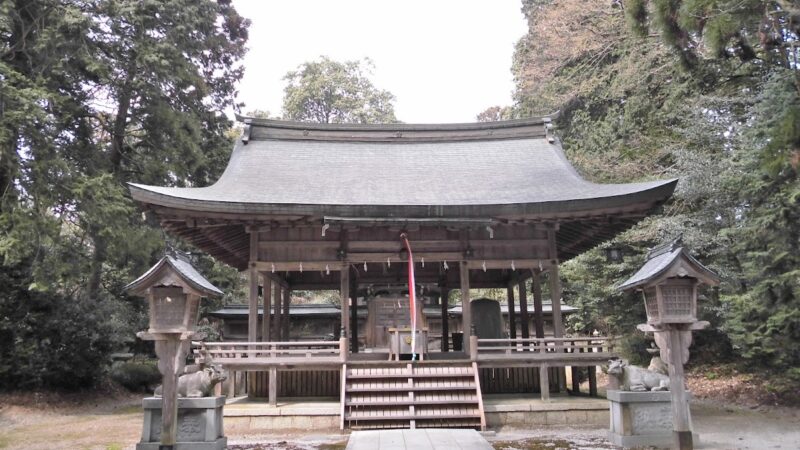
Main Hall
The main hall of Abiko Shrine is the central building of the shrine, dedicated to the enshrined deity, Ame-no-Wakahiko-no-Mikoto. While detailed records of its architectural style and construction date are limited, it has undergone historical reconstructions and repairs to reach its current state.
General visitors are usually not allowed to enter the main hall directly; worship is conducted from the haiden (worship hall). This is a traditional arrangement to maintain the sanctity of the sacred area.
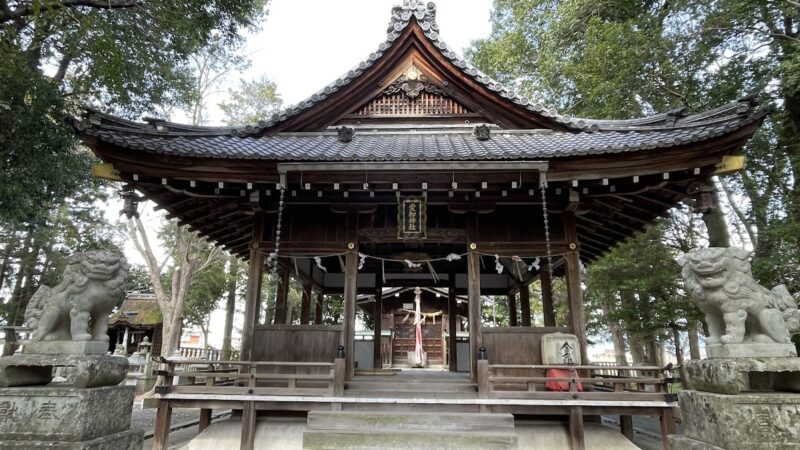
Worship Hall
The haiden is where worshippers offer their prayers and is located in front of the main hall. Here, worshippers offer their donations and perform the ritual of two bows, two claps, and one bow.
Kannon Shrine
As mentioned above, there is a Kannon Shrine on the grounds, housing an eleven-faced, thousand-armed Kannon statue. This shrine is a valuable facility that conveys the history of the syncretism of Shinto and Buddhism.
Due to the Meiji-era decree separating Shinto and Buddhism, many Shinto shrines removed their Buddhist facilities. However, Abiko Shrine retained its Kannon shrine, which continues to be maintained as an object of local faith.
Other Shrine Facilities
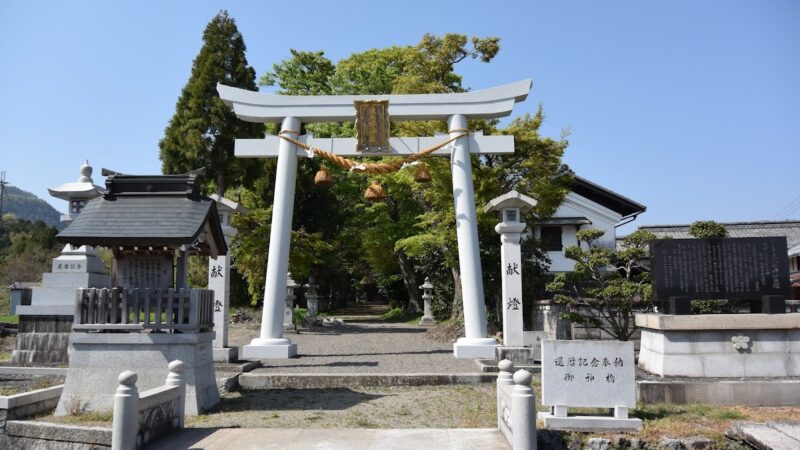
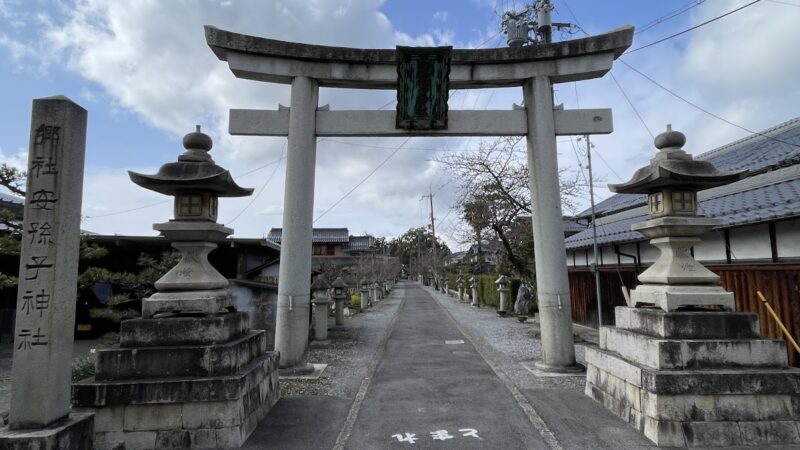
The shrine grounds contain standard Shinto shrine facilities such as a shrine office, a purification fountain, stone lanterns, and guardian lion-dogs. These are important elements that welcome visitors and create a sacred atmosphere.
Access Information | How to Get to Abiko Shrine
Location
Address: Abiko, Aisho-cho, Echi-gun, Shiga Prefecture
Aisho-cho is located in the eastern part of Shiga Prefecture, between Hikone City and Omihachiman City. It is close to the eastern shore of Lake Biwa and has flourished as a transportation hub since ancient times.
Access by Public Transportation
Nearest Station: JR Biwako Line “Inae Station” or “Notogawa Station”
From Inae Station or Notogawa Station, you will need to take a taxi or local bus. The distance from the station to the shrine is several kilometers, so walking will take a considerable amount of time.
We recommend checking the local bus schedule in advance, such as with the Omi Railway Bus.
Access by Car
Expressway: Approximately 15-20 minutes from the Meishin Expressway “Hikone IC” or “Koto Sanzan Smart IC”
Access by car is the most convenient. Entering “Abiko Shrine” or the address into your car navigation system will allow you to reach the shrine relatively easily.
Parking
There may be parking spaces for visitors within the shrine grounds or nearby, but we recommend checking the details in advance. Especially during festivals, congestion is expected, so it is advisable to visit with plenty of time to spare.
Goshuin Information
In recent years, collecting goshuin (temple/shrine stamps) has become popular, and many shrines now offer them. Abiko Shrine may also offer goshuin, but it is recommended to inquire directly with the shrine for details.
Goshuin are not merely stamps or signatures; they are sacred items given as proof of visiting the shrine. When receiving a goshuin, please note the following:
- Complete your prayers before receiving the goshuin.
- Prepare a goshuincho (avoid notebooks or colored paper).
- Prepare the offering fee (usually 300-500 yen).
- Remember to show respect to the Shinto priest.
Annual Festivals and Rituals
Shrines hold various rituals throughout the year. It is believed that Abiko Shrine also continues to hold rituals based on local traditions.
Main Annual Festivals (Examples of Typical Shrines)
- Saitansai (January 1st): A festival celebrating the New Year
- Kinensai (February or March): A festival praying for a bountiful harvest
- Reisai (Dates vary by shrine): The most important festival at that shrine
- Niinamesai (November 23rd): A festival giving thanks for the harvest
- Oharai (June 30th, December 31st): A Shinto ritual to purify sins and impurities
For specific festival dates at Abiko Shrine, please inquire with the Shiga Prefectural Shrine Association or the shrine directly.
Shiga Prefecture’s Shrine Culture and Abiko Shrine
Characteristics of Shrines in Shiga Prefecture
Shiga Prefecture has approximately 1,436 shrines, accounting for about 1.78% of the total number of shrines nationwide. This ranks 23rd out of 47 prefectures in Japan.
The following are some of the characteristics of shrines in Shiga Prefecture:
- History from Ancient Times: As a region that has been developed since ancient times as Omi Province, there are many shrines with ancient histories.
- Relationship with Lake Biwa: A belief in gratitude for the blessings of water is deeply rooted.
- Transportation Hub: As a transportation route connecting east and west, diverse cultures flowed in.
- Reverence from Samurai: As a territory controlled by powerful samurai families such as the Sasaki clan, many shrines received protection from the samurai.
Major Shrines (Reference)
The following are some of the major shrines in Shiga Prefecture:
- Taga Taisha (Taga-cho, Inukami-gun): The prefecture’s largest shrine, affectionately known as “O-Taga-san”.
- Hiyoshi Taisha (Otsu City): The head shrine of approximately 3,800 Hiyoshi, Hie, and Sanno shrines nationwide.
- Takebe Taisha (Otsu City): Revered as the Ichinomiya (first-ranked shrine) of Omi Province.
- Shirahige Shrine (Takashima City): Famous for its torii gate floating on Lake Biwa
- Tenshin Shrine (Otsu City): Known for the Otsu Festival
While Abiko Shrine may be smaller in scale compared to these major shrines, it possesses its own unique value and history as a place of worship deeply rooted in the community.
History and Culture of Aisho Town
Overview of Aisho Town
Aisho Town was formed in 2006 through the merger of Aichigawa Town and Hatasho Town. Located in the eastern part of Shiga Prefecture, on the eastern shore of Lake Biwa, it borders Hikone City, Omihachiman City, Higashiomi City, and others.
The town’s name, “Aisho Town,” was created by taking one character from each of the names of the two towns before the merger. It has a population of approximately 20,000, and is a region where agriculture and industry are well-balanced.
Historical Background
The Aisho Town area has occupied an important position as a transportation hub since ancient times. Aisho Town has a history of flourishing as a post town along the Nakasendo Road.
It is also known as one of the birthplaces of Omi merchants, and during the Edo period, many merchants expanded their businesses throughout Japan from this area. Omi merchants were known for their “Sanpo Yoshi” philosophy (good for the seller, good for the buyer, and good for society), and they had a significant influence on Japanese commercial culture.
Cultural Assets and Tourism in Aisho Town
Aisho Town has many historical and cultural resources besides Abiko Shrine:
- Kongorinji Temple: One of the three temples of Kotō, famous for its autumn foliage
- Aichigawa River: The river from which the town derives its name, with beautiful waterside scenery
- Historical Sites of Omi Merchants: Former merchant residences and related facilities
Manners and Etiquette for Visiting Shrines
When visiting a shrine, it is important to observe basic manners and etiquette. The following explains the general flow of visiting a shrine.
How to Pass Through a Torii Gate
The torii gate at the entrance of a shrine is a boundary separating the sacred realm from the secular world. Before passing through the torii gate, bow to prepare yourself mentally for entering the sacred realm.
When walking along the approach to the shrine, avoid the center and walk on either the left or right side. The center is called “seichu” and is considered the path for the gods.
How to Perform the Water Purification Ritual
Purify your body and mind at the water basin. The correct procedure is as follows:
- Take the ladle in your right hand and purify your left hand.
- Switch the ladle to your left hand and purify your right hand.
- Take the ladle back in your right hand, receive water in your left hand, and rinse your mouth.
- Purify your left hand once more.
- Hold the ladle upright, let the water flow down the handle, and return it to its original position.
Worship at the Main Hall
Approach the main hall and quietly place your offering into the offering box. Then, if there is a bell, ring it.
The basic etiquette for visiting a shrine is “two bows, two claps, one bow”:
- Bow deeply twice (two bows)
- Bring both hands together at chest height, slightly lowering the right hand, and clap twice (two claps)
- Offer your prayer with your hands still clasped together
- Finally, bow deeply once (one bow)
After Visiting
After finishing your visit, return the way you came. It is more polite to turn back and bow once as you leave the torii gate.
Connections to Other Shrines in Shiga Prefecture
Nearby Shrines
In addition to Abiko Shrine, there are many other shrines in Aisho Town and the surrounding area. Visiting these shrines will allow you to gain a deeper understanding of the local religious culture.
Hikone City Shrines: Around Hikone Castle, there are shrines such as Gokoku Shrine, where you can enjoy beautiful scenery during cherry blossom season.
Omihachiman City Shrines: Many shrines that attracted the faith of Omi merchants are scattered throughout the area.
Shrines in Higashiomi City: There are shrines dedicated to mountain worship, such as Tarobo-gu (Aga Shrine).
How to Enjoy Shrine Visits
When visiting shrines in Shiga Prefecture, here are some ways to enjoy it:
- Goshuin Stamp Collecting: Collect goshuin stamps at each shrine to keep a record of your visit.
- Historical Exploration: Learn about the history of the shrine and understand the local history.
- Nature Walks: Many shrines are located in areas rich in nature, allowing you to enjoy the scenery of each season.
- Participation in Festivals: Participate in local festivals and experience traditional culture.
Shrine Maintenance and the Local Community
Parishioners and Worshippers
Shrines are supported by local residents called ujiko (parishioners). Ujiko worship the shrine’s guardian deity and cooperate in the maintenance and management of the shrine and the operation of festivals.
Abiko Shrine has also been protected by local parishioners. Even in today’s society, where the birthrate is declining and the population is aging, efforts to pass on traditions to the next generation continue.
The Role of Shrines
The role of shrines in modern society extends beyond mere religious institutions:
- Community Center: Functioning as a place where local residents gather
- Cultural Transmission: Transmitting culture through traditional festivals and events
- Peace of Mind: A place to find peace of mind in a tranquil space
- Tourism Resource: A tourist spot that conveys the history and culture of the region
Summary | The Value and Charm of Abiko Shrine
Abiko Shrine is a historic shrine located in Aisho-cho, Shiga Prefecture. It has played an important role throughout its long history, with a lineage connected to Emperor Kaika, a status recorded in the Heian period’s Sandai Jitsuroku (Chronicle of Three Reigns), reverence from samurai families in the medieval period, and its elevation to a local shrine in the Meiji era.
The shrine has many points of interest, including the enshrined deity, Ame-no-Wakahiko-no-Mikoto, the three-leaf hollyhock crest, and the Kannon shrine within the grounds. Furthermore, as the guardian deity of the region, it continues to attract the faith of local residents.
When visiting Shiga Prefecture, why not visit not only the major shrines such as Taga Taisha and Hiyoshi Taisha, but also local shrines like Abiko Shrine? There, you can find the vibrant bonds of traditional Japanese culture and local communities.
Nestled in the quiet town of Aisho on the eastern shore of Lake Biwa, Abiko Shrine is a precious cultural heritage site that offers visitors a sense of historical significance and peace of mind.