Okataka Shrine (Nagahama City, Shiga Prefecture) Complete Guide | History, Goshuin (Shrine Seals), Access, and Highlights
Okataka Shrine, located in Kitanogo-cho, Nagahama City, Shiga Prefecture, is a venerable shrine boasting a history of over 1500 years. Its official name is written as “岡髙神社” (Okataka Shrine), and it enshrines Sugawara no Michizane, the god of learning, and Susanoo-no-Mikoto. This article comprehensively introduces information useful for visiting Okataka Shrine, including its detailed history, goshuin information, highlights within the grounds, and access methods.
Basic Information about Okataka Shrine
Shrine Overview
Official Name: Okataka Shrine (岡高神社)
Reading: Okataka Jinja
Alternative Name: Okataka Tenjin
Location: 292 Kitanogo-cho, Nagahama City, Shiga Prefecture 526-0214
Phone Number: 0749-74-1766
Nearest Station: Torahime Station, JR Hokuriku Main Line
Visiting Hours: Open for worship
Admission Fee: Free
Parking: Available (Free)
Deities Enshrined
Main Deity: Sugawara no Michizane
Enshrined Deity: Susanoo-no-Mikoto
Sugawara no Michizane was a scholar and politician of the Heian period and is worshipped nationwide as the god of learning. Susanoo-no-Mikoto is a deity appearing in Japanese mythology, known as a god who wards off evil and disease.
Divine Emblem
The shrine’s crest is the star-shaped plum blossom crest. This crest is often seen at shrines dedicated to Sugawara no Michizane, and originates from Michizane’s love of plum blossoms.
History and Origins of Okata Shrine
From Founding to Ancient History
Okata Shrine is said to have been founded in 459 AD (the 3rd year of Emperor Yuryaku’s reign). It is believed to have begun when Gamou Inagi Sanmaro enshrined Susanoo-no-Mikoto on Mount Senjo-odake, located approximately 2 kilometers east of the present shrine site.
Later, in 685 AD (the 13th year of the Hakuhō era), the shrine was moved to its current location. This period coincided with the transition from the Asuka period to the Nara period, a time when Buddhist culture in Japan began to develop significantly. The relocation of the shrine from Senjōdake to its current location is thought to reflect the development of the region and changes in religious practices.
Development from the Medieval to the Early Modern Period
Since the Heian period, Okata Shrine has been revered as the local tutelary deity, attracting the faith of people in and around Kitano-gō town. Especially after Sugawara no Michizane was enshrined there, the number of worshippers praying for academic success and passing examinations increased.
During the Sengoku period, this region was under the influence of the Asai clan, then ruled by Oda Nobunaga, and later by Toyotomi Hideyoshi. During the Edo period, it became part of the Hikone Domain and has been protected as the guardian shrine of the region to this day.
Progress Since the Modern Period
Following the Meiji-era separation of Shinto and Buddhism, Okata Shrine was designated a village shrine. Even after the war, it remained a center of faith for local residents and is now carefully preserved as a valuable cultural asset of Nagahama City.
Highlights of the Shrine Grounds
The 400-Year-Old Cedar
Within the grounds of Okata Shrine stands a magnificent cedar tree estimated to be approximately 400 years old. This sacred tree has watched over the shrine grounds since the early Edo period, and its majestic appearance leaves a deep impression on visitors. Its trunk circumference is several meters, and its straight, upward-reaching form seems to symbolize the divine power of the shrine.
A sacred rope (shimenawa) is stretched around the base of the cedar, and it is revered as a sacred presence. The cedar changes its appearance with the seasons, displaying its beauty in each season: the fresh green of spring, the deep green of summer, the vibrant autumn foliage, and the snow-covered winter landscape.
A Colony of Erythronium Flowers
The grounds of Okata Shrine and the surrounding woodlands are known as a natural habitat for Erythronium flowers. Erythronium is a delicate flower that blooms in early spring, characterized by its purple petals that hang downwards.
Every year from late March to early April, the dogtooth violet (Erythronium japonicum) quietly blooms in the grove of trees on the shrine grounds. Dogtooth violets are rare plants, taking 7-8 years from seed to flower, and their presence in large clusters is a testament to the well-preserved natural environment of the region.
During the dogtooth violet blooming season, photography enthusiasts and nature observers visit the shrine, making it a quintessential sign of spring’s arrival. However, dogtooth violets are delicate plants, so care should be taken not to trample them when viewing them.
Main Shrine and Worship Hall
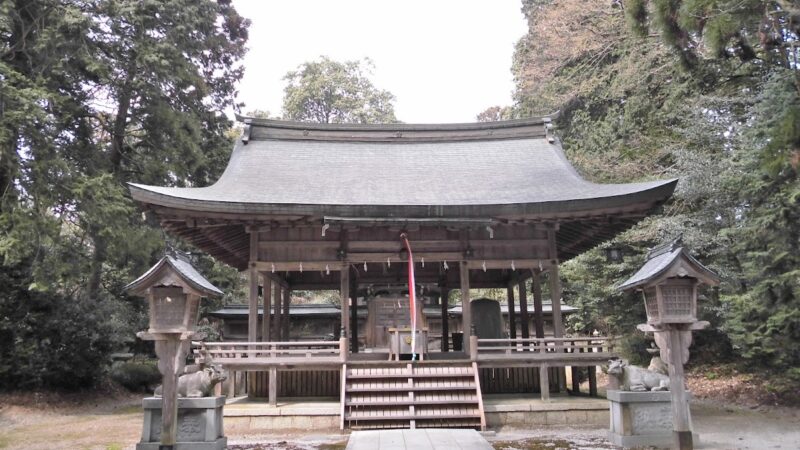
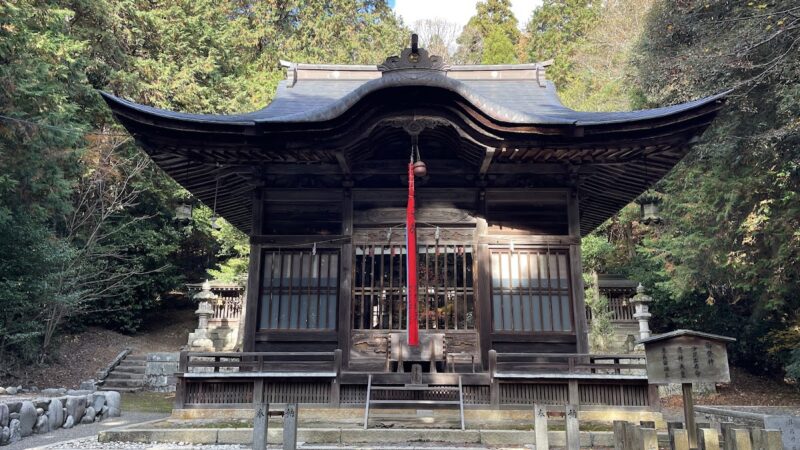
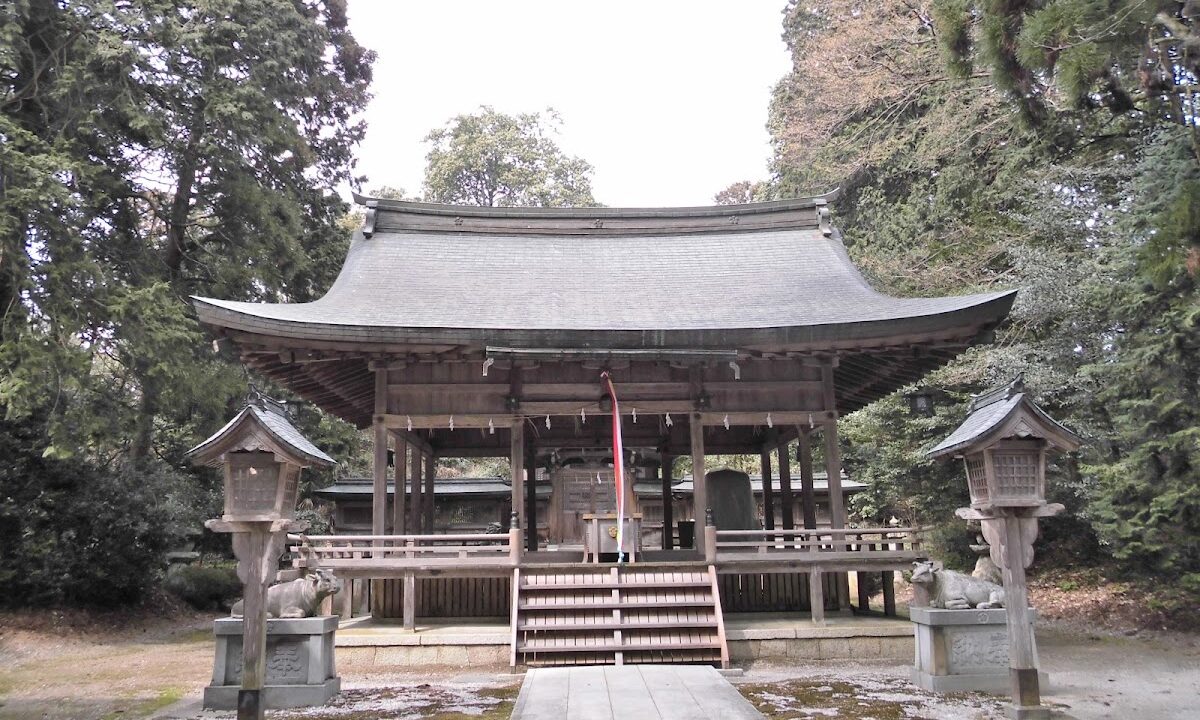
The main shrine of Okadaka Shrine is built in the traditional style of shrine architecture, exuding a sense of historical weight. The worship hall is a well-maintained space for worshippers to offer prayers and is kept clean.
The shrine grounds are enveloped in tranquility, providing a space to calm the mind away from the hustle and bustle of the city. Visiting in the early morning or evening, in particular, allows one to feel an even more sacred atmosphere.
Komainu (Guardian Lion-Dogs) and Stone Sculptures
Within the shrine grounds stand guardian lion-dogs that evoke a sense of history. Exposed to the elements, these lion-dogs have protected the shrine for centuries, telling the story of its long history of faith.
Furthermore, various stone sculptures, such as stone lanterns and a purification fountain, are placed throughout the grounds, each serving as valuable historical and cultural artifacts of the shrine.
Goshuin (Shrine Seal) and Goshuincho (Shrine Seal Book) Information
About Goshuin
Goshuin (shrine seals) are available at Okadaka Shrine. Goshuin are popular among visitors as proof of their visit and as a memento of their travels.
The goshuin features the calligraphy of “Okadaka Shrine” and the shrine’s seal, creating a simple yet dignified design. It is recommended to contact the shrine in advance before visiting to receive a goshuin.
Manners for Receiving a Goshuin (Shrine Stamp)
- Complete your prayers first: A goshuin is proof of your visit, so be sure to pray at the main shrine first.
- Prepare a goshuincho (stamp book): Use a dedicated goshuincho, not a notepad or colored paper.
- Prepare the offering: Generally, it’s around 300 to 500 yen, but prepare the exact amount so no change is needed.
- Use polite language: Ask politely, “May I receive a goshuin?”
- Wait quietly: Wait quietly while the goshuin is being written.
About Goshuincho
Please inquire directly with the shrine to see if they have an original goshuincho. It is also possible to bring a goshuincho issued at another shrine in Shiga Prefecture.
Prayers that can be granted at Okadaka Shrine
Prayers for academic success and passing exams
The main deity enshrined there, Sugawara no Michizane, is widely known as the god of learning. Therefore, Okadaka Shrine is visited by many worshippers praying for academic success and passing entrance exams.
During exam season, not only local students but also people from far away come to pray for success. By writing the name of their desired school and their goals on an ema (votive tablet) and offering it, they can pray for the protection of Sugawara no Michizane.
Protection from Misfortune and Disaster
Susanoo-no-Mikoto, one of the enshrined deities, is worshipped as a god of protection from misfortune and disaster. Many people visit the shrine during their unlucky years to pray for good health and protection from illness.
Family Safety and Protection of the Community
Okadaka Shrine has watched over the lives of the local residents as the tutelary deity of Kitanogo Town. You can pray for various wishes related to daily life, such as family safety, abundant harvests, and business prosperity.
Access
Access by Train
The nearest station is Torahime Station on the JR Hokuriku Main Line.
- Walking from Torahime Station: Approximately 2.5 km (approximately 30-40 minutes)
- Taxi from Torahime Station: Approximately 5 minutes
Torahime Station is only served by local trains. If you are using an express or rapid train, you will need to transfer at Nagahama Station or Maibara Station.
Travel time from major stations:
- From Nagahama Station to Torahime Station: Approximately 10 minutes by local train
- From Maibara Station to Torahime Station: Approximately 15 minutes by local train
- From Kyoto Station to Torahime Station: Approximately 45 minutes by rapid train to Maibara Station + approximately 15 minutes by local train
Access by car
Approximately 15 minutes from Hokuriku Expressway “Nagahama IC”
- Exit at Nagahama IC
- Head north on National Route 8
- Follow the signs towards Kitanogo-cho
The shrine has a free parking lot, making it convenient to access by car. However, please note that the parking lot may be full during busy periods such as New Year’s Day or festivals.
Car Navigation Settings
- Address Search: 292 Kitanogo-cho, Nagahama City, Shiga Prefecture
- Phone Number Search: 0749-74-1766
- Map Code: (If compatible with your navigation system)
Nearby Tourist Attractions
Nagahama City Center
Nagahama city center, located about 15 minutes by car from Okata Shrine, boasts many tourist attractions.
Kurokabe Square: A tourist area famous for glass craftsmanship, with a charming retro streetscape. Glass workshops, cafes, and souvenir shops line the streets, offering a full day of enjoyment.
Nagahama Castle: Known as the first castle where Toyotomi Hideyoshi served as lord. Currently open to the public as a history museum, the view from the castle tower overlooking Lake Biwa is spectacular.
Keiunkan: A guesthouse built as a temporary residence for Emperor Meiji, its beautiful Japanese garden is a highlight.
Chikubu Island
Located about 30 minutes by boat from Nagahama Port, Chikubu Island is a mystical island floating in Lake Biwa. It is home to Hogonji Temple and Tsukubusuma Shrine, and is a popular power spot.
Lake Yogo
Lake Yogo, located about 20 minutes by car north of Okata Shrine, is a beautiful lake also known as “Mirror Lake.” It has a quiet atmosphere different from Lake Biwa, and you can enjoy the nature of each season.
Annual Events and Festivals
Okata Shrine holds various Shinto rituals and festivals throughout the year.
New Year’s Visit (January 1st-3rd)
Many worshippers visit to pray for happiness in the new year. Many students praying for academic success can also be seen.
Setsubun Festival (around February 3rd)
A Shinto ritual, including bean-throwing, is performed to pray for protection from evil throughout the year.
Spring Festival
A festival celebrating the arrival of spring, praying for a bountiful harvest and peace in the community. It often coincides with the blooming of dogtooth violet flowers, creating a vibrant atmosphere within the shrine grounds.
Autumn Festival
A festival expressing gratitude for the harvest and offering new grain to the gods. It is a cherished local tradition.
For detailed festival dates, please contact the shrine directly or check the Shiga Prefecture Shrine Association website.
Manners and Etiquette for Visiting a Shrine
How to Pass Through the Torii Gate
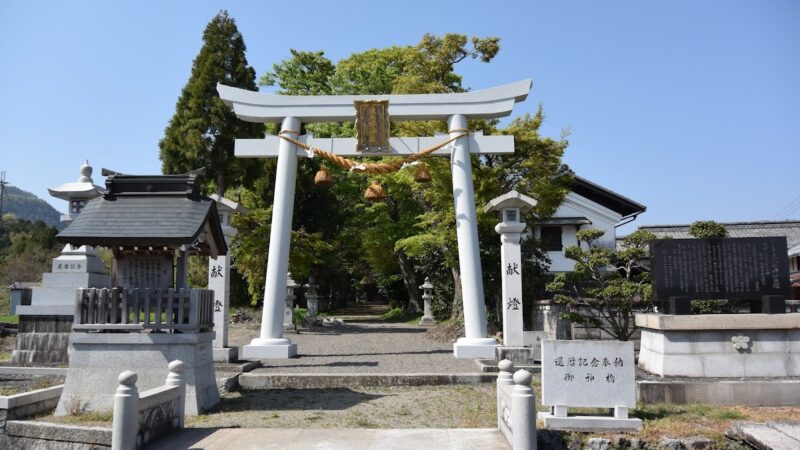
The torii gate of a shrine is the entrance to the sacred area. Bow before passing through the gate, and walk along the sides of the path, as the center (seichu) is considered the path of the gods.
Proper Hand-Washing Ritual
- Take the ladle with your right hand and wash your left hand.
- Switch the ladle to your left hand and wash your right hand.
- Take the ladle back into your right hand, receive water in your left hand, and rinse your mouth.
- Wash your left hand once more.
- Hold the ladle upright, let water flow over the handle, and return it to its original position.
Proper Worship Ritual
Follow the general shrine worship ritual of “two bows, two claps, one bow.”
- Bow lightly in front of the offering box.
- Gently place your offering in the box.
- Ring the bell if there is one.
- Bow deeply twice (two bows).
- Clap your hands twice at chest height (two claps).
- Pray with your hands clasped together.
- Bow deeply once (one bow).
Connection to Other Shrines in Shiga Prefecture
Shiga Prefecture is home to many historical shrines. When you visit Okata Shrine, why not also visit the surrounding shrines?
Taga Taisha (Taga-cho, Inukami-gun)
Affectionately known as “O-Taga-san,” this is Shiga Prefecture’s largest shrine. It enshrines Izanagi-no-Mikoto and Izanami-no-Mikoto and is worshipped as a god of longevity and matchmaking.
Hiyoshi Taisha (Otsu City)
This is the head shrine of approximately 3,800 Hiyoshi, Hie, and Sanno shrines nationwide. Located at the foot of Mount Hiei, it is known as a god of protection against evil and misfortune.
Takebe Taisha (Otsu City)
A prestigious shrine as the Ichinomiya (first-ranked shrine) of Omi Province. It enshrines Yamato Takeru and is worshipped as a god of career advancement and good fortune.
Shirahige Shrine (Takashima City)
A shrine famous for its large torii gate floating on Lake Biwa. Also known as “Itsukushima of Omi,” it is worshipped as a deity of longevity and matchmaking.
How to Enjoy Visiting Okata Shrine
Enjoying the Changing Seasons
The grounds of Okata Shrine show different faces depending on the season.
Spring (March-May): Spring flowers such as dogtooth violets and cherry blossoms adorn the grounds. The large cedar trees with their fresh green leaves are also beautiful, making it a season where you can feel the vitality of life.
Summer (June-August): The grounds, enveloped in deep green, are cool and refreshing, making you forget the heat of the city. Visiting the quiet grounds, where the sound of cicadas resonates, will soothe your soul.
Autumn (September-November): The grounds surrounded by autumn leaves are truly a spectacular sight. The contrast between the green of the large cedar trees and the surrounding autumn leaves is beautiful, making it the perfect season for photography.
Winter (December-February): The snow-covered shrine grounds are enveloped in a magical atmosphere. Visiting in the silence evokes an even deeper sense of sacredness.
Photography Tips
Okata Shrine is a great spot for photography. The following points are especially recommended:
- Panoramic View of the Great Cedar: A view looking up at the 400-year-old sacred tree from below.
- Dogtooth Violet Flowers: Delicate flowers blooming in the early spring grove.
- Main Hall and Worship Hall: The beauty of traditional shrine architecture.
- Stone Structures on the Grounds: Historic guardian lion-dogs and stone lanterns.
However, when taking photographs, please be considerate of other visitors and remember that this is a sacred place, observing proper etiquette.
Spending a Relaxing Time
The charm of Okata Shrine lies in its quiet and peaceful atmosphere. Instead of rushing through your visit, we recommend taking a leisurely stroll through the grounds, listening to the sounds of nature, and taking time to calm your mind.
If there are benches or rest areas, take some time to sit and soak up the atmosphere of the shrine grounds. You’ll be able to escape the hustle and bustle of everyday life and refresh both your mind and body.
Summary
Okata Shrine, located in Kitanogo-cho, Nagahama City, Shiga Prefecture, is a venerable shrine with a long history, founded in the 3rd year of Emperor Yuryaku’s reign (459 AD). It enshrines Sugawara no Michizane and Susanoo-no-Mikoto, and is known for its blessings of academic success and protection from evil.
With abundant natural attractions such as a 400-year-old cedar tree and a cluster of dogtooth violet flowers, you can enjoy the beauty of each season. You can also receive a Goshuin (shrine stamp), making it recommended for those who enjoy visiting shrines.
It’s easily accessible, within walking distance of JR Torahime Station and about 15 minutes by car from the Nagahama Interchange on the Hokuriku Expressway. Visiting it in conjunction with sightseeing in Nagahama city will make your trip to Shiga Prefecture even more fulfilling.
Okadaka Shrine offers a peaceful and tranquil atmosphere where you can find peace of mind while feeling the history and nature. Why not pay a visit sometime?
Things to check before your visit:
- If you wish to receive a Goshuin (shrine stamp), we recommend calling ahead to confirm.
- Festival and ritual dates may vary from year to year, so please inquire in advance.
- The blooming period of the dogtooth violets varies depending on the weather, so we recommend checking the best time to visit.
- There is a possibility of snow in winter, so please be careful of your footing.
We hope your visit to Okadaka Shrine will be a wonderful and memorable experience.