Complete Guide to Hakunu Shrine (Nagahama City, Shiga Prefecture) | The Legend of Mononobe no Moriya and the History of a Shikinaisha Shrine
Hakunu Shrine, located in Takahata-cho, Nagahama City, Shiga Prefecture, is a Shikinaisha shrine listed in the Engishiki Jinmyocho (a list of shrines compiled in the Heian period), and its former shrine rank was Gosha (village shrine). Situated at the eastern foot of Mt. Kotani, it is known as an ancient shrine with strong legends related to Mononobe no Moriya, the Great Minister of the Land. This article provides a detailed introduction to Hakunu Shrine, including its history, enshrined deities, highlights of the grounds, and access methods.
History and Origins of Hakunu Shrine
Hakunu Shrine is an ancient shrine listed as “Hakunu Shrine” in the Engishiki Jinmyocho as a Shikinaisha shrine in Asai District, Omi Province. While its founding date is unclear, according to shrine tradition, it dates back to the Asuka period.
The Legend of Mononobe no Moriya no Ōmuraji
The most distinctive feature of Hakunu Shrine is the legend surrounding Mononobe no Moriya no Ōmuraji. Mononobe no Moriya is known as the leader of the Mononobe clan, a powerful local family during the Asuka period, and for his conflict with Soga no Umako over the acceptance of Buddhism.
According to shrine tradition, in the second year of Emperor Yōmei’s reign (587 AD), after being defeated by the combined forces of Soga no Umako and Prince Shōtoku in the Teimi Rebellion, Mononobe no Moriya, accompanied by Urushibe no Kosaka, went into hiding in this area, which was his territory. To escape pursuit by the Soga clan, he hid in a cave in the eastern gorge of Kotaniyama in October of the same year, and later built a hermitage in the area of Takahata where bush clover grew.
It is said that Moriya, under the false name “Hagi Ōkina,” devoted himself to educating the villagers. After his death, the villagers, remembering his virtues, built a shrine and worshipped him as “Sho-ichii Hagino Daimyojin,” which is considered the origin of this shrine.
Changes Since the Meiji Era
In the Meiji era, Hakunu Shrine was positioned within the shrine ranking system. In 1881 (Meiji 14), it was ranked as a local shrine, and in 1901 (Meiji 34), the shrine buildings were renovated.
During this renovation in 1901, Takamimusubi-no-kami was enshrined as the principal deity, and Mononobe no Moriya-no-Omuraji, who had previously been the principal deity, was relegated to the position of a subordinate deity. This is thought to be an influence of the Meiji government’s shrine policy. Takamimusubi-no-kami is one of the three creation deities and an important deity involved in the creation of heaven and earth, but the basis for its worship at this shrine is not entirely clear.
In 1908 (Meiji 41), it was designated a shrine receiving offerings of sacred food and cloth, establishing its position as an important shrine in the region.
Deities Enshrined
The deities enshrined at Hakunu Shrine are as follows:
Main Deity
Takamimusubi-no-kami
One of the three creation deities who appeared in Takamagahara at the time of the creation of heaven and earth. Worshipped as the god who governs production and creation. While enshrined as the main deity in 1901 (Meiji 34), this was established during the Meiji-era reorganization of shrines and is not an ancient enshrined deity.
Enshrined Deities
Mononobe no Moriya no Omuraji
The leader of the Mononobe clan, a powerful family during the Asuka period. Legend says that after being defeated by Soga no Umako in the Jingwei Rebellion of 587 AD (the second year of Emperor Yomei’s reign), he fled to this area, adopted the name “Hagiu-o” (Old Man Hagiu), and taught the local people. Before 1901 (Meiji 34), he was enshrined as the main deity. In effect, the center of worship at this shrine is arguably Mononobe no Moriya.
Highlights of the Shrine Grounds
Shrine Building
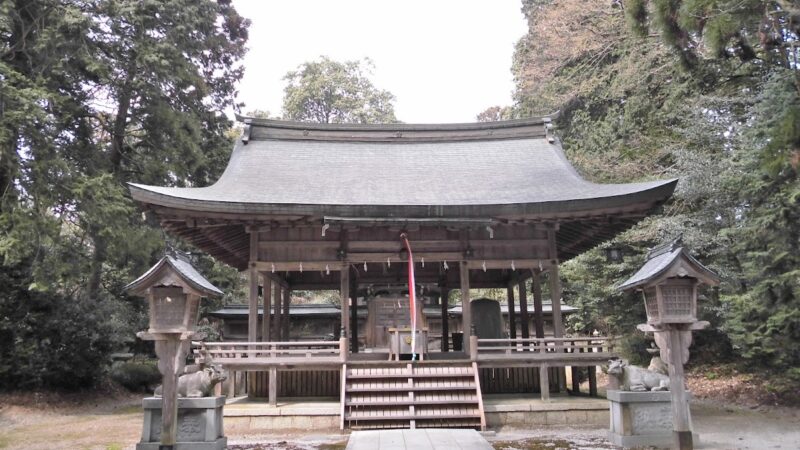
The shrine building of Hakunu Shrine is based on the structure renovated in 1901 (Meiji 34). Nestled in the quiet environment at the foot of Mt. Kotani, the shrine building possesses a simple yet solemn atmosphere.
Iwakura (Sacred Rock)
It is known that an Iwakura exists within the grounds of Hakunu Shrine. It is a valuable relic that conveys the form of ancient Shinto rituals, and tells the story of the local history of faith, where nature worship and shrine worship were fused. A connection to the cave in the eastern gorge of Mt. Kotani, where Mononobe no Moriya is said to have lived in seclusion, has also been pointed out.
Relationship with Mount Kotani
Mount Kotani rises behind Hakunu Shrine. While Mount Kotani is famous as the site of Kotani Castle, the residence of the Asai clan during the Sengoku period, it has been a sacred mountain revered for its religious significance even before that time. It is said that a cave where Mononobe no Moriya secluded himself was located on this mountain, indicating a deep connection between Hakunu Shrine and Mount Kotani.
Hakunu Shrine and the Mononobe Clan
The Mononobe clan was a powerful local family in ancient Japan, responsible for military affairs and religious rituals. Mononobe no Moriya, in particular, clashed fiercely with Soga no Umako over the acceptance of Buddhism and is generally believed to have been defeated and destroyed. However, traditions suggest that some family members and associates fled to various locations.
The traditions of Hakunu Shrine suggest that Mononobe no Moriya held territory in Asai County, Omi Province, and that he fled to this area to spend the rest of his life. While historical evidence is not entirely sufficient, this tradition is attracting attention as a valuable source suggesting a connection between the Mononobe clan and the local area.
The pseudonym “Hagiu-o” is said to originate from the fact that he built a hermitage in a place where bush clover grew abundantly. There is also a theory that the shrine’s name, “Hakunu,” is a variation of “Hagiu.”
Hakunu Shrine as a Shikinaisha (Shrine Listed in the Engishiki)
Hakunu Shrine is a Shikinaisha (shrine listed in the Engishiki Jinmyocho). The Engishiki Jinmyocho is a list of shrines within the Engishiki, completed in 927 AD, and lists shrines throughout the country that were considered important by the imperial court at the time.
Several Shikinaisha are listed in Asai District, Omi Province, and Hakunu Shrine is one of them, indicating its importance as a local shrine since ancient times. Being a Shikinaisha indicates that the shrine had established religious beliefs at least during the Heian period.
Annual Events and Festivals
Hakunu Shrine holds various festivals throughout the year. As the local guardian deity, it has long been revered by the residents.
Annual Festival
The annual festival is held every autumn, attracting many local worshippers. It is recommended to check the specific date before visiting.
Other Events
Seasonal festivals such as the New Year’s Day Festival and Spring Festival are held. For detailed dates and information, please refer to the Shiga Prefectural Shrine Association or local information sources.
Location
Address: 296 Takahata-cho, Nagahama City, Shiga Prefecture 529-0313
Hakunu Shrine is located in Takahata-cho, in the northern part of Nagahama City, Shiga Prefecture. Situated at the eastern foot of Mt. Otani, it is surrounded by a quiet rural landscape. It is also close to the ruins of Otani Castle, the former base of the Asai clan, and the area retains a strong historical atmosphere.
Access Information
Nearest Station & Line
JR Hokuriku Main Line, Kawake Station
The nearest station to Hakunu Shrine is Kawake Station on the JR Hokuriku Main Line. The shrine is approximately 3km east of Kawake Station.
- Travel Time from Station: Approximately 40 minutes on foot, approximately 5-7 minutes by taxi
- Line: JR Hokuriku Main Line (towards Maibara Station to Tsuruga Station)
Kawake Station is only served by local trains, but it is accessible by transferring at Maibara Station or Nagahama Station.
Nearest Bus Stop & Line
Public transportation access is limited, and bus services are infrequent. Taking a taxi from Kawake Station, renting a car, or using a private vehicle is recommended.
A local community bus may be operating; it is recommended to check the latest information on the Nagahama City website or at the tourist information center.
Access by Car
From Nagahama IC on the Hokuriku Expressway
- Approximately 15 minutes from Nagahama IC via National Route 365
- Parking: Parking space for visitors is available on the shrine grounds (limited spaces, so please be aware during festivals)
From Maibara IC on the Meishin Expressway
- Approximately 20 minutes from Maibara IC via National Route 8 and prefectural roads
Points to Note When Visiting
- The shrine grounds are a quiet environment, so please observe proper visiting etiquette.
- The shrine office may not always be staffed, so please check in advance if you wish to receive a Goshuin (shrine stamp), etc.
- The surrounding area is residential and agricultural land, so please be considerate of local residents by not parking on the street.
Nearby Tourist Spots
Odani Castle Ruins
Behind Hakunu Shrine, on Mount Odani, lie the ruins of Odani Castle, the residence of the Asai clan during the Sengoku period. Known as the tragic site of Asai Nagamasa and Oichi-no-kata, it is designated as a national historic site. The hiking trail is well-maintained, and from the summit you can enjoy a spectacular view of Lake Biwa and the Kohoku Plain.
Odani Castle Sengoku Historical Museum
This museum allows you to learn about the history of Odani Castle and the Asai clan. Located a few minutes’ drive from Hakunu Shrine, it offers detailed information about the history of the Kohoku region during the Sengoku period.
Nagahama City
Nagahama city is home to many tourist attractions, including Kurokabe Square and Nagahama Castle. You can enjoy the history and culture of the Kohoku region in conjunction with a visit to Hakunu Shrine.
Points to Note When Visiting
Etiquette for Visiting Shrines
Follow the basic etiquette for visiting a shrine.
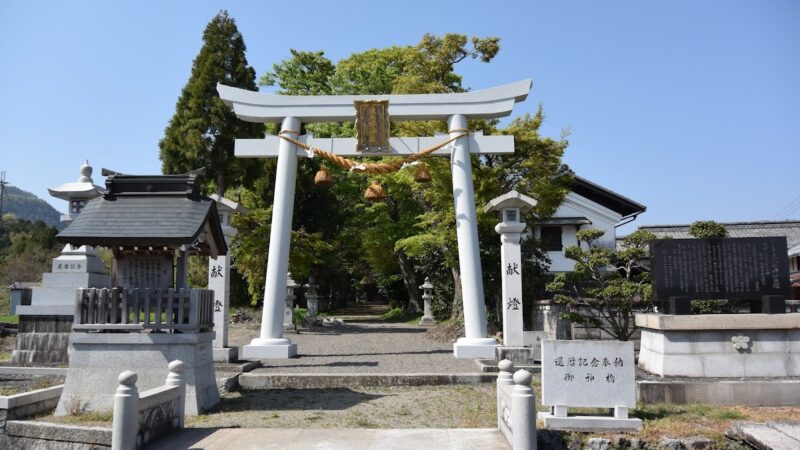
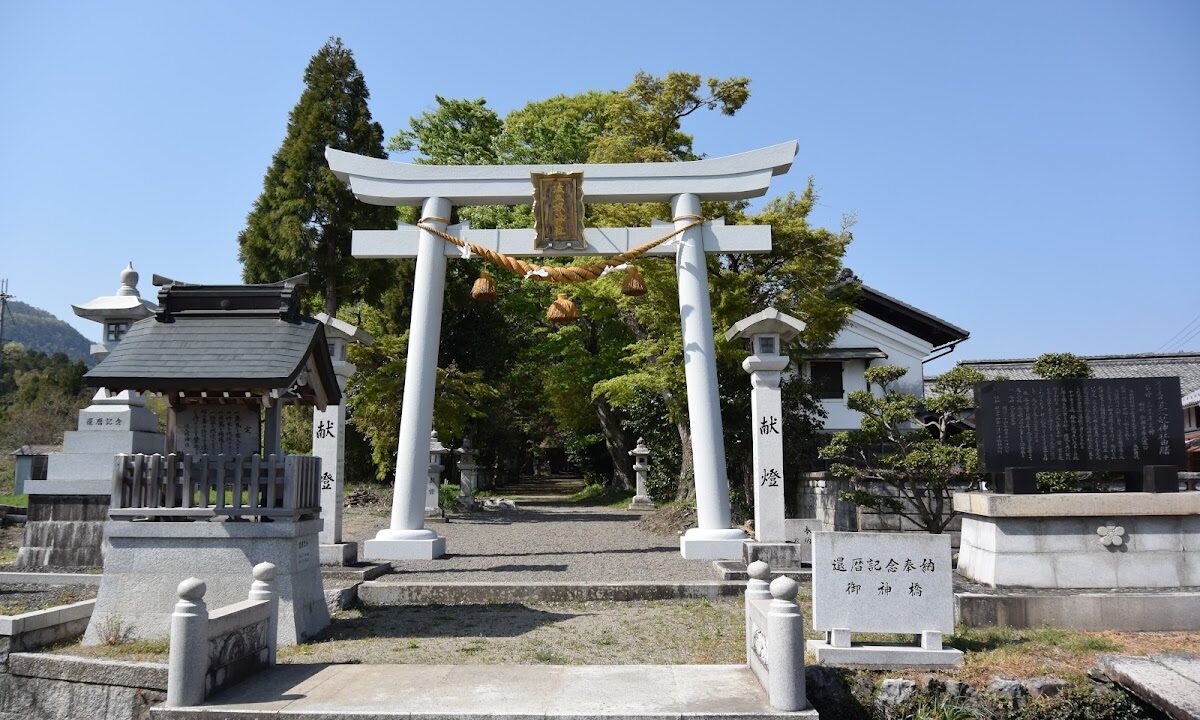
- Bow before passing through the torii gate.
- Purify your body and mind at the water basin.
- Bow twice, clap twice, and bow once in front of the main hall.
- Stroll quietly around the shrine grounds.
- Bow once again at the torii gate when leaving.
Regarding Photography
Photography is generally permitted on the shrine grounds, but please be considerate of other worshippers. Refrain from taking photos inside the shrine buildings or in sacred areas, or obtain permission beforehand.
Regarding Goshuin (Shrine Seals)
It is recommended to check in advance whether you can obtain a goshuin at Hakunu Shrine. If there is no permanent shrine office, the priest’s presence may be limited.
The Charm of Hakunu Shrine
The greatest charm of Hakunu Shrine lies in the strong traditions surrounding the historical figure Mononobe no Moriya. While Mononobe no Moriya is generally depicted as a “villain,” in this region he is revered as “Hagiu-o,” who enlightened the villagers, and is worshipped as a deity.
Hakunu Shrine, nestled in the tranquil foothills of Mount Otani, is a fascinating place for anyone interested in ancient history and Shinto beliefs, as it blends ancient ritual sites such as sacred rocks with the legends of the Mononobe clan.
Despite its status as a Shikinaisha (a shrine listed in the Engishiki), it retains a simple, unspoiled atmosphere, making it a charming place for quiet worship. Visiting it in conjunction with the ruins of Otani Castle and sightseeing in Nagahama will allow you to truly appreciate the depth of history in the Kohoku region.
Summary
Hakunu Shrine, located in Takahata-cho, Nagahama City, Shiga Prefecture, is a Shikinaisha and a historical shrine steeped in the legends of Mononobe no Moriya no Omuraji. While Takamimusubi no Kami is the main deity and Mononobe no Moriya no Omuraji is enshrined alongside, the worship of Mononobe no Moriya is essentially central.
Nestled in the tranquil environment at the foot of Mount Otani, the shrine grounds retain traces of ancient rituals such as sacred rocks, allowing visitors to feel the history of faith that has continued since ancient times. It is located approximately 3km from JR Kawage Station and is easily accessible by car. Visiting this shrine in conjunction with sightseeing at the Odani Castle ruins and the city of Nagahama will allow you to experience the rich history and culture of the Kohoku region. This shrine is highly recommended for those interested in the legends of the Mononobe clan, those visiting Shikinaisha shrines, and those seeking a quiet, ancient shrine.