Complete Guide to Shiwa Inari Shrine (Iwate Prefecture) | History, Blessings, Access, and Highlights Explained in Detail
Shiwa Inari Shrine, located in Shiwa-cho, Shiwa-gun, Iwate Prefecture, is a venerable shrine known as one of the oldest in the Tohoku region. Locally, it is affectionately known as “Shiwa no Oinari-san” and is sometimes considered one of Japan’s three or even five greatest Inari shrines. This article provides a detailed explanation of Shiwa Inari Shrine’s history, blessings, highlights, and access methods.
Basic Information on Shiwa Inari Shrine
Location and Access
Address: 17-1 Maehira, Masuzawa, Shiwa-cho, Shiwa-gun, Iwate Prefecture 028-3303
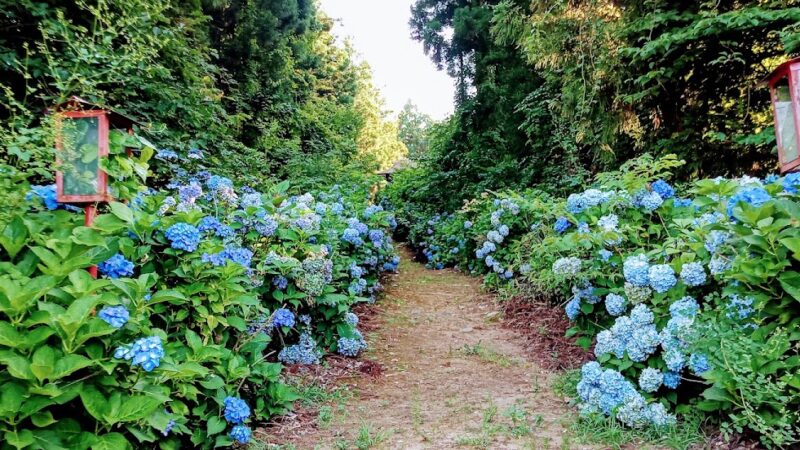
Shiwa Inari Shrine is located on the left bank of the Takinagawa River, at the western foot of the mountains in the Masuzawa village of Shiwa-cho. Surrounded by abundant nature, it enjoys a tranquil environment where visitors can appreciate the beautiful scenery of each season.
Access by Car:
- Approximately 15 minutes from the Shiwa Interchange on the Tohoku Expressway
- Approximately 10 minutes by car from Shiwa-Chuo Station on the JR Tohoku Main Line
Access by Public Transportation:
- Taking a taxi from Shiwa-Chuo Station on the JR Tohoku Main Line is convenient
- Since the number of buses is limited, we recommend checking the timetable in advance.
Opening Hours and Visiting Hours
While it is generally possible to visit the shrine grounds all day, the hours for receiving Goshuin (shrine stamps) and requesting prayers at the shrine office are as follows:
- Shrine Office Reception Hours: 9:00 AM to 4:30 PM (Normal Hours)
- Closed Days: None (Open all year round)
However, hours may change during festivals and events. Those wishing to request prayers should check the official website or inquire by phone in advance.
History of Shiwa Inari Shrine
Founded by Minamoto no Yoriyoshi and his son Yoshiie
The founding of Shiwa Inari Shrine dates back to 1057 (Tenki 5). It is said to have been founded by Minamoto no Yoriyoshi, the Chinju-fu Shogun (Commander-in-Chief of the Northern Defense Headquarters), who was on his way to pacify Oshu, and his son, Minamoto no Yoshiie (Hachiman Taro Yoshiie).
During the Former Nine Years’ War (1051-1062), Minamoto no Yoriyoshi and his son Yoshiie enshrined the Inari deity in this area to pray for victory. After their victory, they built a shrine as an expression of gratitude, which is considered the beginning of Shiwa Inari Shrine.
Due to this historical background, Shiwa Inari Shrine has long been revered as an important shrine associated with the Minamoto clan in the Tohoku region.
Former Shrine Rank and Current Status
Under the Meiji era’s shrine ranking system, it was ranked as a Prefectural Shrine, recognized as a central shrine in the region. Currently, it is designated as a Special List Shrine by the Association of Shinto Shrines, and is positioned as one of the most prestigious shrines in Iwate Prefecture.
A Special List Shrine is a special shrine designated by the Association of Shinto Shrines, selected for its historical and social significance. This designation demonstrates the long history and regional importance of Shiwa Inari Shrine.
Deities and Benefits
Deities Enshrined
Shiwa Inari Shrine enshrines the following three deities:
- Ukanomitama-no-Okami: The principal deity of Inari, the god of abundant harvests and business prosperity.
- Sarutahiko-no-Okami: The god of opening paths, the god of traffic safety and protection from evil directions.
- Omiyanome-no-Okami: Also identified with Ame-no-Uzume-no-Mikoto, the god of performing arts and matchmaking.
It is believed that the combination of these three deities bestows a wide range of blessings.
Main Blessings
Shiwa Inari Shrine is particularly known for the following blessings:
Abundant Harvests and Business Prosperity:
As this is the original divine virtue of Inari, many worshippers visit to pray for bountiful harvests and business success.
Traffic Safety:
Due to the power of Sarutahiko-no-Okami to open paths, the shrine is especially famous for its blessings of traffic safety. Many people from both within and outside Iwate Prefecture visit this shrine to have their cars blessed. It’s a deeply rooted local custom to visit when purchasing a new car or before long-distance driving.
Prayer for a Bountiful Catch: Although located in a mountainous area far from the sea, the shrine enjoys strong faith from those involved in the fishing industry, and many visitors come to pray for a bountiful catch.
Exorcism and Protection from Misfortune: The shrine is considered highly effective in warding off misfortune for those entering their unlucky years, and there is a constant stream of visitors praying for protection from evil.
Prayer for Success in Exams: During exam season, many students and their parents visit to pray for success. Amulets for academic achievement are also popular.
Good Fortune and Prosperity: The shrine is believed to bestow overall good fortune, and many people visit at important turning points in their lives.
Highlights of the Shrine Grounds
The 1000-Year-Old Sacred Tree
The most impressive feature of the grounds of Shiwa Inari Shrine is the ancient cedar tree said to be approximately 1000 years old. This gigantic sacred tree is believed to have watched over the grounds since the shrine’s founding, and it attracts worshippers as a living witness to a long history.
Its trunk circumference is several meters, and its overwhelming presence overwhelms visitors. Many worshippers visit to touch this sacred tree and receive its power. The tree itself is revered as a deity and is an object of nature worship.
Atmosphere of the Shrine and Grounds
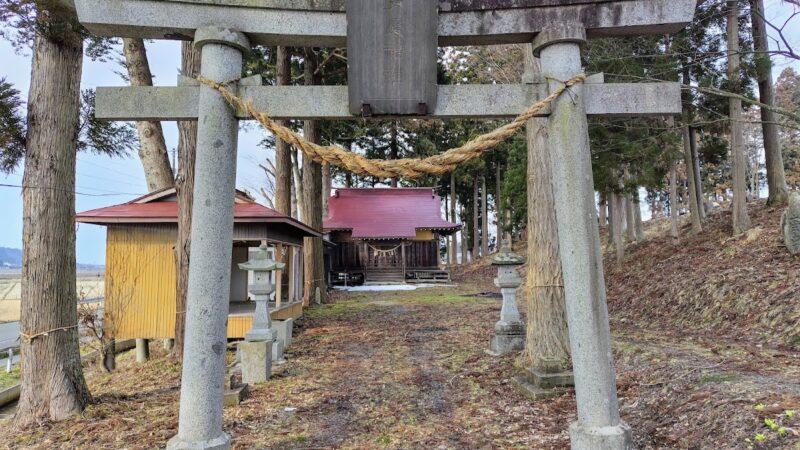
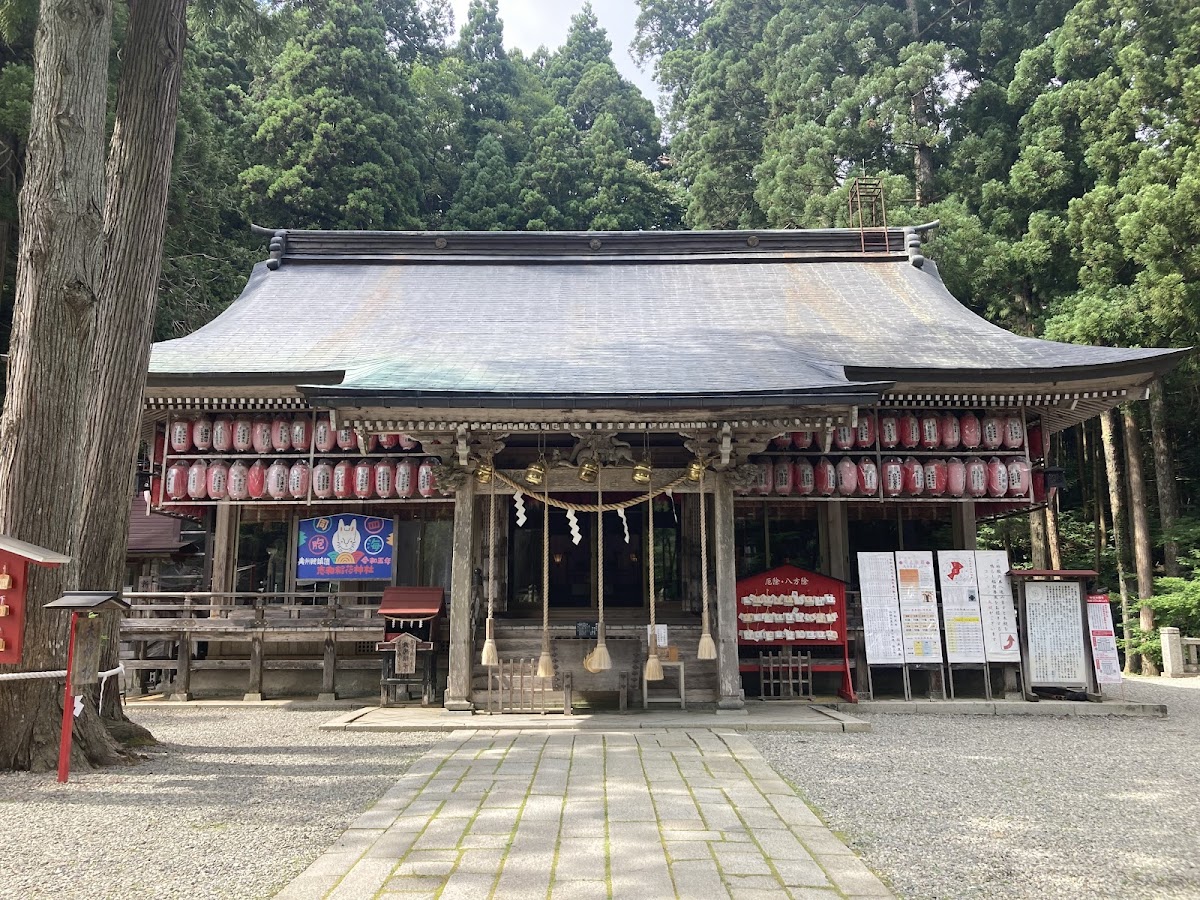
Both the main hall and the worship hall are built in the traditional shrine architectural style, and the vermilion torii gate and shrine buildings stand out beautifully against the green of the mountains, creating a stunning landscape. The grounds are enveloped in a tranquil atmosphere, allowing worshippers to calm their minds and offer their prayers.
The shrine buildings are located at the top of a stone staircase, and the journey itself can be enjoyed as part of the worship experience. One of the charms of Shiwa Inari Shrine is that visitors can experience the changing seasons while offering their prayers.
Fox Statues and the Faith of the Inari God
Fox statues, a characteristic feature of Inari shrines, are placed throughout the grounds. There is a strong faith in the fox (the messenger of the Inari god), and many people can be seen paying their respects to these statues.
Relationship with Shiwa Koinari Shrine
Adjacent Shiwa Koinari Shrine
Immediately next to Shiwa Inari Shrine stands Shiwa Koinari Shrine. This is also a shrine that has attracted worshippers since ancient times. It was formerly known as “Hongu-ji” and was a place where Shugendo (mountain asceticism) flourished until the Meiji Restoration.
The enshrined deity is Ukanomitama-no-Mikoto, revered as the god of “good fortune and prosperity” and “industry.” Located in a quiet environment surrounded by trees, it has a unique atmosphere different from Shiwa Inari Shrine.
The Legend of the White Fox Mummy
The most famous legend at Shiwako Inari Shrine is that of the white fox mummy.
In 1954 (Showa 29), when Typhoon Ione (Typhoon No. 15) struck the Tohoku region, the sacred cedar tree in front of Shiwako Inari Shrine felled. Discovered in the hollow at its base was the mummy of a white fox, a divine messenger.
This discovery became a major topic of conversation and attracted attention as a valuable example demonstrating the existence of divine messengers (foxes) in Inari worship. Currently, this white fox mummy is stored at Shiwako Inari Shrine and is occasionally displayed on special occasions.
The Unusual Divine Messenger Shrine in Front of the Main Hall
A unique feature of Shiwako Inari Shrine is its unusual arrangement of a divine messenger shrine in front of the main hall. Typically, Inari shrines have shrines dedicated to the guardian spirits of the deity located beside the main hall or elsewhere on the grounds. However, Shiwa Koinari Shrine has a unique arrangement where these shrines are positioned directly in front of the worship hall.
This indicates a particularly strong belief in the guardian spirits (foxes) and is thought to be related to the discovery of a mummified white fox.
Main Annual Festivals and Events
Annual Grand Festival
Shiwa Inari Shrine holds various festivals and events every year. The Annual Grand Festival, in particular, is an important event for the community, attracting many worshippers and local residents.
New Year’s Visit
The shrine is bustling with worshippers for their first visit of the year. Many people visit to pray for traffic safety, business prosperity, family safety, and other wishes for the new year.
Other Annual Events
Seasonal festivals such as the Setsubun Festival and the Spring and Autumn Annual Festivals are also held. Detailed dates can be found on the official website.
Prayers and Offerings
Types of Prayers
At Shiwa Inari Shrine, you can receive the following types of prayers:
- Prayer for Traffic Safety (Car Blessing)
- Protection from Evil Spirits
- Prayer for Success in Exams/Academic Achievement
- Prayers for Business Prosperity
- Family Safety
- Prayer for Safe Childbirth
- Recovery from Illness
- Other Various Prayers
Car blessings are particularly popular, and many cars visit the shrine grounds on weekends. Reservations are not required, but there may be a waiting time during busy periods.
Amulets and Goshuin (Shrine Seals)
The shrine office offers various amulets and goshuin (shrine seals). A variety of amulets are available to suit different purposes, such as traffic safety amulets and amulets for success in exams.
Goshuin are popular as mementos of your visit and are carefully written. Goshuin notebooks are also available, making it a great option for those starting to collect goshuin.
Nearby Tourist Attractions
Tourism in Shiwa Town
Shiwa Town, where Shiwa Inari Shrine is located, is situated in the central part of Iwate Prefecture and is a region rich in nature and agriculture. The following are some of the nearby tourist attractions:
Shiwa Fruit Park: A facility unique to Shiwa Town, which is known for its fruit cultivation, where you can enjoy seasonal fruit picking and purchase local products.
Shiwa Town Ogawa Project: A multi-purpose facility that has attracted national attention as a successful example of regional revitalization. It houses a library, a market, restaurants, and more.
Shiroyama Park: Known as a famous cherry blossom viewing spot, it is bustling with many visitors in spring.
Other Tourist Attractions in Iwate Prefecture
When visiting Shiwa Inari Shrine, why not also explore other tourist attractions in Iwate Prefecture?
- Morioka City: The prefectural capital, home to famous landmarks such as Morioka Castle Ruins Park, Morioka Hachimangu Shrine, and Ishiwari-zakura Cherry Tree.
- Hiraizumi: Home to the World Heritage Sites of Chusonji Temple’s Golden Hall and Motsuji Temple.
- Hanamaki Onsenkyo: A place associated with Kenji Miyazawa, where you can enjoy literary walks along with hot springs.
Manners and Precautions for Visiting Shrines
Basic Shrine Etiquette
Please observe basic shrine etiquette for a pleasant visit.
- Bow before passing through the torii gate: This is a courtesy before entering the sacred area.
- Purify yourself at the water basin: Purify your left hand, then your right hand, then your mouth.
- Avoid walking in the center of the approach: The center is considered the path of the gods.
- Etiquette at the main hall: Two bows, two claps, and one bow are the basic rituals.
Regarding Photography
Photography is generally permitted within the shrine grounds, but please refrain from taking pictures inside the main hall or during Shinto rituals. It is also important to be considerate of other worshippers.
Regarding Attire
Casual attire is acceptable for worship, but if you are receiving prayers, clean and subdued clothing is preferable.
Accommodation near Shiwa Inari Shrine
Hotels in Shiwa Town and Morioka City
For those considering accommodation near Shiwa Inari Shrine, the following hotels are recommended:
Within Shiwa Town:
There are several small accommodations within the town. Enjoy local cuisine in a homey atmosphere.
Morioka City: Morioka City, about a 30-minute drive away, offers a wide range of options from business hotels to luxury hotels. The area around Morioka Station is convenient.
Hanamaki Onsenkyo: A short trip will take you to enjoy the hot springs of Hanamaki Onsenkyo. A travel plan combining sightseeing and hot springs is also recommended.
About Japan’s Three Great Inari Shrines and Five Great Inari Shrines
The Position of Shiwa Inari Shrine
Shiwa Inari Shrine is sometimes considered one of Japan’s Three Great Inari Shrines or Five Great Inari Shrines locally. However, there is no nationwide unified definition of Japan’s Three Great Inari Shrines or Five Great Inari Shrines, and different shrines may be listed depending on the region.
Generally known as Japan’s Three Great Inari Shrines are Fushimi Inari Taisha (Kyoto), Toyokawa Inari (Aichi), and Yutoku Inari Shrine (Saga), but due to local beliefs and historical background, Shiwa Inari Shrine also holds an important position as a major Inari shrine in the Tohoku region. ### One of Tohoku’s Foremost Inari Shrines
Regardless of its national ranking, Shiwa Inari Shrine is undoubtedly one of the most prominent Inari shrines in the Tohoku region. Its solid history, dating back to its founding by Minamoto no Yoriyoshi and Yoshiie, its 1000-year-old sacred tree, its status as a specially designated shrine, and the fervent devotion that continues to this day all attest to the importance of this shrine.
Detailed Access Information to Shiwa Inari Shrine
Access by Car (Details)
From Tokyo:
- Take the Tohoku Expressway north and exit at Shiwa IC (approx. 6 hours)
- Approximately 15 minutes from the IC via prefectural roads
From Sendai:
- Take the Tohoku Expressway north and exit at Shiwa IC (approx. 2 hours)
- Approximately 15 minutes from the IC via prefectural roads
From Morioka City:
- Take National Route 4 south towards Shiwa Town (approx. 30 minutes)
Parking Information
The shrine grounds have a free parking lot for visitors. It can accommodate approximately 50 regular cars. Temporary parking lots are also available during peak seasons such as New Year’s Day and the annual festival.
Access by Public Transportation (Details)
Train:
- Get off at Shiwa-Chuo Station on the JR Tohoku Main Line
- Approximately 10 minutes by taxi from the station (approximately 2,000 yen)
Bus:
- Since the number of local buses is limited, using a taxi is more convenient.
- We recommend checking the Shiwa Town community bus information in advance.
Frequently Asked Questions (FAQ)
Q1: What are the visiting hours for Shiwa Inari Shrine?
A1: You can visit the shrine grounds all day, but the shrine office is only open from 9:00 AM to 4:30 PM for receiving Goshuin (shrine stamps) and accepting requests for prayers. If you wish to receive prayers, we recommend visiting within these hours.
Q2: Is a reservation required for car blessing?
A2: Reservations are not required, but it can get crowded on weekends and holidays. If you want to be sure to receive prayers or if you are short on time, we recommend calling in advance. ### Q3: Can I see the white fox mummy at Shiwa Koinari Shrine?
A3: The white fox mummy is usually not open to the public, but it may be displayed during special events or occasions. Please contact Shiwa Koinari Shrine or Shiwa Inari Shrine directly for information on when it will be open.
Q4: Can I get a Goshuin (shrine stamp)?
A4: Yes, you can get a Goshuin during the shrine office’s reception hours (9:00 AM to 4:30 PM). If you do not have a Goshuincho (stamp book), they are also available at the shrine office.
Q5: How crowded is it during the New Year’s visit?
A5: The shrine is very crowded from New Year’s Day through the third day. It is especially crowded in the morning and evening on New Year’s Day, so we recommend visiting with plenty of time to spare. The parking lot may also be crowded, so it’s best to go early.
Q6: Is it possible to visit with a pet? A6: Regarding bringing pets into the shrine grounds, consideration for other visitors is necessary. Pets are allowed if they are on a leash and proper etiquette, such as cleaning up after them, are permitted, but please refrain from bringing them inside the shrine buildings. If you have any concerns, we recommend checking with the shrine in advance.
Q7: Should I visit both Shiwa Inari Shrine and Shiwa Koinari Shrine?
A7: The two shrines are adjacent to each other and each has a different history and characteristics. If you have the time, visiting both will allow for a deeper religious experience. Those particularly interested in the legend of the white fox mummy are recommended to visit Shiwa Koinari Shrine as well.
Summary
Shiwa Inari Shrine is a representative ancient shrine of Iwate Prefecture, with a history of approximately 1000 years since its founding by Minamoto no Yoriyoshi and his son Yoshiie. This shrine boasts a thousand-year-old sacred tree, diverse blessings for traffic safety, academic success, and protection from evil, and the legend of the white fox mummy at the adjacent Shiwa Inari Shrine, offering plenty to see and enjoy.
Its convenient location, easily accessible from the Tohoku Expressway, makes it ideal for combining with sightseeing in Iwate Prefecture. Its relatively close proximity to tourist destinations like Morioka and Hiraizumi also makes it easy to incorporate into an Iwate trip itinerary.
Shiwa Inari Shrine offers blessings for various aspects of life, including abundant harvests, business prosperity, traffic safety, and academic success. Why not calm your mind in the tranquil grounds and experience the shrine’s long history while offering your prayers?
When visiting Iwate Prefecture, be sure to include a visit to Shiwa Inari Shrine in your travel plans. It’s sure to be a memorable experience.