Complete Guide to Shiwa Inari Shrine | A Power Spot in Iwate Prefecture with a Thousand-Year History [Goshuin (Shrine Seal), Access, and Benefits]
Shiwa Inari Shrine, located at the foot of the mountains in Shiwa-cho, Shiwa-gun, Iwate Prefecture, surrounded by the babbling of the Takina River and ancient cedar groves, is one of Tohoku’s oldest shrines, boasting a history of over a thousand years. Affectionately known as “Michinoku’s Inari-san” and “Shiwa’s Inari-san” by locals, it is known for its boundless divine blessings, including abundant harvests, traffic safety, and protection from evil.
This article comprehensively introduces information you should know before visiting Shiwa Inari Shrine, including its history, enshrined deities, benefits, highlights of the grounds, goshuin information, and access methods.
What is Shiwa Inari Shrine? An Overview of Tohoku’s Oldest Shrine
Shiwa Inari Shrine is a shrine located on the left bank of the Takina River, at the western foot of the mountains in Masuzawa village, Shiwa-cho, Shiwa-gun, Iwate Prefecture. Formerly a prefectural shrine, it is currently designated as a special shrine by the Association of Shinto Shrines.
Locally, it is sometimes considered one of the “Three Great Inari Shrines of Japan” or “Five Great Inari Shrines of Japan,” and is widely known as a representative Inari shrine of the Tohoku region. Giant cedar trees, said to be over 1,000 years old, flourish luxuriantly within the shrine grounds, creating a solemn atmosphere befitting a sacred place.
Basic Information
- Official Name: Shiwa Inari Shrine
- Location: 17 Maehira, Masuzawa, Shiwa-cho, Shiwa-gun, Iwate Prefecture
- Phone Number: 019-673-7608
- Former Shrine Rank: Prefectural Shrine
- Current Rank: Special Shrine
History of Shiwa Inari Shrine | A Continuous Faith from Minamoto no Yoriyoshi to the Nanbu Domain
While there are various theories regarding the founding of Shiwa Inari Shrine, it is certain that it has a history of over a thousand years. In particular, records show that Minamoto no Yoriyoshi, the Chinju-fu Shogun (Commander-in-Chief of the Northern Defense Headquarters), rebuilt the shrine in 1057 (Tenki 5), marking a significant turning point in the history of Shiwa Inari Shrine.
Connection with Minamoto no Yoriyoshi and his son Yoshiie
During the Former Nine Years’ War (1051-1062), Minamoto no Yoriyoshi and his son Yoshiie fought in the Tohoku region to pacify Oshu. It is said that they prayed for victory at Shiwa Inari Shrine, and after achieving a resounding victory, they rebuilt the shrine in 1057 (Tenki 5). This story led to Shiwa Inari Shrine gaining reverence from the samurai class.
From the Hiraizumi Culture Period to the Middle Ages
During the flourishing Hiraizumi culture, the Hizume clan, vassals of the Oshu Fujiwara clan, held Shiwa Inari Shrine in high esteem. In the Middle Ages, the Shiba clan, who ruled this area, worked to protect the shrine, donating land and constructing shrine buildings.
Protection by the Nanbu Domain in the Early Modern Period
During the Edo period, successive lords of the Nanbu Domain held Shiwa Inari Shrine in high regard, continuously donating land and constructing shrine buildings. In particular, in 1834-1835 (Tenpo 5-6), the “Inari Road” was constructed to facilitate worshippers, demonstrating the domain’s utmost devotion to the deity.
The construction of this Inari Road increased the number of worshippers from distant areas, and Shiwa Inari Shrine became a revered shrine throughout the Tohoku region, attracting faith from all over the Tohoku area as the “guardian deity of Oshu.”
Deities Enshrined | Three Noble Deities and Their Divine Virtues
Shiwa Inari Shrine enshrines three noble deities whose divine virtues are vast and boundless, encompassing all aspects of life and livelihood.
Ukanomitama-no-Okami
This is the principal deity, also known as Inari-no-Okami. In the Kojiki, Ukanomitama-no-kami appears as Ukanomitama-no-mikoto, and in the Nihon Shoki as Kurainadama-no-mikoto, and is known as the god who presides over food and grains.
Divine Virtues
- Abundant harvests
- Business prosperity
- Industrial development
- Good fortune and prosperity
This god is particularly revered by people involved in agriculture and commerce, and is worshipped as a god who brings abundant harvests and business prosperity.
Sarutahiko-no-Okami
This is a Kunitsukami (earthly god) who guided the descent of the heavenly grandchild, and is known as the god of opening paths. Appearing in the Kojiki and Nihon Shoki, he is believed to have the power to guide all things in a positive direction.
Divine Virtues
- Traffic safety
- Opening paths (opening the path of life)
- Protection from misfortune
- Safe travel
The reason why Shiwa Inari Shrine is particularly famous for prayers for traffic safety is largely attributed to the divine virtues of Sarutahiko-no-Okami. ### Omiyanome-no-Okami
A goddess who presides over court rituals and is considered the guardian deity of Amaterasu-Omikami’s palace (Omiya). She is worshipped as a goddess who brings harmony and peace.
Divine Virtues
- Family Safety
- Matchmaking
- Harmony and Harmony
- Protection of Women
She attracts worshippers who pray for peace in their homes and harmony in their relationships.
Benefits of Shiwa Inari Shrine | Particularly Effective Prayers
Shiwa Inari Shrine is known for its wide range of benefits related to all aspects of life, but it is considered particularly effective for the following prayers:
Prayers for Traffic Safety and Car Blessing
Due to the divine virtue of Sarutahiko-no-Okami’s road-opening power, Shiwa Inari Shrine is known as one of the leading sacred sites for traffic safety prayers in the Tohoku region. Worshippers from all over Japan visit to have their new cars blessed and to pray for safe driving every day. A vehicle prayer area is located within the shrine grounds, where you can receive a respectful prayer from a Shinto priest.
Exorcism and Protection from Misfortune
Exorcism and protection from misfortune during one’s unlucky year are among the most representative blessings of Shiwa Inari Shrine. Many people receive prayers not only for the main unlucky year, but also for the preceding and succeeding unlucky years.
Prayer for Success in Exams and Academic Achievement
During exam season, many visitors come to pray for success in exams. Thanks to the divine virtues of Sarutahiko-no-Okami, who opens the way, students and their parents continue to visit to pray for success in exams and academic achievement.
Prayer for Abundant Harvest and Bountiful Catch
Thanks to the divine virtues of Ukanomitama-no-Okami, the Inari deity, the shrine enjoys strong faith from people involved in agriculture and fishing, and visits continue to be made to pray for bountiful harvests and abundant catches.
Other Benefits
- Business Prosperity
- Family Safety
- Good Fortune
- Recovery from Illness
- Matchmaking
- Prayer for Safe Childbirth
Highlights of the Shrine Grounds | Ancient Cedars and the Nature of the Sacred Area
The grounds of Shiwa Inari Shrine are enveloped in a mystical atmosphere created by the clear waters of the Takinagawa River and the ancient cedar trees.
The Great Cedar Grove of Shiwa Inari (Town-Designated Cultural Property)
Several giant cedar trees, said to be over 1,000 years old, stand tall within the shrine grounds. These are designated as a cultural property of Shiwa Town as the “Great Cedar Grove of Shiwa Inari,” and serve as living witnesses to a long history of faith.
The densely growing cedar grove fills the grounds with a sacred atmosphere, giving visitors a deep sense of healing and awe.
Shrine Building
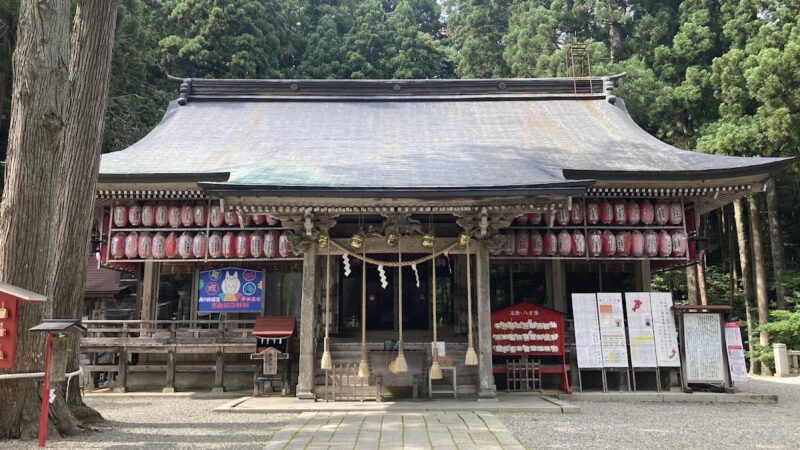
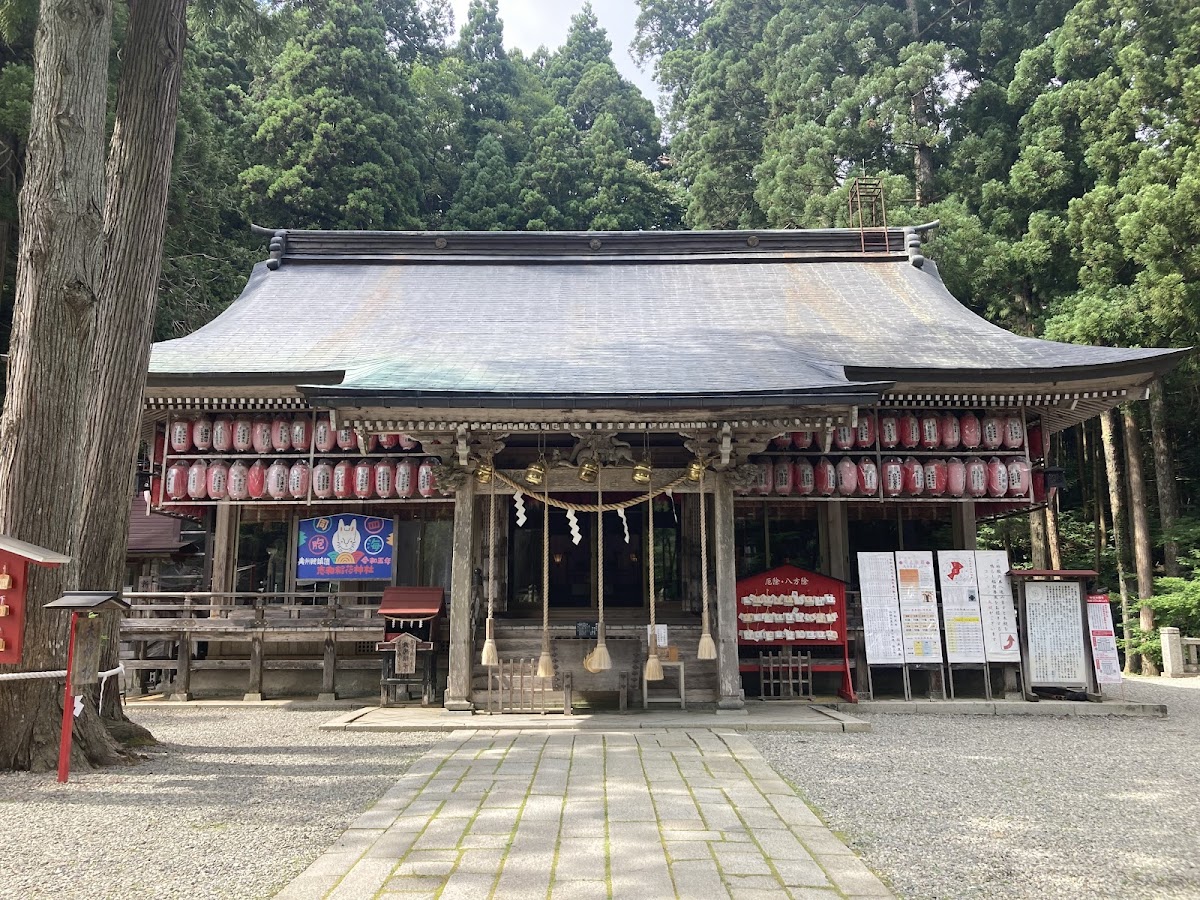
The current shrine building has reached its present state through successive constructions and repairs. The beautiful vermilion-lacquered shrine building possesses both the vibrant beauty characteristic of an Inari shrine and the dignified presence of an ancient shrine in the Tohoku region.
The Clear Stream of the Takinagawa River
The clear stream of the Takinagawa River, flowing through the shrine grounds, is cherished as a source of cleansing for worshippers. The gentle murmur of the river further enhances the tranquility of the sacred area, bringing a sense of peace.
Relationship with Shiwafuru Inari Shrine | The Legend of the Fox Mummy
Nearby Shiwa Inari Shrine is Shiwafuru Inari Shrine. The two shrines are closely related, and many people visit both together.
Shiwafuru Inari Shrine gained attention when a “fox mummy” was discovered in a sacred tree felled during Typhoon Ione (1948). This mysterious event is still recounted today as a symbolic event of the relationship between Inari worship and foxes.
Information about Shiwa Inari Shrine
- Location: 108 Komori, Masuzawa, Shiwa-cho, Shiwa-gun, Iwate Prefecture
- Deity: Ukanomitama-no-Mikoto
- Prayer Hours: 8:00 AM – 5:00 PM
Goshuin (Shrine Seal) Information | Items Available at Shiwa Inari Shrine
At Shiwa Inari Shrine, you can receive a goshuin as proof of your visit.
Features of the Goshuin
The goshuin of Shiwa Inari Shrine is characterized by its powerful ink calligraphy and red seal. It features the words “Guardian of Oshu” and “Shiwa Inari Shrine,” making it popular among goshuin enthusiasts as a memento of their visit.
Reception at the Shrine Office
Goshuin are available at the shrine office. After your visit, please leave your goshuin book and have it inscribed. The offering fee is the same as for most shrines.
Other Items Offered
In addition to Goshuin (temple/shrine stamps), amulets, talismans, and votive tablets are also offered. Traffic safety amulets and amulets for warding off evil are particularly popular.
Annual Events | Main Festivals of Shiwa Inari Shrine
Shiwa Inari Shrine holds various festivals throughout the year.
New Year’s Visit (January 1st-3rd)
Many worshippers from within and outside the prefecture visit for the New Year’s visit. The shrine grounds are bustling with people praying for safety and happiness throughout the year.
Hatsuumasai Festival (First Horse Day of February)
The Hatsuumasai Festival is one of the most important festivals for Inari shrines. It is a traditional festival praying for a bountiful harvest and business prosperity.
Annual Grand Festival (Autumn)
The Annual Grand Festival, the most important annual event at Shiwa Inari Shrine, features a portable shrine procession and dedication ceremonies, making it a grand festival involving the entire community.
Other Festivals
- Setsubun Festival (February)
- Summer Purification Ceremony (June 30th)
- Shichi-Go-San Ceremony (November)
- Year-End Purification Ceremony (December 31st)
Access Information | How to Get to Shiwa Inari Shrine
Access by Car
From the Tohoku Expressway
- Approximately 10 minutes from Shiwa IC
- Approximately 20 minutes from Morioka IC
Parking is available on the shrine grounds and is free of charge. Temporary parking is also available during busy periods such as New Year’s Day and the annual festival.
Access by Public Transportation
JR Tohoku Main Line
- Approximately 10 minutes by car from Shiwa-Chuo Station
- Approximately 15 minutes by car from Hizume Station
Taking a taxi from the station is convenient. Since the number of bus services is limited, it is recommended to check the timetable in advance.
Address and Contact Information
- Address: 17 Maehira, Masuzawa, Shiwa-cho, Shiwa-gun, Iwate Prefecture 028-3442
- Phone Number: 019-673-7608
- Official Website: https://www.shiwa-oinarisan.jp/
Points to Note and Manners When Visiting
Visiting Hours
Entry to the shrine grounds is generally free, but if you wish to receive prayers, please visit during the shrine office’s reception hours. Generally, this is around 9:00 AM to 4:00 PM, but it is recommended to confirm by phone beforehand.
Dress Code
If receiving prayers, it is preferable to wear attire that is not too casual. For general worship, any sensible attire is acceptable.
Photography
Photography is generally permitted on the shrine grounds, but please refrain from taking pictures inside the main hall or during Shinto rituals. Also, please be considerate of other worshippers.
Protection of the Natural Environment
The cedar groves within the shrine grounds and the clear waters of the Takinagawa River are precious natural environments. Please be sure to take your trash with you and cherish nature.
Nearby Tourist Attractions
When visiting Shiwa Inari Shrine, you can also visit other tourist attractions around Shiwa Town.
Tourist Facilities in Shiwa Town
- Shiwa Fruit Park: Enjoy fresh local produce and wine.
- Shiwa Town Library (Ogawa): A multi-purpose facility with acclaimed architectural design.
- Shiroyama Park: Known as a famous cherry blossom viewing spot.
Morioka City
Morioka City, about a 30-minute drive away, has many tourist attractions, including Morioka Castle Ruins Park, Ishiwari-zakura (Stone-Splitting Cherry Tree), and Morioka Hachimangu Shrine.
Summary of the Charms of Shiwa Inari Shrine
Shiwa Inari Shrine boasts a history of over a thousand years, and is one of Tohoku’s leading ancient shrines, with a continuous history of faith from its restoration by Minamoto no Yoriyoshi to the patronage of the Nanbu clan.
This shrine enshrines three noble deities: Ukanomitama-no-Okami, Sarutahiko-no-Okami, and Omiyanome-no-Okami. It is known for its broad divine blessings covering all aspects of life, including abundant harvests, traffic safety, protection from evil, and success in examinations.
The shrine grounds, densely populated with giant cedar trees over 1,000 years old, and the clear waters of the Takinagawa River create a mystical atmosphere, offering deep healing and spiritual blessings to visitors.
Shiwa Inari Shrine, affectionately known as “Michinoku’s Inari-san” and “Shiwa’s Inari-san,” is a power spot you should definitely visit when you come to Iwate Prefecture. Why not purify your mind and gain new vitality in this sacred place enveloped in ancient history and nature?
The official Instagram account (@siwainarijinja_official) posts seasonal photos of the shrine grounds and information about events, so we recommend checking it before your visit.