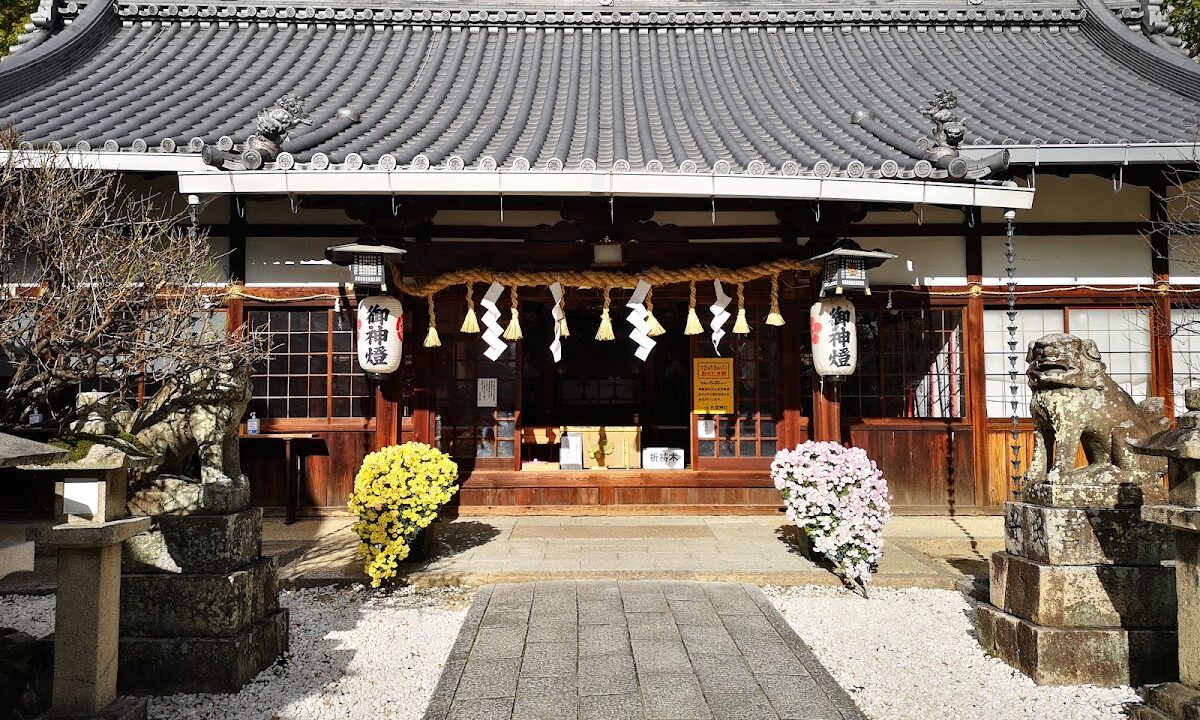
Katano Shrine (Hirakata City, Osaka Prefecture) Complete Guide | The History of the National Important Cultural Property Main Hall and its Protection from the Demon’s Gate of Osaka Castle
Katano Shrine, located in Makinozaka, Hirakata City, Osaka Prefecture, is a historic shrine with a main hall from the Momoyama period designated as a National Important Cultural Property. Known nationwide as an Engishiki-listed shrine, it has a history of being built by Toyotomi Hideyori as a guardian deity protecting the demon’s gate of Osaka Castle. This article will introduce the charm of Katano Shrine in its entirety, from its history and architectural value to its enshrined deities, annual events, and access information.
History and Origins of Katano Shrine
Origin of its Founding: The Legend of Nomi no Sukune and Sumo Wrestling
The founding of Katano Shrine dates back to the reign of Emperor Suinin, the 11th emperor. According to shrine tradition, Nomi no Sukune, a powerful local lord of Izumo Province, received the entire Kawachi Province as a reward for his victory in a sumo match against Taima no Kehaya of Yamato Province. Nomi no Sukune is considered the ancestor of the Haji and Sugawara clans. It is believed that the Katano Shrine originated when he enshrined Takehaya Susanoo-no-Okami, the ancestral deity of Izumo, in this area, making it the guardian shrine of his family.
Nomi no Sukune is a real historical figure who appears in the Nihon Shoki (Chronicles of Japan) and is also known as the founder of sumo wrestling. This sumo legend is an important story that tells the origin of sumo, Japan’s national sport, and Katano Shrine has a deep connection to its historical setting.
Status as an Engishiki Shrine
During the reign of Emperor Kinmei, it was named “Katano Shrine” by imperial decree, and in the fifth year of the Engi era (927 AD) during the Heian period, it was listed as an Engishiki Shrine, a shrine listed in the Engishiki Jinmyocho (a list of shrines compiled in the mid-Heian period). An Engishiki Shrine is a shrine listed in the Engishiki Jinmyocho, a list compiled in the mid-Heian period, signifying a historically significant shrine officially recognized by the imperial court at the time. As a Shikinaisha belonging to Katano District in Kawachi Province, Katano Shrine has been a central place of worship in the region since ancient times.
Enshrinement of Sugawara no Michizane
In the fourth year of the Tentoku era (960 AD), during the reign of Emperor Murakami in the mid-Heian period, Sugawara no Michizane, a descendant of Nomi no Sukune, was enshrined alongside the shrine. While Sugawara no Michizane is revered nationwide as the god of learning, at Katano Shrine, he also holds significance as an ancestral deity. The lineage connection from the Haji clan to the Sugawara clan is the background to this joint enshrinement.
Protection and Construction by Toyotomi Hideyoshi and Hideyori
A noteworthy aspect of Katano Shrine’s history is its deep connection with the Toyotomi regime. In 1583, when Toyotomi Hideyoshi built Osaka Castle, Katano Shrine, located in the northeast (the “demon’s gate”) direction of Osaka Castle, received special protection as a shrine protecting against evil spirits.
The “demon’s gate” refers to the northeast, considered an inauspicious direction in Onmyodo (Japanese esoteric cosmology), and deities and Buddhas have been placed there since ancient times to ward off evil spirits. Katano Shrine, which played a role in protecting Osaka Castle, the center of the Toyotomi regime, came to be widely worshipped as a guardian deity of evil spirits and auspicious directions in northern Kawachi.
In 1602 (Keicho 7), Toyotomi Hideyori appointed Katagiri Katsumoto as the chief magistrate for a large-scale construction project including the main hall, worship hall, south gate, earthen walls, sutra hall, and other structures. The main hall, currently designated a National Important Cultural Property, and the south gate (Red Gate), a designated cultural property of Osaka Prefecture, were constructed during this period.
National Important Cultural Property: Katano Shrine Main Hall
Main Hall: The Pinnacle of Momoyama Architecture
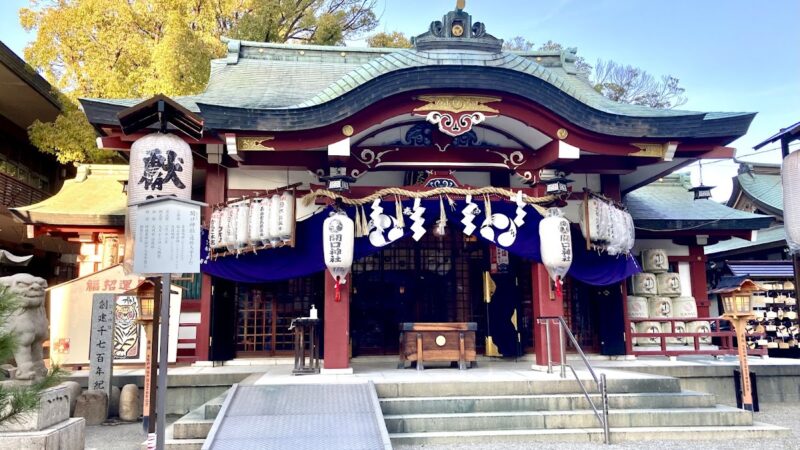
The Katano Shrine Main Hall was designated a National Important Cultural Property on April 5, 1917 (Taisho 6). Built in 1602 (Keicho 7), it is a magnificent building in the style of a three-bay nagare-zukuri (flowing roof) structure with a cypress bark roof, and is entirely covered in vermilion lacquer.
A three-bay nagare-zukuri refers to a shrine building in the nagare-zukuri style with three bays (spaces between pillars) on the front. The Nagare-zukuri style is one of the most common styles of Japanese shrine architecture, characterized by a long, extended front roof that forms a portico (kohai). The main hall of Katano Shrine retains strong architectural styles and techniques from the Momoyama period, and is highly regarded as a building that combines opulent ornamentation with powerful structural beauty.
Architectural Features and Value
The main hall’s architectural features include the following:
- The Splendor of the Vermilion Lacquer: The vermilion lacquer applied throughout expresses the magnificent aesthetic of the Momoyama period.
- Hinoki Bark Roof: This traditional roofing technique using cypress bark highlights the beauty of its curves.
- Sculptural Decoration: Luxurious carvings characteristic of the Momoyama style are found throughout the building.
- Structural Robustness: The high level of architectural skill is evident in the fact that the basic structure has been maintained for over 400 years.
The Momoyama period, also known as the Azuchi-Momoyama period, corresponds to the era of Oda Nobunaga and Toyotomi Hideyoshi. Architecture from this period is characterized by its opulent and magnificent decoration, showcasing the power of those in authority. The main hall of Katano Shrine occupies an important position in architectural history as one of its representative examples.
Cultural Properties and Highlights of Katano Shrine
South Gate (Red Gate): Osaka Prefecture Designated Cultural Property
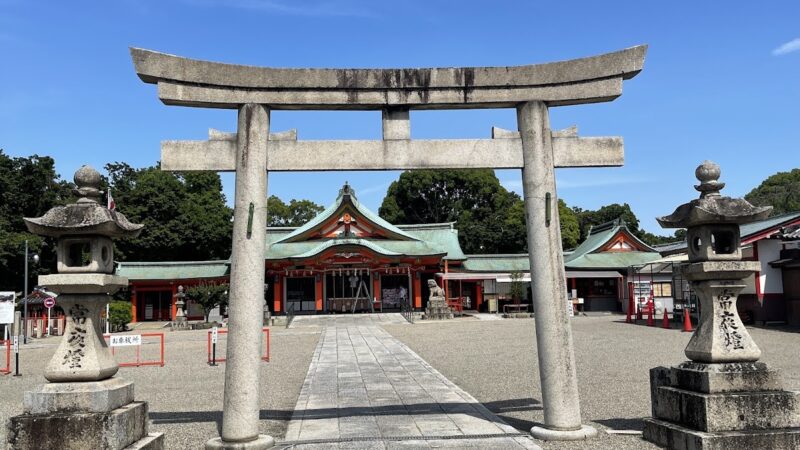
The South Gate, the main gate of Katano Shrine, is commonly known as the “Red Gate” and is designated as a tangible cultural property of Osaka Prefecture. Like the main shrine building, it was built in 1602 (Keicho 7) through a donation from Toyotomi Hideyori and retains many characteristics of Momoyama period gate architecture. Its striking vermilion color is impressive, and it is a beloved landmark welcoming visitors to the shrine.
East Gate (Black Gate): Remains of Muromachi Style
The East Gate, commonly known as the “Black Gate,” is a valuable remnant of Muromachi period architecture. In contrast to the splendor of the South Gate, this gate possesses a calm and dignified style, and is one of the structures that tells the long history of Katano Shrine.
Stone Lantern: Osaka Prefecture Designated Cultural Property
Within the shrine grounds is a stone lantern believed to have been made during the Kamakura period, and it is designated as a tangible cultural property of Osaka Prefecture. Although the lower part of the finial is missing, the rest of the stone lantern remains in its original state, making it a valuable cultural asset that conveys medieval stone art to the present day. Lanterns are furnishings used in shrines and temples to offer light to deities, and this stone lantern has quietly watched over the long history of Katano Shrine.
Other Shrine Facilities
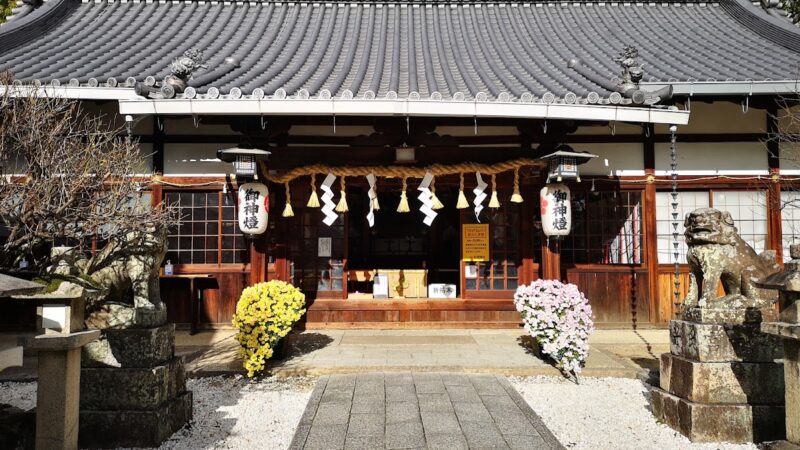
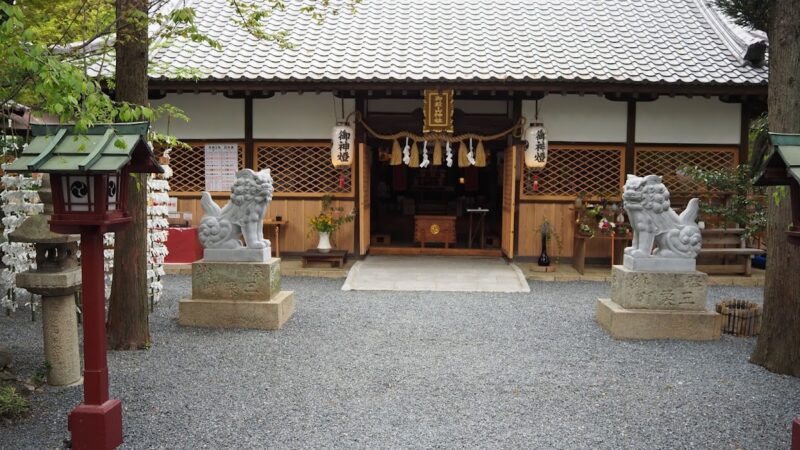
The grounds of Katano Shrine are equipped with facilities such as a worship hall, shrine office, and purification fountain. Located on a hill in Makinozaka, on a corner of the Katano Plateau, the shrine grounds are enveloped in a tranquil atmosphere, providing a peaceful space despite being in an urban area.
Deities and Divine Virtues
Main Deities
The main deities of Katano Shrine are the following two:
Takehayasusano-no-Okami
A god appearing in Japanese mythology, known as the younger brother of Amaterasu-Omikami. He is the ancestral deity of Izumo Province and is famous for the myth of slaying the Yamata no Orochi (eight-headed serpent). He is believed to have divine virtues such as warding off evil, protecting against disasters, and bringing good fortune in relationships.
Sugawara no Michizane
A scholar and politician of the Heian period, he is enshrined as the god of learning in Tenmangu shrines throughout Japan. He is known for his divine virtues of academic success, passing examinations, and improvement in literary arts.
Enshrined Deities
In addition to the main deity, eleven other deities are enshrined, and the shrine attracts worshippers with its diverse divine virtues.
Divine Virtue of Protection from Evil Spirits
Since being protected by Toyotomi Hideyoshi as a guardian of the northeast direction of Osaka Castle, Katano Shrine has been especially revered as a guardian deity of protection from evil spirits and of auspicious directions in house design. Many worshippers visit the shrine to pray for blessings related to new construction, moving, and protection from misfortune, and it continues to attract worshippers as a central shrine for protection against misfortune in northern Kawachi.
Annual Events and Festivals
Toka Ebisu (Toka Ebisu Festival)
Katano Shrine is the only place in Hirakata City where the Toka Ebisu festival is held. The Toka Ebisu festival, held annually around January 10th, is a festival praying for business prosperity and is widely popular in the Kansai region. The shrine grounds are bustling with worshippers seeking lucky bamboo branches and other auspicious items.
Setsubun Festival: “Fortune in, demons in!”
Katano Shrine’s Setsubun festival has a unique characteristic. While most shrines chant “Fortune in, demons out!” when scattering beans, Katano Shrine chants “Fortune in, demons in!” This is said to represent the deep compassion of the main deity, Susanoo-no-Mikoto, a fierce god who even accepts demons. This unique bean-throwing ceremony is known as a distinctive event of Katano Shrine.
Other Annual Events
- New Year’s Visit (January 1st-3rd)
- Spring Grand Festival
- Summer Purification Ceremony (June 30th)
- Autumn Grand Festival
- Shichi-Go-San Festival (November)
- Year-End Purification Ceremony (December 31st)
Various festivals and Shinto rituals are held throughout the year.
Access and Visiting Information
Location
Address: 2-21-15 Makinozaka, Hirakata City, Osaka Prefecture
Access by Train
Approximately 5 minutes on foot from Keihan Railway “Makino Station”
Makino Station on the Keihan Main Line is the nearest station, and the shrine is easily accessible, just a 5-minute walk from the station. It’s easily accessible from Osaka city center in about 30 minutes by Keihan Railway.
- From Keihan “Yodoyabashi Station”: Approximately 25 minutes on the Keihan Main Line, alight at “Makino Station”
- From Keihan “Kyobashi Station”: Approximately 20 minutes on the Keihan Main Line, alight at “Makino Station”
- From Keihan “Sanjo Station” (Kyoto): Approximately 35 minutes on the Keihan Main Line, alight at “Makino Station”
Access by Car
- Approximately 10 minutes from the Daini Keihan Expressway “Hirakata Higashi IC”
- Parking: Visitor parking available on the temple grounds (limited spaces)
Visiting Hours
- Temple Grounds: Open all day
- Temple Office: 9:00 AM – 5:00 PM (Prayer reception, Goshuin stamp issuance, etc.)
- Phone Number: 072-851-3222
Admission Fee
Visiting the temple grounds is free.
Goshuin (Shrine Seals) and Amulets
Goshuin (Shrine Seals)
At Katano Shrine, in addition to the regular goshuin, seasonal special goshuin are sometimes available. They can be obtained at the shrine office during reception hours.
Amulets and Items Available
- Amulet for warding off evil spirits
- Amulet for warding off bad directions
- Amulet for academic success
- Amulet for warding off misfortune
- Amulet for traffic safety
A variety of amulets are available. The amulets for warding off evil spirits and bad directions are particularly popular and unique to Katano Shrine.
Nearby Tourist Attractions
Highlights in Hirakata City
When visiting Katano Shrine, we recommend also visiting other tourist attractions in Hirakata City.
Hirakata-juku
You can stroll through the streets that retain the atmosphere of Hirakata-juku, a post town that flourished during the Edo period.
Okami Shrine
Another Shikinaisha (shrine listed in the Engishiki) in Hirakata City, this is a historical shrine.
Yamadaike Park
A vast natural park where you can enjoy seasonal flowers and autumn foliage.
Related Spots in Osaka Prefecture
Osaka Castle
Osaka Castle, protected by Katano Shrine as a guardian against evil influences, is one of Osaka’s most representative tourist attractions.
Sumiyoshi Taisha Shrine
A representative ancient shrine of Osaka, and the head shrine of all Sumiyoshi shrines nationwide.
The Charm of Katano Shrine and Points to Note When Visiting
Value as Architectural Art
The greatest charm of Katano Shrine is undoubtedly the architectural beauty of its main hall, which is designated as a National Important Cultural Property. As a valuable historical structure that conveys the architectural style of the Momoyama period, it is a must-see spot for those interested in architectural history and art history. The vibrant colors of the vermilion lacquer and the elegant curves created by the cypress bark roof make it a popular spot for photography.
A Sense of Historical Romance
Katano Shrine is steeped in a rich history, encompassing the legend of Nomi no Sukune’s sumo wrestling, its status as a shrine listed in the Engishiki (an ancient Japanese legal code), its construction by Toyotomi Hideyori, and its role as a guardian of the northeast direction (the “demon’s gate”) of Osaka Castle. For history enthusiasts, visiting the shrine while contemplating these historical contexts will be a truly special experience.
A Serene Atmosphere
Located on a hilltop in the Katano Plateau, Katano Shrine boasts a quiet and peaceful atmosphere despite its urban location. It’s a beloved place for locals seeking solace away from the hustle and bustle.
A Belief in Protection Against Unfavorable Directions and the “Demon’s Gate”
For those planning new construction or relocation, or those concerned with feng shui and auspicious directions, Katano Shrine holds special significance. As a shrine with a history of guarding the northeast direction of Osaka Castle, it’s worth visiting to pray for protection against unfavorable directions.
Summary: Reasons to Visit Katano Shrine
Katano Shrine in Hirakata City, Osaka Prefecture, is a shrine with multifaceted charms, boasting a main hall designated as a National Important Cultural Property (Momoyama-style architecture), its status as a shrine listed in the Engishiki (an ancient Japanese legal code), its history of construction by Toyotomi Hideyori, and its role as a guardian against evil influences from the northeast of Osaka Castle.
Despite its convenient access—just a 5-minute walk from Makino Station on the Keihan Railway—it offers a rare opportunity to experience history and culture in a tranquil setting. It’s a shrine worth visiting for a variety of purposes, including those interested in architectural art, those seeking historical romance, those praying for protection against evil influences, and those wishing for academic success.
When visiting Osaka, be sure to visit Katano Shrine and experience the vermilion-lacquered main hall with over 400 years of history and the history of faith that thrives in this land. The opportunity to admire the finest example of Momoyama architecture, a rare sight nationwide, up close will surely be an unforgettable experience.