Omori Mioya Shrine (Neyagawa City, Osaka Prefecture) | The History of a Shikinaisha Shrine and its Deep Connection to the Takamiya Temple Ruins
About Omori Mioya Shrine
Omori Mioya Shrine is a historical shrine located in Takamiya, Neyagawa City, Osaka Prefecture. It is a Shikinaisha shrine listed in the Engishiki Jinmyocho (a list of shrines compiled in the Heian period), and belonged to Sanra District, Kawachi Province. There are three Shikinaisha shrines in present-day Neyagawa City, and this shrine is one of them, attracting the faith of the local community.
Located approximately 1.3 kilometers west of Higashi-Neyagawa Station, it forms a lush sacred grove amidst a quiet residential area. The shrine grounds overlap with a portion of the Takamiya Temple Ruins, a nationally designated historical site, making it a valuable place that conveys the history of the coexistence of ancient temples and shrines.
Deity and Origin of the Shrine
Reason for Enshrining Ame-no-Yorozu-Tama-no-Mikoto
The deity enshrined at Omori Mioya Shrine is Ame-no-Yorozu-Tama-no-Mikoto. This deity is considered the ancestral deity of Takamiya Shrine, located approximately 300 meters northwest of our shrine. The shrine’s name, “Mioya,” is thought to originate from the fact that it enshrines the ancestor of Takamiya Shrine, demonstrating the deep relationship between the two shrines.
Ame-no-Yorozu-Tama-no-Mikoto has been worshipped as the god who governs all souls and has been revered as the guardian deity of the region. The shrine’s name, indicating its parent-child relationship with Takamiya Shrine, is an important clue to understanding the ancient process of the shrine’s establishment and the development of regional beliefs.
Changes in the Shrine’s Name
The Engishiki Jinmyocho (a list of shrines compiled in the Heian period) lists the shrine as “Taisha-so Jinja,” using the characters “Taisha” (大社) instead of “Omori” (大杜). Later, in the early modern period, the shrine came to be recorded as “Takamiya Oomori Shrine” (as seen in “Kawachi Shi” and “Kawachi Meisho Zue”), eventually leading to the current name “Oomori Mioya Shrine.”
This change in the shrine’s name is thought to reflect changes in the shrine’s character and its position within the region. The addition of the character “Mioya” (御祖) more clearly indicates its relationship with Takamiya Shrine.
Relationship with Takamiya Temple Ruins
Ancient Temple of the Hakuhō Period
The grounds of Oomori Mioya Shrine are closely related to the Takamiya Temple Ruins, a nationally designated historical site. Takamiya Temple was an ancient temple founded during the Hakuhō period (late 7th century) and had a distinctive temple layout with towers positioned to the east and west.
Immediately southeast of the current shrine building, the foundation stones of the east tower of Takamiya Temple remain, and the shrine’s worship hall is built where the west tower once stood. In other words, the shrine building itself is built on top of the remains of an ancient temple, a very unique location. ### History of Shinto-Buddhist Syncretism
In ancient times, this shrine was known for enshrining Gozu Tenno, and a shrine-temple complex called Tamamatsu-ji existed here. This is a typical form of Shinto-Buddhist syncretism, indicating that the shrine and temple were integrated and gathered faith together.
Although Tamamatsu-ji was abolished due to the separation of Shinto and Buddhism after the Meiji Restoration, the shrine continued to exist on the remains of the Takamiya Temple ruins, preserving the continuity of faith in this area. The worship hall built on the site of the West Pagoda and the foundation stones of the East Pagoda remain on the grounds, making them valuable legacies that convey the memory of the Shinto-Buddhist syncretism era.
Highlights of the Shrine Grounds
Approach and Torii Gate
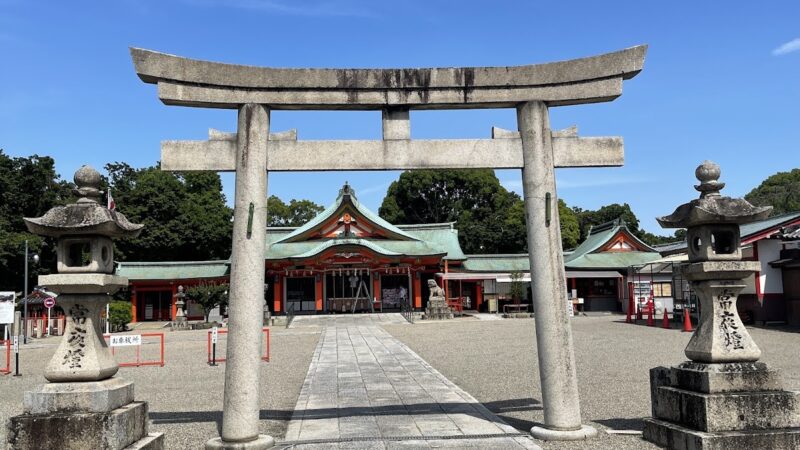
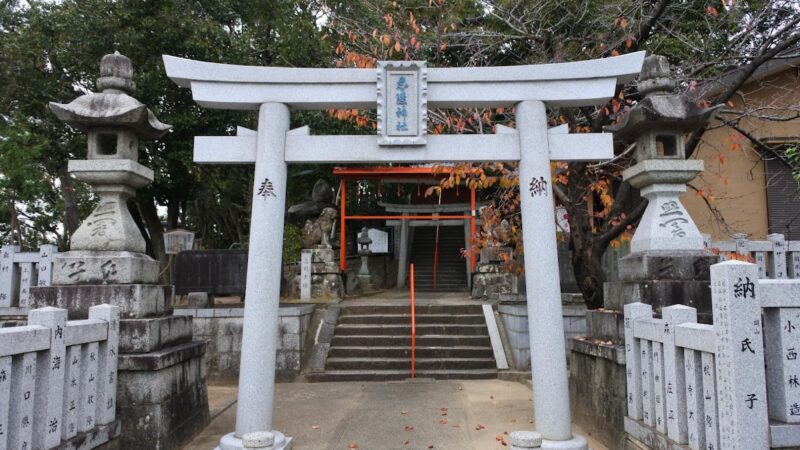
A torii gate stands at the entrance to the approach, and from there the approach leads to the shrine building. Despite being located in a residential area, the grounds, surrounded by lush trees, maintain a tranquil atmosphere, providing peace of mind to visitors.
Passing through the torii gate, visitors are greeted by the sacred groves of trees lining both sides of the approach to the shrine. These trees represent a valuable green space in the increasingly urbanized city of Neyagawa, contributing to the preservation of the local environment.
Shrine Building Layout
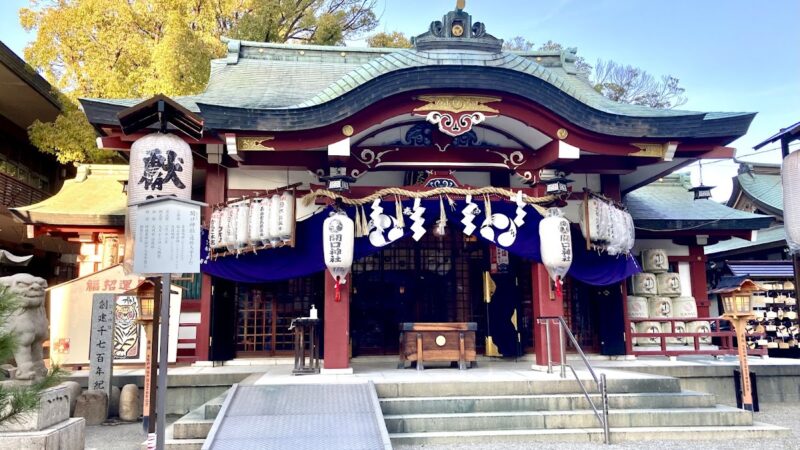
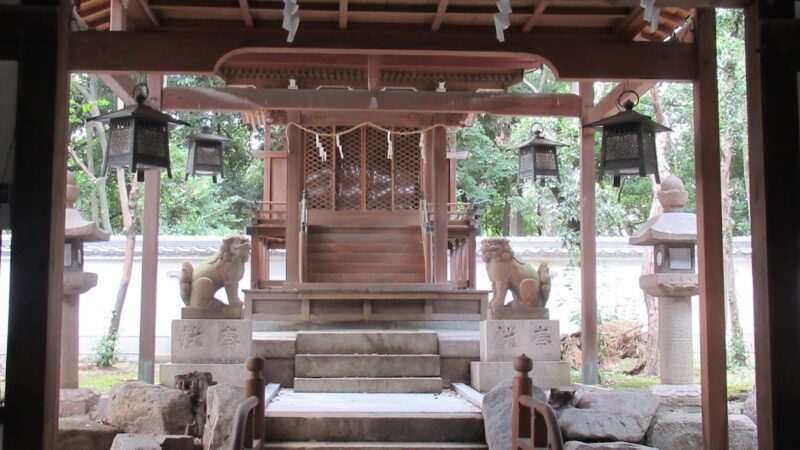
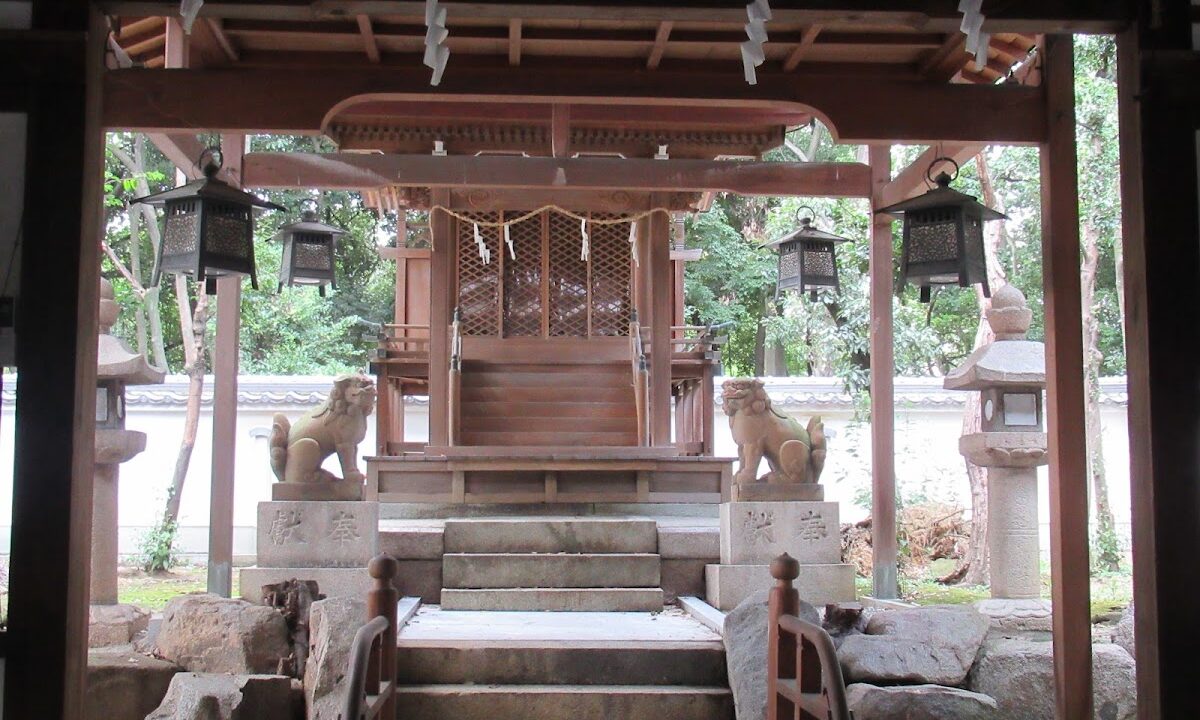
The shrine buildings are constructed on the site of the former west pagoda of Takamiya Temple and consist of a worship hall and a main hall. The foundation stones of the east pagoda are preserved immediately southeast of the shrine buildings, allowing visitors to appreciate the scale of the ancient temple.
While the architectural style of the shrine buildings is relatively simple, it maintains the dignity of a Shikinaisha (a shrine listed in the Engishiki, an ancient Japanese legal code) while possessing a friendly, community-oriented atmosphere. As the entire grounds are part of a nationally designated historical site, care has been taken to preserve the historical landscape.
Remains of Takamiya Temple
The foundation stones of Takamiya Temple remaining on the grounds are important remains for understanding temple architecture of the Hakuhō period. The temple layout, with towers positioned east and west, is similar to that of Horyu-ji and Shitenno-ji temples, demonstrating the advanced temple architecture techniques of the time.
The size and arrangement of the foundation stones suggest that a considerably large tower once stood here, indicating that this region was an important center of Buddhist culture in ancient times. The Omori Mioya Shrine is historically extremely valuable, preserving the memory of an ancient temple while continuing to exist as a Shinto shrine.
History of Omori Mioya Shrine
Founding and Ancient Times
The exact founding date of Omori Mioya Shrine is unclear, but its inclusion in the Engishiki Jinmyocho (compiled in 927) confirms its existence in the early Heian period. It was recognized by the imperial court as an influential shrine in Sanra District, Kawachi Province.
Considering its relationship with the Takamiya Abandoned Temple, it is possible that worship as a shrine began around the time the temple was founded during the Hakuhō period, or around that time. It is presumed that both Shinto gods and Buddhist deities were worshipped in this area from an early stage of the syncretism of Shinto and Buddhism in ancient times. ### From the Medieval to the Early Modern Period
From the medieval period onward, as the worship of Gozu Tenno spread, our shrine also became known as a shrine dedicated to Gozu Tenno. Tamamatsu-ji Temple, a temple attached to the shrine, formed a syncretic Shinto-Buddhist structure, attracting local faith.
Early modern geographical records such as the “Kawachi-shi” and “Kawachi Meisho Zue” record it as “Takamiya Oomori Shrine,” indicating its recognition as an important shrine in the Takamiya area. During this period, its history as a Shikinaisha (a shrine listed in the Engishiki) was highly valued and cherished as a source of local pride.
From the Modern Period Onward
In 1872 (Meiji 5), Oomori Oomori Shrine was designated a village shrine. This officially recognized its status as a Shikinaisha with the Meiji government’s reorganization of the shrine system.
Although Tamamatsu-ji Temple was abolished due to the Shinto-Buddhist Separation Order, the shrine survived and continues to attract worshippers as the local tutelary deity to this day. Along with the preservation of the Takamiya Temple Ruins, a nationally designated historical site, its historical value is being re-recognized.
Festivals and Annual Events
The annual festival of Omori Mioya Shrine is held on October 17th. On this day, parishioners and local residents gather, and a solemn Shinto ritual is performed.
The festival includes a ritual expressing gratitude to Ame-no-Yorotsu-no-Mikoto and praying for the peace and prosperity of the community, preserving the traditional festival format. Although not large in scale, it is an important event that reaffirms the bond between the shrine and its parishioners in a warm, community-rooted atmosphere.
Access and Visiting Information
Location
2-15-1 Takamiya, Neyagawa City, Osaka Prefecture
Transportation Access
- Train: Approximately 15 minutes on foot (approx. 1.3 km) west from Higashi-Neyagawa Station on the Keihan Main Line of the Keihan Electric Railway
- Bus: Approximately 5 minutes on foot from the Takamiya bus stop on the Keihan Bus
- Car: There is no dedicated parking lot, so please use nearby coin parking.
Visiting Hours
The shrine grounds are always open, and you can visit freely. However, the shrine office may not always be staffed, so it is recommended to check in advance if you wish to receive a Goshuin (shrine stamp).
Nearby Attractions
Takamiya Shrine
Located approximately 300 meters northwest of Omori-Misogi Shrine, Takamiya Shrine enshrines the child deity of Ame-no-Yorotama-no-Mikoto, the enshrined deity of our shrine. Visiting both shrines together will allow you to gain a deeper understanding of the parent-child relationship between the two shrines. ### Historical Resources of Neyagawa City
Neyagawa City boasts a wealth of historical resources, including not only the Omori Mioya Shrine but also other Shikinaisha shrines, ancient burial mounds, and ancient temple ruins. A stroll through the city allows you to experience the history of the Kawachi region from ancient to medieval times.
Cultural Value of Omori Mioya Shrine
Importance as a Shikinaisha Shrine
Shikinaisha shrines, listed in the Engishiki Jinmyocho (a list of shrines compiled in the Heian period), are prestigious shrines recognized by the imperial court during the Heian period and are considered to have high historical and cultural value. Omori Mioya Shrine, as a Shikinaisha in Sanra District, Kawachi Province, is an important example for studying ancient shrine systems and regional beliefs.
Integration with the Takamiya Temple Ruins
The fact that the shrine grounds overlap with the Takamiya Temple Ruins, a nationally designated historical site, is a rare example nationwide. The continued existence of a shrine on top of the remains of an ancient temple makes it a valuable site that concretely demonstrates the history of Shinto-Buddhist syncretism and the changes in beliefs from ancient to medieval times.
The landscape, where the ruins with their foundation stones and temple layout can be confirmed, and the shrine where worship continues to this day, are integrated, is important from the perspective of cultural property preservation and is also used as a place for local history education.
Core of Regional Identity
Omori Mioya Shrine is the core of the historical identity of the Takamiya district in Neyagawa City. As a place of worship that has continued since ancient times, and as a place that conveys the memory of the ancient temple, Takamiya Haiji, it is an object of pride and affection for the local residents.
Amidst increasing urbanization, the fact that it has continued to maintain a rich sacred grove is of great significance in terms of both environmental preservation and historical transmission.
Summary
Omori Mioya Shrine is an Engishiki-listed shrine located in Takamiya, Neyagawa City, Osaka Prefecture, and enshrines Ame-no-Yorotsu-no-Mikoto as its main deity. It bears the name “Mioya” (meaning “ancestor”) because it enshrines the ancestral deity of Takamiya Shrine, indicating the deep relationship between the two shrines.
Its most distinctive feature is its integration with the Takamiya Haiji Ruins, a nationally designated historical site. The shrine was built on the site of the west pagoda of an ancient temple from the Hakuhō period, and the foundation stones of the east pagoda remain on the grounds. This unique location is a valuable example of the history of syncretism between Shinto and Buddhism and the continuity of faith from ancient times to the present day.
Designated a village shrine in 1872 (Meiji 5), Ōmori Mioya Shrine continues to be revered as the local guardian deity. Combining historical value as a Shikinaisha (a shrine listed in the Engishiki, an ancient Japanese legal code) with archaeological value as the site of the Takamiya Temple ruins, it can be considered a representative cultural asset of Neyagawa City.
Nearby in a quiet residential area, it forms a lush sacred grove, and the well-maintained grounds, including the approach, torii gate, and shrine building, allow visitors to simultaneously feel the weight of ancient history and the warmth of faith that lives on today.