Kamo Takezumi no Mikoto Shrine (Hirakata City, Osaka Prefecture) Complete Guide | Detailed Explanation of Deities, Goshuin (Shrine Seals), Access, and History
Kamo Takezumi no Mikoto Shrine, located in Hashiritani, Hirakata City, Osaka Prefecture, is a historic shrine said to have been founded by imperial decree of Emperor Kanmu. Locally known as “Kamo Shrine,” it has a long history as an important shrine in Kawachi Province, enshrining a divided spirit of Kyoto’s Kamo Shrine.
This article comprehensively introduces all the information necessary for visiting Kamo Takezumi no Mikoto Shrine, including its enshrined deities, founding history, highlights of the grounds, goshuin information, and access methods.
Basic Information on Kamo Takezumi no Mikoto Shrine
Shrine Overview
Official Name: Kamo Takezumi no Mikoto Shrine
Common Name: Kamo Shrine
Location: 1-17-2 Hashiritani, Hirakata City, Osaka Prefecture 573-0063
Corporate Number: 9120005012920
Telephone Number: Sada Shrine (072-831-1550) *Managed by the shrine
Main Deity: Kamo Takezumi no Mikoto (Kamo Takezumi no Mikoto)
Shrine Rank: Former Village Shrine
Founded: During the reign of Emperor Kanmu (early Heian period)
Affiliation and Management
Kamo Takezumi no Mikoto Shrine belongs to the Third Branch of the Osaka Prefectural Shrine Association, and is currently managed by Sada Shrine. Therefore, inquiries regarding Goshuin (temple/shrine stamps) and festivals should be directed to Sada Shrine.
About the Enshrined Deity
About Kamo Takezumi no Mikoto (Kamo Taketsunumi no Mikoto)
The enshrined deity of Kamo Takezumi no Mikoto Shrine is written as “Kamo Takezumi no Mikoto,” but this is believed to be the same deity as “Kamo Taketsunumi no Mikoto,” enshrined at Kamo Mioya Shrine (Shimogamo Shrine) and Kamo Wakeikazuchi Shrine (Kamigamo Shrine) in Kyoto.
Kamo Taketsunumi no Mikoto is a deity revered as the ancestral god of the ancient Kamo clan, and is a historically significant deity appearing in the Kojiki and Nihon Shoki. It is said that during Emperor Jimmu’s eastern expedition, this deity transformed into a Yatagarasu (three-legged crow) to guide him, and is therefore worshipped as a god of guidance and protection against evil.
Divine Virtues
The main divine virtues of Kamo Takezumi no Mikoto are as follows:
- Protection from Misfortune and Evil: As a god who shows the way, he guides the direction of one’s life.
- Traffic Safety: From the legend of him guiding people as a Yatagarasu (three-legged crow).
- Good Fortune and Prosperity: Grants the power to forge new paths.
- Family Safety: As the ancestral god of the Kamo clan, he protects the family.
- Victory and Sure Victory: From his achievements in leading Emperor Jimmu to victory.
History of Kamo Takezumi no Mikoto Shrine
Origin of the Shrine
The founding of Kamo Takezumi no Mikoto Shrine is recorded as follows in the records of the Osaka Prefectural Shrine Association:
“During the reign of Emperor Kanmu, the 50th Emperor of Japan, Wake no Kiyomaro, by imperial decree, established this place as the Ichinomiya (first shrine) of Kawachi Province and enshrined the ‘Great God of Kamo,’ marking its beginning.”
Emperor Kanmu is known as the emperor who founded Heian-kyo (Kyoto), and at that time, he particularly revered the Kamo Shrine in Kyoto as the guardian deity of the imperial city. An imperial decree was issued to enshrine the Great God of Kamo in Kawachi Province (present-day eastern Osaka Prefecture), and it is said that Wake no Kiyomaro founded the shrine in this location.
Relocation of Kamo Shrine Families and Construction of Shrine Buildings
Records indicate that when the divided spirit of the deity was welcomed to this area, many members of the shrine families (families of Shinto priests) who served the Kamo Shrine in Kyoto relocated here. They are said to have opened a vast sacred area of 3,000 tsubo (approximately 9,900 square meters) on Doyama Mountain and constructed a magnificent shrine building on its slopes.
This fact indicates that it was not merely a small local shrine, but a formally established shrine commissioned by the imperial court, illustrating the importance of Kamo Takezumi-no-Mikoto Shrine in Kawachi Province at the time.
Positioning as the Ichinomiya of Kawachi
As stated in the founding history, “as the Ichinomiya of Kawachi,” Kamo Takezumi-no-Mikoto Shrine was positioned as a central shrine of Kamo worship in Kawachi Province. However, the shrine generally known as the “Ichinomiya of Kawachi Province” is Hiraoka Shrine (Higashi-Osaka City), and “Ichinomiya” here is interpreted as meaning the center of Kamo worship in Kawachi.
Changes from the Early Modern Period Onward
Unfortunately, detailed records from the medieval to early modern periods are limited, but it is known that during the Edo period, it was a village shrine that attracted local faith. Even under the Meiji era’s shrine system, it was positioned as a village shrine and revered as the local tutelary deity.
Currently under the management of Sada Shrine, faith by local residents continues, and many worshippers visit during the spring festival and annual grand festival.
Highlights of the Shrine Grounds
Shrine Buildings
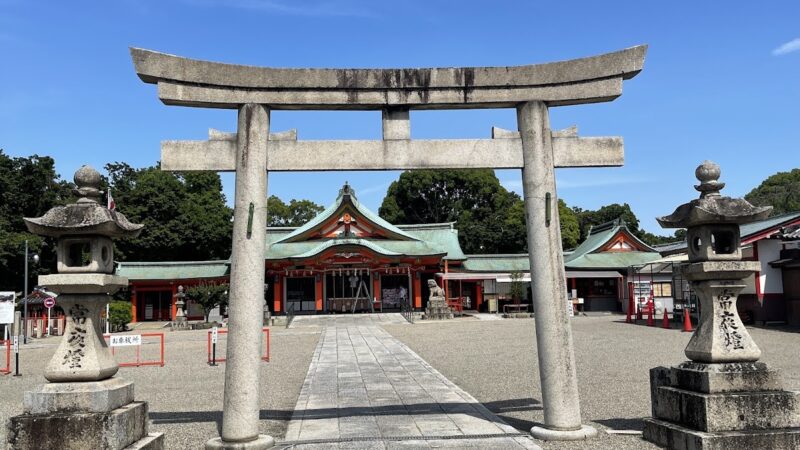
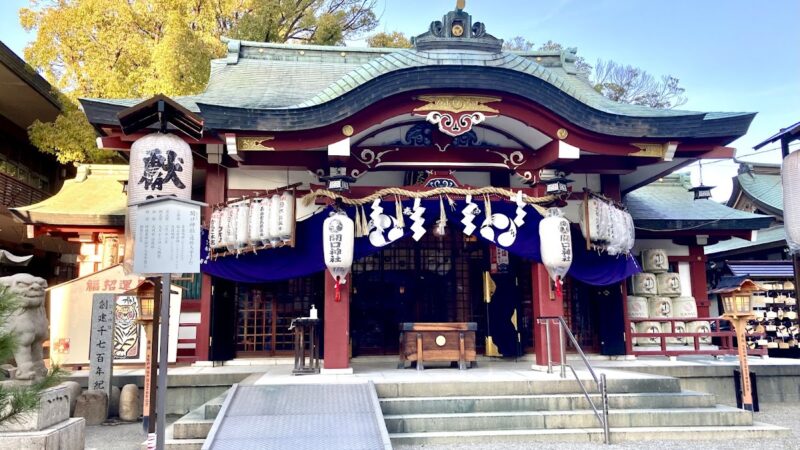
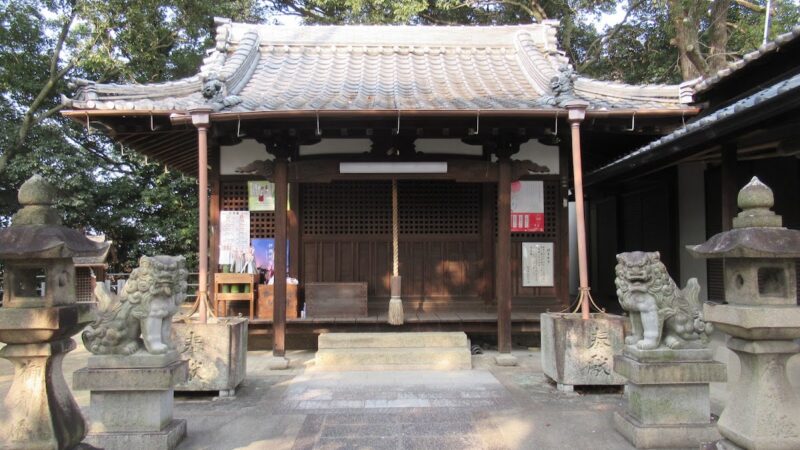
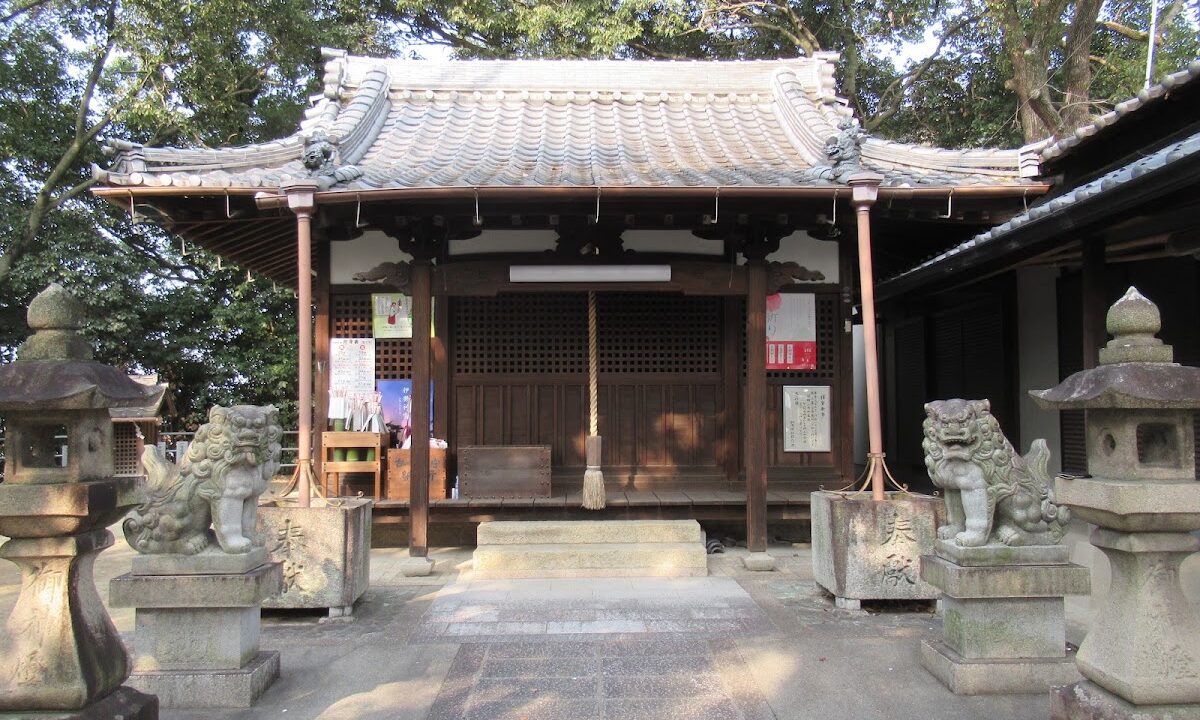
The shrine buildings of Kamo Takezumi no Mikoto Shrine, while grand in their original grandeur, have aged considerably and are now relatively modest. However, they maintain a tranquil atmosphere for worship. The main hall retains the traditional style of shrine architecture, making it a valuable structure that conveys the history of the region.
Atmosphere of the Shrine Grounds
Despite being located in a residential area of Hashiritani, Hirakata City, a quiet atmosphere permeates the shrine grounds. Ancient trees flourish, maintaining a solemn atmosphere befitting a sacred place despite its urban location. Visitors have commented that it is “a small shrine where you can feel the history” and “a quiet and peaceful place to worship.”
Surrounding Natural Environment
Records indicate that the shrine buildings were constructed on the “mid-slope of Doyama” at the time of its founding, suggesting that it was once surrounded by abundant nature. Although urbanization has progressed, greenery remains on the grounds, allowing visitors to experience the changing seasons.
About Goshuin (Shrine Seals)
Issuance of Goshuin
Regarding the Goshuin of Kamo Takezumi no Mikoto Shrine, it may be handled by the managing shrine, Sada Shrine. Those wishing to receive a Goshuin are advised to contact Sada Shrine (Tel: 072-831-1550) in advance.
Manners When Receiving a Goshuin
Goshuin are received as proof of worship. Please observe the following manners:
- Complete your worship first: Before receiving a Goshuin, first worship at the main hall.
- Prepare a Goshuincho (Goshuin notebook): Use a dedicated Goshuincho, not a notepad or colored paper.
- Use polite language: Please politely request, “May I receive a Goshuin?”
- Prepare a donation: Generally, around 300 to 500 yen. Prepare the exact amount of money so that no change is needed.
- Don’t forget to be grateful: When you receive something, say “Thank you.”
Annual Festivals
Spring Festival
Date: April 15th
The Spring Festival of Kamo Takezumi-no-Mikoto Shrine is held annually on April 15th. It is an important festival to give thanks to the gods for the arrival of spring and to pray for a bountiful harvest and the safety of the community throughout the year.
Grand Festival
Date: October 15th
The Grand Festival is the most important annual event for the shrine. At Kamo Takezumi-no-Mikoto Shrine, the Grand Festival is held annually on October 15th, to express gratitude to the enshrined deity and to pray for the prosperity of the community. It is a valuable opportunity for local residents to gather and pass on traditions.
Other Festivals
There may be festivals held jointly with the managing shrine, Sada Shrine. Please contact Sada Shrine for details.
Access Methods
Access by Train
The nearest stations to Kamo Kenzumi-no-Mikoto Shrine are as follows:
Nearest Station ①: Keihan Main Line “Kōzenji Station”
- Travel Time: Approximately 10 minutes on foot (approximately 766m)
- Kōzenji Station is the closest station.
Nearest Station ②: Keihan Main Line “Hirakata-kōen Station”
- Travel Time: Approximately 12 minutes on foot (approximately 991m)
- Access is also possible from the station next to Kōzenji Station.
Directions from Kōzenji Station
- Exit the ticket gate at Kōzenji Station and head west.
- Cross Prefectural Road 13 (Kyoto-Moriguchi Line).
- Go through the residential area towards Hashiritani.
- You will arrive at Kamo Kenzumi-no-Mikoto Shrine in approximately 10 minutes.
*For first-time visitors, using a smartphone map app (such as Google Maps) is recommended.
Access by Car
Address: 1-17-2 Hashiritani, Hirakata City, Osaka Prefecture
Car Navigation Setting: Search using the above address or phone number (Sada Shrine: 072-831-1550)
Access from Major Roads:
- Via Prefectural Road 13 from National Route 1
- Approximately 15 minutes from Hirakata East IC on the Daini Keihan Expressway
Parking Information
We recommend contacting Sada Shrine in advance regarding the availability of a dedicated parking lot. While there are coin-operated parking lots nearby, their number is limited, making public transportation more convenient.
Nearby Shrines and Temples
Sada Shrine
This shrine manages Kamo Takezumi no Mikoto Shrine. It is one of the important shrines in Hirakata City and has a larger precinct. When visiting Kamo Takezumi no Mikoto Shrine, we recommend also visiting Sada Shrine.
Location: Minami-Nakafuri, Hirakata City, Osaka Prefecture
Phone: 072-831-1550
Okami Shrine
An ancient shrine in Hirakata City, known for enshrining the god of water. It is located relatively close to Kamo-Takezumi-no-Mikoto Shrine.
Kudara-O Shrine
A shrine in Hirakata City associated with the Kudara-O clan. A valuable shrine that conveys the history of ancient immigrant clans.
Katano Shrine
One of the major shrines in Hirakata City, famous for its beautiful main hall. It also has buildings designated as Important Cultural Properties, making it well worth a visit.
History of Hirakata City and Kamo-Takezumi-no-Mikoto Shrine
Hirakata as a Strategic Point in Kawachi Province
Hirakata City has been an important area of Kawachi Province since ancient times. Hirakata flourished as a transportation hub utilizing the Yodo River’s water transport, and as a key point connecting Kyoto and Namba (Osaka). It is believed that this geographical importance of Hirakata played a role in the founding of the Kamo Takezumi-no-Mikoto Shrine.
The Kamo Clan and Kawachi Province
The Kamo clan, who worshipped at the Kamo Shrine in Kyoto, was a powerful ancient clan. When Emperor Kanmu established Heian-kyo, the Kamo Shrine was highly valued as a guardian deity of the imperial city, and its influence extended throughout the Kinai region. The enshrinement of the Kamo deity in Kawachi Province can be seen as part of this expansion of the Kamo clan’s power.
Wake no Kiyomaro and the Shrine’s Founding
Wake no Kiyomaro, who is believed to have been involved in the shrine’s founding, was a nobleman from the late Nara period to the early Heian period, famous for the Dokyo Incident. He enjoyed the deep trust of Emperor Kanmu and was deeply involved in the relocation of the capital to Heian-kyo. The legend that Kiyomaro enshrined Kamo-no-Okami in Kawachi is considered to have high historical credibility.
Points for Visiting a Shrine
Basic Etiquette for Visiting a Shrine
Let’s review the basic etiquette for visiting a shrine:
- Bow before passing through the torii gate: Bow lightly before entering the sacred area.
- Walk along the edge of the path: The center is considered the path for the gods.
- Purify yourself at the water basin: Purify your hands and mouth (if there is a water basin).
- Etiquette in front of the main hall:
- Quietly place your offering in the offering box.
- Ring the bell if there is one.
- Two bows, two claps, one bow (two bows, two claps, one bow).
- Bow when leaving: Turn around and bow after leaving the torii gate.
Recommended Time to Visit
Since Kamo-no-Takezumi-no-Mikoto Shrine is located in a residential area, it is recommended to visit during quiet times such as early morning or evening. Especially in the early morning, you can visit the shrine in refreshing air.
Regarding Photography
Photography is generally permitted on the shrine grounds, but please note the following:
- Refrain from taking photos inside the main hall or in sacred areas.
- Be considerate of other visitors.
- Avoid using flash photography.
- When posting on social media, be mindful of using respectful language towards the shrine.
The Charm of Kamo Takezumi-no-Mikoto Shrine
The Weight of History
The shrine’s history, having been founded by imperial decree of Emperor Kanmu, speaks to its historical value. As a shrine deeply connected to the turning point in Japanese history—the relocation of the capital to Heian-kyo—it is a fascinating place to visit for history enthusiasts.
Connection to Kyoto Kamo Shrine
As a shrine that enshrines a divided spirit of Kyoto’s Kamo Shrine (Shimogamo Shrine and Kamigamo Shrine), a World Heritage Site, it is a valuable shrine where you can receive the divine blessings of Kamo Okami while in Osaka.
A Quiet Worship Environment
Unlike large-scale tourist shrines, the calm atmosphere that allows for a peaceful and leisurely worship is another attractive feature. This shrine is suitable for those who wish to escape the hustle and bustle and offer prayers in peace.
A faith rooted in the community
With a history of over a thousand years, its continued reverence as the local guardian deity evokes the very essence of Japanese shrine worship.
Precautions when visiting
Attire
While no special attire is required for visiting the shrine, please dress in clean clothing that is respectful to the deities. It is best to avoid overly revealing clothing or overly casual attire such as sandals.
Visiting Hours
The shrine grounds are generally open all day, but the shrine office has limited hours. If you wish to receive a Goshuin (shrine stamp) or prayers, please check with Sada Shrine in advance.
Consideration for neighbors
As the shrine is located in a residential area, please refrain from actions that may disturb nearby residents, such as speaking loudly or parking for extended periods.
Summary
Kamo Takezumi-no-Mikoto Shrine is a historical shrine located in Hirakata City, Osaka Prefecture. Founded by imperial decree of Emperor Kanmu, this venerable shrine, which enshrines a divided spirit of Kyoto’s Kamo Shrine, boasts a history spanning over a thousand years.
Currently under the management of Sada Shrine, it is not large in scale, but it is a precious shrine where one can pray in peace and tranquility within its quiet grounds. The enshrined deity, Kamo Takezumi-no-Mikoto, is known for his divine virtues of protection against misfortune, traffic safety, and good fortune, and continues to watch over worshippers seeking guidance in their lives.
With easy access—approximately a 10-minute walk from Kōzenji Station on the Keihan Main Line—it is a recommended stop on a shrine tour of Hirakata City. During the Spring Festival (April 15th) and the Annual Grand Festival (October 15th), you can also experience local traditional events.
If you want to experience Osaka’s history and culture, seek a peaceful environment for worship, or are interested in Kamo faith, please visit Kamo Takezumi-no-Mikoto Shrine. You will surely spend a soul-cleansing time in this sacred place where a thousand years of history breathes. ### Final Checklist Before Visiting
- [ ] Confirm access methods (approximately 10 minutes on foot from Kōzenji Station)
- [ ] Contact Sada Shrine in advance if you wish to receive a Goshuin (shrine stamp)
- [ ] Confirm proper worship etiquette (two bows, two claps, one bow)
- [ ] Prepare clean clothing
- [ ] Prepare offering money (small change)
- [ ] Gather information on nearby shrines and temples (if visiting them together)
May your visit to Kamo Takezumi no Mikoto Shrine be a fulfilling experience for everyone.