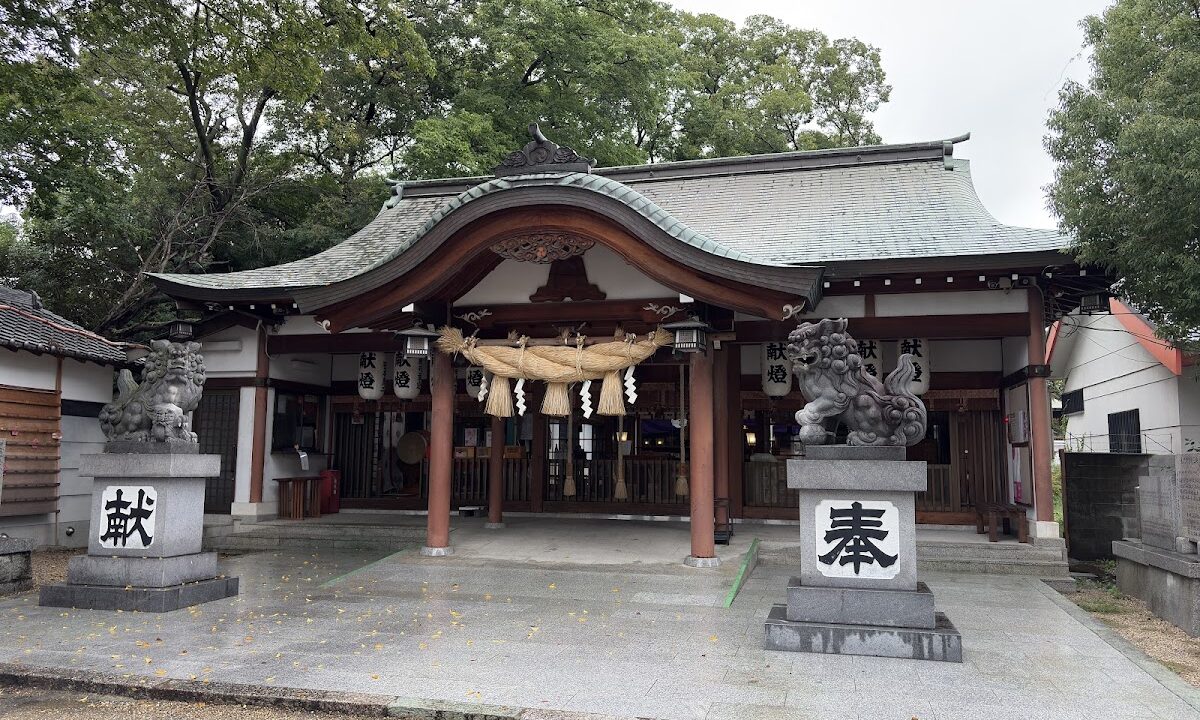
Wakae Kagami Shrine (Higashi-Osaka City, Osaka Prefecture) Complete Guide | History, Blessings, and Access Information
Wakae Kagami Shrine, located in Wakae-Minami-cho, Higashi-Osaka City, Osaka Prefecture, is a venerable shrine listed in the Engishiki, a compilation of laws and regulations from the Heian period. With a vast grounds covering 2,000 tsubo (approximately 6,600 square meters), this shrine, known for its blessings of “intelligence,” “health,” and “safe childbirth,” continues to attract many worshippers as a center of local faith. This article provides a detailed overview of Wakae Kagami Shrine, including its history, enshrined deities, blessings, access methods, and surrounding tourist information.
History and Origins of Wakae Kagami Shrine
Founding and Ancient Records
The founding date of Wakae Kagami Shrine is unknown, but its history is extremely old, and it was already recognized as an important shrine in the early Heian period. The “Nihon Montoku Tenno Jitsuroku” (Chronicle of Emperor Montoku of Japan), in the entry for the fourth month of the first year of the Saihei era (854), states, “The deity of Kawachi Province, O-Ikazuchiho Akari, was granted the rank of Junior Fifth Rank, Lower Grade,” indicating that Wakae Kagami Shrine was granted a divine rank. The Engishiki Jinmyocho, compiled in the mid-Heian period, lists Wakae Kagami Shrine as a Shikinaisha (a shrine listed in the Engishiki) in Wakae District, Kawachi Province, indicating that it was a highly prestigious shrine recognized by the imperial court even at that time. Its rank of Junior Fifth Rank, Lower Grade, was quite high for a shrine of that era, suggesting that Wakae Kagami Shrine was an important place of worship in the region.
Connection to Wakae District
The area of Wakae where Wakae Kagami Shrine is located was the center of the ancient Wakae District of Kawachi Province. This region had been developed since ancient times and flourished as a rich agricultural area blessed by the Yamato River system. Wakae District was also closely connected to the sphere of influence of the Mononobe clan, and it has been suggested that the Mononobe clan, as a priestly clan, may have been responsible for the shrine’s rituals.
Even after the medieval period, Wakae Kagami Shrine continued to be revered as the local tutelary deity, and it is believed to have had close ties with Wakae Castle during the Sengoku period. During the Edo period, it was designated as a Gosha (village shrine), and it was also ranked as a Gosha under the modern shrine ranking system of the Meiji era.
Origin of the Shrine Name “Kagami”
There are several theories regarding the origin of the name “Kagami” (mirror) in Wakae Kagami Shrine. One theory suggests it derives from the fact that a mirror was enshrined as a sacred object or treasure. In ancient times, mirrors were sacred ritual objects, and as exemplified by the Yata no Kagami (one of the Three Sacred Treasures), they were highly valued as objects in which divine spirits resided.
Another theory suggests the name was derived from the fact that the local topography or water surface resembled a mirror. Furthermore, there are various interpretations, including the theory that “Kagami” is a corruption of “Kagami” (another name), and theories pointing to a connection with a group of artisans called the Kagami-tsukuri-be (mirror makers).
Deities and Benefits
Main Deity
Three deities are enshrined at Wakae Kagami Shrine.
Oikazuchi no Okami
Oikazuchi no Okami, the main deity, is a god with the characteristics of a thunder god and fire god. The “Ōikazuchihoakari-no-Kami” mentioned in the *Nihon Montoku Tennō Jitsuroku* (Chronicle of Emperor Montoku of Japan) is believed to refer to this deity. In ancient times, thunder was a symbol of heavenly power and was revered as a source of rain, crucial for agriculture.
Tarashinakatsuhiko-no-Mikoto
This refers to Emperor Chūai, the 14th emperor. He was the husband of Empress Jingū and is known as a brave and martial emperor.
Okinagatarashihime-no-Mikoto
This refers to Empress Jingū. Known for the legend of her conquest of the Three Kingdoms of Korea, she is widely worshipped as a goddess of safe childbirth and child-rearing.
Benefits
Wakae Kagami Shrine is particularly known for the following three benefits:
Intellectual Enhancement
It is believed to bring academic success and wisdom, and many students and those preparing for exams visit the shrine. This is based on the belief that the thunder god brings heavenly wisdom.
Health and Longevity
This shrine is believed to offer blessings for healing illnesses and promoting health, attracting visitors who pray for the health of their families. The power of lightning, a symbol of vitality, is thought to bring good health.
Prayers for Safe Childbirth
As it enshrines Empress Jingu, it is known for its blessings of safe childbirth, fertility, and child-rearing. Many pregnant women visit this shrine from far away to pray for safe childbirth.
Seeking these blessings, visitors come not only from Higashi-Osaka City but also from all over Osaka Prefecture.
Highlights of the Shrine Grounds
Main Hall (City-Designated Cultural Property)
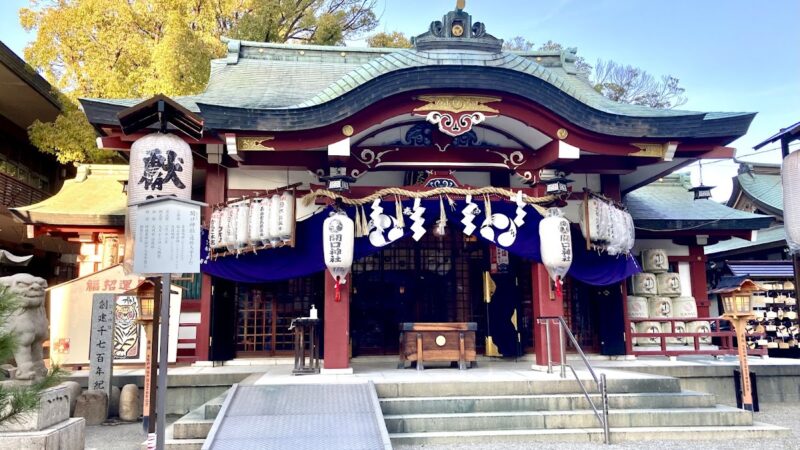
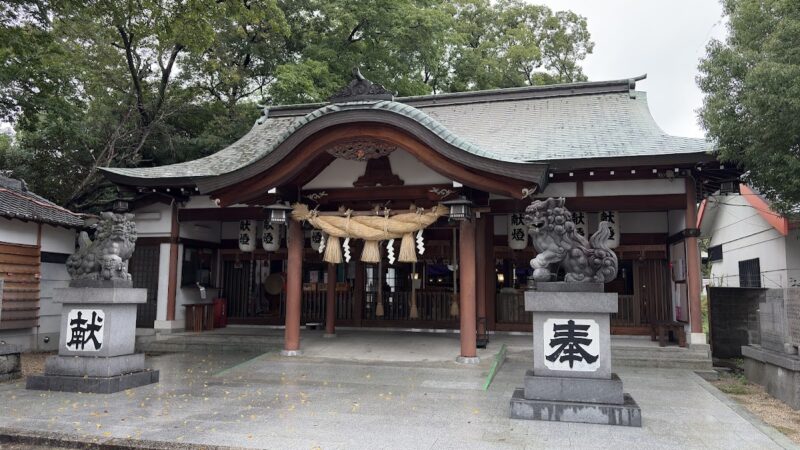
The main hall of Wakae Kagami Shrine is designated as a tangible cultural property by Higashi-Osaka City. The main hall measures 6 shaku (approximately 1.8 meters) in length and 7 shaku (approximately 2.1 meters) in width, while the auxiliary hall measures 7 shaku (approximately 1.8 meters) on each side. It is a valuable structure that preserves the characteristics of Edo period shrine architecture.
The wooden architecture, with its cypress bark roof and intricate carvings, exudes a dignified atmosphere shaped by a long history. The architectural style and decorations of the main hall showcase the high skill of the craftsmen of the time.
Subsidiary Shrines
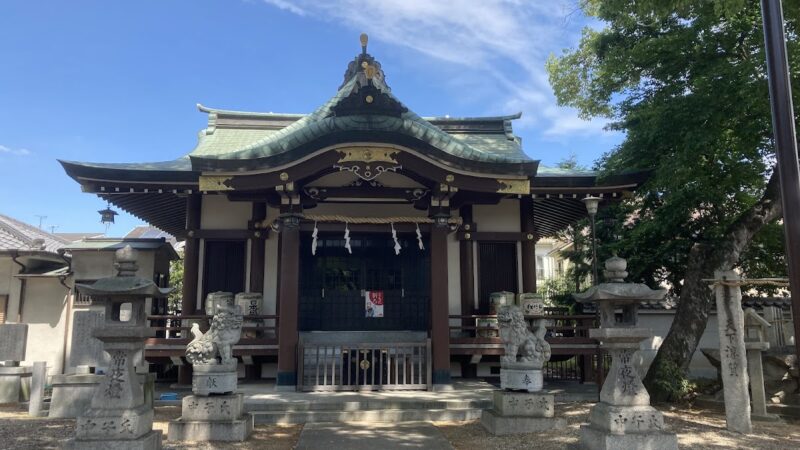
Within the grounds of Wakae Kagami Shrine, there are many subsidiary shrines in addition to the main shrine.
- Amaterasu Kōtaijinja: Dedicated to Amaterasu Ōmikami, the ancestral deity of the Imperial family.
- Tsukamoto Inari Shrine: Deity of business prosperity and abundant harvests.
- Kumano Gongen Shrine: Dedicated to the deities of the Kumano Sanzan shrines.
- Suijinja: Deity of the blessings of water.
- Yakumo Kankiten Shrine: Deity of business prosperity and matchmaking.
- Goen Jizō Shrine: Deity of successful relationships and matchmaking.
These subsidiary shrines reflect the diverse beliefs of the local people, and each can be seen with its own worshippers.
Atmosphere of the Shrine Grounds
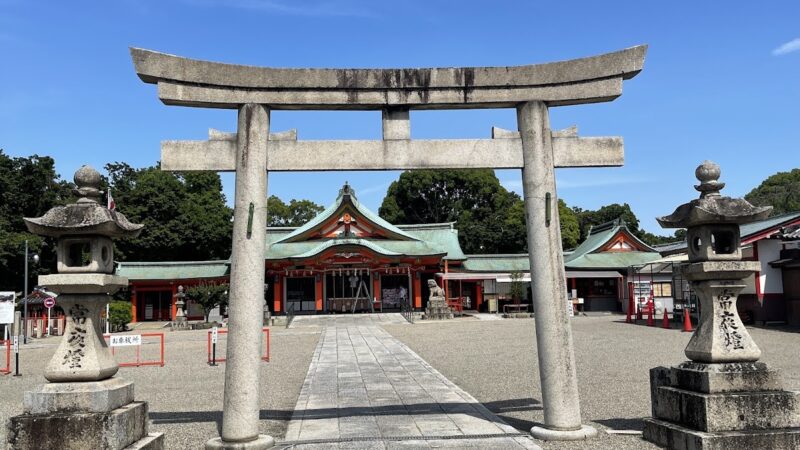
Despite its vast grounds of 2,000 tsubo (approximately 6,600 square meters), the shrine maintains a tranquil space despite its urban location. Mature trees flourish, allowing visitors to experience the beauty of nature throughout the seasons. The grounds are particularly beautifully colored during the cherry blossom season in spring and the autumn foliage season.
The grounds are meticulously maintained and cleaned. Walking along the approach to the shrine, one can forget the hustle and bustle of the city and experience a peaceful atmosphere.
Annual Events and Festivals
Danjiri Festival
Wakae Kagami Shrine is also known for its Danjiri Festival in Higashi-Osaka City. During the annual autumn festival, danjiri floats pulled by local parishioners enter the shrine grounds, creating a magnificent spectacle.
The Danjiri Festival is an important event demonstrating the unity of the local community and is a traditional cultural event of the Wakae district. During the festival, the area around the shrine is bustling with many spectators, creating a lively atmosphere.
New Year’s Visit and Annual Events
Many worshippers visit the shrine for their first shrine visit of the New Year, praying for a safe year and the safety of their families. Throughout the year, various Shinto rituals are held, including the Setsubun Festival, the Summer Purification Ceremony, and Shichi-Go-San (a traditional rite of passage for children).
Especially during Shichi-Go-San, the shrine grounds are vibrant with children in their finest attire and their families. Shrine visits for newborns are also popular, and the shrine plays an important role as a place for life-changing rituals in the community.
Goshuin (Shrine Seal) Information
Wakae Kagami Shrine offers Goshuin. Goshuin serve as proof of a visit to the shrine and are a memento of the experience. With the recent boom in Goshuin collecting, many worshippers bring their Goshuin notebooks.
Goshuin can be obtained at the shrine office. However, they may not be available if the chief priest is absent, so it is recommended to call ahead to confirm if you wish to receive a Goshuin.
The Goshuin will have the shrine name and date of visit written in ink, and will bear the shrine’s seal. The carefully written Goshuin (temple/shrine stamp) will be a wonderful memento of your visit.
Access Information
Access by Train
The most convenient way to reach Wakae Kagami Shrine is by using the Kintetsu Nara Line.
Nearest Station: Kintetsu Nara Line “Kawachi-Kosaka Station”
Approximately 8 minutes on foot from the station. Exit the station and head south; the shrine will be reached after passing through a residential area.
Kintetsu Nara Line “Wakae-Iwata Station”
Approximately 10 minutes on foot from the station. Access is also possible from here.
The Kintetsu Nara Line runs from Osaka Namba Station towards Nara. Kawachi-Kosaka Station is approximately 15 minutes from Osaka Namba Station, and the fare is reasonable, making it easy to visit.
Access by Car
Location: 2-3-9 Wakaminami-cho, Higashi-Osaka City, Osaka Prefecture
Approximately 10 minutes from the Nagata Exit of the Hanshin Expressway Route 13 Higashi-Osaka Line
Approximately 15 minutes from the Higashi-Osaka Minami Interchange on the Kinki Expressway
While the shrine has a parking lot, spaces are limited. During busy periods such as festivals and New Year’s, we recommend using public transportation.
Surrounding Traffic Environment
Wakaminami-cho is located in a residential area of Higashi-Osaka City, and many of the roads are relatively narrow residential streets. When visiting by car, please drive considerately and respectfully to the residents of the surrounding area.
Basic Information
Shrine Name: Wakae Kagami Shrine
Location: 2-3-9 Wakae Minami-cho, Higashi-Osaka City, Osaka Prefecture
Phone Number: 06-6721-2340
Shrine Rank: Shikinaisha (Shrine listed in the Engishiki), Former Village Shrine
Deities Enshrined: Oikazuchi-no-Okami, Ashinakahiko-no-Mikoto, Okinagatarashihime-no-Mikoto
Parking: Available (Limited number of spaces)
Visiting Hours: Grounds are open freely (Shrine office is open irregularly)
Official Website: None
Tourist Attractions Around Wakae Kagami Shrine
Cultural Facilities in Higashi-Osaka City
Shiba Ryotaro Memorial Museum
A memorial museum for the nationally renowned author Shiba Ryotaro, located about 10 minutes by car from Wakae Kagami Shrine. Built adjacent to the home where Shiba Ryotaro spent his later years, it displays his collection of books and writing materials. The building designed by architect Tadao Ando is also a highlight.
Hanazono Rugby Stadium, Higashi-Osaka City
Known as the “holy ground of rugby,” Hanazono Rugby Stadium is approximately 3km from Wakae Kagami Shrine. Famous as the venue for the National High School Rugby Tournament, it’s a must-visit for rugby fans.
Nearby Shrines and Temples
Hiraoka Shrine
A prestigious shrine, the Ichinomiya (first-ranked shrine) of Kawachi Province, approximately 5km from Wakae Kagami Shrine. Considered the original shrine of Kasuga Taisha, it’s also known as “Moto-Kasuga” (Original Kasuga). It’s also known as a famous spot for autumn foliage.
Ishikiri Tsurugi Shrine
Affectionately known as “Ishikiri-san,” this shrine is famous as the god of boils and tumors. A retro Showa-era shopping street stretches along the approach to the shrine, making it a popular tourist spot.
Nearby Gourmet Spots
Around Kawachi-Kosaka Station
Around Kintetsu Kawachi-Kosaka Station, there’s a traditional shopping street dotted with restaurants beloved by locals. Besides Osaka-style takoyaki and okonomiyaki shops, there’s a wide variety of options including set meal restaurants and cafes.
Higashi-Osaka’s Local Chinese Restaurants
Higashi-Osaka City is known as a “town of rugby and manufacturing,” but it’s also home to many excellent local Chinese restaurants. There are many reasonably priced and delicious Chinese restaurants, making them a great choice for a meal after visiting a shrine.
Manners and Points for Visiting a Shrine
Etiquette for Visiting a Shrine
Please observe the basic etiquette for visiting a shrine.
- Bow before passing through the torii gate: This is a courtesy before entering the sacred area.
- Purify yourself at the water basin: Purify your left hand, then your right hand, then your mouth.
- Walk along the edge of the path: The center is considered the path of the gods.
- Etiquette at the main hall: The basic procedure is two bows, two claps, and one bow.
Regarding Photography
Photography is generally permitted within the shrine grounds, but please refrain from photographing the interior of the main hall or the sacred object. Also, please be considerate of other worshippers. When posting on social media, please be mindful of privacy by avoiding photos that could identify individuals.
Suitable Time for Visiting
For those who wish to visit in peace, weekday mornings are recommended. Weekends and festival days tend to be crowded. If you wish to receive a Goshuin (shrine stamp) at the shrine office, it is best to confirm by phone in advance.
The Charm of Wakae Kagami Shrine
The greatest charm of Wakae Kagami Shrine lies in its location in an urban area, yet it preserves a history and tradition dating back to the Heian period. Despite its status as a Shikinaisha (a shrine listed in the Engishiki, an ancient Japanese legal code), it maintains a friendly, community-oriented atmosphere, functioning as a familiar shrine for daily visits.
The vast grounds, covering 2,000 tsubo (approximately 6,600 square meters), are a valuable green space within the residential area of Higashi-Osaka City, offering a peaceful atmosphere for even a simple stroll. There are numerous points of interest, including the main hall (a city-designated cultural property), various subsidiary shrines, and local festival culture.
The shrine’s blessings of “intellect,” “health,” and “safe childbirth,” all relevant to modern life, are another reason for its popularity. During exam season, people pray for success; pregnant women in their second trimester pray for safe childbirth; and people pray for the health of their families—all visiting with their own wishes in mind.
The History of Higashi-Osaka City and Wakae
Higashi-Osaka City, where Wakae Kagami Shrine is located, has flourished since ancient times as one of the centers of Kawachi Province. Blessed with water transport via the Yamato River and the Old Yamato River (present-day Nagase River), it was a vital transportation hub connecting Yamato, Kawachi, and Settsu.
The name Wakae has a long history dating back to ancient times, and during the Sengoku period, Wakae Castle, the residence of Miyoshi Nagayoshi, was built there. During the Edo period, it developed as an agricultural area, and after the Meiji Restoration, its population increased as a suburban residential area of Osaka.
Present-day Higashi-Osaka City is known as a “manufacturing town” with a concentration of small and medium-sized enterprises, and has gained worldwide recognition for its precision processing technology, particularly in screws and molds. It is also famous as a “rugby town” due to the presence of Hanazono Rugby Stadium, a sacred ground for rugby.
While possessing these modern aspects, ancient shrines like Wakae Kagami Shrine still function as centers of local faith, making it a town where history and modernity coexist.
Summary
Wakae Kagami Shrine, a Shikinaisha (a shrine listed in the Engishiki, an ancient Japanese legal text) with a history dating back to the Heian period, is an important cultural heritage site and place of worship in Higashi-Osaka City, Osaka Prefecture. Enshrining three deities—Ōikazuchi-no-Ōkami, Ashinakahiko-no-Mikoto, and Okinagatarashihime-no-Mikoto—this shrine, known for its blessings of wisdom, health, and safe childbirth, attracts many worshippers not only from the local area but also from far away.
With its convenient access (8-minute walk from Kawachi-Kosaka Station on the Kintetsu Nara Line), vast and tranquil grounds spanning 2,000 tsubo (approximately 6,600 square meters), a main hall designated as a city cultural property, and a rich local festival culture, there are plenty of things to see and do.
When you visit Higashi-Osaka City, be sure to visit Wakae Kagami Shrine. Immersing yourself in the atmosphere of this long-established shrine and spending time in quiet prayer will be a precious moment to forget the hustle and bustle of everyday life. Combine your visit with the surrounding tourist spots and cuisine to fully experience the charm of Higashi-Osaka.