Nishigori Tenjin Shrine (Yao City, Osaka Prefecture) Complete Guide | History, Deities, Access, and Festival Information
Nishigori Tenjin Shrine, located in Izumi-cho, Yao City, Osaka Prefecture, is a historic shrine built on land associated with the ancient Nishigori clan. Within the shrine grounds, the foundation stone of the pagoda of the Nishigori Temple, which existed from the Asuka to Nara periods, still remains, telling the story of this area’s long history. This article provides a detailed introduction to Nishigori Tenjin Shrine, including its history, enshrined deities, annual festivals, access methods, and nearby attractions.
Basic Information on Nishigori Tenjin Shrine
Location
2-118 Izumi-cho, Yao City, Osaka Prefecture 581-0813
Shrine Rank
Former Village Shrine
Deities Enshrined
- Susanoo-no-Okami
- Amenohohi-no-Mikoto
- Sugawara-no-Michizane
- Okuninushi-no-Okami
- Sukunahikona-no-Okami
Annual Festival Date
Fourth Sunday of October (Autumn Grand Festival)
Jurisdiction
Sixth Branch, Osaka Prefectural Shrine Association
History and Origins of Nishigori Tenjin Shrine
The Founding Period and its Connection to the Nishikori Clan
While the official founding date of Nishikori Tenjin Shrine is said to be the Tenbun era (1532-1555), it is highly likely that it was actually worshipped as a sacred place much earlier.
This area was the residence of the ancient powerful clan, the Nishikori Clan. The Nishikori Clan was a clan that served the Yamato court and is considered to be a family of immigrants skilled in weaving. They settled in this area and cultivated their own unique culture and beliefs. The current place name “Nishikori” also originates from the Nishikori Clan.
Relationship with the Nishikori Abandoned Temple
The remains of the Nishikori Abandoned Temple are preserved within the shrine grounds. The Nishikori Abandoned Temple was an ancient temple that existed from the Asuka period to the Nara period and is believed to have been founded by the Nishikori Clan. Currently, the water basin used on the temple grounds is a foundation stone from the former Nishigori Temple.
A foundation stone is a stone used to support the central pillar of a five-story or three-story pagoda, and is an important relic of ancient temple architecture. This stone is approximately 1 meter in diameter and has a hole in the center for a pillar. The fact that this valuable relic remains on the shrine grounds today demonstrates the historical importance of this place.
The Nanboku-cho Period and the Legend of Kusunoki Masashige
According to some legends, Nishikiori-ji Temple was built by Kusunoki Masashige during the Nanboku-cho period. However, it is said that the temple was burned down following the defeat of the Southern Court. There is also a theory that a shrine was spontaneously built there afterward to enshrine the ancestral deity of the Nishikiori family.
The existence of these multiple legends indicates that this area was a center of various religious beliefs throughout its long history.
History Since the Early Modern Period
During the Edo period, it was revered by local residents as the tutelary deity of the region, and in the Meiji era, it was designated a village shrine under the new shrine system. Even after the war, it remains a central hub for the local community, with various festivals held throughout the year.
Details of the Enshrined Deities
Five deities are enshrined at Nishigori Tenjin Shrine. Let’s take a closer look at each deity.
Susanoo-no-Okami
A heroic deity in Japanese mythology, known for the legend of slaying Yamata-no-Orochi. Widely worshipped as a god of protection against evil, disease, and matchmaking. As the younger brother of Amaterasu-Omikami, he possesses a fierce yet powerful divine character.
Amenohohi-no-Mikoto
One of Amaterasu-Omikami’s children, and considered the ancestral deity of the Izumo no Kuni no Miyatsuko (provincial governor). Known as a god of sincerity and loyalty, he also has characteristics as an agricultural deity. It is believed that he was enshrined in this area due to his connection with the Nishikiori clan.
Sugawara no Michizane
A scholar and politician of the Heian period, he is worshipped nationwide as the god of learning. The name of the shrine, Tenjin Shrine, indicates that Michizane holds an important position as one of the main deities. Many worshippers visit to pray for academic success and passing exams.
Okuninushi no Okami
Known as the main deity of Izumo Taisha Shrine, he is the god of nation-building. He is worshipped for a wide range of blessings, including matchmaking, business prosperity, and abundant harvests.
Sukunahikona no Okami
A god who worked with Okuninushi no Okami in nation-building, he is known as the god of medicine, hot springs, and sake brewing. Despite his small stature, he is a god of wisdom and skill.
The fact that these five deities are enshrined in one shrine indicates that this shrine has functioned as a comprehensive guardian deity of the region.
Access and Transportation
Access by Train
From Kintetsu Osaka Line “Kintetsu Yao Station”
- Distance: Approximately 2km north
- Walking time: Approximately 25 minutes
- Bus: Kintetsu bus available
From Kintetsu Nara Line “Wakae-Iwata Station”
- Distance: Approximately 2km from the north exit
- Walking time: Approximately 25 minutes
Access by Bus
Take a Kintetsu bus from Kintetsu Yao Station, get off at the nearest bus stop, and walk for a few minutes. For detailed bus routes, please check the Kintetsu Bus official website or ticket counter.
Access by Car
From Major Roads
- Via Prefectural Road from National Route 25
- Approximately 15 minutes from Kinki Expressway “Yao IC”
Parking
There is parking space for visitors on the temple grounds, but the number of spaces is limited, so we recommend using public transportation during festivals and other special occasions.
Landmarks in the Surrounding Area
Located in a residential area of Izumi-cho, Yao City. Nearby are Izumi-cho Park and other landmarks, making it a friendly shrine within the local community.
Annual Festivals and Events
Annual Festival (Autumn Grand Festival)
This is the most important festival, held annually on the fourth Sunday of October (around October 25th). This day is a grand celebration involving the entire parish community, and the Danjiri floats enter the shrine grounds.
Nishigori Danjiri
At the Nishigori Tenjin Shrine’s autumn festival, the Danjiri floats from the local Nishigori district enter the shrine grounds. The Danjiri festival in Yao City is a unique cultural tradition of the Kawachi region, and the magnificent procession and entry into the shrine attract many spectators.
Danjiri floats are a traditional cultural tradition dating back to the Edo period, and are beautifully decorated floats adorned with carvings and ornaments. The powerful pulling of the float by the young men, accompanied by the music of flutes, drums, and gongs, enlivens the festival. During the procession into the shrine grounds, the float enters the shrine precincts, where offerings are made before the deities.
Other Annual Events
- New Year’s Day Festival (January 1st): A festival celebrating the New Year
- Setsubun Festival (around February 3rd): Events such as bean-throwing
- Summer Purification Ceremony (June 30th): A Shinto ritual to purify oneself of the impurities accumulated over the past six months
- Year-End Purification Ceremony (December 31st): A Shinto ritual to purify oneself of the impurities accumulated over the past year
As the local guardian shrine, these traditional events are still carefully preserved.
Highlights on the Shrine Grounds
Nishigori Abandoned Temple Pagoda Foundation Stone
As mentioned above, the pagoda foundation stone, used as a water basin on the shrine grounds, is a valuable relic dating from the Asuka to Nara periods. This site possesses significant cultural value, preserving the appearance of an ancient temple. Please pay close attention to it during your visit.
Main Hall and Worship Hall
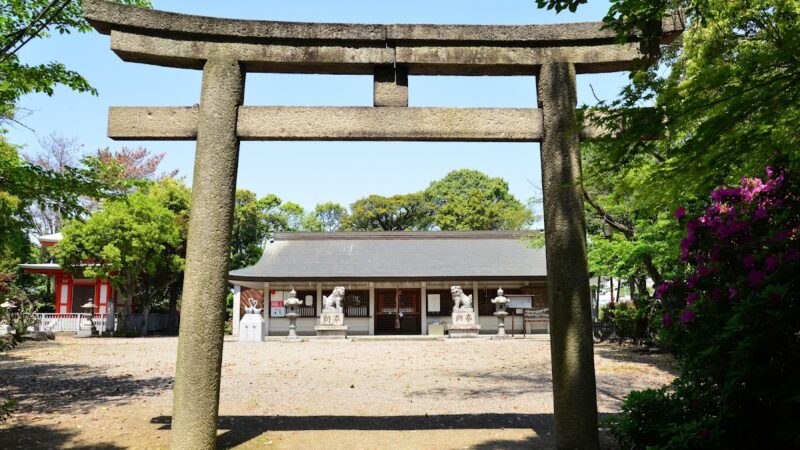
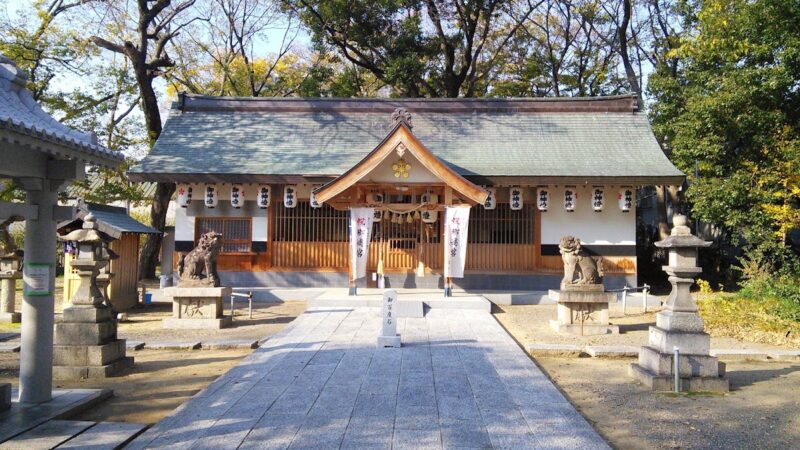
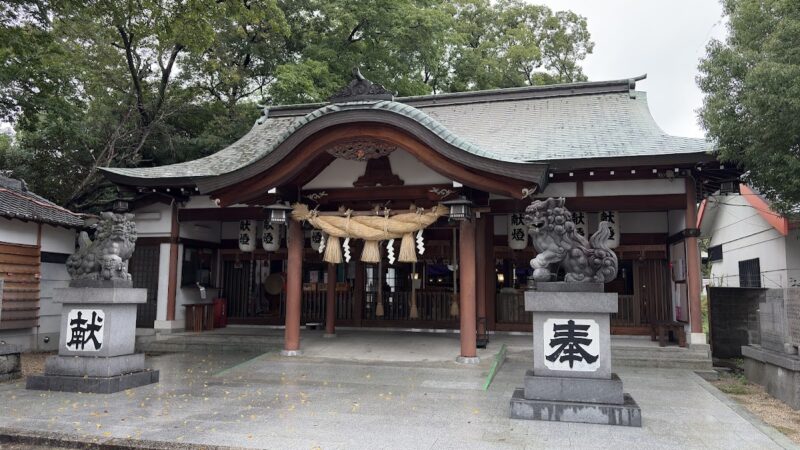
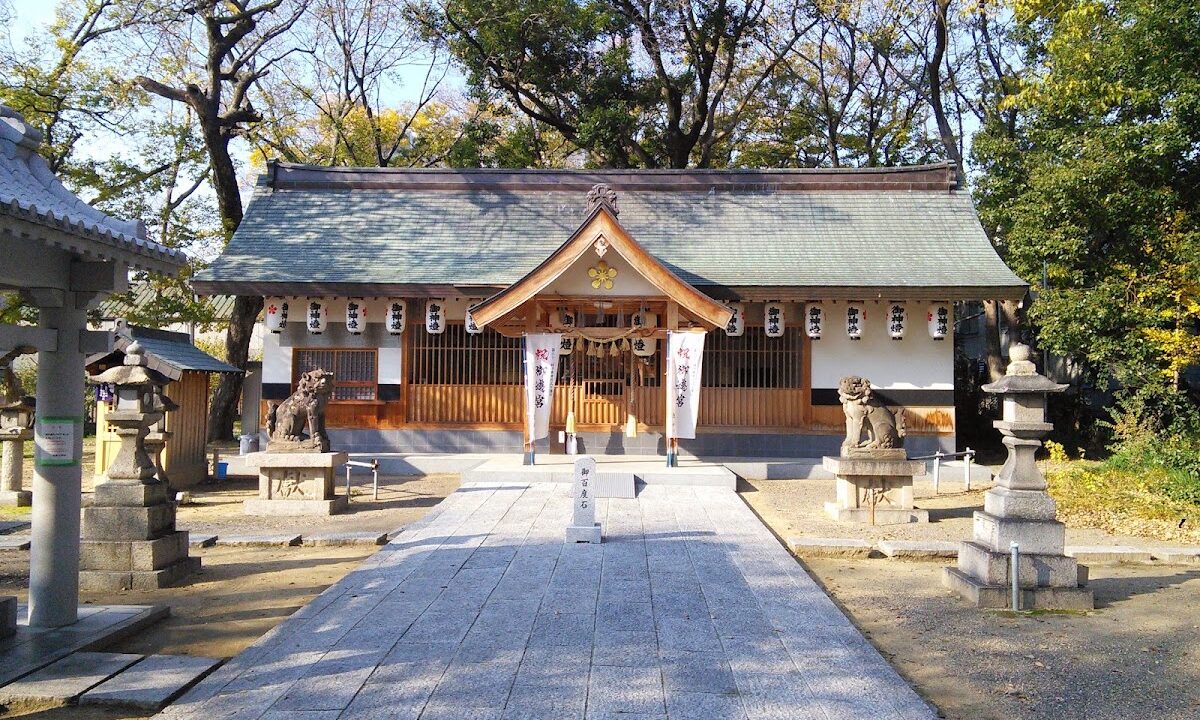
The wooden main hall and worship hall showcase the traditional shrine architecture of the region. While not large in scale, they are meticulously maintained, reflecting the deep faith of the local people.
Subsidiary Shrines
Small subsidiary shrines are also enshrined around the main hall, reflecting the history of accepting diverse local beliefs.
Shrine Grove
Despite being in the increasingly urbanized city of Yao, trees remain on the shrine grounds, creating a tranquil space for worship.
Manners and Etiquette for Visiting a Shrine
Basic Etiquette for Visiting a Shrine
- Bow before passing through the torii gate: This is a courtesy before entering the sacred area.
- Purify yourself at the water basin: Purify your left hand, right hand, and mouth in that order.
- Walk along the edge of the path: The center is considered the path of the gods.
- Etiquette in front of the main hall: Two bows, two claps, and one bow is the basic procedure.
Regarding Photography
Photography is generally permitted within the shrine grounds, but please refrain from taking photos inside the main hall or during Shinto rituals. Also, please be considerate of other visitors.
Regarding Goshuin (Shrine Seals)
For information on receiving Goshuin, please contact the shrine directly. Since there may not always be a resident Shinto priest, prior confirmation is recommended.
Nearby Attractions and Tourist Spots
Historical Spots in Yao City
Onchi Shrine
A representative ancient shrine of Yao City, known as the second-ranked shrine of Kawachi Province. It’s about a 15-minute drive from Nishigori Tenjin Shrine.
Jokoji Temple
A pilgrimage site of the Kawachi Saigoku Kannon Pilgrimage, this ancient temple tells the history of Yao.
Yao City Historical and Folk Museum
A facility where you can learn about the history and culture of the Kawachi region. There may be exhibits related to the Nishikiori clan and the abandoned Nishigori Temple.
Gourmet & Shopping
Around Kintetsu Yao Station
There are shopping streets and shopping centers, making it convenient for meals and shopping after visiting the shrine. There are also restaurants where you can enjoy Kawachi’s local cuisine.
Cultural Value of Nishigori Tenjin Shrine
Importance in Local History
Nishigori Tenjin Shrine is not just a shrine; it’s a valuable place that conveys the history of this land from ancient times. The footprints of the ancient Nishikiori clan, the remains of the ancient temple Nishigori, and its role as a center of local faith from the early modern period onward—all of these are layered upon each other.
Archaeological Significance
The central foundation stone of the pagoda at the abandoned Nishigori Temple is important evidence of the spread of Buddhist culture in the Kawachi region from the Asuka period to the Nara period. At that time, many immigrant clans resided in this region, bringing advanced technology and culture. The Nishikiori clan was one such clan, and the fact that traces of the temple they built still remain is valuable material for local history research.
Folkloric Value
Annual events, including the Danjiri Festival, are living traditions that convey the folk culture of the Kawachi region to the present day. Even amidst increasing urbanization, they play a role in maintaining the bonds of the local community.
Visitor Voices and Experiences
Quiet Worship Environment
Nishigori Tenjin Shrine is not a large-scale tourist shrine, so a quiet environment for worship is maintained. Its calm atmosphere is appealing as a place of daily faith for local residents.
Lively Atmosphere During Festivals
On the other hand, during the autumn festival, the entire region comes alive, and many people gather to watch the Danjiri enter the shrine. You can experience a lively atmosphere that is in stark contrast to the usual tranquility.
Visits from History Enthusiasts
For those interested in ancient history and archaeology, the grounds of the Nishigori Abandoned Temple, where remains still exist, are a valuable place to visit. By actually touching the central foundation stone of the pagoda, you can feel the history of over 1300 years ago firsthand.
Shrine Culture of Yao City and Nishigori Tenjin Shrine
Characteristics of Shrines in Yao City
Numerous shrines are scattered throughout Yao City, each deeply connected to the region’s history. Many shrines have a history dating back to ancient times, reflecting the city’s prosperity as one of the centers of Kawachi Province.
Connection to Danjiri Culture
The Kawachi region, especially around Yao City, is a region where danjiri (float) culture is thriving. Danjiri floats enter the shrine grounds during the autumn festivals of each shrine, playing an important role in shaping the region’s identity. Nishigori Tenjin Shrine is also part of this cultural sphere, continuing to preserve its traditions.
Points to Note and Advice for Visitors
Best Time to Visit
Regular Visit
While visits are possible year-round, the atmosphere of the shrine grounds is particularly pleasant during the fresh greenery of spring and the vibrant autumn foliage.
Festival Viewing
The Autumn Festival on the fourth Sunday of October offers a rare opportunity to witness the procession of the festival floats into the shrine. However, crowds are expected, so please allow ample time for your visit.
Attire and Items to Bring
No special attire is required, but clean clothing appropriate for visiting a shrine is desirable. Remember to bring sun protection in summer and warm clothing in winter.
Estimated Time Required
A regular visit takes approximately 15-30 minutes. If you wish to leisurely explore the grounds and closely examine the remains of the Nishigori Abandoned Temple, allow about an hour.
Contacting Nishigori Tenjin Shrine
For detailed information and the latest festival schedule, please contact the Osaka Prefectural Shrine Association or the Yao City Tourism Association.
Osaka Prefectural Shrine Association, Sixth Branch
This branch oversees shrines within Yao City and provides official information regarding Nishigori Tenjin Shrine.
Yao City Hall, Cultural Properties Division
This branch provides information on cultural properties, including the Nishigori Temple Ruins.
Summary: The Charm of Nishigori Tenjin Shrine
Nishigori Tenjin Shrine is a shrine quietly nestled in a residential area of Yao City, Osaka Prefecture, but its historical value is immeasurable. It was the residence of the ancient powerful clan, Nishikiori no Muraji; the remains of the Nishigori Temple from the Asuka period still exist; and it remains a center of local faith that continues to this day—all of these are condensed into one place.
While it lacks the grandeur of large-scale tourist shrines, the simple faith rooted in the community and the space where over 1000 years of history quietly breathe will deeply move visitors. When visiting Yao City, be sure to visit Nishigori Tenjin Shrine and reflect on the history of this place that has continued since ancient times.
The weight of time etched into the central foundation stone of the pagoda, the community bonds embodied in the festival floats, and this land watched over by the five deities—Nishigori Tenjin Shrine is a special place where the past and present intersect.