Utsutsu Shrine (Kasugai City, Aichi Prefecture) Complete Guide | History, Gardens, Goshuin (Shrine Seal), and Access Information
Utsutsu Shrine, located in Utsu-cho, in the eastern part of Kasugai City, Aichi Prefecture, near the border with Gifu Prefecture, is a venerable shrine listed in the “Engishiki Jinmyocho” (a list of shrines compiled during the Heian period). It has a deep connection to the legend of Yamato Takeru no Mikoto and is known as a historically valuable shrine with a shrine building and garden designated as an Aichi Prefecture cultural property.
This article comprehensively explains everything you need to know before visiting Utsutsu Shrine, from its history and highlights to the charm of its gardens, goshuin information, and access methods.
History and Origins of Utsutsu Shrine
Founding Legends and the Legend of Yamato Takeru
The exact founding date of Utsutsu Shrine is unknown, but according to shrine tradition, it dates back to the reign of Emperor Keiko (around 71-130 AD). This shrine has a deep connection to the legend of Yamato Takeru’s eastern expedition and has been revered as one of the centers of Yamato Takeru worship in Owari Province.
There is a legend that Yamato Takeru passed through this area on his return journey from pacifying the eastern provinces, and it is said that the place name Utsutsu itself originates from the legend of Yamato Takeru. These legends suggest that it was recognized as a sacred place from ancient times.
A Shrine Listed in the Engishiki Jinmyocho
Utsutsu Shrine is a shrine listed in the Engishiki Jinmyocho (completed in 927), compiled during the Heian period, under the name “Utsutsu Shrine” in Harube District, Owari Province. Being listed in the Engishiki Jinmyocho means that it was a high-ranking shrine already recognized by the imperial court during the Heian period.
Its status as a shrine listed in the Engishiki demonstrates the religious and social importance of Utsutsu Shrine in this region, indicating that it functioned as a center of local faith from ancient to medieval times.
Reverence from Warlords and the Legend of Toyotomi Hideyoshi
Utsutsu Shrine has long been deeply revered by warlords, and it is said that many warlords visited it, especially during the Sengoku and Edo periods. The most famous anecdote is that Toyotomi Hideyoshi prayed for victory during his invasion of Korea (the Bunroku-Keicho War, 1592-1598), and that he cut down a mast for his warship from the shrine grounds.
This legend indicates that Utsutsu Shrine was not merely a local shrine, but was recognized as a highly revered and sacred place even by powerful figures. The reverence of warlords contributed to the maintenance and development of the shrine, and was the driving force behind the foundation of the current shrine buildings and gardens.
Syncretism of Shinto and Buddhism and the Relationship with Utsutsu Myokenji Temple
Utsutsu Myokenji Temple is located immediately adjacent to Utsutsu Shrine, preserving the form of syncretism of Shinto and Buddhism from before the Edo period. Shinto-Buddhist syncretism is a religious form that combines ancient Japanese Shinto with introduced Buddhism, and was seen in many shrines throughout Japan until the Meiji-era separation of Shinto and Buddhism.
The relative locations of Uchitsu Shrine and Uchitsu Myokenji Temple represent a valuable historical landscape that shows this area once functioned as a sacred site for Shinto-Buddhist syncretism. Visiting both sites allows for a deeper understanding of the reality of Shinto-Buddhist syncretism in the history of Japanese religion.
The Shrine Building and Architectural Beauty of Uchitsu Shrine
Masterpieces of Sculpture by the Tachikawa Family
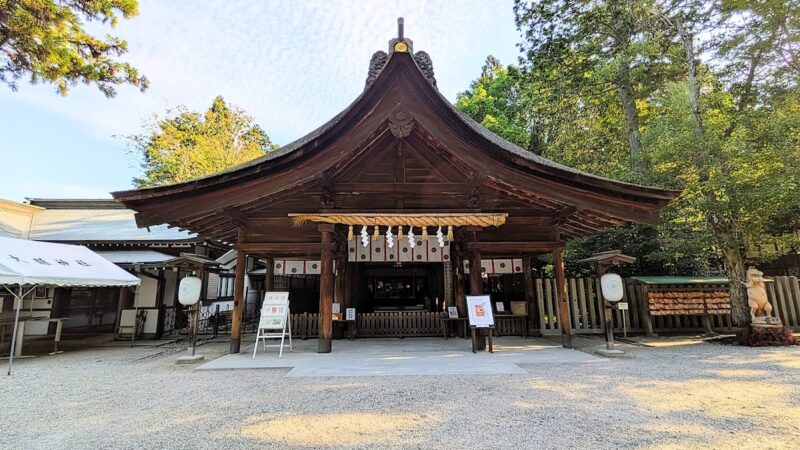
The current shrine building of Uchitsu Shrine was constructed during the Bunka era (1804-1818) and is designated as an Aichi Prefecture cultural property. The greatest highlight of this shrine building is the exquisite carvings by the Tachikawa family, known as master craftsmen of Suwa.
The Tachikawa family was a family of shrine carpenters and sculptors who were active from the mid-Edo period to the Meiji era, and were based in the Suwa region, undertaking many shrine and temple construction projects mainly in the Chubu region. The carvings on the shrine buildings of Uchino Shrine are considered one of the representative works that demonstrate the advanced skills and artistry of the Tachikawa family.
Characteristics and Highlights of the Shrine Carvings
The carvings throughout the shrine buildings utilize traditional motifs such as dragons, lions, phoenixes, and flowers and birds, each rendered in exquisite detail and three-dimensionally. The carvings on the transoms and rainbow beams of the main hall, in particular, are breathtaking, showcasing a dynamic expression while making full use of the wood’s texture.
Upon closer examination of the carvings, one can appreciate the meticulous detail in the animal fur and feathers, demonstrating the exceptional skill of the Tachikawa family. When visiting the shrine, we highly recommend taking the time to admire these carvings.
Shrine Layout and Architectural Style
The shrine buildings of Uchino Shrine consist of the main hall, worship hall, and prayer hall, cleverly utilizing the mountain slope. The architectural layout, harmonizing with the natural topography of the hillside behind the shrine, embodies the philosophy of coexistence with nature in shrine architecture.
The architectural style strongly retains characteristics of the late Edo period, resulting in a beautiful composition that balances ornamentation and functionality. The solemn atmosphere emanating from the entire shrine gives visitors a profound spiritual experience.
The Charm of the Uchiuchi Shrine Garden
The Legend of Musō Soseki’s Garden Design
The Uchiuchi Shrine Garden is said to have been designed by Musō Soseki (1275-1351), a high-ranking Buddhist monk and landscape architect of the Nanboku-chō period. Musō Soseki was a master of Japanese garden history, having designed gardens at Tenryū-ji Temple and Saihō-ji Temple (Moss Temple) in Kyoto. The fact that his name remains in legend speaks to the high status of this garden.
While there are various theories regarding the actual construction period, the garden exhibits stylistic characteristics from the Nanboku-cho to Muromachi periods, and is designated as a Place of Scenic Beauty by Aichi Prefecture, a valuable cultural asset that conveys the beauty of medieval gardens to the present day.
Composition of a Stroll Garden with Forest and Pond
The Uchino Shrine Garden is a stroll garden with forest and pond, skillfully incorporating natural rocks and the topography of the hillside behind the shrine to create a unique landscape. A stroll garden is a type of garden where visitors enjoy various landscapes while walking along paths, with different scenery unfolding as they progress.
Throughout the garden, traditional Japanese garden techniques can be seen in many places, such as stone arrangements using natural stones, a composition with varying elevations utilizing slopes, and the creation of a sense of depth through the placement of trees. In particular, the composition that incorporates the bedrock of the hillside behind the shrine as a backdrop embodies the unique aesthetic of Japanese gardens that blurs the boundary between nature and artificiality.
The Beauty of the Seasons
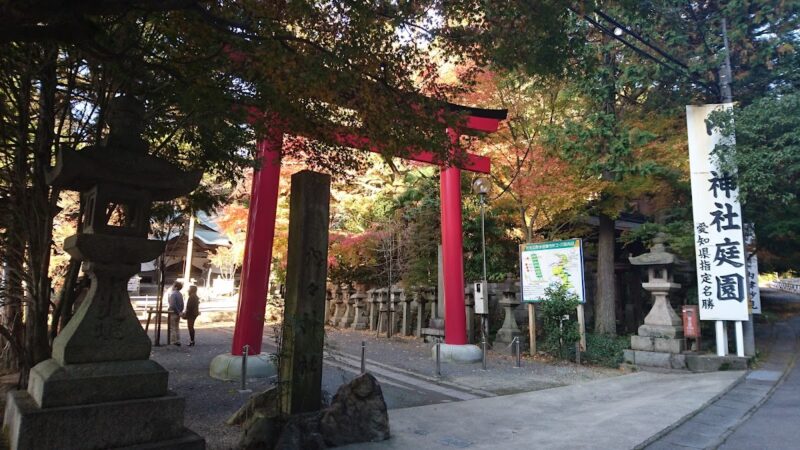
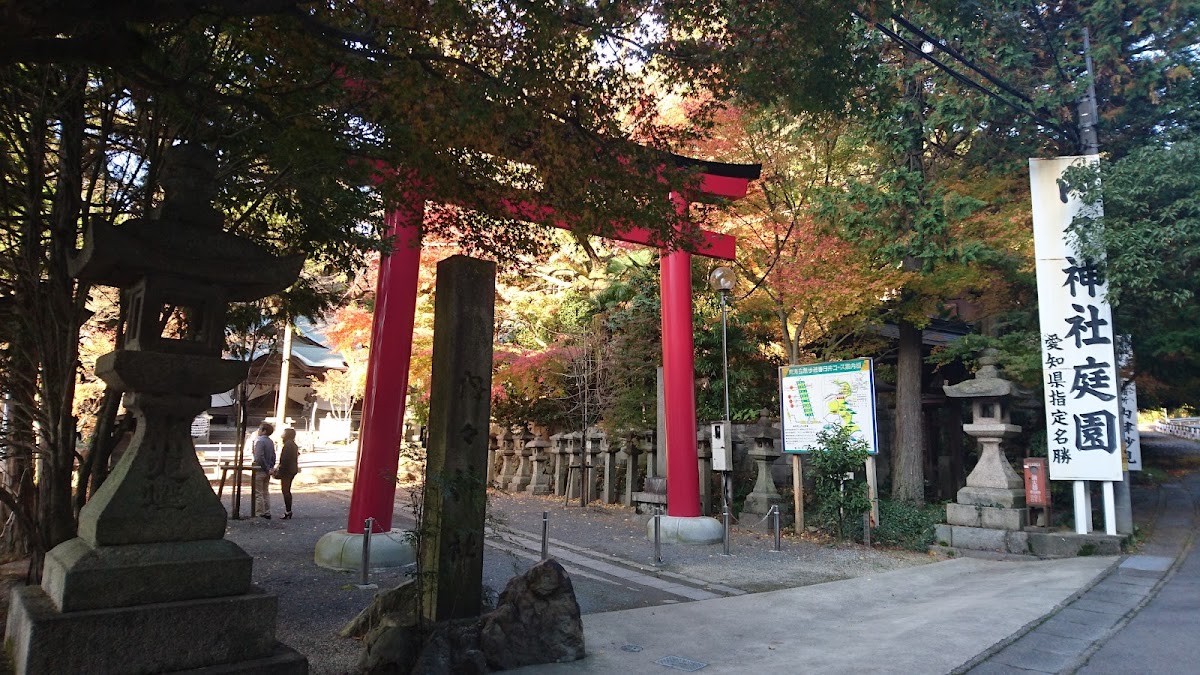
The Uchiuchi Shrine Garden displays different expressions throughout the four seasons, but its beauty is particularly exceptional during the autumn foliage season. Maple and other trees with vibrant autumn colors adorn the garden, creating a magnificent landscape in contrast to the rock formations and pond.
In spring, the fresh greenery is refreshing; in summer, the deep shade of the trees provides coolness; and in winter, the snow-covered garden displays a serene beauty. The fact that you can enjoy completely different garden beauty depending on the season you visit is a major attraction of the Uchiuchi Shrine Garden.
Points to Appreciate the Garden
When appreciating the garden, paying attention to the following points will allow you to appreciate its beauty more deeply:
- Arrangement of Natural Stones: Large natural stones are arranged in exquisite balance, creating a sense of strength and stability.
- Water Flow: Water flow utilizing the slope adds a dynamic element to the garden.
- Borrowed Scenery: The technique of borrowing scenery, incorporating trees and rock formations from the hillside behind the garden as a background, is used effectively.
- Changing Perspectives: As you walk along the garden paths, new landscapes will appear one after another.
Information on Goshuin (Shrine Seals) at Uchiuchi Shrine
About the Issuance of Goshuin
Uchiuchi Shrine offers Goshuin (shrine seals), and many visitors receive them as a memento of their visit. Goshuin are issued at the shrine office, but since staff may be absent, it is recommended to contact them in advance if you wish to be sure to receive a Goshuin.
The goshuin (temple/shrine stamp) features the calligraphy and red seal of “Uchiuchi Shrine,” creating a simple yet dignified design. The offering fee is a typical amount (around 300-500 yen), but please confirm the exact amount upon your visit.
About Goshuincho (Stamp Books)
We recommend checking with the shrine office upon your visit regarding the availability of original goshuincho. Some shrines offer seasonal or specially designed goshuincho.
Basic Information and Access to Uchitsu Shrine
Location and Contact Information
Location: 24 Uchitsu-cho, Kasugai City, Aichi Prefecture
Phone Number: 0568-81-3176 (If confirmation is needed)
Transportation Access
Access by Train and Bus:
- Take the Meitetsu Bus bound for “Uchitsu-cho” from JR Chuo Main Line “Kozoji Station,” get off at the “Uchitsu-cho” bus stop, and walk for about 5 minutes.
- Take a taxi from Meitetsu Komaki Line “Komaki Station” for about 20 minutes.
Access by Car:
- About 20 minutes from Tomei Expressway “Kasugai IC”
- About 15 minutes from Chuo Expressway “Komaki-Higashi IC”
- Parking: There is a parking lot for visitors on the shrine grounds (spaces are limited, so be careful during peak seasons).
Visiting Hours and Admission Fee
Visiting Hours: Grounds are freely accessible (please check the shrine office’s operating hours). Admission Fee: Free (including garden)
Notes for Visitors
- The garden is built on a slope, so comfortable walking shoes are recommended.
- The autumn foliage season (mid-to-late November) may be crowded.
- The shrine office may be unattended, so it is advisable to contact them in advance if you wish to receive a Goshuin (shrine stamp).
- The shrine is located in a quiet residential area, so please be considerate of noise levels.
Tourist Attractions Around Uchitsu Shrine
Uchitsu Myokenji Temple
Uchitsu Myokenji Temple, located right next to Uchitsu Shrine, is a temple where you can experience the history of Shinto-Buddhist syncretism. Visiting both Uchitsu Shrine and Uchitsu Myokenji Temple allows you to understand the layered nature of Japanese religious culture. The main hall, which enshrines Myoken Bodhisattva, and the view from the temple grounds are also highlights.
Tourist Spots in Kasugai City
- Ochiai Park: A representative urban park of Kasugai City, known for its cherry blossoms.
- Kasugai City Michikaze Memorial Hall: A facility commemorating Ono no Michikaze, a calligrapher from the Heian period.
- Utsu Pass: A pass on the border with Gifu Prefecture, popular as a hiking course.
History of the Shimo-kaido (Zenkoji Road)
Utsu Shrine is located along the “Shimo-kaido” (Zenkoji Road), a side route of the Nakasendo. This road is a historic route that was used by many people as a pilgrimage route to Zenkoji Temple in Shinshu during the Edo period. Historical sites that still retain the atmosphere of that time are scattered along the road, allowing visitors to enjoy a historical walk.
Annual Events and Festivals at Utsu Shrine
Main Festivals
Various festivals are held at Utsu Shrine throughout the year. The main events include the following:
- Annual Grand Festival: The most important festival held once a year.
- New Year’s Visit: Many worshippers visit during the first three days of the New Year.
- Setsubun Festival: Events such as bean-throwing are sometimes held on Setsubun in February.
For specific dates and details, please contact the shrine directly or check the Kasugai City tourist information.
Special Charm of the Autumn Foliage Season
The autumn foliage season from mid- to late November is one of the most beautiful times to visit Uchino Shrine. The maple trees in the garden turn vivid colors, creating a magnificent landscape in harmony with the rock formations and shrine buildings. While many photography enthusiasts and tourists visit during this time, it is relatively quiet to appreciate the scenery on weekday mornings.
Cultural Value of Uchino Shrine
Significance as an Aichi Prefecture Designated Cultural Property
The shrine buildings and gardens of Uchino Shrine are designated as Aichi Prefecture Designated Cultural Properties and are protected as an important cultural heritage of Aichi Prefecture. It is highly regarded academically as a valuable example of Edo period architectural techniques and garden art.
A Precious Site for Local History
Uchino Shrine is an indispensable part of Kasugai City’s history. From the ancient legend of Yamato Takeru, to its status as a Shikinaisha (a shrine listed in the Engishiki) during the Heian period, to medieval garden culture, Edo period shrine architecture, and the history of Shinto-Buddhist syncretism, it is a rare shrine where you can experience a multi-layered history all in one place.
It continues to be a center of faith for local residents and plays a vital role as the core of the local community.
Recommended Plan for Visiting Uchino Shrine
Estimated Time Required
For a thorough visit to Uchino Shrine and garden appreciation, allow approximately 60 to 90 minutes. If you want to carefully examine the carvings on the shrine buildings and enjoy taking photos while strolling through the garden, about 2 hours would be more comfortable.
Recommended Time to Visit
- Autumn Foliage Season (Mid-to-Late November): The most popular time, when the gardens are at their most beautiful.
- Fresh Green Season (April-May): Enjoy the temple grounds enveloped in refreshing greenery.
- Winter (December-February): Fewer visitors, allowing for a peaceful visit. The snowy scenery is also beautiful.
Combining with Nearby Facilities
Visiting the adjacent Utsu Myokenji Temple or exploring the surrounding historical walking trails before or after your visit to Utsu Shrine will enhance your sightseeing experience. It’s also possible to combine your visit with other tourist spots in Kasugai City or sightseeing in Tajimi City, Gifu Prefecture.
Summary: Rediscovering the Charm of Uchino Shrine
Uchino Shrine in Kasugai City, Aichi Prefecture, is a shrine with multifaceted charms: its status as a Shikinaisha (a shrine listed in the Engishiki Jinmyocho), its mythological background associated with the legend of Yamato Takeru, its famous garden said to have been designed by Muso Soseki, its exquisite shrine carvings by the Tachikawa family, and its historical landscape of syncretism between Shinto and Buddhism.
While relatively easy to access from urban areas, it is a precious spot where you can feel history and nature in a quiet environment, and is loved by many people from both within and outside Aichi Prefecture.
It is a shrine worth visiting for a variety of purposes, from history buffs and garden enthusiasts to those interested in architecture, goshuin (shrine stamps), and those seeking a peaceful place to calm their minds. Please visit Uchino Shrine at least once and experience its multifaceted charm.
Uchino Shrine shows different faces in each of the four seasons, making it a place where you can discover something new every time you visit. The beauty of the autumn leaves is particularly exceptional, but the season of fresh greenery and the tranquil winter also have their own unique charms. Why not add Uchiuchi Shrine, a hidden gem in Aichi Prefecture, to your travel destinations?