Agata Shrine (Uji Renge, Uji City) Complete Guide | The History of the Guardian Shrine of Byodo-in and the Charm of the Mysterious Festival in the Dark
Agata Shrine, located in Uji Renge, Uji City, Kyoto Prefecture, is known as an ancient shrine that protects the northeast (demon’s gate) of the World Heritage site, Byodo-in Temple. The “Mysterious Festival in the Dark,” held annually from late night on June 5th to the early morning of June 6th, is one of Kyoto’s most unique festivals, attracting many worshippers. This article thoroughly explains the charm of Agata Shrine, from its history and enshrined deities to its highlights and access methods.
What is Agata Shrine? | An Overview of the Ancient Shrine Protecting Byodo-in
Agata Shrine is located at 72 Uji Renge, Uji City, Kyoto Prefecture, and its former shrine rank was Village Shrine. It is located a short 2-minute walk southwest of Byodo-in Temple, making it easily accessible for Uji sightseeing.
The exact founding date is unclear, but it is said that in 1052 (Eisho 7) during the mid-Heian period, when Regent Fujiwara Yorimichi converted his father Fujiwara Michinaga’s villa into the temple Byodo-in, the shrine was revered as its guardian deity. When Byodo-in was built, Agata Shrine was located in the southwest (the “back demon gate”) of Byodo-in, and therefore played an important role as a guardian deity against evil spirits.
The character “縣” is the old form of “県” (prefecture), and also indicates an ancient administrative division, suggesting that this region has been an important place since ancient times.
Deity Enshrined | Konohanasakuya-hime no Mikoto and Blessings of Matchmaking and Safe Childbirth
The main deity enshrined at Agata Shrine is Konohanasakuya-hime no Mikoto. Konohanasakuya-hime is a goddess in Japanese mythology, a beautiful woman who became the consort of Ninigi-no-Mikoto in the myth of the descent of the heavenly grandchild.
The Myth of Konohanasakuya-hime
Konohanasakuya-hime is also known as the goddess of Mount Fuji and is depicted as a woman as beautiful as a cherry blossom. After marrying Ninigi-no-Mikoto, when she was suspected of having conceived overnight, she set fire to the birthing hut and safely gave birth to three children amid the flames. From this anecdote, she came to be worshipped as a goddess of fire and a goddess of safe childbirth.
Divine Blessings
At Agata Shrine, the following blessings are believed to be bestowed through the divine virtues of Konohanasakuya-hime no Mikoto:
- Good Matchmaking and Relationships: Known as a beautiful goddess, she is visited by many female worshippers as a deity who brings good relationships.
- Safe Childbirth and Fertility: Due to the myth of her safe childbirth amidst flames, she is revered as a deity for safe childbirth.
- Child Rearing: As a mother goddess who raised three children, she is also worshipped as a guardian deity of child rearing.
- Fire Protection: Due to her role as a god of fire, she is also believed to offer protection against fires.
Especially for female worshippers, she is cherished as a guardian deity for matchmaking and safe childbirth, and many visit this shrine along with Byodo-in Temple when visiting Uji.
The Mysterious Festival of the Dark Night: Agata Festival | A Representative Traditional Event of Kyoto
An indispensable event when discussing Agata Shrine is the “Agata Festival,” held annually from late night on June 5th to the early morning of June 6th. Known as the “Strange Festival of the Dark Night” or “Strange Festival of Darkness,” this festival is famous for its particularly unique atmosphere, even within Kyoto Prefecture.
History and Origins of the Agata Festival
The Agata Festival has ancient origins, believed to date back to the Heian period. While it’s said to have originally been a festival to pray for a bountiful harvest or a festival to ward off disease, its exact origins are uncertain. However, it is certainly a traditional event with a history of at least several hundred years.
Festival Characteristics | Why is it called the “Strange Festival of the Dark Night”?
The main reason the Agata Festival is called the “Strange Festival of the Dark Night” is that all the lights in the area from Ujibashi-dori Shopping Street to the vicinity of Agata Shrine are turned off during the festival. The sight of the portable shrine procession taking place in the pitch-black darkness of midnight, with all streetlights and shop lights extinguished, is fantastical and mystical, creating a unique atmosphere unlike any other festival.
Festival Characteristics | Why is it called the “Strange Festival of the Dark Night”?
The biggest reason the Agata Festival is called the “Strange Festival of the Dark Night” is that all the lights in the area from Ujibashi-dori Shopping Street to Agata Shrine are turned off during the festival. There are various theories as to why the festival is held in darkness, but it is said to be a remnant of ancient Shinto rituals that were performed at night, or it may stem from the belief that one should not directly see the form of the gods.
Festival Flow
The Agata Festival begins in the evening of June 5th and proceeds as follows:
- Yoimiyasai (Evening of June 5th): A Shinto ritual that signals the start of the festival
- Bonten Togyo (Night of June 5th): A procession carrying decorative objects called Bonten parades through the town
- Kirai no Mikoshi Togyo (Late Night of June 5th – Early Morning of June 6th): From around 1 AM, the surrounding lights are turned off, and the mikoshi (portable shrine) is carried through the darkness
- Kankosai (Early Morning of June 6th): The mikoshi returns to the shrine, and the festival ends
What is Bonten?
Bonten is a symbolic presence of the Agata Festival. These are bamboo poles adorned with colorful artificial flowers and decorations, reaching heights of over 3 meters. Each neighborhood donates a Bonten (a type of portable shrine), each beautifully decorated with unique designs. The Bonten are used to pray for a bountiful harvest and family safety, and are displayed on the shrine grounds throughout the festival.
Points to Note When Visiting the Agata Festival
When participating in the Agata Festival, please note the following:
- Time: The highlight, the procession of the portable shrine in darkness, begins around 1 AM.
- Crowds: Many visitors come every year, and it gets extremely crowded, especially at night.
- Attire: Since it’s dark at night, comfortable walking shoes are recommended.
- Manners: As this is a sacred Shinto ritual, a quiet and respectful attitude is expected.
Highlights on the Shrine Grounds | Historical Sites
The grounds of Agata Shrine contain numerous historical sites that evoke a sense of history dating back to the Heian period.
Agatai Well
The Agatai Well, located within the shrine grounds, is a historic well that has been celebrated in waka poetry since the Heian period. This well, from which pure water springs forth, has long been known as a source of Uji’s famous water, and many poets have celebrated its beauty in their waka poems. Even today, it quietly holds water within the shrine grounds, allowing visitors to feel the atmosphere of antiquity.
Appearing in Heian period literary works and poetry collections, this well is an important historical site in telling the story of Uji.
Hackberry Tree
A magnificent hackberry tree, said to be over 500 years old, stands tall within the shrine grounds. This giant tree is a symbol of Agata Shrine and can be considered a living witness to its long history.
The hackberry tree is approximately 20 meters tall, with a trunk circumference of several meters, and its majestic presence overwhelms visitors. In summer, its lush green leaves create a cool, shady spot within the temple grounds. It is also revered as an object of tree worship, and many worshippers can be seen praying before it.
Weeping Cherry Tree
The temple grounds are home to a beautiful weeping cherry tree, which blooms magnificently in spring. Along with the cherry blossoms at Byodo-in Temple, it is known as a famous spot that colors Uji’s spring. During cherry blossom season, many worshippers and tourists visit, enjoying taking photographs.
Worship Hall and Main Hall
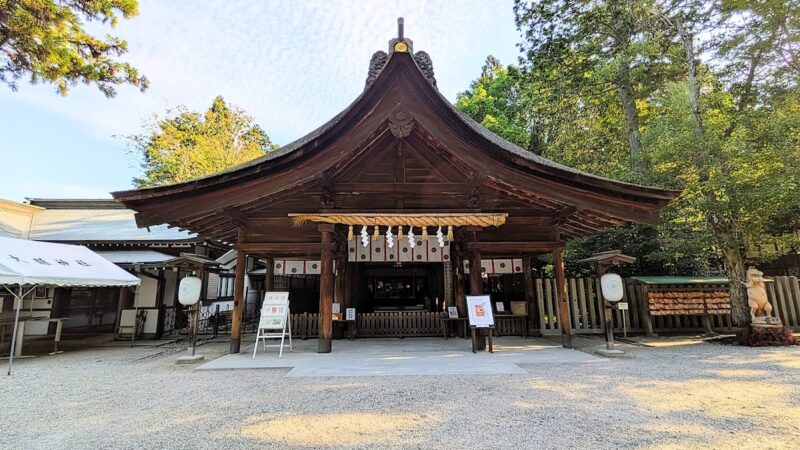
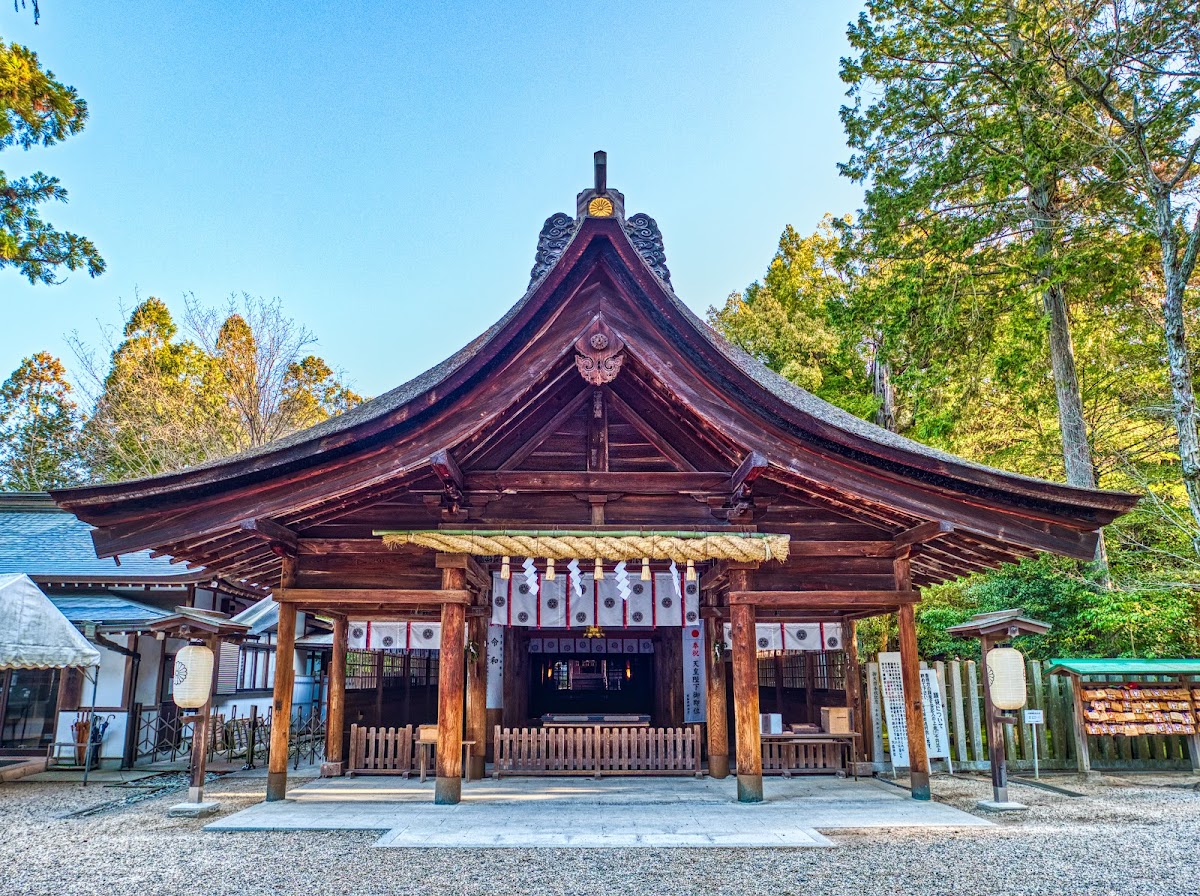
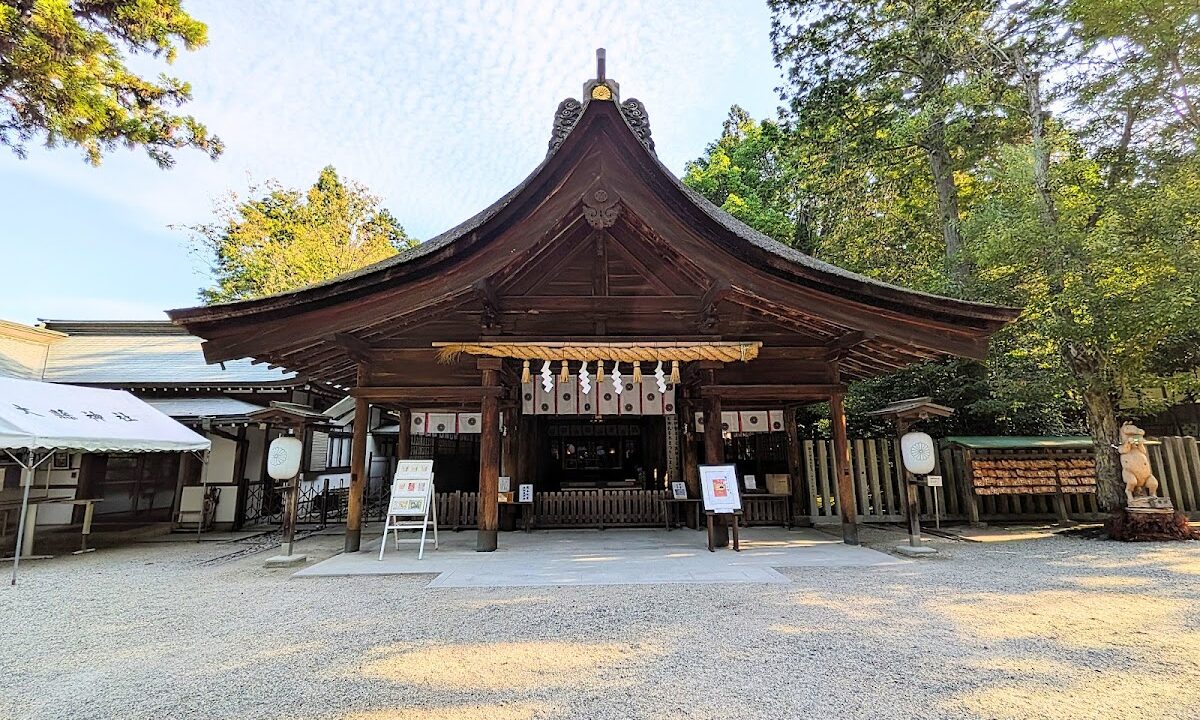
The Agata Shrine consists of a worship hall and a main hall. The main hall is built in the traditional Ikkensha Nagare-zukuri style, preserving the architectural style of the Edo period. Although not large in scale, the meticulously maintained shrine reflects the deep faith of the local people.
Shrines within the Precincts
Within the grounds of Agata Shrine, there are several subsidiary shrines (subsidiary shrines):
- Tenman Shrine (Tenjin Shrine): A shrine dedicated to Sugawara no Michizane, the god of learning. Visited by students taking exams and those praying for academic success.
- Kasuga Shrine: A shrine dedicated to Kasuga no Okami.
- Hachiman Shrine: A shrine dedicated to Hachiman no Okami.
By visiting these subsidiary shrines as well, you can receive even greater blessings.
Approach and Torii Gate
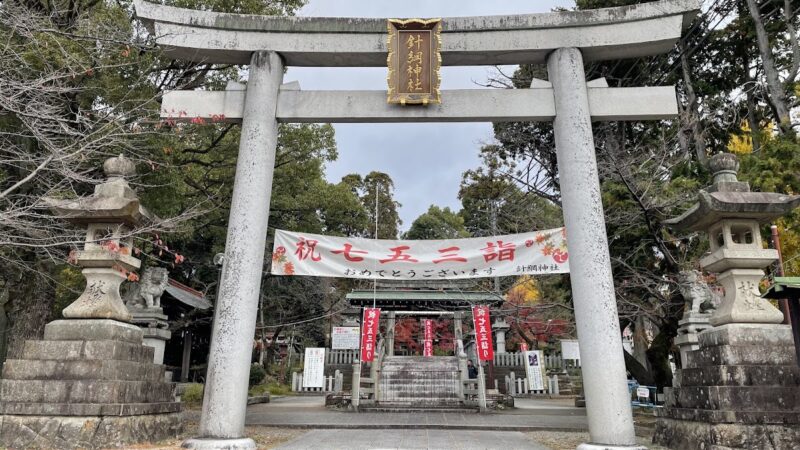
A magnificent torii gate stands at the entrance to the approach leading to Agata Shrine from Ujibashi Street. This torii gate is a landmark of “Agata Street” and can be easily found by heading south from the five-way intersection at the west end of Ujibashi Bridge.
The approach intersects with the approach to Byodo-in Temple, which is how tourists visiting Byodo-in Temple often become aware of Agata Shrine. Passing through the torii gate and proceeding along the approach to the shrine, you are led into a tranquil shrine grounds.
Goshuin Information | A Memento of Your Visit
You can receive a goshuin (shrine stamp) at Agata Shrine. Goshuin are proof of your visit and a way to preserve your connection with the shrine, and many visitors seek them out.
Features of the Goshuin
The goshuin at Agata Shrine features the calligraphy of “Agata Shrine” and the shrine’s seal. The simple yet powerful calligraphy conveys the shrine’s prestige.
Goshuin Reception Hours
Goshuin can be obtained at the shrine office, but they may not be available at all times. If you want to be sure to receive a goshuin, it is recommended to inquire with the shrine in advance. Special goshuin may be available, especially during the Agata Festival.
Goshuin Notebook
It is recommended to check whether Agata Shrine has its own original goshuin notebook upon your visit. When visiting the shrines and temples of Uji, one of the pleasures is bringing your goshuincho (stamp book) and collecting stamps at each location.
Access and Basic Information
Location
72 Uji Renge, Uji City, Kyoto Prefecture 611-0021
Access by Train
From JR Nara Line “Uji Station”
- Approximately 10 minutes on foot
- Cross Uji Bridge, head south along Ujibashi Shopping Street, pass Byodoin Omotesando, and continue south a little further. You will see a torii gate on your right.
From Keihan Railway “Uji Station”
- Approximately 8 minutes on foot
- From Keihan Uji Station, head towards Byodoin Temple. After passing the south gate of Byodoin Temple, head west for approximately 100 meters.
Access by Car
- Approximately 10 minutes from Keiji Bypass “Uji Nishi IC”
- There is no dedicated parking lot for the shrine, but there are paid parking lots in the surrounding area.
- We recommend using parking lots around Byodoin Temple and visiting on foot.
Visiting Hours
The shrine grounds are generally open for free visits, but the shrine office has limited hours. As with most shrines, daytime visits are recommended.
Admission Fee
Entry to the shrine grounds is free.
Nearby Tourist Attractions
Because Agata Shrine is located in the heart of Uji’s tourist area, there are many tourist attractions nearby:
- Byodo-in Temple (2-minute walk): A symbol of Fujiwara culture, registered as a World Heritage Site
- Ujigami Shrine (10-minute walk): A World Heritage Site, Japan’s oldest shrine architecture
- Uji Shrine (8-minute walk): An ancient shrine affectionately known as the “Rabbit Shrine”
- Uji Bridge (5-minute walk): One of Japan’s three oldest bridges
- Kōshō-ji Temple (15-minute walk): A Sōtō Zen temple famous for Kotozaka
- Mimuroto-ji Temple (5-minute drive): A famous temple known as the “Temple of Flowers”
At Ujibashi-dori Shopping Street, you can enjoy Uji tea and Uji tea sweets, allowing you to savor Uji’s cuisine along with sightseeing.
Deeper Understanding of Agata Shrine’s History
Deep Connection with Byodo-in Temple
The relationship between Agata Shrine and Byodo-in Temple is not merely geographical proximity. When Byodo-in Temple was founded by Fujiwara Yorimichi in 1052, Agata Shrine was designated as its guardian shrine.
A guardian shrine is a shrine that protects a temple or a specific region, a remnant of the era when temples and shrines were worshipped together based on the syncretic belief of Shinto and Buddhism. Located in the southwest (the “back demon gate”) of Byodo-in Temple, Agata Shrine also played an important protective role in feng shui.
Although shrines and temples were separated by the Meiji-era Shinto-Buddhist Separation Order, both remain inseparable when discussing the history and culture of Uji.
Meaning of the Place Name “Agata”
“Agata” is the old form of “ken” (県), a word indicating administrative divisions in ancient Japan. The territories directly controlled by the Yamato court were called “agata,” indicating that this region had a deep connection with the court from ancient times. Uji is known as the setting for the “Ten Chapters of Uji” in *The Tale of Genji*, and it flourished as a villa area for Heian-period aristocrats. The name of Agata Shrine itself tells the story of this area’s long history.
Agata Shrine as celebrated in Waka poetry
From the Heian period to the medieval period, Agata Shrine and Agata Well were celebrated in many waka poems. In particular, the pure water of Agata Well was beloved by poets and became known as a utamakura (a famous place celebrated in waka poetry).
Many poems about Uji are included in imperial anthologies of waka poetry such as the Kokin Wakashū and Shinkokin Wakashū, and the area around Agata Shrine also held an important position as a literary landmark.
Manners and Enjoyment of Visiting a Shrine
Basic Shrine Visiting Etiquette
The basic etiquette for visiting a shrine is as follows:
- Bow before passing through the torii gate: As a sign of respect before entering the sacred area.
- Purify yourself at the water basin: Purify your left hand, right hand, and mouth in that order.
- Pray in front of the main hall: Two bows, two claps, and one bow is the basic form.
- Visit the subsidiary shrines: If you have time, visit the subsidiary shrines as well.
- Bow upon leaving: Turn around and bow before leaving the torii gate.
Recommended Time to Visit
Agata Shrine has charm in every season, but the most recommended times are:
- Spring (late March to early April): The weeping cherry blossoms are in full bloom.
- Early Summer (June 5th-6th): The only opportunity to experience the Agata Festival.
- Autumn (November): The season of autumn leaves; the entire Uji area is beautifully colored.
- New Year’s: Many worshippers visit for the first shrine visit of the year.
Recommended Pilgrimage Route Including Byodo-in Temple
For an efficient pilgrimage route when visiting Uji, we recommend the following:
- Arrive at JR Uji Station or Keihan Uji Station
- Cross Uji Bridge and stroll through Ujibashi-dori Shopping Street
- Visit Byodo-in Temple (approx. 1 hour)
- Visit Agata Shrine (approx. 20-30 minutes)
- Walk along the Uji River to Uji Shrine and Ujigami Shrine (approx. 10 minutes on foot)
- Take a break at a Uji tea cafe
This route allows you to efficiently visit two World Heritage sites and Agata Shrine.
Voices of Visitors to Agata Shrine
Visitors to Agata Shrine have shared the following impressions:
- “Located very close to Byodo-in Temple, the quiet and peaceful atmosphere was wonderful.”
- “The procession of the portable shrine in the darkness during the Agata Festival was a fantastical experience unlike anything else.”
- “Although not large in scale, it’s a shrine steeped in history, and worth visiting in conjunction with Byodo-in Temple.”
- “The hackberry tree in the shrine grounds was magnificent, and I felt like I received some power from it.”
- “I visited seeking blessings for matchmaking, and it was a quiet and peaceful place.”
On the other hand, some have commented, “The torii gate at the entrance to the shrine is impressive, but the grounds were smaller than expected.” However, regardless of its size, Agata Shrine, with its long history and unique festival, is one of the shrines you should definitely visit when visiting Uji.
Summary | A Historic Shrine You Must Visit When Sightseeing in Uji
Agata Shrine boasts a history of nearly 1,000 years as the guardian shrine of Byodo-in Temple and is revered as the goddess of good fortune in marriage and safe childbirth, enshrining Konohanasakuya-hime. The Agata Festival, a unique festival held every June in the dark of night, is famous as one of Kyoto’s most distinctive festivals, attracting many worshippers.
The shrine grounds offer numerous sights to see, including the Agata Well, mentioned in Heian period waka poetry, a hackberry tree over 500 years old, and beautiful weeping cherry trees. Its convenient location, just a 2-minute walk from Byodo-in Temple, makes it a must-visit shrine when sightseeing in Uji.
Agata Shrine, along with the World Heritage site Byodo-in Temple, conveys the history and culture of Uji to the present day. Why not reflect on history in the tranquil grounds and receive the divine blessings of Konohanasakuya-hime? Agata Shrine is a place worth visiting not only for women praying for good fortune in love or safe childbirth, but also for those interested in history and culture, and those who want to discover the profound charm of Kyoto.