Complete Guide to Chiba Shrine | The Main Shrine of Myoken-sama, Boasting a Thousand-Year History, and the Blessings of Protection from All Directions
Located in Chuo Ward, Chiba City, Chiba Prefecture, Chiba Shrine is an ancient shrine associated with the Chiba clan, which was restored and founded in 1000 AD (Chōhō 2). Affectionately known as “Myoken-sama,” it is a rare shrine in Japan that enshrines Hokushin Myoken Sonsei-ō (Amenominakanushi-no-Ōkami) as its principal deity. Despite its convenient location, just a 10-minute walk from JR Chiba Station, stepping onto the shrine grounds envelops you in a solemn atmosphere, making it one of Chiba Prefecture’s leading power spots.
History and Origins of Chiba Shrine
Deep Connection Between the Chiba Clan and Myoken Faith
The history of Chiba Shrine dates back to the Heian period. According to shrine tradition, when Chiba Tsuneshige moved his residence from Ōshi Castle to Inohana Castle (present-day Chuo Ward, Chiba City), he relocated the Myōken deity, which had been passed down through generations of his family, to this location and established the Myōken Shrine.
The Chiba clan was a powerful family descended from the Kanmu Taira clan and was a prestigious samurai family that ruled the Bōsō region. The Chiba clan deeply revered Myōken Bodhisattva (Hokushin Myōken Sonseiō) as their guardian deity, and in 1000 (Chōhō 2), Hokutozan Kongōju-ji Temple was restored and re-established as an imperial prayer site for the healing of Emperor Ichijō’s eye disease. This is the predecessor of the current Chiba Shrine.
A historically significant shrine also visited by Minamoto no Yoritomo
From the late Heian period to the Kamakura period, Chiba Shrine attracted the fervent devotion of samurai families. In particular, Minamoto no Yoritomo is said to have visited Chiba Shrine during his campaign against the Taira clan, offering a handwritten prayer, a sword, and other armor. The Chiba clan assisted Yoritomo in his uprising and played a crucial role in the establishment of the Kamakura Shogunate, demonstrating the deep relationship between the two.
Afterward, Chiba Shrine continued to be revered as the guardian deity of the Chiba clan until Chiba Shigetane was destroyed by Toyotomi Hideyoshi in 1590. During the Edo period, it became a temple, attracting the faith of the people and becoming widely known as “Myoken-sama.”
Separation of Shinto and Buddhism in the Meiji Era and the Renaming to Chiba Shrine
With the arrival of the Meiji era, the Meiji government issued a decree separating Shinto and Buddhism. As a result, in 1869, Chiba Shrine abolished its temple status and became a Shinto shrine, changing its name to “Chiba Shrine,” enshrining Amenominakanushi-no-Okami as its principal deity. However, even today, it is still referred to by the alternative names “Myoken Hongu” and “Myoken-sama,” preserving a unique form of worship dedicated to the star deity.
Deities and Divine Virtues
What is Hokushin Myoken Sonsei-o (Amenominakanushi-no-Okami)?
Hokushin Myoken Sonsei-o, the deity enshrined at Chiba Shrine, is the divine spirit of the North Star and the Big Dipper. In Shinto, this deity is worshipped as Amenominakanushi-no-Okami, and is considered one of the three creation gods who first appeared at the creation of heaven and earth in Japanese mythology, making him the supreme deity.
The North Star is located at the center of the heavens, and all stars revolve around it, so it has been revered since ancient times as the center of the universe and the standard of direction. Myoken worship is a faith that fuses Chinese Taoist thought and Buddhism, and in Japan, it spread particularly among the samurai class from the Heian period onward.
Protection from Misfortune and Good Fortune, and Protection from All Directions
Chiba Shrine is known as “Myoken-sama, the protector of protection from misfortune and good fortune, and protection from all directions.” Protection from all directions refers to the belief that the deity protects against calamities coming from all directions—east, west, north, and south—and extends its power in all directions.
The North Star always shines in the northern sky and serves as a reference point for direction, so the shrine is revered as a deity of protection from directions. It is believed to protect against directional misfortunes at turning points in life, and to provide blessings in all situations involving directions, such as moving, changing jobs, traveling, and building a new house.
Other Divine Blessings
Chiba Shrine is believed to offer a variety of blessings, including:
- Destiny Cultivation: As a deity who governs human destiny, it bestows the power to forge one’s own path in life.
- Prayer for Success in Exams: As a deity of wisdom, it grants success in exams and academic achievement.
- Business Prosperity: Development and prosperity of businesses.
- Family Safety: Health and happiness of family members.
- Traffic Safety: Prayers for safe travels and accident-free journeys.
- Healing from Illness: As it was a place of imperial prayer for the healing of Emperor Ichijo’s eye disease, it is particularly renowned for its miraculous powers in curing eye ailments.
Highlights and Grounds Guide of Chiba Shrine
The Magnificent Vermilion-Painted Multi-Storied Shrine
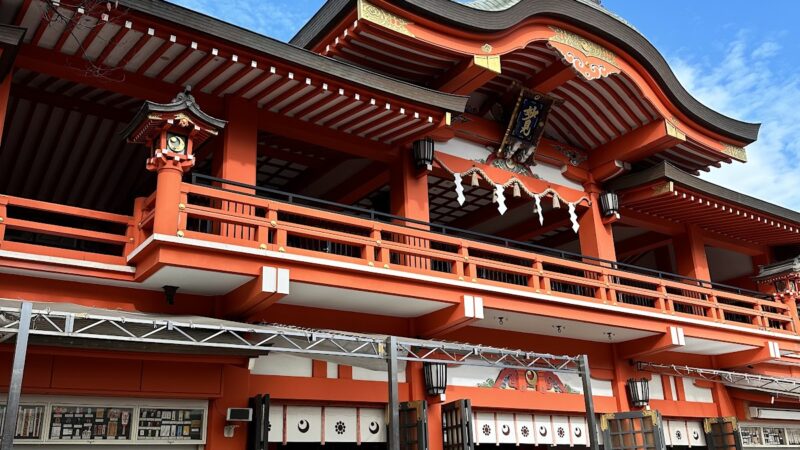
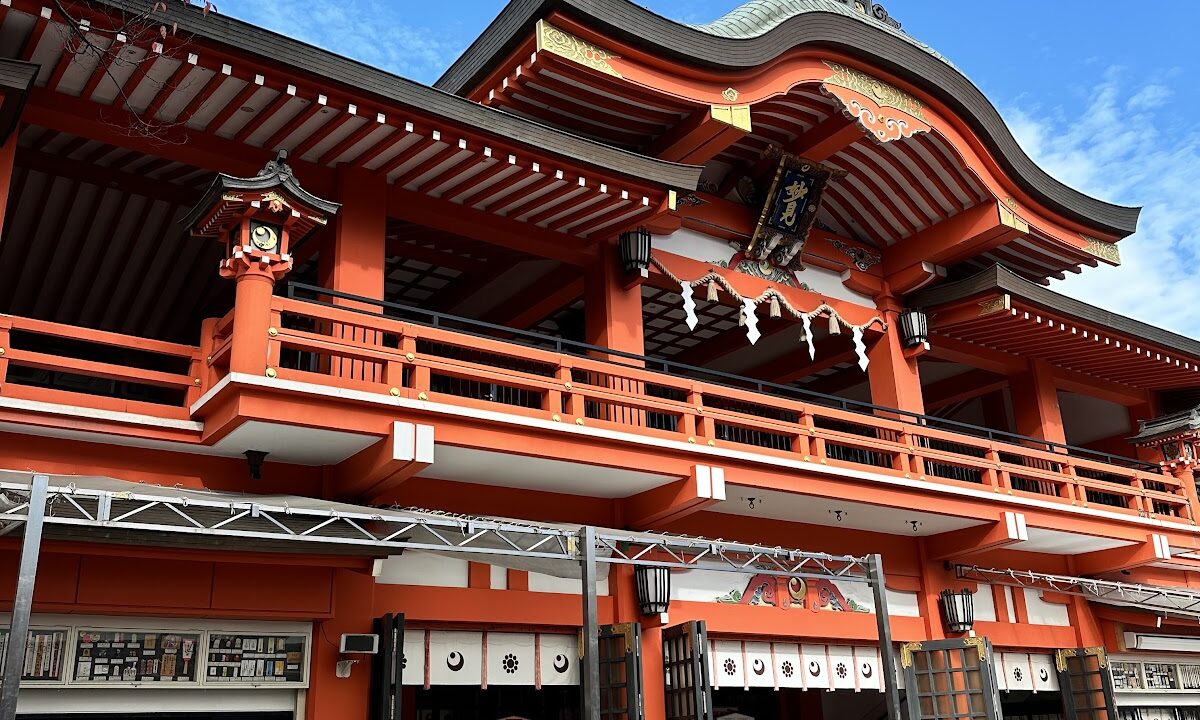
The most distinctive feature of Chiba Shrine is its rare multi-storied structure, with two worship halls, one above the other. The vividly vermilion-painted shrine presents a majestic appearance befitting a shrine with a long history and distinguished origins.
The lower level of the shrine enshrines Amenominakanushi-no-Okami, while the upper level enshrines Futsunushi-no-Mikoto and Yamato Takeru. This two-tiered structure expresses a cosmic view of “connecting heaven and earth,” and is a characteristic architectural style of Myoken faith.
Sonseiden (Upper Level Worship Hall)
The Sonseiden, located at the top of the stairs, is a special space as the upper level worship hall. From here, one can overlook the city of Chiba, and it is believed that praying in this place close to heaven will grant more powerful divine blessings.
Divine and Shrine Emblems
The divine emblem of Chiba Shrine is the “Sanko-mon (Moon and Star Emblem),” and the shrine emblem is the “Kuyo-mon (Nine Stars Emblem).” The Sanko-mon represents the sun, moon, and stars, symbolizing the truth of the universe. The Kuyo-mon represents the nine stars, including the Big Dipper and two other stars, and is an emblem deeply related to Myoken faith. These emblems can be seen throughout the shrine grounds, creating an atmosphere befitting a shrine dedicated to the god of stars.
Sacred Tree and Subsidiary Shrines
Within the shrine grounds stands a sacred tree said to be several hundred years old, emitting a powerful energy. Furthermore, several subsidiary shrines are enshrined within the grounds, each dedicated to a different deity with unique divine virtues.
Annual Events and Festivals of Chiba Shrine
Daradara Festival (Chiba Shrine Grand Festival)
Held every August, the “Daradara Festival” is a beloved summer tradition in Chiba. Officially called the Chiba Shrine Grand Festival, it’s known as the “Daradara Festival” because the festivities continue for an extended period.
During the festival, numerous stalls line the streets, and various rituals, including a portable shrine procession and Kagura (sacred dance) performances, are held. The city center of Chiba is enveloped in the festival’s excitement, attracting many visitors every year.
New Year’s Visit and the Passing-Through Ritual
Chiba Shrine’s New Year’s visit is one of the largest in Chiba Prefecture. Over 600,000 people visit the shrine during the first three days of the New Year, filling the grounds with worshippers. Long lines form at the prayer reception desk, as people pray for protection from misfortune and good fortune in the new year.
During the three-day weekend in January, the “Passing Through Ritual” takes place. This ritual involves passing through a special path set up within the shrine grounds, symbolizing overcoming difficulties and praying for success in exams and achieving goals. Coinciding with exam season, many students and their families visit to pray for success.
Wisdom Ring Passing Ritual
Chiba Shrine has a unique ritual called the “Wisdom Ring Passing Ritual.” This involves passing through a large ring of reeds to receive wisdom and blessings for academic success and passing exams. Unlike the usual reed ring passing ritual, this one is popular as it focuses specifically on wisdom.
Setsubun Festival
A grand Setsubun Festival is held in February. The festival includes bean-throwing ceremonies and raffles, attracting many worshippers who come to pray for protection from evil and good fortune. Chiba Shrine’s Setsubun Festival is particularly well-known for its divine blessings of protection from evil and good fortune, and is especially popular among those in their unlucky years.
Other Annual Events
- New Year’s Day Festival (January 1st): A festival celebrating the New Year
- National Foundation Day Festival (February 11th): A festival celebrating the founding of the nation
- Spring Grand Festival (April): The grand spring festival
- Summer Purification Ceremony (June 30th): A Shinto ritual to purify oneself of sins and impurities accumulated over the past six months
- Autumn Grand Festival (October): The grand autumn festival
- Shichi-Go-San Festival (November): A visit to celebrate the growth of children
- Year-End Purification Ceremony (December 31st): A Shinto ritual to purify oneself of sins and impurities accumulated over the past year
How to Worship and Manners
Basic Worship Etiquette
Worship at Chiba Shrine follows the same etiquette as at other shrines:
- Bow before passing through the torii gate: As a courtesy before entering the sacred area
- Purify yourself at the water basin: Purify your left hand, then your right hand, then your mouth, and finally your left hand.
- Walk along the edge of the path: The center is considered the path for the gods.
- Bow twice, clap twice, and bow once in front of the main hall: Bow deeply twice, clap your hands twice, and finally bow once.
About Prayers
Chiba Shrine offers various prayers. Prayers are available for various purposes, such as protection from misfortune and good fortune, protection from all directions, success in exams, family safety, and business prosperity.
No reservation is required for prayers; apply at the shrine office during reception hours. The offering fee varies depending on the prayer, but generally starts from 5,000 yen. Upon receiving a prayer, you will receive items such as amulets and talismans.
Amulets and Goshuin (Shrine Seals)
Chiba Shrine offers a wide variety of amulets. Particularly popular are:
- Eight Directions Protection Amulet: An amulet that wards off misfortune from all directions.
- Success Amulet: An amulet for praying for success in exams.
- Exorcism Amulet: An amulet that wards off misfortune during unlucky years.
- Star Amulet: An amulet that bestows the divine blessings of the star god.
Goshuin (temple/shrine stamps) can be obtained at the shrine office. The goshuin of Chiba Shrine is stamped with the shrine’s crest, the Sanko crest, and inscribed with the words “Myoken Honmiya.” Original goshuin notebooks are also available and are popular as souvenirs of visits.
Access and Visiting Information
Access by Train
Chiba Shrine is easily accessible by public transportation:
- Approximately 10 minutes on foot from JR Sobu Line, Uchibo Line, and Sotobo Line “Chiba Station”
- Approximately 10 minutes on foot from Keisei Chiba Line “Keisei Chiba Station”
- Approximately 5 minutes on foot from Chiba Urban Monorail “Yoshikawa Park Station”
Chiba Station is the largest terminal station in Chiba Prefecture and is accessible from Tokyo in about 40 minutes. There are signs guiding you from the station to the shrine, so you can arrive without getting lost.
Access by Car and Parking
If visiting by car:
- Approximately 10 minutes from Keiyo Expressway “Anagawa IC”
- Approximately 15 minutes from Higashi-Kanto Expressway “Wangan Chiba IC”
The shrine has a parking lot for visitors, but spaces are limited. On days when crowds are expected, such as during New Year’s visits or festivals, we recommend using public transportation. There are coin-operated parking lots nearby.
Basic Information
- Location: 1-16-1 Innai, Chuo-ku, Chiba City, Chiba Prefecture
- Phone Number: 043-224-2211
- Visiting Hours: The grounds are generally open for free worship (Shrine office and prayer reception are open from 8:00 to 17:00)
- Closed Days: None (Open all year round)
- Admission Fee: Free
- Official Website: https://www.chibajinja.com/
Estimated Time Required for Visiting
A simple visit to the grounds takes about 30 minutes, but if you wish to receive prayers, please allow 1 to 1.5 hours. During New Year’s visits and festivals, it may take longer due to crowds.
Tourist Attractions Around Chiba Shrine
Highlights in Central Chiba City
Chiba Shrine is located in the central urban area of Chiba City, so there are various tourist attractions nearby:
- Chiba Park: A place of relaxation for citizens where you can enjoy flowers of all seasons
- Chiba City Museum of Art: Popular for its exhibitions focusing on contemporary art
- Chiba Castle (Local History Museum): A museum where you can learn about the history of the Chiba clan
- Chiba Port Tower: An observation deck offering panoramic views of Chiba Port
Food and Shopping
There are many restaurants and shopping facilities around Chiba Station. It’s recommended to enjoy Chiba’s local cuisine or buy souvenirs before or after visiting the shrine. Chiba Prefecture is rich in seafood, and dishes using fresh seafood are popular.
The Charm of Chiba Shrine as a Power Spot
A Sanctuary in the City
While Chiba Shrine is located in the bustling downtown area of Chiba City, stepping onto the shrine grounds reveals a completely different world. Away from the hustle and bustle of the city, you can find peace of mind and offer your prayers in a tranquil space. The vermilion-lacquered shrine buildings and lush grounds harmonize beautifully, making it a popular spot where you can feel a powerful energy despite being in an urban area.
The Special Divine Virtue of the Star Gods
Chiba Shrine, with the North Star and the Big Dipper as its sacred objects, is considered a shrine directly connected to the energy of the universe. Like the stars shining in the night sky, it is believed to illuminate the lives of worshippers and guide them toward their chosen path.
Especially when facing a turning point in life, making an important decision, or taking action related to direction, receiving a prayer for protection from all directions at Chiba Shrine can provide peace of mind as you take that new step forward.
A Sacred Place for Students Taking Exams
With its unique rituals specifically for praying for success in exams, such as the “Passing Through the Ring of Wisdom” and the “Passing Through the Ring of Wisdom” ritual, Chiba Shrine has become a special place for students taking exams and their families. Every year, many students visit to pray for success, and numerous reports of successful admissions to their desired schools are received.
Cultural Properties of Chiba Shrine
Chiba Shrine preserves numerous cultural properties of high historical value, including those designated as cultural properties by Chiba City. Many valuable materials, such as shrine buildings, grounds structures, ancient documents, and votive offerings, convey the history of the Chiba clan and the evolution of Myoken worship.
In particular, materials from the Edo and Meiji periods are important historical sources for understanding the history of the shrine, which underwent a major transformation due to the separation of Shinto and Buddhism.
Summary: A Recommendation for Visiting Chiba Shrine
Chiba Shrine boasts a history of over a thousand years and is a prestigious shrine with deep ties to the Chiba clan. As a rare shrine in Japan that enshrines Hokushin Myoken Sonsei-o, a star deity, it is known for its powerful divine blessings of warding off evil, bringing good fortune, and protection from all directions.
Despite its convenient location within walking distance of JR Chiba Station, it offers a tranquil space that allows visitors to forget the hustle and bustle of the city, attracting many worshippers as one of Chiba Prefecture’s leading power spots.
When you’re facing a turning point in your life, starting something new, or simply praying for daily peace, why not visit Chiba Shrine? Under the protection of the star gods, your life will be guided in a better direction.
Whether you have a specific purpose for visiting—for New Year’s prayers, warding off evil, praying for success in exams, or seeking protection from all directions—it’s also a great place to casually stop by as part of your Chiba City sightseeing. The majestic vermilion-lacquered shrine buildings, unique rituals, and the warm, welcoming atmosphere of the shrine are sure to soothe your soul.