Complete Guide to Komikado Shrine (Narita City, Chiba Prefecture) | Thorough Explanation of Goshuin, Access, and History
Komikado Shrine, located in Narita City, Chiba Prefecture, is a historical shrine dedicated to Fujiwara no Morokata, a loyal retainer of the Nanboku-cho period. In contrast to the bustling Naritasan Shinshoji Temple, this shrine, nestled in a quiet rural landscape, is a hidden historical site that attracts many visitors.
This article provides a detailed explanation of everything you need to know before visiting Komikado Shrine, including its history, the story of its enshrined deity, information on its goshuin (seal stamp), access methods, and nearby attractions.
What is Komikado Shrine? Basic Information
Shrine Overview
Komikado Shrine is located in Nagoya, Narita City, Chiba Prefecture, and enshrines Fujiwara no Morokata, a court official of the Nanboku-cho period, as its principal deity. The official name is “Komikado Shrine,” but it is affectionately known as “Morikata-sama” by locals.
Basic Data
- Location: 898 Nagoya, Narita City, Chiba Prefecture
- Deity Enshrined: Fujiwara no Morikata (Komikado Chunagon Morikata-kyo)
- Founded: Meiji 13 (1880)
- Shrine Rank: Former Prefectural Shrine
- Annual Festival Date: October 10th
- Parking: Available (Free)
Characteristics of the Shrine
The most distinctive feature of Komikado Shrine is that it enshrines Fujiwara no Morikata, who remained loyal to Emperor Go-Daigo until the very end during the turbulent Nanboku-cho period. Since Morikata met his end in this area, the shrine was founded to appease his spirit, and it is revered as a god of loyalty and learning.
The shrine grounds are not particularly large, but they are a well-maintained and refreshing space, providing a peaceful environment for worship away from the hustle and bustle of the city.
The Life of Fujiwara no Morikata and the History of Komikado Shrine
Who was Fujiwara no Morikata?
Fujiwara no Morikata (1295-1351) was a court official who was active from the late Kamakura period to the Nanboku-cho period. He rose to the rank of Gon-Chunagon (Provisional Middle Counselor) and was highly valued as a close confidant of Emperor Go-Daigo.
Main Career Highlights of Lord Morikata
- 1315 (Showa 4): Appointed to Junior Fifth Rank, Lower Grade
- 1331 (Genko Incident): Participated in Emperor Go-Daigo’s uprising
- 1333-1336 (Kenmu Restoration): Played an important role in the new government
- 1351 (Kannō 2): Died in this area at the age of 57
The Turmoil of the Northern and Southern Courts and Lord Morikata’s Exile
When the Kenmu Restoration collapsed and Ashikaga Takauji established the Muromachi Shogunate in Kyoto, Emperor Go-Daigo fled to Yoshino and established the Southern Court. Lord Morikata followed the Emperor and continued to serve as a court official of the Southern Court.
Even after Emperor Go-Daigo’s death, Lord Morikata remained loyal to the Southern Court. However, as the Southern Court’s power declined, he was forced to live a nomadic life, constantly moving from place to place to escape pursuit by the Northern Court and the Muromachi Shogunate.
Ultimately, Lord Morikata arrived in what is now Nagoya, Narita City. He lived in seclusion under the protection of the local powerful family, the Osuga clan, but passed away in 1351, before fulfilling his ambitions.
Founding of Komikado Shrine
After Lord Morikata’s death, local people continued to cherish his legacy and protect his tomb. In the Meiji era, when Lord Morikata’s loyalty was re-evaluated, the shrine was officially founded in 1880.
In 1881, it was designated a prefectural shrine and became recognized as an important local shrine. Even after the war, it continued to attract the reverence of local residents, and remains so to this day.
The Tomb of Lord Morikata
Within the grounds of Komikado Shrine lies the tomb of Lord Morikata. This tomb is designated a Chiba Prefecture Historic Site and is preserved as a historically valuable structure.
The tomb is in the form of a five-ring pagoda, a valuable stone structure that retains the style of the Nanboku-cho period. When visiting, it is recommended to pay respects not only at the main shrine but also at the tomb.
Deity and Divine Virtues
Deity: Fujiwara no Morikata
The deity enshrined at Komikado Shrine is Fujiwara no Morikata. Lord Morikata, also known as “Komikado Chunagon,” is known for his loyalty and scholarship.
Divine Virtues (Benefits)
Based on Lord Morikata’s life and achievements, the following divine virtues are believed to be present.
Main Divine Virtues
- Academic Success and Passing Exams: Because Lord Shiken was a court noble with high academic knowledge, he is worshipped as the god of learning.
- Improvement of Loyalty and Honesty: Cultivating an honest heart by emulating Lord Shiken, who remained loyal to his lord until the end.
- Good Fortune and Prosperity: Drawing on the strong spirit of Lord Shiken, who survived difficult times.
- Family Safety: As a guardian deity of the region, praying for the safety of one’s family.
Especially during exam season, many worshippers visit to pray for academic success.
Highlights of the Shrine Grounds
Main Hall and Worship Hall
The main hall of Komikado Shrine is built in the traditional style of shrine architecture. While not large in scale, its meticulous construction reflects the deep faith of the local people.
Komainu (guardian lion-dogs) are placed in front of the worship hall, welcoming worshippers.
Mausoleum of Lord Morikata (Chiba Prefecture Designated Historic Site)
Located at the back of the shrine grounds, the mausoleum of Lord Morikata is the most important historical site of Komikado Shrine. The five-tiered pagoda-style tombstone is a valuable cultural asset that preserves the style of the Nanboku-cho period and is designated as a Chiba Prefecture Historic Site.
The area around the mausoleum is enveloped in a tranquil atmosphere, allowing visitors to feel the weight of history.
Shrine Office
There is a shrine office on the grounds where you can receive Goshuin (shrine stamps) and request various prayers. Since the chief priest may not always be present, it is recommended to contact the shrine in advance if you wish to be sure to receive a Goshuin.
Nature on the Shrine Grounds
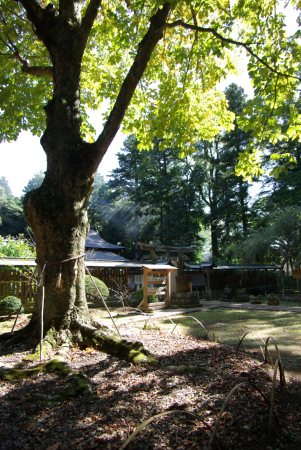
The grounds of Komikado Shrine are located in a rural area, allowing visitors to experience the beauty of nature throughout the seasons. The fresh greenery of spring and the autumn foliage are particularly beautiful, and the peaceful environment for worship is a major attraction.
Goshuin Information
Features of the Goshuin
Goshuin can be obtained at Komikado Shrine. The Goshuin (temple/shrine stamp) will have the name “Komikado Shrine” written in ink and the shrine’s seal stamped on it.
Basic Information on Goshuin
- Offering Fee: 300-500 yen (at your discretion)
- Reception Hours: Approximately 9:00 AM to 5:00 PM (approximate)
- Location: Shrine Office
- Note: The chief priest may be absent, so prior contact is recommended.
Notes on Receiving a Goshuin
Komikado Shrine may not always have a resident priest. To ensure you receive a Goshuin, please note the following:
- Advance Contact: If possible, please call in advance to confirm.
- Time Slot: Morning to early afternoon is generally the most reliable time.
- Pre-written Goshuin: Pre-written Goshuin may be available for when the shrine is closed.
- Manners: Goshuin are proof of your visit, so please be sure to pray before receiving one.
About Goshuincho (Goshuin Stamp Books)
Komikado Shrine often does not carry its own original Goshuincho. Please bring your own.
Access Methods
Access by Train and Bus
Komikado Shrine is located in a somewhat inconvenient location for access by public transportation.
Access from the Nearest Station
- From JR Narita Line “Narita Station” or Keisei Electric Railway “Keisei Narita Station”
- By taxi: Approximately 15 minutes (approximately 3,000 yen)
- By bus: Get off at the “Nagoya” bus stop, approximately 10 minutes on foot
- *Please check the timetable as bus service is infrequent.
- From JR Narita Line “Shimosamatsuzaki Station”
- Approximately 40 minutes on foot (approximately 3 km)
- By taxi: Approximately 10 minutes
When using public transportation, taking a taxi is the most reliable option.
Access by Car
Access by car is the most convenient.
Main Routes
- From the Higashi-Kanto Expressway “Narita IC”
- Approximately 15 minutes (approx. 8 km)
- Via National Route 51
- From the Higashi-Kanto Expressway “Daiei IC”
- Approximately 20 minutes (approx. 10 km)
Car Navigation Settings
- Address: 898 Nagoya, Narita City, Chiba Prefecture
- Phone Number: 0476-96-0449 (if available)
Parking Information
Komikado Shrine has a free parking lot for visitors.
- Number of Parking Spaces: Approximately 10
- Fee: Free
- Operating Hours: During visiting hours
- Notes: May be crowded during events such as festivals
The parking lot is located near the entrance to the shrine grounds and is easy to find.
Points and Manners for Visiting a Shrine
Etiquette for Visiting a Shrine
Visiting Komikado Shrine follows the general etiquette for visiting a shrine.
Basic Etiquette for Visiting a Shrine
- Bow before passing through the torii gate.
- Purify yourself at the water basin (if one is available).
- Bow twice, clap twice, and bow once in front of the main hall.
- Visit the tomb of Lord Morikata.
- Bow once after passing through the torii gate upon leaving.
Recommended Time to Visit
Komikado Shrine is open 24 hours a day, but the following times are recommended.
- Morning (9:00 AM – 12:00 PM): You can visit the shrine in refreshing air and easily receive a Goshuin (shrine stamp).
- Weekdays: You can visit the shrine in peace and quiet.
- Annual Festival Day (October 10th): The day when you can best experience the atmosphere of the shrine.
Regarding Attire
There are no specific dress code requirements, but please wear clean clothing appropriate for visiting a shrine. Since you will also be visiting the cemetery, it is recommended to avoid revealing clothing.
Regarding Photography
Photography is generally permitted on the shrine grounds, but please note the following:
- Refrain from taking photos inside the main hall.
- Be considerate of other visitors.
- Take photos of the cemetery with respect.
- Use flash photography sparingly.
Annual Events and Annual Festival
Annual Festival (October 10th)
The most important event at Komikado Shrine is the annual festival held on October 10th every year. In remembrance of Lord Morikata’s virtues, local people gather to perform a Shinto ritual.
On the day of the annual festival, more worshippers than usual visit, making it the busiest day at the shrine.
Other Events
- New Year’s Day Festival: January 1st
- Spring Annual Festival: Around spring (varies by year)
- Autumn Annual Festival: Around autumn (may be held separately from the October 10th festival)
Specific dates may vary by year, so it is recommended to check before visiting.
Nearby Tourist Attractions
Here are some nearby spots you might want to visit when you come to Komikado Shrine.
Naritasan Shinshoji Temple
Distance: Approximately 15 minutes by car
A representative temple of Chiba Prefecture, boasting one of the highest numbers of visitors nationwide during the New Year’s pilgrimage. The vast grounds are dotted with important cultural properties, making it well worth a visit.
Naritasan Park
Distance: Adjacent to Naritasan Shinshoji Temple
A vast 165,000 square meter Japanese garden where you can enjoy nature throughout the seasons. The autumn foliage is particularly spectacular.
Sogo Reido (Toshōji Temple)
Distance: Approximately 10 minutes by car
A temple dedicated to Sakura Sōgorō, a righteous man of the Edo period. Similar to Komikado Shrine, it shares the commonality of enshrining historical figures, making it worthwhile to visit both.
Bōsō no Mura
Distance: Approximately 25 minutes by car
A museum facility where you can experience the lifestyle and culture of Bōsō from the Edo to Meiji periods. A recommended spot for history buffs.
Narita International Airport
Distance: Approximately 20 minutes by car
Narita Airport, known as Japan’s gateway. You can enjoy watching planes take off and land from the observation deck, or enjoy shopping.
Model Itinerary for Visiting Komikado Shrine
Half-Day Course (by Car)
9:00 Arrive at Komikado Shrine and visit (60 minutes)
- Visit the main hall
- Visit the tomb of Lord Morikata
- Receive a Goshuin (shrine stamp)
10:30 Visit Sogo Reido (45 minutes)
12:00 Lunch at Naritasan Omotesando (60 minutes)
- Enjoy local specialties such as eel dishes
13:30 Visit Naritasan Shinshoji Temple (90 minutes)
15:00 Stroll through Naritasan Park (60 minutes)
Full-Day Course (by Car)
Complete the above half-day course in the morning, and add the following in the afternoon.
16:30 Visit to Boso-no-mura (120 minutes)
19:00 Dinner in Narita City
This course allows you to fully enjoy the history and culture of the Narita area.
Frequently Asked Questions
Q1: Is it guaranteed that I can get a Goshuin (temple/shrine stamp) at Komikado Shrine?
Komikado Shrine may not always have a resident priest, so it is not always guaranteed that you will receive a Goshuin. If you want to be sure to receive a Goshuin, we recommend calling ahead to confirm. Also, pre-written Goshuin may be available for when the priest is absent.
Q2: How long does a visit to the shrine take?
A normal visit takes about 30 minutes to 1 hour. This amount of time is sufficient to include visiting the main hall, the tomb of Lord Morikata, and strolling around the grounds. If you wish to receive a Goshuin, it is advisable to allow an additional 10-15 minutes.
Q3: Is Komikado Shrine accessible by wheelchair?
The shrine grounds are mostly flat, making it accessible for wheelchair users, but there are some areas with steps. We recommend visiting with an assistant. For details, please contact the shrine in advance.
Q4: Can I bring my pet to the shrine?
Generally, it is discouraged to bring pets to shrines. At Komikado Shrine, it is best to avoid bringing pets onto the grounds. If you absolutely must bring your pet, please carry them or put them in a carrier, and be considerate of other visitors.
Q5: Can I have a wedding or prayer ceremony at Komikado Shrine?
Komikado Shrine accepts various prayer ceremonies. If you wish to have a wedding ceremony, exorcism, prayer for safe childbirth, or a first shrine visit ceremony, please contact the shrine in advance to discuss dates and details.
Q6: Is it within walking distance from the nearest station?
It takes approximately 40 minutes (about 3 km) on foot from the nearest Shimousa-Matsuzaki Station. While not an impossible distance to walk, it’s a bit far, so we recommend taking a taxi. It’s even further from Narita Station, so if you’re using public transportation, a taxi is the most practical option.
Q7: When is the shrine busiest besides the annual festival?
Besides the annual festival (October 10th), the number of visitors tends to increase on New Year’s Day and during exam season (January to March). However, Komikado Shrine is a relatively quiet shrine, so it’s rarely crowded, and you can visit and pray peacefully at any time.
Summary
Komikado Shrine is a historically significant shrine dedicated to Fujiwara no Morikata, a loyal retainer of the Nanboku-cho period. While it lacks the grandeur of Naritasan Shinshoji Temple, it’s a hidden gem where you can pray amidst a tranquil rural landscape, reflecting on history.
Highlights of Visiting Komikado Shrine
- You can experience the turbulent life and spirit of loyalty of Lord Morikata
- Known for its blessings of academic success
- Contains a burial site designated as a Chiba Prefecture historical site
- A peaceful environment for worship
- Easily accessible in conjunction with sightseeing in the Narita area
When visiting Narita, be sure to visit Komikado Shrine in addition to the famous Naritasan Shinshoji Temple. The weight of history and tranquil atmosphere will provide a memorable worship experience.
Access by car is convenient, so it’s a good idea to plan a visit to combine it with other sightseeing spots in the Narita area. If you wish to receive a Goshuin (shrine stamp), be sure to contact them in advance.
Spend a meaningful time at Komikado Shrine, experiencing the historical romance of the Nanboku-cho period and the spirit of loyalty in Japan.