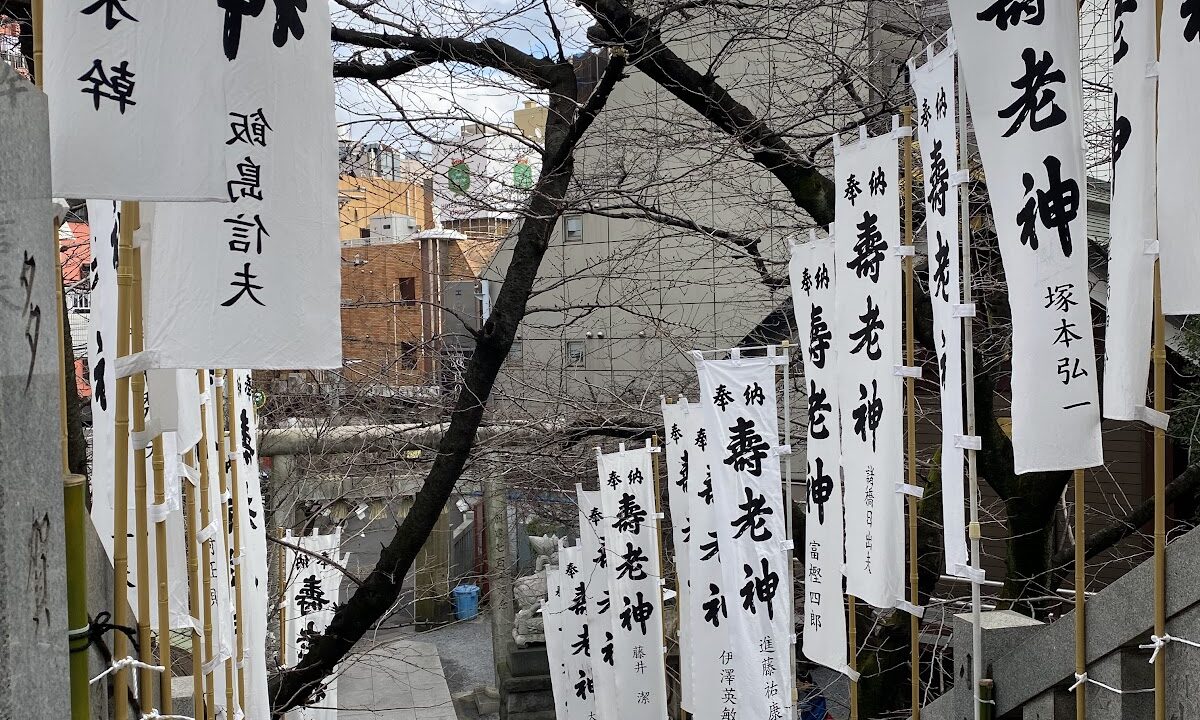
Moto-Mishima Shrine (Taito Ward, Tokyo) Complete Guide | A Shrine with History and Connections to Masaoka Shiki, Right in Front of Uguisudani Station
Located in Negishi, Taito Ward, Tokyo, Moto-Mishima Shrine boasts a history of over 700 years despite its central Tokyo location, directly in front of the north exit of JR Uguisudani Station. This guide thoroughly explores the charms of Moto-Mishima Shrine, from its founding history related to the Kamakura period warlord Kono Michiari and the Koan War, to its deep connection with the literary giant Masaoka Shiki, and its current status as one of the Shitaya Seven Lucky Gods.
Basic Information and Access to Motomishima Shrine
Location and Transportation Access
Location
1-7-11 Negishi, Taito-ku, Tokyo 110-0003
Access
- 1-minute walk from the North Exit of Uguisudani Station (JR Yamanote Line/Keihin-Tohoku Line) (The shrine building is visible from the station platform)
- Approximately 10-minute walk from Iriya Station (Tokyo Metro Hibiya Line)
The shrine is characterized by its excellent location, directly visible upon exiting the North Exit of Uguisudani Station, and is known as an easily accessible shrine despite being in the heart of the city. The shrine grounds, quietly nestled in a corner away from the bustling entertainment district in front of the station, exude a peaceful atmosphere away from the hustle and bustle.
Shrine Office Hours
Normally 9:00 AM to 5:00 PM (Worship itself is possible 24 hours a day)
Telephone Number
TEL: 03-3873-4976
FAX: 03-3873-6535
Deity and Divine Virtues
Ōyamatsumi-no-Mikoto
The deity enshrined at Motomishima Shrine is Ōyamatsumi-no-Mikoto. Ōyamatsumi-no-Mikoto is a god revered in Japanese mythology as the god of mountains and the sea, and is particularly believed to possess the following divine virtues.
- Long-lasting military fortune and victory: Derived from Kono Michiari’s victory in the Koan War
- Safe voyages: As a god protecting maritime transport in the Seto Inland Sea
- Family safety and business prosperity: As a guardian deity of the region
- Fulfillment of all wishes: As a god who grants all wishes
Oyamatsumi-no-Mikoto is worshipped at the Oyamatsumi Shrine on Omishima Island in Imabari City, Ehime Prefecture, and is the principal deity of Mishima Shrines throughout Japan.
Founding and History of Moto-Mishima Shrine
The Koan War and Kono Michiari’s Prayer for Victory
The founding of Moto-Mishima Shrine dates back to the Koan era (1278-1288). Its origins are deeply connected to the Mongol invasions of the Kamakura period, particularly the Koan War of 1281.
Kono Michiari, a retainer of the Kamakura Shogunate, was a warrior from Iyo Province (present-day Ehime Prefecture) and a brave general who led the naval forces of the Seto Inland Sea. Before departing for the Koan War, Kono Michiari prayed for victory at the local Oyamazumi Shrine. Receiving divine protection, Kono Michiari distinguished himself brilliantly in battle against the Mongol army, achieving a resounding victory and returning home.
A Divine Dream and the Enshrinement of a Divided Spirit at Uenoyama
After returning home, Kono Michiari received a divine message in a dream from Oyamazumi-no-Mikoto. The message instructed him to “enshrine a divided spirit of Oyamazumi-no-Mikoto in Toshima District, Musashi Province.”
Following this divine dream, Kono Michiari enshrined a divided spirit of Oyamazumi Shrine at the Kono family residence located on Uenoyama. This marked the beginning of the original Mishima Shrine. At that time, Uenoyama referred to the area that is now Ueno Park and was a vast mountainous forest area.
Relocation in Keian 3 and the Origin of the Name “Moto-Mishima”
Approximately 370 years after its founding, in Keian 3 (1650), the shrine was ordered to relocate due to the Edo Shogunate’s urban development of Ueno. The shogunate gave the shrine Kanasugi Village, which is now Negishi in Taito Ward, as its replacement site.
Upon this relocation, the villagers of Kanasugi and Negishi voiced their concerns, saying, “It is truly inconvenient for our guardian deity to leave our community.” After numerous discussions, it was decided to welcome the divine spirit of Mishima Daimyojin back to Kanasugi, the closest location to where the Mishima Shrine had once stood in Ueno.
At this time, the shrine was merged with the Kumano Shrine, which had been located there for a long time, and a new shrine building was constructed. This is how the current “Moto-Mishima Shrine” came into being. The character “元” (moto) indicates that the Mishima Shrine was originally located on Ueno Hill.
Three Mishima Shrines
In Taito Ward, there are three shrines bearing the name “Mishima Shrine,” including the original Mishima Shrine.
- Moto-Mishima Shrine (Negishi): The shrine introduced in this article
- Mishima Shrine (Shitaya): Located in the Shitaya area
- Main Shrine Mishima Shrine: Located within Taito Ward
All three shrines share the same history and originate from a single shrine originally located on Ueno Hill. Due to circumstances during relocation and local conditions, they were divided into three shrines, which remain to this day.
The Deep Connection Between Masaoka Shiki and the Original Mishima Shrine
Shiki-an and the Negishi Area
The original Mishima Shrine is also known as a place associated with Masaoka Shiki, a haiku and tanka poet of the Meiji era. Shiki Masaoka lived in Negishi from 1894 (Meiji 27) until his death in 1902 (Meiji 35). This residence is still preserved today as “Shiki-an” and is within walking distance of the former Mishima Shrine.
Shiki Masaoka’s family originated in Iyo Province (Ehime Prefecture) and were descendants of the Iyo naval force. For Shiki, who shared the same roots in Iyo as the Kono family, the former Mishima Shrine, founded by Kono Michiari, likely held special significance.
Shiki’s Haiku Monument
Within the grounds of the former Mishima Shrine stands a haiku monument inscribed with a poem by Shiki Masaoka.
“Hibiscus in bloom / Visiting the painter’s house / In front of Mishima Shrine”
This haiku describes visiting a painter’s house in front of Mishima Shrine during the season when hibiscus flowers are in bloom. This monument captures a glimpse into Shiki’s daily life as he strolled around the Negishi area, serving as a valuable cultural asset that conveys the scenery and Shiki’s life of that time.
Negishi was known as a cultural area during the Meiji era, home to many writers and artists, and Shiki also produced many of his works here. Motomishima Shrine is a symbolic presence of Negishi, reflecting this cultural background.
Highlights and Cultural Assets within the Shrine Grounds
Shrine Buildings and Atmosphere
After passing through the alleys of the entertainment district from the north exit of Uguisudani Station, the grounds of Motomishima Shrine stand quietly. A tranquil space unfolds, a stark contrast to the hustle and bustle of the city center, welcoming visitors.
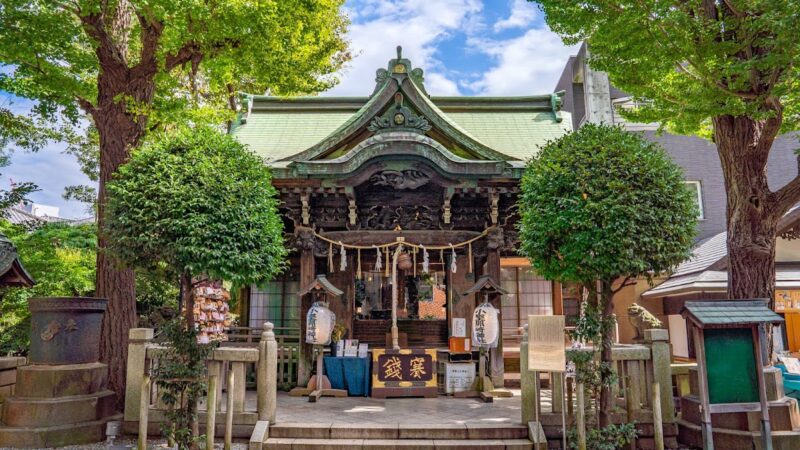
The shrine buildings retain the style of the Edo period while being properly maintained, conveying a sense of historical weight. The grounds, though compact, are kept clean, reflecting the affection the local people have for the place.
Shiki Masaoka’s Haiku Monument
As mentioned above, a haiku monument to Shiki Masaoka stands within the shrine grounds. This is a must-see spot for literature fans and haiku enthusiasts. Imagining the scenery Shiki saw while standing in front of the haiku monument is a unique way to enjoy Motomishima Shrine.
Jurojin of the Shitaya Seven Lucky Gods
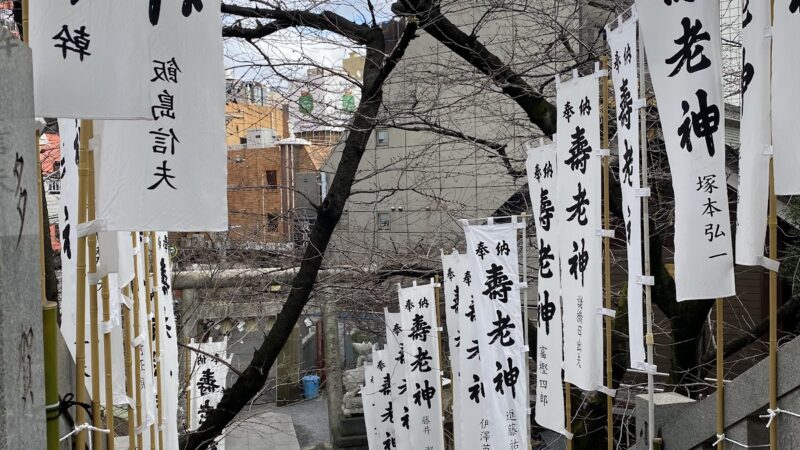
Motomishima Shrine enshrines Jurojin, one of the Shitaya Seven Lucky Gods. Jurojin is worshipped as the god of longevity and happiness, and every New Year’s Day, the shrine is bustling with visitors on a pilgrimage to the Seven Lucky Gods.
The Shitaya Seven Lucky Gods consist of the following seven temples and shrines:
- Eishinji Temple (Daikokuten)
- Hoshoji Temple (Bishamonten)
- Jueiji Temple (Hotei)
- Motomishima Shrine (Jurojin)
- Tobifudōson (Ebisu)
- Iriya Kishimojin (Fukurokuju)
- Benten-in Temple (Benzaiten)
During the New Year’s Seven Lucky Gods pilgrimage, many visitors come to each temple and shrine to collect goshuin (temple/shrine stamps) and shikishi (decorative paper).
Goshuin and Gift Information
Regular Goshuin
Motomishima Shrine offers regular goshuin. If you visit during the shrine office’s reception hours, they will carefully write it for you.
Offering Fee: Usually around 300-500 yen
The goshuin features the calligraphy and red seal of “Motomishima Shrine,” and is popular as a memento of the visit.
Limited Edition Goshuin (Shrine Seals)
During special periods such as the annual festival and New Year’s, limited edition Goshuin may be offered. We recommend checking the official website or social media (X/former Twitter) in advance for details.
Goshuincho (Shrine Seal Books)
Original Goshuincho may also be available. Please inquire at the shrine office during your visit regarding designs and availability.
Offerings (Amulets and Talismans)
Motomishima Shrine offers various amulets and talismans.
- Eikichi Amulet: A popular amulet among visitors, with the auspicious name meaning “long-lasting good fortune.” Some people even choose it as an amulet named after their pets.
- Katsu Amulet: An amulet for good fortune, derived from the victory in the Kōan War.
- Kanai Anzen Amulet: An amulet wishing for the safety and happiness of the family.
- Kotsu Anzen Amulet: An amulet for safe commuting to work or school.
Other offerings are available depending on the season and events.
Annual Events and the Grand Festival
Grand Festival (May)
The most important festival of Motomishima Shrine is the Grand Festival, held every year in May. In 2025, it is scheduled to be held from May 10th (Sat) to 11th (Sun).
The Grand Festival includes a procession of the portable shrine and the dedication of Kagura (sacred dance and music), and attracts local people as the guardian shrine of Negishi. The usually quiet shrine grounds become bustling with many worshippers and the lively atmosphere of the festival during this time.
New Year’s Visit and Events
During the New Year, many worshippers visit for their first shrine visit of the year. In particular, many people visit Jurojin (the god of longevity) as part of the Shitamachi Seven Lucky Gods pilgrimage. From New Year’s Day to the third day, the shrine is crowded with worshippers praying for safety and happiness in the new year.
Other Annual Events
- Setsubun Festival (February): Events such as bean-throwing
- Shichi-Go-San Pilgrimage (November): Pilgrimage to celebrate children’s growth
- Monthly Festival: Regularly held monthly festivals
Please check the official website or shrine office for detailed dates.
Former Shrine Rank and Shrine Association of Motomishima Shrine
Motomishima Shrine’s former shrine rank was Village Shrine. From the Edo period to the Meiji period, it was the guardian shrine of Kanasugi Village (present-day Negishi area), attracting local faith.
Currently, it belongs to the Tokyo Metropolitan Shrine Association and is properly managed and operated as a shrine of Taito Ward. Information on Motomishima Shrine is also posted on the Tokyo Metropolitan Shrine Association’s website, and it is officially recognized as a shrine.
Nearby Attractions and Tourist Spots
Shiki-an
Shiki-an, located a few minutes’ walk from Motomishima Shrine, is the residence where Masaoka Shiki spent his later years. Currently open to the public as a memorial museum, it displays Shiki’s belongings and materials. Visiting it in conjunction with the former Mishima Shrine will give you a deeper understanding of Negishi’s cultural history.
Address: 2-5-11 Negishi, Taito-ku, Tokyo
Opening Hours: 10:30-12:00, 13:00-16:00 (Open only on Thursdays, Fridays, Saturdays, Sundays, and public holidays)
Admission Fee: 500 yen for adults
Around Uguisudani Station
The area around Uguisudani Station is known as an entertainment district, but it is also an area dotted with historical temples and shrines. Why not visit the following spots in conjunction with your visit to the former Mishima Shrine?
- Kanei-ji Temple: A large Tendai sect temple located within Ueno Park.
- Yanaka Cemetery: A historic cemetery with many famous people’s graves.
- Temples and Shrines in the Negishi and Iriya Areas: Part of the Shitamachi Seven Lucky Gods pilgrimage route.
Ueno Park
Ueno Hill, the original site of the former Mishima Shrine, is now Ueno Park. It’s a representative Tokyo tourist spot, home to cultural facilities such as Ueno Zoo, Tokyo National Museum, and National Museum of Western Art. It’s one train stop from Uguisudani Station to Ueno Station, or about a 15-minute walk.
Manners and Precautions for Visiting a Shrine
Basic Worship Etiquette
- Bow before passing through the torii gate: This is a courtesy when entering the sacred area.
- Purify yourself at the water basin: Purify your left hand, right hand, and mouth in that order.
- Worship at the main hall: Two bows, two claps, and one bow is the basic procedure.
- Worship quietly: Remember to be considerate of those around you.
Photography
Photography is generally permitted on the shrine grounds, but please refrain from taking photos inside the shrine buildings or during festivals. Also, please be considerate of other worshippers. When posting on social media, please be careful not to include other worshippers in your photos.
Parking
Motomishima Shrine does not have its own parking lot. Due to its location just a 1-minute walk from Uguisudani Station, we recommend using public transportation. If you are visiting by car, please use a nearby coin-operated parking lot.
Official Information and Inquiries
Official Website
Motomishima Shrine has launched its official website. It contains the latest event information and information on Goshuin (shrine stamps), so we recommend checking it before your visit.
Official Website: https://motomishima.jp/
Official Social Media (X/Former Twitter)
Motomishima Shrine operates an official X account (@MotomishimaS). Daily updates on the shrine grounds and event announcements are posted there, so following it is convenient.
Contact Information
Address: 1-7-11 Negishi, Taito-ku, Tokyo 110-0003
Phone: 03-3873-4976
FAX: 03-3873-6535
For questions regarding visits or Goshuin availability, please contact us by phone.
Summary: The Charm of Moto-Mishima Shrine
Moto-Mishima Shrine is a multifaceted shrine with a rich history spanning over 700 years, dating back to the Kōan War of the Kamakura period. Its dramatic founding story, stemming from Kōno Michiari’s prayer for victory, its literary connection to Masaoka Shiki, and its current status as one of the Shitaya Seven Lucky Gods, all contribute to its multifaceted appeal.
Despite its central location just a one-minute walk from Uguisudani Station’s North Exit, the shrine grounds offer a quiet and peaceful retreat from the hustle and bustle of everyday life, making it a beloved place for locals to find solace.
Whether you’re a history buff, a literature lover, a collector of Goshuin (shrine stamps), or on a pilgrimage to the Seven Lucky Gods, this shrine will satisfy everyone. Combine your visit with sightseeing in Ueno or Asakusa, and be sure to include a stop at Moto-Mishima Shrine.
While receiving the divine protection of Ōyamatsumi-no-Mikoto, you can feel the weight of history dating back to the Kamakura period and the charm of Negishi, a place beloved by Masaoka Shiki. Through this visit, I hope to receive the divine blessings for lasting military fortune and the fulfillment of all my wishes, and to gain vitality in my daily life.