Complete Guide to Chiyoda Inari Shrine (Tokyo) | History and Access to Shrines in Shibuya, Chiyoda, and Taito
There are several shrines in Tokyo named “Chiyoda Inari Shrine.” Each has its own unique history and traditions, and has attracted local devotion. This article provides a detailed explanation of the history, enshrined deities, access methods, and visiting information for the Chiyoda Inari Shrines located in Dogenzaka, Shibuya Ward; Kojimachi, Chiyoda Ward; and Taito, Taito Ward.
What is Chiyoda Inari Shrine? About the Multiple Shrines in Tokyo
There are at least three major Chiyoda Inari Shrines in Tokyo. The most famous is the one located in Dogenzaka, Shibuya Ward, which has a long history dating back to the construction of Edo Castle by Ota Dokan. There are also Chiyoda Inari Shrines in Kojimachi, Chiyoda Ward, and Taito, Taito Ward, and another shrine with the same name in Ura-Takao-cho, Hachioji City.
These shrines each have their own distinct history and are revered as local guardian deities or gods of business prosperity. This article focuses on three Chiyoda Inari Shrines located in Shibuya, Chiyoda, and Taito wards, which attract a particularly large number of visitors.
History and Origins of Chiyoda Inari Shrine (Dogenzaka, Shibuya Ward)
Founded by Ota Dokan and its Deep Connection to Edo Castle
Chiyoda Inari Shrine, located in Dogenzaka, Shibuya Ward, originated in 1457 when Ota Dokan invited the deity from Fushimi Inari Taisha in Kyoto to serve as a guardian deity when he built Edo Castle. This occurred during the late Muromachi period, making it a shrine that has walked hand-in-hand with the history of Edo Castle.
Initially located within Edo Castle, it was moved to Momijiyama within the castle grounds after Tokugawa Ieyasu entered Edo. Later, in 1602 (Keicho 7), with the expansion of Edo Castle’s grounds, the shrine was relocated to Miyamasuzaka in Shibuya. It is said that at this time, it came to be called “Chiyoda Inari,” after “Chiyoda Castle,” another name for Edo Castle.
Relocation to Dogenzaka and Current Location
Chiyoda Inari Shrine, which had attracted worshippers around Miyamasuzaka throughout the Edo period, is now located at 2-20-8 Dogenzaka, Shibuya-ku, in a corner of the Hyakken-dana shopping street in Dogenzaka. Despite being in the heart of Shibuya’s bustling commercial district, it maintains a quiet space for worship.
Hyakken-dana shopping street is a historic shopping street whose name comes from the fact that it once had 100 shops lining the street during the Edo period. Chiyoda Inari Shrine is located in an alleyway within this shopping street and is deeply revered by local shop owners and worshippers as a god of good fortune for business prosperity.
Deity and Divine Virtues
The deity enshrined at Chiyoda Inari Shrine in Shibuya Ward is Ukanomitama-no-Mikoto. Ukanomitama-no-Mikoto is widely known as the principal deity of Inari shrines and is believed to bestow blessings such as abundant harvests, business prosperity, and family safety.
Especially given its location in Shibuya, a commercial center, the shrine attracts many worshippers praying for business success. Furthermore, due to its history as a guardian deity of Edo Castle, it is also worshipped as a god of protection against misfortune and for bringing good fortune.
Access and Visiting Information for Chiyoda Inari Shrine (Shibuya Ward)
Access Method
Nearest Station:
- Approximately 5 minutes on foot from the Hachiko Exit of Shibuya Station (JR Yamanote Line, Saikyo Line, Shonan Shinjuku Line)
- Approximately 3 minutes on foot from Exit A0 of Shibuya Station (Tokyo Metro Ginza Line, Hanzomon Line, Fukutoshin Line)
- Approximately 5 minutes on foot from Shibuya Station (Tokyu Toyoko Line, Den-en-toshi Line)
- Approximately 7 minutes on foot from Shibuya Station (Keio Inokashira Line)
Location: 2-20-8 Dogenzaka, Shibuya-ku, Tokyo
After exiting the Hachiko Exit of Shibuya Station, walk up Dogenzaka Hill and enter the alley of Hyakken-dana Shopping Street; the shrine will come into view. It is located in a quiet area slightly away from the hustle and bustle of Shibuya.
Visiting Hours and Festival Days
Visiting is generally free, but the shrine office’s operating hours may be limited. The annual festival is held on the Saturday following September 14th.
Phone: 03-3461-9306
About Goshuin (Shrine Seals)
Information indicates that Chiyoda Inari Shrine in Shibuya Ward does not currently offer Goshuin. Those wishing to visit are advised to confirm in advance.
Shrine Grounds and Highlights
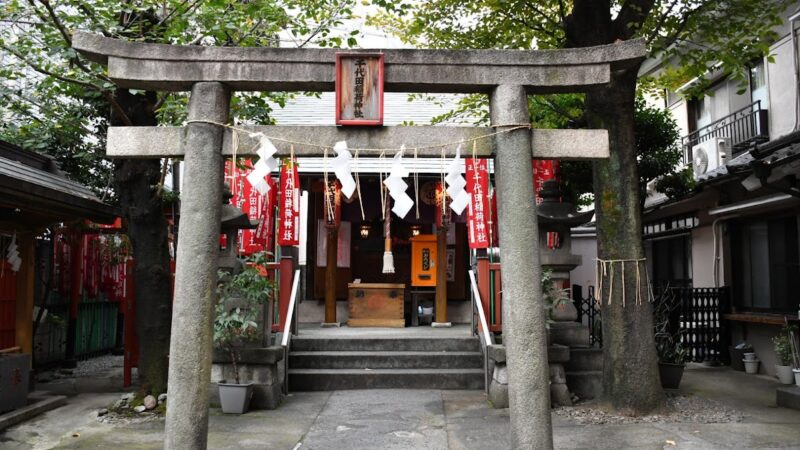
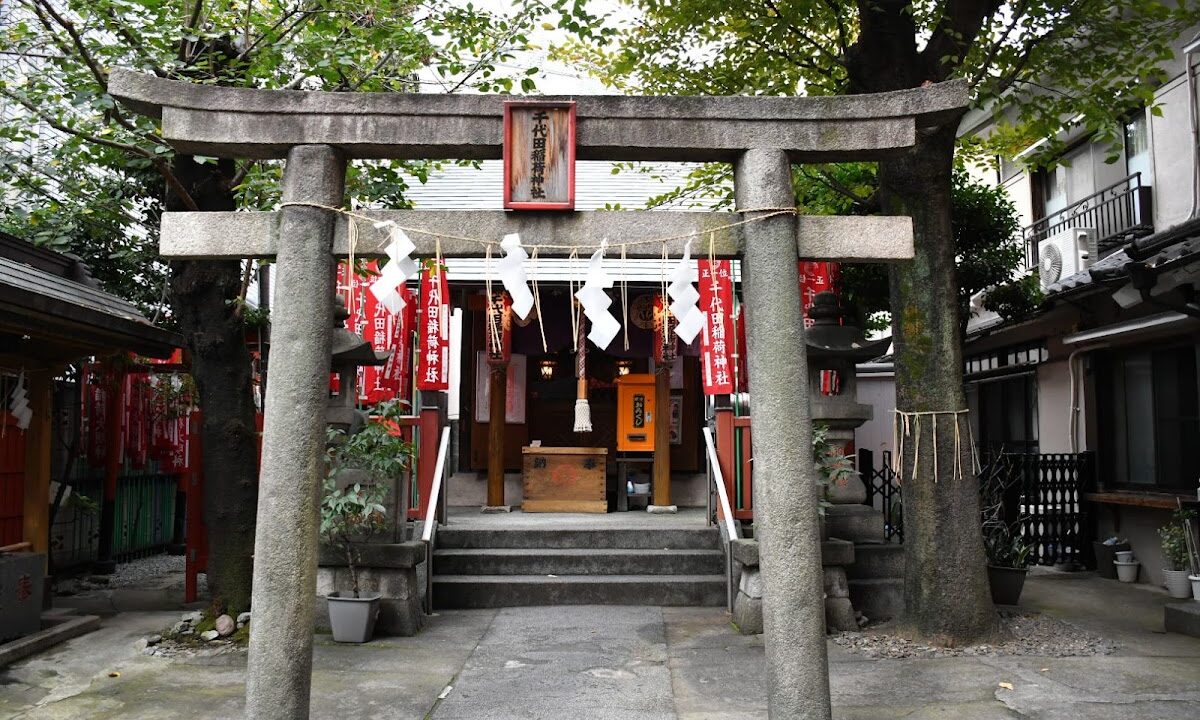
The shrine grounds are compact but kept clean, creating an oasis-like atmosphere in the city. The red torii gate and main hall are impressive, showcasing the characteristic appearance of an Inari shrine. The surrounding area is a shopping district, allowing visitors to enjoy a stroll through Shibuya after their visit.
History and Characteristics of Chiyoda Inari Shrine (Kojimachi, Chiyoda Ward)
From Tomita Inari to Chiyoda Inari Shrine
Chiyoda Inari Shrine, located at 5-6 Kojimachi, Chiyoda Ward, has a different history from the shrines in Shibuya Ward. The predecessor of this shrine was “Tomita Inari,” the household shrine of the Tomita family, a hatamoto (direct retainer of the shogun) who lived in this area during the Edo period. In 1949 (Showa 24), the shrine was established by inviting a deity from Fushimi Inari Taisha in Kyoto, and was named “Chiyoda Inari Shrine.” The name is derived from the Chiyoda Ward, and it is cherished as the guardian deity of the area.
Access and Visiting Information
Nearest Station:
- Approximately 7 minutes on foot from the Kojimachi Exit of Yotsuya Station on the JR Chuo and Sobu Lines
- Approximately 7 minutes on foot from Yotsuya Station on the Tokyo Metro Marunouchi and Namboku Lines
Location: 5-6 Kojimachi, Chiyoda-ku, Tokyo
The shrine is located in the residential area of Kojimachi, accessible by walking along Shinjuku Street towards Ichigaya from Yotsuya Station. It is situated in an area where office buildings and residential areas coexist, and is revered as the local guardian deity.
Deity and Divine Virtues
Chiyoda Inari Shrine in Chiyoda Ward also enshrines Ukanomitama-no-Mikoto, the Inari deity. This shrine is believed to bestow blessings for business prosperity, abundant harvests, and family safety, attracting local residents and office workers from the surrounding area.
About Chiyoda Inari Shrine (Taito, Taito Ward)
There is also a Chiyoda Inari Shrine in Taito Ward. This shrine also has its own unique history and is a center of local faith. While detailed historical records are limited, it is a beloved Inari shrine located in Taito Ward, a downtown area of Edo (Tokyo).
Taito Ward, including Asakusa and Ueno, is an area where Edo culture remains strong. This Chiyoda Inari Shrine can be said to have walked hand in hand with the history of this downtown area.
Shrines and Temples Around Chiyoda Inari Shrine
Around Chiyoda Inari Shrine in Shibuya Ward
After visiting Chiyoda Inari Shrine in Shibuya Ward, you can also visit the surrounding shrines and temples.
Konno Hachimangu Shrine: Located about a 5-minute walk from Shibuya Station, this is the main shrine of Shibuya Ward. Founded in the late Heian period, it is associated with Shibuya Konnomaru, a retainer of Minamoto no Yoshitomo. It features a spacious grounds and magnificent shrine buildings, making it a spot where you can feel the history of Shibuya.
Shibuya Hikawa Shrine: Approximately a 15-minute walk from Shibuya Station. An ancient shrine dating back to the Edo period, known for its divine blessings for matchmaking.
Around Chiyoda Inari Shrine in Chiyoda Ward
Hie Shrine: A large shrine located in Akasaka, revered as the tutelary deity of the Tokugawa shogunate. While a little distance from the shrines in Chiyoda Ward, it is an important shrine within the same ward.
Yasukuni Shrine: One of Japan’s most representative shrines, located in Kudanshita. Easily accessible from Yotsuya Station.
Etiquette and Manners for Visiting Chiyoda Inari Shrine
Basic Etiquette for Visiting a Shrine
The basic etiquette for visiting an Inari shrine is as follows:
- Bow before passing through the torii gate: As a sign of respect before entering the sacred area, bow before the torii gate.
- Purify yourself at the water basin: If there is a water basin, purify your left hand, then your right hand, and then your mouth.
- Pray: Pray in front of the offering box using the two bows, two claps, and one bow ritual.
- Express gratitude: It is important to express gratitude not only for your wishes but also for everyday blessings.
Considerations Unique to Urban Shrines
Chiyoda Inari Shrine in Shibuya Ward is located in a bustling commercial area, and other shrines in Chiyoda Ward are also located near office districts. When visiting, please be considerate of the surrounding residents and shops, and pray quietly.
While photography is often permitted, it is considered good manners to refrain from taking photos that include the interior of the main shrine or other worshippers.
The Divine Virtues and Business Prosperity Faith of Chiyoda Inari Shrine
History of Inari Faith
There are said to be approximately 30,000 Inari shrines throughout Japan, making them the most numerous type of shrine in the country. The origins of Inari faith date back to the Nara period, and originally, Inari was revered as a god of agriculture, especially rice cultivation.
The name “Inari” is widely believed to derive from “Inari” (rice harvest) or “Inari” (rice yield), and Inari was worshipped as a god of abundant harvests. During the Edo period, with the development of commerce, Inari’s character as a god of business prosperity became stronger.
Business Prosperity Faith of Chiyoda Inari Shrine
Chiyoda Inari Shrine in Shibuya Ward, located in the commercial area of Dogenzaka, is particularly revered as a god of good fortune for business prosperity. Many people who run businesses in Shibuya, including shop owners in the Hyakken-dori shopping street, visit the shrine to pray.
The shrine in Chiyoda Ward, being close to the business district of Kojimachi, is also said to be frequently visited by business owners and business people.
Inari Faith in Modern Times
Even today, Inari faith remains strong, and people visit with various wishes, not only for business prosperity, but also for family safety, traffic safety, academic success, and more. Located in the heart of the city, Chiyoda Inari Shrine serves as a place of solace where busy modern people can easily stop by.
Points to Note When Visiting Chiyoda Inari Shrine
Distinguishing Between Shrines
Searching for “Chiyoda Inari Shrine” may result in a mix of information about multiple shrines. When planning a visit, be sure to check the location:
- Chiyoda Inari Shrine in Dogenzaka, Shibuya Ward: 2-20-8 Dogenzaka, Shibuya-ku, Tokyo
- Chiyoda Inari Shrine in Kojimachi, Chiyoda Ward: 5-6 Kojimachi, Chiyoda-ku, Tokyo
- Chiyoda Inari Shrine in Taito, Taito Ward: Taito, Taito-ku, Tokyo
Check Visiting Hours
For smaller shrines, the shrine office may not be open all the time. If you wish to obtain a Goshuin (shrine stamp) or amulet, it is recommended to check by phone in advance.
Consideration for the Surrounding Environment
Shrines in Shibuya Ward, in particular, are located within shopping streets, so consideration for surrounding shops and residents is necessary when visiting. Please be careful not to speak loudly or obstruct pedestrian traffic in the shopping street.
Cultural Properties and Grounds of Chiyoda Inari Shrine
Chiyoda Inari Shrine, Shibuya Ward
Although the grounds are small, they are characterized by the red torii gate and main hall typical of Inari shrines. Despite being in the heart of the city, it exudes an atmosphere that evokes history dating back to the Edo period. While not designated as a special cultural property, it is a historically significant shrine with a history dating back to Ota Dokan.
Chiyoda Inari Shrine, Chiyoda Ward
With a history as the guardian deity of a samurai residence, it conveys the samurai culture of the Edo period to the present day. The grounds are located in a residential area, creating a friendly atmosphere that blends seamlessly into the community.
Chiyoda Inari Shrine and the History of Tokyo
Connection to Edo Castle
Chiyoda Inari Shrine in Shibuya Ward is deeply connected to the important event in Japanese history: the construction of Edo Castle. The year 1457, when Ota Dokan built Edo Castle, was a turbulent time in the late Muromachi period. The fact that the Inari Shrine, which was established as a guardian deity at this time, has continued to be worshipped from the Tokugawa era to the present day demonstrates the continuity of Tokyo’s history.
Origin of the Place Name “Chiyoda”
The place name “Chiyoda” originates from “Chiyoda Castle,” another name for Edo Castle. “Chiyoda” means “a rice field of eternal time,” an auspicious name expressing the wish for eternal prosperity. Shrines bearing this name are deeply intertwined with the history of Edo/Tokyo.
Urbanization and the Changes in Shrines
Amidst Tokyo’s rapid urbanization, many shrines experienced relocation and consolidation. Chiyoda Inari Shrine also moved several times, from within Edo Castle to Miyamasuzaka, and then to its current location. However, its history and faith have been passed down without interruption, and it remains an important place of worship in modern Tokyo.
Summary: A Guide to Visiting Chiyoda Inari Shrines
The Chiyoda Inari Shrines, located in multiple locations throughout Tokyo, each possess their own unique history and charm. The shrine in Dogenzaka, Shibuya Ward, boasts a long history linked to Ota Dokan and Edo Castle, while the shrine in Kojimachi, Chiyoda Ward, has a distinctive origin as the guardian deity of a samurai residence.
The Chiyoda Inari Shrine in Shibuya Ward, conveniently located just a few minutes’ walk from Shibuya Station, is an urban oasis perfect for a quick visit between shopping or work. It welcomes a diverse range of visitors, including those praying for business prosperity, those interested in Tokyo’s history, and those seeking a peaceful space for worship.
The Chiyoda Inari Shrine near Yotsuya Station is ideal for business professionals seeking career success and prosperity, given its proximity to the business district. The Taito Ward shrine offers a unique opportunity to experience the atmosphere of old Tokyo.
By visiting each of these Chiyoda Inari Shrines, you can experience the diverse history and culture of Tokyo. In the midst of the hustle and bustle of Shibuya, experiencing a tranquil space of faith that has continued since the Edo period is a unique charm of modern Tokyo.
When visiting a shrine, understanding its history and divine virtues, and visiting with a sense of gratitude, will make for a more fulfilling experience. Why not discover the world of history and faith within the city by touring the Chiyoda Inari shrines throughout Tokyo?