Kitaya Inari Shrine (Tokyo) Complete Guide | History, Goshuin (Shrine Seal), and Access Information for Shibuya’s Hidden Guardian Shrine
Near the hustle and bustle of Shibuya, on a hill in Jinnan, lies a shrine like an urban oasis: Kitaya Inari Shrine. Located near the NHK Broadcasting Center, this shrine, characterized by its lush grounds and modern architecture, has been cherished by the local community as the guardian shrine of northern Shibuya since the Muromachi period.
This article comprehensively introduces everything you need to know before visiting Kitaya Inari Shrine, including its history, enshrined deities, goshuin (shrine seal), worship methods, and access information.
History and Origins of Kitaya Inari Shrine
Origins of its Founding and its Establishment during the Bunmei Era
While the exact founding date of Kitaya Inari Shrine is unclear, according to the “Shinpen Musashi no Kuni Fudoki-ko” (New Compilation of the Topography of Musashi Province), it is recorded that Tanaka Sanuki-no-kami Naotaka enshrined the deity in the northeast direction of his residence when he moved from Suruga (present-day central Shizuoka Prefecture) during the Bunmei era (1469-1487).
According to a ridge beam inscription created during the reconstruction after the shrine was severely damaged in Manji 3 (1660), it is highly likely that the shrine existed even before the Bunmei era, and it is estimated to be an ancient shrine with a history of at least 550 years.
Place Name of Kitaya and Shrine Name
The shrine was named “Kitaya Inari” because it was located in the former hamlet of “Kitaya.” This area is located in the northern part of Shibuya, and it has long been revered by local residents as the guardian shrine of northern Shibuya. During the Edo period, it served as a village shrine, a spiritual center for the community.
The Transformation of the Shrine and the Army Training Ground in the Meiji Era
In the Meiji era, the area surrounding the current Kitaya Inari Shrine became a vast training ground managed by the Ministry of War. Many residents were forced to relocate to this area, known as the Yoyogi and Aoyama training grounds.
Within the shrine grounds, stone lanterns remain, imbued with the feelings of those who had to leave their hometowns due to the construction of the army training grounds, quietly telling the story of that time. These stone lanterns are carefully preserved as valuable cultural assets that convey the historical memory of the region.
From the Post-War Period to the Present
After the war, Shibuya developed rapidly, transforming the surrounding area into an urban space lined with skyscrapers and office buildings. Kitaya Inari Shrine also underwent this transformation, being reborn in 1997 as its current modern shrine building. Designed by the renowned architect Kiyoshi Kikutake, this shrine creates a unique space where tradition and modernity harmonize.
Deities and Blessings
The Five Deities Enshrined
The following five deities are enshrined at Kitaya Inari Shrine:
Ukanomitama-no-Okami
Known as the principal deity of Inari, this god is revered for abundant harvests, business prosperity, and industrial development. As the god who presides over food, this deity is believed to bring stability and prosperity to life.
Onamuchi-no-Okami
Another name for Okuninushi-no-Mikoto, this god is worshipped as the god of matchmaking, medicine, and nation-building. This god strengthens the bonds between people and watches over the development of society.
Omiyahime-no-Okami
Known as the guardian deity of markets and commerce, this god presides over the prosperity of commerce and the interaction of people.
Empress Jingu
The empress of Emperor Chuai, the 14th emperor, she is revered as the goddess of safe childbirth, child-rearing, and victory.
Ota no Okami
As the guardian deity of the land, she is a god who watches over the peace and development of the region.
The Divine Virtue of “Lifelong Active Life”
In recent years, Kitatani Inari Shrine has attracted particular attention for its divine virtue of “lifelong active life.” In modern society, the desire to live a healthy and vibrant life is common to many people. Our shrine has seen an increase in visitors praying for continued health and activity, starting with the distribution of “Lifelong Active Life Amulets.”
This divine virtue is believed to be the culmination of the life force, vitality, and prosperity energy of the five deities, and it attracts particularly strong devotion from business people and the elderly.
Highlights of Kitaya Inari Shrine
Modern Shrine Architecture
The most distinctive feature of Kitaya Inari Shrine is its modern shrine building, completed in 1997. Designed by Kiyoshi Kikutake, one of Japan’s leading architects, Kikutake is known as a central figure in the Metabolism movement. His design transcends traditional shrine architecture, resulting in a groundbreaking aesthetic.
The bright and open space, utilizing glass and steel, takes advantage of the shrine’s urban location, creating a welcoming and accessible worship space for modern people. Many visitors express surprise, exclaiming, “A shrine in a place like this!” and “What a modern main hall!”
Shrine Grounds Integrated with an Office Building
The current Kitaya Inari Shrine has a unique structure integrated with an office building. This is one modern solution to the land-use challenges faced by urban shrines, achieving a form that harmonizes with the urban space while maintaining the shrine’s functions.
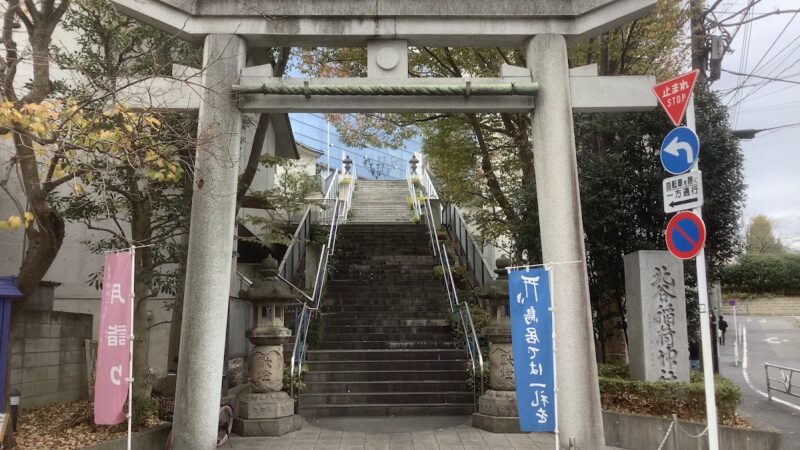
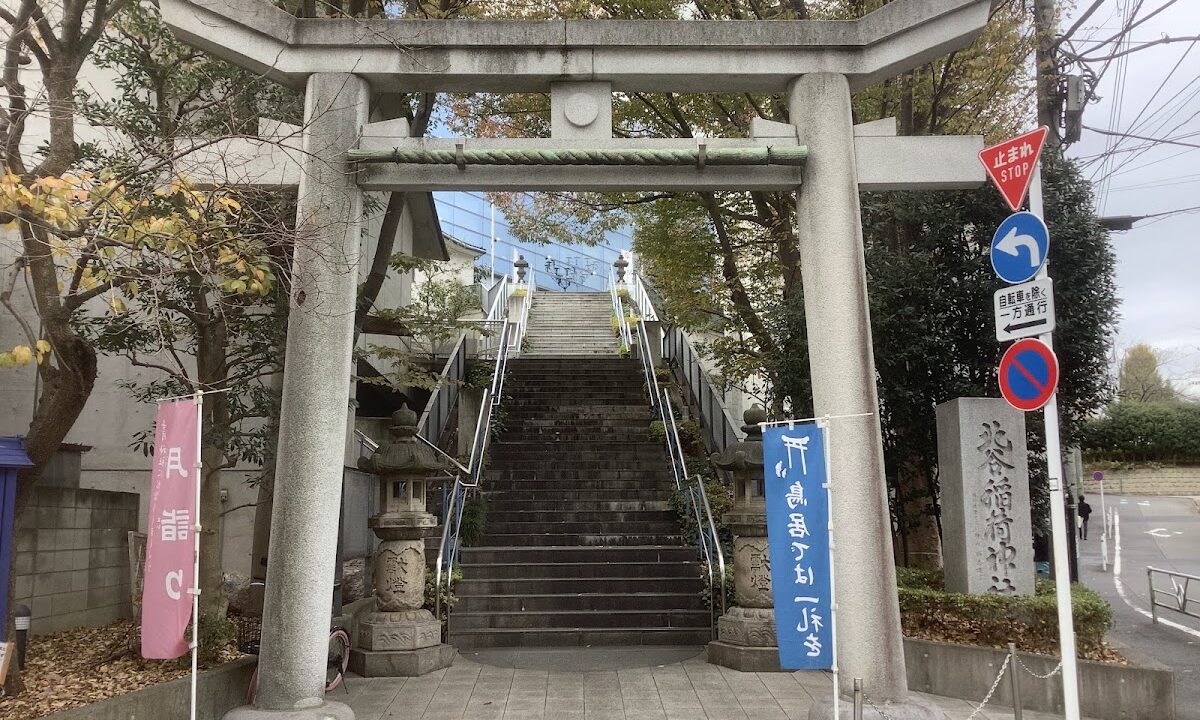
Reaching the shrine grounds requires climbing a steep staircase, leading to comments such as “It’s a shrine with a huge difference in elevation” and “It’s like climbing a three-story house.” However, at the top, a tranquil space unfolds, a stark contrast to the bustling city.
Lush Green Approach and Torii Gate
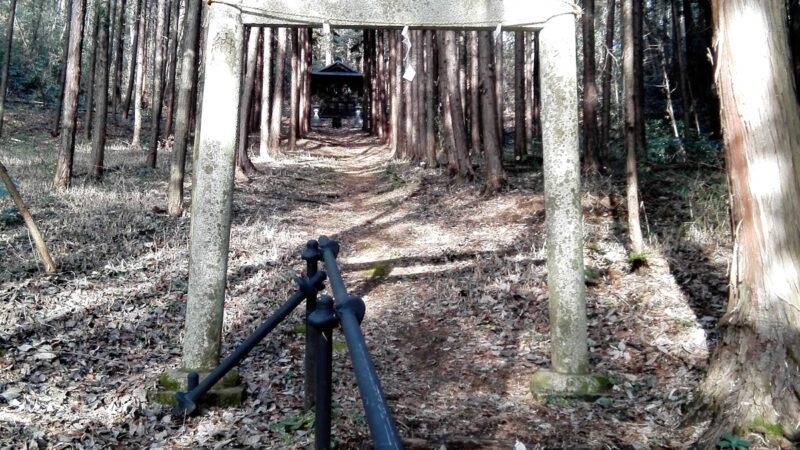
Despite being in the heart of Shibuya, the approach to Kitaya Inari Shrine is enveloped in greenery. Passing through the torii gate, a serene space appears, a stark contrast to the hustle and bustle of the city, transporting visitors to another world. This lush green environment is a precious oasis for healing weary hearts.
Stone Lanterns that Tell a Story of History
The stone lanterns remaining on the grounds are valuable cultural artifacts imbued with the feelings of those who left this area due to the construction of an army training ground during the Meiji era. They are carefully preserved as important historical relics that convey the longing for their hometown and the unwavering faith in the shrine.
Udagawa Shusse Benzaiten
Within the shrine grounds is a subsidiary shrine called Udagawa Shusse Benzaiten. This is a shrine associated with the legend of the “man-eating pine tree” of Dogenzaka.
In 1930, when the Tokyo City government attempted to cut down a large pine tree at the bottom of Dogenzaka as part of urban redevelopment, a strange incident occurred in which many people were injured. According to legend, following a divine message received by two sisters who were followers of the Nichiren sect, they built a shrine to Benzaiten and Ryujin (the dragon god) and moved it to Jinnan-cho along with the pine tree.
Later, in 1975, it was rediscovered by members of the Shibuya Local History Research Society and moved to the grounds of Kitaya Inari Shrine by members of the Udagawa Benten-ko (Udagawa Benzaiten Association). It is believed to bring good fortune and success, and many worshippers visit.
Goshuin (Shrine Seal) and Amulets
About Goshuin (Shrine Seals)
Kitaya Inari Shrine offers Goshuin. The simple yet powerful ink calligraphy and red seal are distinctive, conveying the history and prestige of the shrine. For those collecting Goshuin, it is a worthwhile visit as an important shrine in the Shibuya area.
Goshuin (temple/shrine stamps) are given out at the shrine office, but since staff may be absent, it is recommended to check in advance if you want to be sure to receive one.
Lifelong Active Charm
The “Lifelong Active Charm” is particularly popular at Kitatani Inari Shrine. As a charm that fulfills the wishes of modern people who want to remain healthy and active for as long as possible, it is popular with a wide range of age groups.
Many visitors come seeking this charm, including those active on the front lines of business, those who want to stay healthy after retirement, and those who want to continue working for a long time.
Other Items Available
Various charms and talismans are also available, such as those for business prosperity, family safety, and traffic safety. As befits an Inari shrine, there is a particularly wide selection of charms for business prosperity and success.
Annual Festival and Events
Annual Festival (September 28th)
The annual festival of Kitatani Inari Shrine is held every year on September 28th. This day marks the most important festival for the shrine, where local people gather to offer their gratitude to the gods.
During the annual grand festival, solemn Shinto rituals are performed, and prayers are offered for the prosperity of the region and the well-being of the parishioners. Even in today’s increasingly urbanized world, this traditional festival remains an important opportunity to reaffirm the bonds of the local community.
New Year’s Visit
During the New Year’s visit period, many worshippers come to the shrine. Due to its location in Shibuya, many business people can be seen visiting before starting work again. The shrine is bustling with people seeking the divine blessings for lifelong vitality and praying with their New Year’s resolutions in mind.
Other Festivals
Various Shinto rituals, such as the Setsubun Festival and the Summer Purification Ceremony, are held throughout the year. It is recommended to check the detailed schedule before visiting.
Access and Basic Information
Location
Address: 1-4-1 Jinnan, Shibuya-ku, Tokyo
Located in the Jinnan district, close to the bustling Shibuya area, and near the NHK Broadcasting Center, it is easily accessible. ### Access by Train
JR Line
- Approximately 10 minutes on foot from Shibuya Station (Yamanote Line, Saikyo Line, Shonan Shinjuku Line)
- Approximately 7 minutes on foot from Harajuku Station (Yamanote Line)
Tokyo Metro
- Approximately 10 minutes on foot from Shibuya Station (Ginza Line, Hanzomon Line, Fukutoshin Line)
- Approximately 8 minutes on foot from Meiji-jingumae Station (Chiyoda Line, Fukutoshin Line)
Keio Line
- Approximately 10 minutes on foot from Shibuya Station
Tokyu Line
- Approximately 10 minutes on foot from Shibuya Station (Toyoko Line, Den-en-toshi Line)
Directions from the Nearest Station
From Shibuya Station
- Exit from the Hachiko Exit and head towards Dogenzaka. Walk towards the NHK Broadcasting Center, and from near the intersection in front of NHK, turn towards Jinnan. A torii gate covered in greenery is a landmark.
From Harajuku Station/Meiji-jingumae Station
Proceed along Omotesando towards Shibuya, past the Jingumae intersection, and head towards Jinnan. The entrance to the shrine is on your left, just before the NHK Broadcasting Center.
Visiting Hours
While you can generally visit the shrine grounds freely, the shrine office has limited hours. If you wish to receive a Goshuin (shrine stamp) or amulet, it is recommended to visit during weekday daytime hours.
Parking
There is no dedicated parking lot. If you are coming by car, please use a nearby coin-operated parking lot. However, parking fees in the Shibuya area are expensive, so using public transportation is recommended.
Nearby Tourist Attractions
NHK Broadcasting Center
At the NHK Broadcasting Center, located a short walk away, you can learn about the history of broadcasting and the behind-the-scenes of program production at Studio Park. It’s an ideal spot to visit in conjunction with a visit to Kitaya Inari Shrine.
Yoyogi Park
A vast urban park within walking distance. Enjoy the changing seasons within the lush green grounds. Flea markets and events are also held on weekends.
Meiji Jingu Shrine
A representative Japanese shrine within walking distance of Harajuku Station. The majestic shrine buildings, surrounded by a vast sacred forest, are a must-visit spot when visiting Tokyo.
Shibuya Center Gai/Dogenzaka
Shibuya’s bustling entertainment district, known as a hub of youth culture. Shopping, dining, and entertainment are concentrated here.
Onden Shrine
A shrine near Harajuku’s Cat Street, within walking distance. This shrine also boasts a quiet atmosphere, making it a recommended stop during a stroll through Shibuya.
Visitor Reviews and Reputation
“An Oasis in the City”
Many visitors highly appreciate the quiet and peaceful atmosphere, despite being in the heart of Shibuya. It’s cherished as a precious space to forget the hustle and bustle of the city, often met with surprise at its unexpected location.
“The modern shrine building is impressive”
The modern shrine building, designed by Kiyoshi Kikutake, has left a strong impression on many visitors, despite receiving mixed reviews. Comments include “It’s like a beautiful building” and “It’s a fusion of tradition and modernity.”
“The stairs are tough, but worth the climb”
While some comment on the steep stairs, saying things like “The elevation difference is huge” and “It’s about the height of a three-story house,” many visitors positively praise the “wonderful view and atmosphere at the top.”
“The goshuin (shrine stamp) is lovely”
The simple yet powerful goshuin is popular among visitors collecting them. It’s positioned as an important spot for goshuin pilgrimages in the Shibuya area.
Manners and Points for Visiting a Shrine
Basic Worship Etiquette
- Bow before passing through the torii gate.
- Purify your body and mind at the water basin.
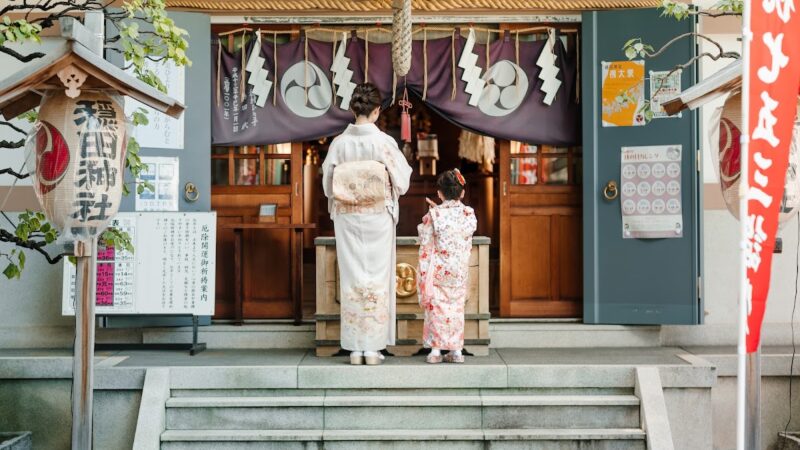
- Bow twice, clap twice, and bow once in front of the main hall.
- Visit any subsidiary shrines within the grounds.
- Bow once again at the torii gate when leaving.
Regarding Photography
The modern shrine buildings are very photogenic, and many visitors enjoy taking pictures. However, please be considerate of other visitors and remember that this is a sacred place, taking pictures with moderation.
Regarding Stairs
The stairs leading to the shrine grounds are quite steep and numerous, so we recommend wearing comfortable shoes. Particular caution is needed on rainy days, as the stairs can be slippery. Those with mobility issues should climb slowly and carefully.
Wishes Granted at Kitaya Inari Shrine
Praying for Business Success
Many visitors come to pray for business prosperity and development, thanks to the divine virtues of Ukanomitama-no-Okami and Omiyahime-no-Okami. Located near Shibuya, the heart of Japan’s economy, it’s a shrine deeply revered by business professionals.
A Life of Active Participation
The divine virtue of “lifelong active participation” fulfills the wish to remain energetic and active even as one ages. An increasing number of visitors pray for health, longevity, and maintaining vitality.
Matchmaking and Good Relationships
Thanks to the divine virtues of Oonamuchi-no-Okami, you can also pray for successful relationships and smooth interpersonal relationships. Visitors seeking good business encounters or partners also come.
Safe Childbirth and Child-Rearing
As Empress Jingu is enshrined here, visitors also pray for safe childbirth and the success of child-rearing.
Summary
Kitaya Inari Shrine is a special shrine where tradition and innovation merge, boasting a history dating back to the Bunmei era of the Muromachi period, while also featuring a modern shrine building that embodies the pinnacle of contemporary architecture. Located in the heart of Shibuya, it maintains a lush, tranquil space, attracting attention as a shrine that fulfills the wishes of modern people with its divine blessing of “lifelong active participation.”
Why not extend your trip a little and visit Kitaya Inari Shrine while shopping or sightseeing in Shibuya? The unique space that unfolds after climbing the steep stairs is sure to offer you new discoveries and peace of mind.
We recommend a visit to Kitaya Inari Shrine for those collecting Goshuin (shrine stamps), those interested in shrine architecture, those who want to learn about the history of Shibuya, and everyone who wishes to remain active throughout their lives. Amidst the hustle and bustle of the city, you can spend a precious time quietly reflecting on yourself.