Complete Guide to Mabashi Inari Shrine (Tokyo) | An Ancient Shrine in Suginami Ward Known for its Twin Dragon Torii Gate and Lucky Bell
Located in Asagaya Minami, Suginami Ward, Tokyo, Mabashi Inari Shrine is a historic shrine dating back to the late Kamakura period. With its unique charm, including a rare torii gate carved with twin dragons and one of the largest lucky bells in Tokyo, this shrine is affectionately known as “Mabashi Inari” by local residents. This article comprehensively covers everything you need to know before visiting Mabashi Inari Shrine, from its history and highlights to its goshuin (shrine stamps), access methods, and surrounding area information.
History and Origins of Mabashi Inari Shrine
Founded in the Late Kamakura Period
Mabashi Inari Shrine is believed to have been founded in the late Kamakura period (late 13th to early 14th century). It served as the guardian shrine of the former Mabashi Village, attracting the faith of the local people. The place name “Mabashi” is said to originate from the fact that there was once a bridge in this area that horses could cross.
Mabashi Inari Shrine, which has watched over the community for over 700 years since its founding, is one of the most historically significant shrines in Suginami Ward.
Receiving the Divine Title of “Sho-ichii Taruho Inari Daimyojin”
In 1831 (Tenpo 2), 53 parishioners contributed funds for the reconstruction of the main hall and submitted a petition to the Kyoto Shirakawa Jingi Hakke office. The following year, in 1832 (Tenpo 3), the shrine officially received the divine title of “Sho-ichii Taruho Inari Daimyojin.”
This receiving of the divine title demonstrates the high status of Mabashi Inari Shrine, and the name “Taruho” is said to embody the meaning of “fullness” or “sufficiency,” as Inari is a god who brings abundant harvests.
Development Since the Showa Era
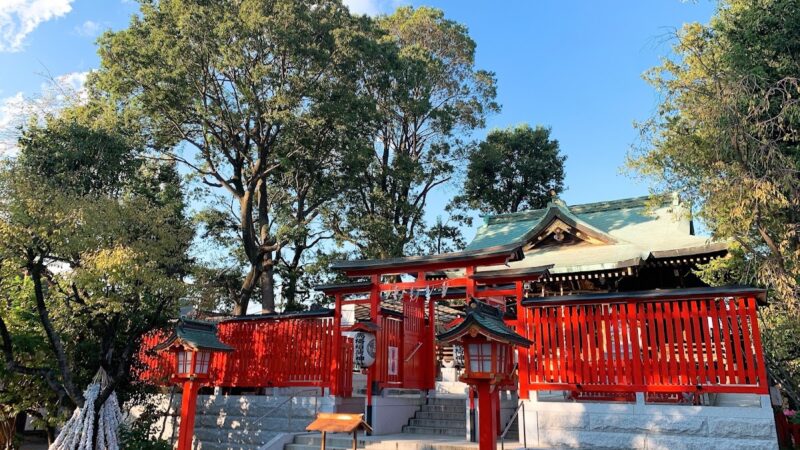
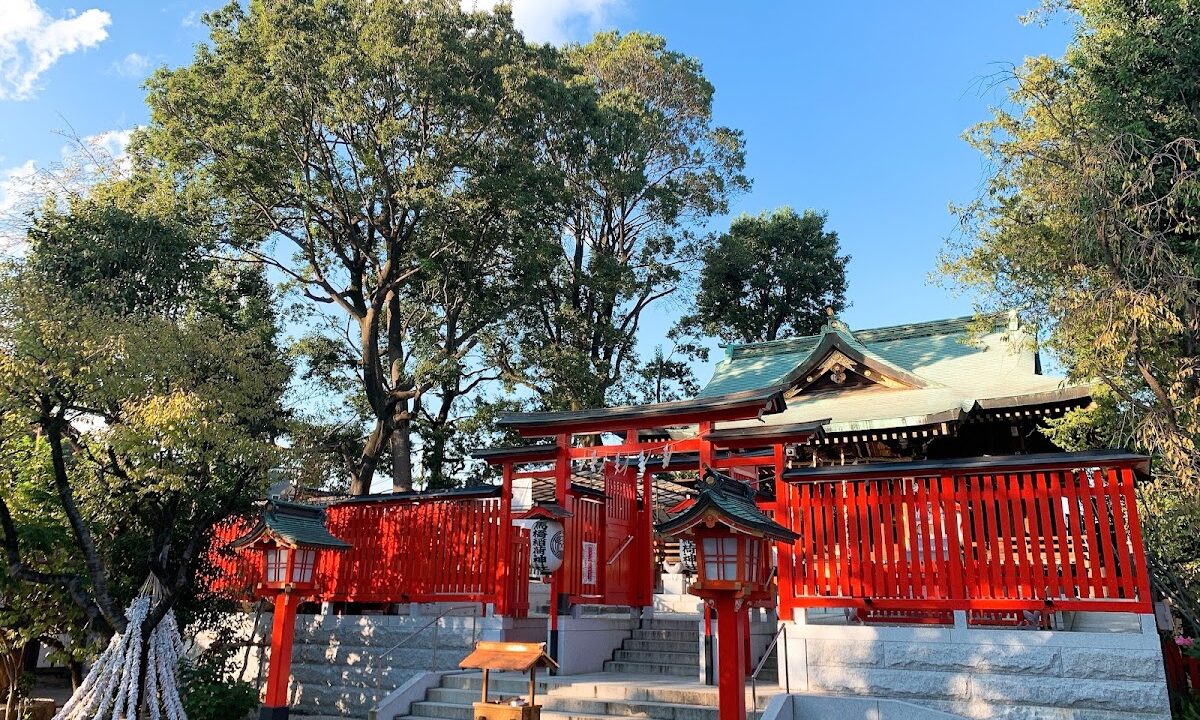
In 1975 (Showa 50), as part of the 700th anniversary of the shrine’s founding, the current vermilion-lacquered Zuishinmon gate was constructed. This gate is adorned with one of the largest lucky bells in Tokyo, making it a symbolic presence of Mabashi Inari Shrine.
Currently, more and more people are holding wedding ceremonies in the tranquil shrine grounds, and the shrine continues to develop as a place where tradition and modernity harmonize.
Deities and Divine Virtues
Main Deities
Mabashi Inari Shrine enshrines two main deities.
Ukanomitama-no-kami
This is the god of grain and food, widely known as the main deity of Inari shrines. It is believed to bestow blessings of abundant harvests, business prosperity, and industrial development. “Uka” means “grain,” and the deity has been revered as the guardian deity of agriculture, especially rice cultivation.
Ōmatonozu-no-kami
This deity is often identified with Sarutahiko-no-kami and is a god of guidance. They are believed to grant blessings such as opening paths, protection from misfortune, and traffic safety. Many people visit this deity when they are at a crossroads in life or starting something new.
Expected Benefits
The following benefits can be expected at Mabashi Inari Shrine:
- Abundant Harvest and Business Prosperity: The basic divine virtue of Inari-sama
- Good Fortune and Prosperity: Increased luck associated with the lucky bell
- Family Safety: Protection as the guardian deity of the region
- Traffic Safety: The guiding power of Oasa-no-zu-no-kami
- Matchmaking and Good Relationships: As a shrine where wedding ceremonies are held
- Exorcism and Protection from Evil Directions: The divine virtue of Sarutahiko-no-kami
Highlights of Mabashi Inari Shrine
Twin Dragon Torii Gate (One of Tokyo’s Three Great Torii Gates)
The greatest highlight of Mabashi Inari Shrine is the twin dragon torii gate on the approach to the shrine. This torii gate features magnificent carvings of a rising dragon on the left and a descending dragon on the right, captivating many visitors with its high level of artistry.
Torii gates entwined with dragons are extremely rare in Tokyo, and since only Shinagawa Shrine, the Inari shrine within Shukuhozan Koenji Temple, and this shrine exist, they are known as the “Three Great Torii Gates of Tokyo.”
The ascending dragon symbolizes rising fortune and development, while the descending dragon symbolizes stability and protection. Both dragons welcome visitors. It’s a popular photo spot, and many posts can be seen on social media.
The Great Bell of Good Fortune (One of the Largest in Tokyo)
The Great Bell of Good Fortune, suspended from the central ceiling of the Zuishinmon Gate, measures 75 centimeters in diameter, making it one of the largest ringable bells in Tokyo. It was installed in 1975 as part of the 700th anniversary celebrations of the shrine’s founding.
Visitors can ring this bell by pulling a rope, and its clear sound resonates throughout the shrine grounds. The sound of the bell is believed to ward off evil spirits and attract deities, and many visitors ring it as a symbol of good fortune and prosperity.
Zuishinmon Gate
The beautiful vermilion-painted Zuishinmon Gate, along with the Great Bell of Good Fortune, is a symbolic presence of Mabashi Inari Shrine. On either side of the gate are guardian deities (Zuijin), solemnly protecting the entrance to the sacred area leading from the approach to the main shrine.
When passing through the Zuijin Gate, it is customary to compose oneself and bow.
Main Shrine and Worship Hall
The worship hall, rebuilt in 1831 (Tenpo 2), is a valuable structure that preserves the architectural style of the late Edo period. The main shrine is located behind the worship hall and enshrines Ukanomitama-no-kami and Oasatonozu-no-kami.
The area around the shrine is enveloped in a tranquil atmosphere, a space that allows you to forget the hustle and bustle of the city.
Large Portable Shrine
Mabashi Inari Shrine possesses a large portable shrine that was exhibited at the Tokyo Peace Exposition in Ueno in 1922 (Taisho 11). Crafted by the master craftsman Akiyama Sangoro, it is a masterpiece showcasing the high level of skill of the Taisho period.
This meticulously crafted portable shrine is carried through the community during festivals. While normally stored in the shrine’s storage, there are occasions when its majestic form can be seen.
Atmosphere of the Shrine Grounds
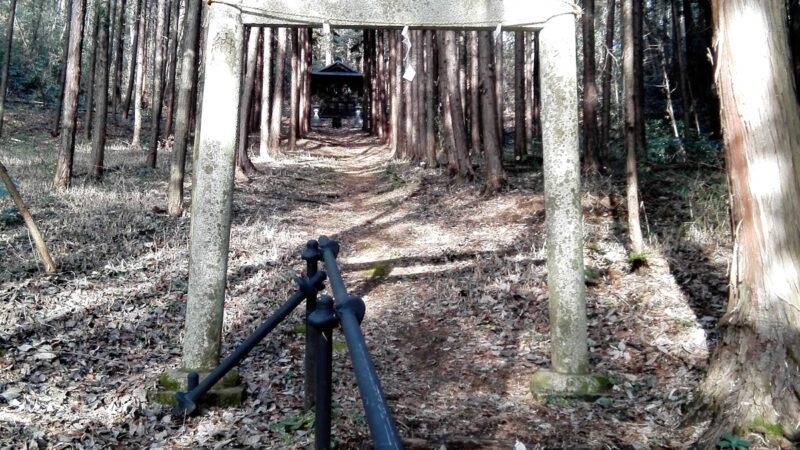
Nearby a quiet residential area in Suginami Ward, the grounds of Mabashi Inari Shrine offer a tranquil and lush atmosphere despite its central Tokyo location. The long approach to the shrine transports visitors to a sacred space, far removed from everyday life.
The grounds, where one can experience the changing seasons, are ideal for strolls and are a beloved place of relaxation for local residents.
Annual Events and Festivals
Hatsuumasai Festival and Mochi-making Ceremony
The most important festival at Mabashi Inari Shrine is the Hatsuumasai Festival, held on the first day of the horse in February. Hatsuumasai is a special day for Inari shrines and is celebrated grandly at Inari shrines throughout Japan.
At the Hatsuumasai festival of Mabashi Inari Shrine, a traditional “mochi-making ceremony” is held, passed down among the parishioners. The sight of the parishioners pounding mochi while singing mochi-making songs is a valuable folk event that has continued since the Edo period, attracting many spectators.
The pounded mochi is distributed to worshippers, and it is said that eating this mochi will ensure good health for a year.
Other Annual Events
- New Year’s Day Festival (January 1st): A festival celebrating the New Year
- Setsubun Festival (around February 3rd): A ritual to ward off evil spirits by scattering beans
- Annual Grand Festival (September): A grand annual festival including a portable shrine procession
- Shichi-Go-San Festival (November): A celebration of children’s growth
- Great Purification Ceremony (June & December): A Shinto ritual to purify oneself of the impurities accumulated over the past six months
Goshuin (Shrine Seal) Information
Types and Designs of Goshuin
At Mabashi Inari Shrine, you can receive a standard goshuin. It features the words “Mabashi Inari Shrine” in calligraphy in the center, the date of visit on the right, and “Located in Asagaya Minami, Suginami Ward” on the left, followed by a red seal.
Seasonal and special-day goshuin are sometimes available, so it’s a good idea to check the official information.
Goshuin (Shrine Seal) Reception Hours
Goshuin are available at the shrine office. Reception hours are generally from 9:00 AM to 5:00 PM, but the priest may be absent depending on their schedule. If you want to be sure to receive a goshuin, it is recommended to call ahead to confirm.
The offering fee is typically around 300 to 500 yen.
Goshuincho (Shrine Seal Book)
Original goshuincho are sometimes available. Goshuincho featuring designs such as the twin dragon torii gate or the lucky bell make a memorable souvenir of your visit.
How to Visit and Etiquette
Basic Visiting Etiquette
- Bow before passing through the torii gate: A courtesy before entering the sacred area.
- Walk along the edge of the path: The center is the path of the gods.
- Purify yourself at the water basin: Left hand → Right hand → Mouth → Handle of the ladle in the left hand.
- Bow at the Zuishinmon gate: Ring the bell of good fortune.
- Pray in front of the main hall: Two bows, two claps, one bow.
Attire for Visiting
There are no particularly strict dress code regulations, but it is desirable to wear clothing that is mindful of the sacred nature of the place. Since weddings are sometimes held here, it is best to avoid extremely casual attire.
Photography
Photography is generally permitted within the shrine grounds, but please refrain from taking pictures inside the main hall or during prayers. The twin dragon torii gate and the bell of good fortune are popular photo spots, but please be considerate of other visitors.
Access Information
Basic Information
Address: 2-4-4 Asagaya Minami, Suginami-ku, Tokyo 166-0004
Phone Number: 03-3311-8588
FAX: 03-3316-1680
Access by Train
From JR Chuo Line “Asagaya Station”
- Approximately 10 minutes on foot from the South Exit
- Easiest Route
- From the station, go through the shopping street and into the residential area
From Tokyo Metro Marunouchi Line “Minami-Asagaya Station”
- Approximately 12 minutes on foot
- Route along Ome Kaido
From JR Chuo Line “Koenji Station”
- Approximately 15 minutes on foot from the North Exit
- Closer from Asagaya Station
Access by Car
Approximately 10 minutes from the Shuto Expressway Route 4 Shinjuku Line “Koenji Exit”. However, since there is no dedicated parking lot on the shrine grounds, you will need to use nearby coin-operated parking lots.
As it is located in a residential area, some roads are narrow. For first-time visitors, using public transportation is recommended.
Parking Information
There is no dedicated parking lot for the shrine, but there are several coin-operated parking lots in the surrounding area.
- Parking lots around Asagaya Station
- Private parking lots near the shrine
During New Year’s visits and festivals, congestion is expected, so access by train is recommended.
Recommended Tourist Spots around Mabashi Inari Shrine
Asagaya Pearl Center Shopping Street
This is an arcade shopping street approximately 700 meters long, located on the way from Asagaya Station to Mabashi Inari Shrine. Around 250 shops line the street, creating a retro Showa-era atmosphere.
Every August, the “Asagaya Tanabata Festival” is held, with giant papier-mâché decorations adorning the shopping street. Known as one of the three major Tanabata festivals in the Kanto region, it attracts large crowds during the festival period.
Koenji
Koenji, within walking distance of Mabashi Inari Shrine, is known as a mecca for subculture. It’s a hub for youth culture, with vintage clothing stores, live music venues, and unique restaurants.
Koenji Hikawa Shrine and Koenji Temple are also nearby, making it ideal for a stroll.
Zenpukuji River Green Space
This green space park is located along the Zenpukuji River in Suginami Ward. It’s also known as a cherry blossom viewing spot, attracting many visitors in spring. It’s a popular jogging and walking course for local residents.
Otaguro Park
This Japanese garden was developed on the site of the former residence of music critic Motoo Otaguro. The ginkgo tree-lined avenue and strolling garden are beautiful, and the autumn foliage illumination is a must-see. It’s about a 15-minute walk from Asagaya Station.
Gourmet Information Around Mabashi Inari Shrine
Recommended Restaurants in Asagaya
Established Western-Style Restaurants
Asagaya boasts many Western-style restaurants that have been around since the Showa era, offering nostalgic flavors like hamburgers and omelets.
Unique Cafes
Asagaya is dotted with unique cafes, including those renovated from old houses and coffee shops specializing in high-quality coffee.
Ramen Battleground
The Asagaya and Koenji area is famous as a ramen battleground, with a variety of ramen shops offering different genres.
Izakayas and Bars
There are plenty of izakayas and bars to visit after your shrine visit. Many are bustling with local regulars, giving you a taste of old-town charm.
Hotels and Accommodations Around Mabashi Inari Shrine
Accommodation in the Asagaya and Koenji Area
While there are few large hotels around Asagaya Station, there are business hotels and guesthouses.
Business Hotels
- Conveniently located business hotels near train stations
- Reasonably priced
Guest Houses
- Inexpensive accommodations for backpackers
- Opportunities for international exchange
Hotels in the Shinjuku/Nakano Area
For more options, consider hotels around Shinjuku Station or Nakano Station, just a few stops away on the JR Chuo Line.
Around Shinjuku Station
- A variety of options, from large hotels to business hotels
- Approximately 10 minutes by train to Asagaya Station
Around Nakano Station
- Many relatively affordable hotels
- Approximately 5 minutes by train to Asagaya Station
About Weddings and Prayers
Shinto Weddings
At Mabashi Inari Shrine, you can hold a solemn Shinto wedding ceremony in a tranquil setting. Despite being in the heart of the city, the shrine grounds offer a peaceful atmosphere, making it a popular choice for a significant life event.
If you wish to hold a wedding ceremony, you must contact the shrine office in advance to discuss dates and details.
Various Prayers and Blessings
At Mabashi Inari Shrine, you can receive the following prayers and blessings:
- Protection from misfortune and evil spirits
- Family safety
- Business prosperity
- Traffic safety
- Prayers for safe childbirth
- First shrine visit for a newborn
- Shichi-Go-San (7-5-3) ceremony
- Prayers for passing exams
- Recovery from illness
If you wish to receive a prayer, we recommend making a reservation by phone in advance. The offering fee varies depending on the type of prayer.
Reviews and Reputation of Mabashi Inari Shrine
Visitor Voices
The Beauty of the Twin Dragon Torii Gate
“The dragon carvings are truly magnificent, and it’s easy to see why it’s one of Tokyo’s three most beautiful torii gates. It’s very photogenic, so I recommend bringing a camera.”
The Impressive Lucky Bell
“As one of the largest in Tokyo, I was overwhelmed by the size of the bell. The sound it made was soothing, and it really made me feel like I was going to be blessed with good fortune.”
A Quiet and Peaceful Atmosphere
“Despite being located in a residential area, the shrine grounds are incredibly quiet, like a different world. I was able to forget the hustle and bustle of the city and pray at my leisure.”
The Mochi-Pounding Ceremony at the Hatsuumasai Festival
“Listening to the traditional mochi-pounding songs during the ceremony made me feel like I had traveled back in time to the Edo period. The freshly pounded mochi was delicious.”
Visitor Trends
The following types of people visit Mabashi Inari Shrine:
- Shrine enthusiasts collecting Goshuin (temple/shrine stamps)
- Photography enthusiasts wanting to photograph the twin-dragon torii gate
- Daily worship by local residents
- Participants in annual events such as Hatsumode (first shrine visit of the year) and Hatsuumasai (first horse festival)
- Couples getting married
- Life rites such as Shichi-Go-San (children’s festival)
- Tourists stopping by while sightseeing in Asagaya and Koenji
Summary
Mabashi Inari Shrine is a representative shrine of Suginami Ward, Tokyo, with a history of approximately 700 years since its founding at the end of the Kamakura period. It is full of unique charms not found in other shrines, such as the twin-dragon torii gate, the large bell for good fortune, and the traditional mochi-making ceremony at Hatsuumasai.
Despite its convenient location just a 10-minute walk from Asagaya Station on the JR Chuo Line, it maintains a tranquil atmosphere and is cherished by both local residents and tourists as an oasis in the city.
It offers a variety of blessings, including abundant harvests, business prosperity, good fortune, and traffic safety, making it an ideal place to celebrate life’s milestones and express daily gratitude. When you visit the Asagaya and Koenji area, be sure to stop by Mabashi Inari Shrine. Passing through the twin-dragon torii gate and ringing the bell of good fortune is sure to bring you good luck.